








What Is a Lawn Mower?
A lawn mower is a machine designed to cut grass to a more even height and keep a lawn manageable through regular mowing. Most models use either a fast-spinning rotary blade or a reel-style cutting system to trim the grass as the mower moves across the lawn.
The main parts usually include the cutting system, deck, wheels or drive system, and a power source. That power may come from gasoline, a rechargeable battery, a corded electric supply, or the person pushing the mower. As the cutting system moves, the mower removes grass at a set height, while the clippings are discharged, collected, or mulched back into the lawn.
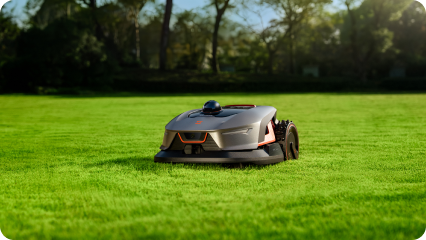
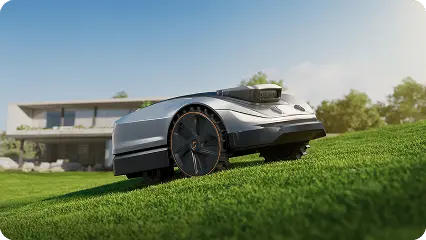
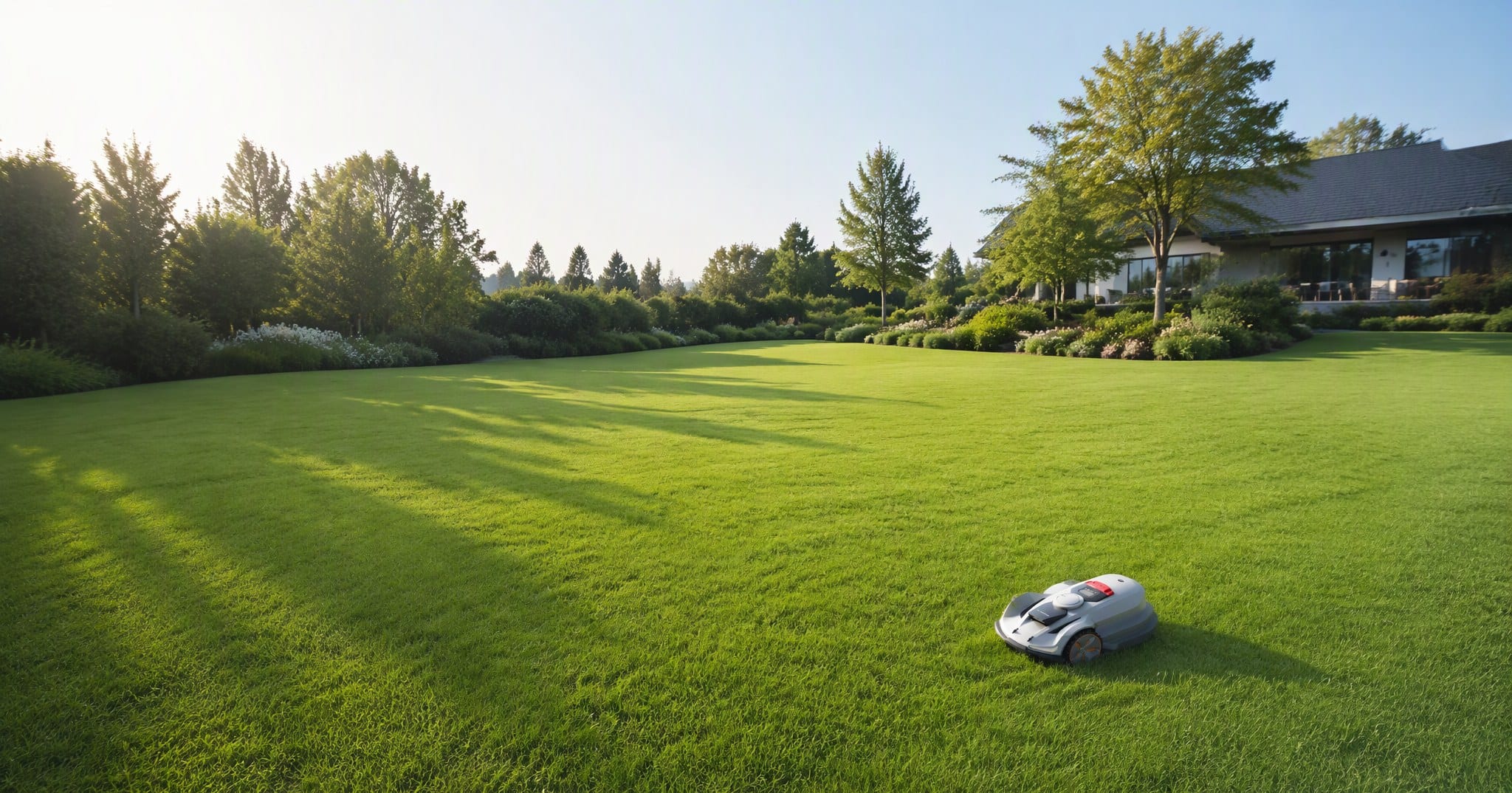
Robot lawn mowers add another layer of automation. Sensors, mapping, navigation, and automatic charging allow them to maintain the lawn through frequent cuts with much less direct input.
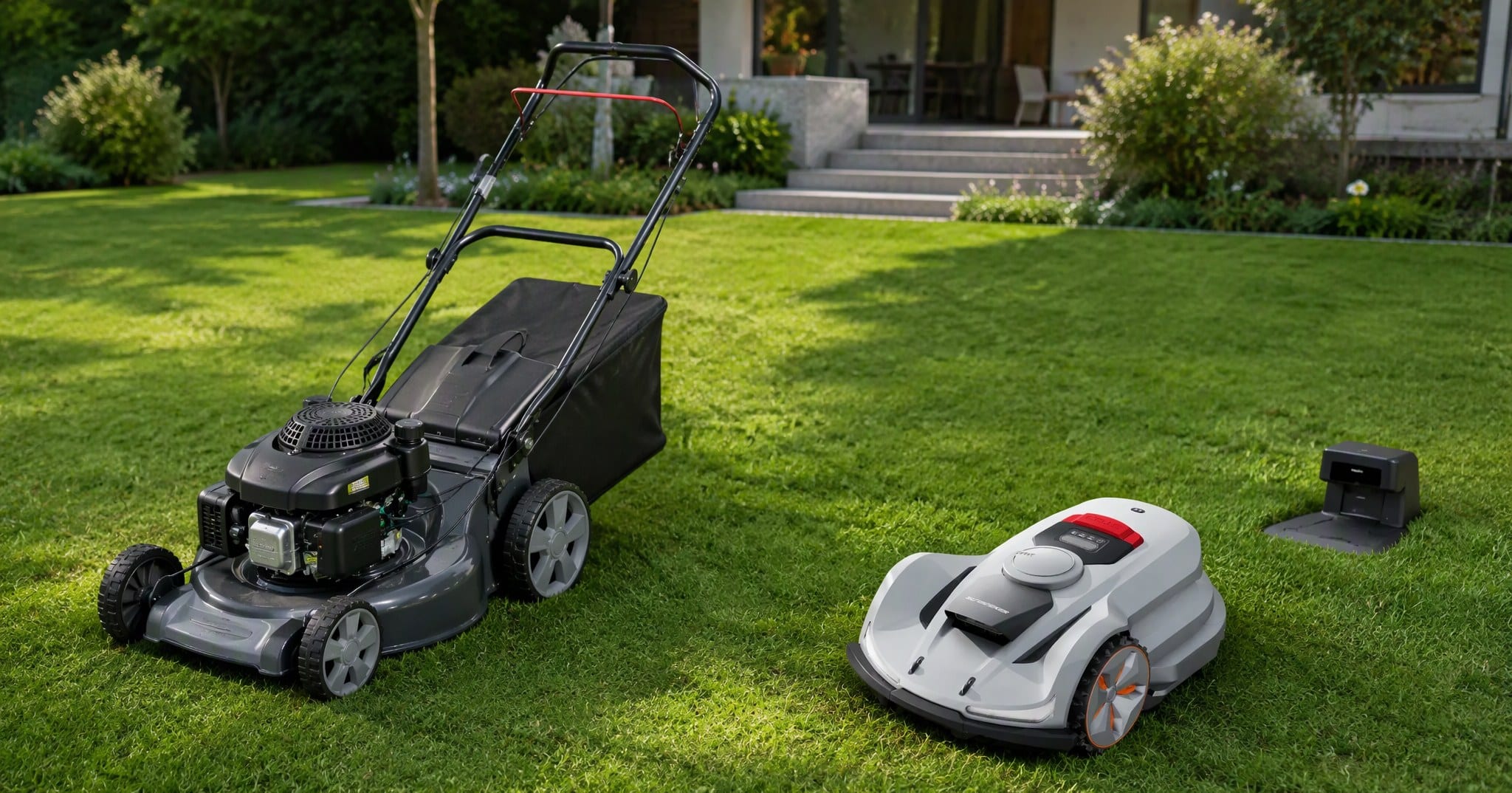
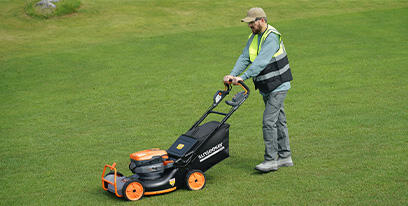
Traditional walk-behind mower
- Cutting System: A rotary blade beneath the deck cuts grass as the mower moves across the lawn.
- Deck: The deck surrounds the cutting area and helps direct the grass clippings.
- Wheels & Drive: The wheels support movement. On push models, the operator provides forward motion; self-propelled models power the wheels.
- Power Source: An engine or electric motor powers the blade. This pictured mower uses a gasoline engine mounted above the deck.
- Grass Handling: Depending on the mower, clippings can be collected, discharged or mulched back into the lawn. This mower is fitted with a rear collection bag.
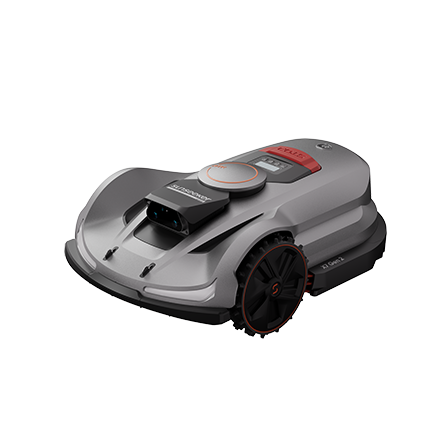
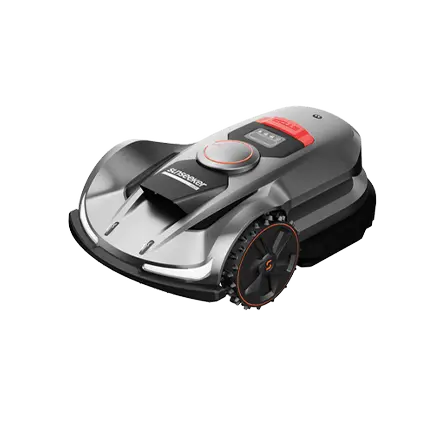
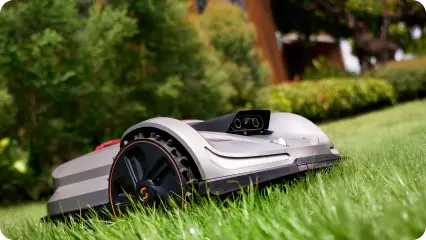
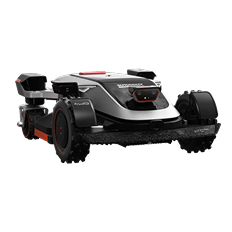
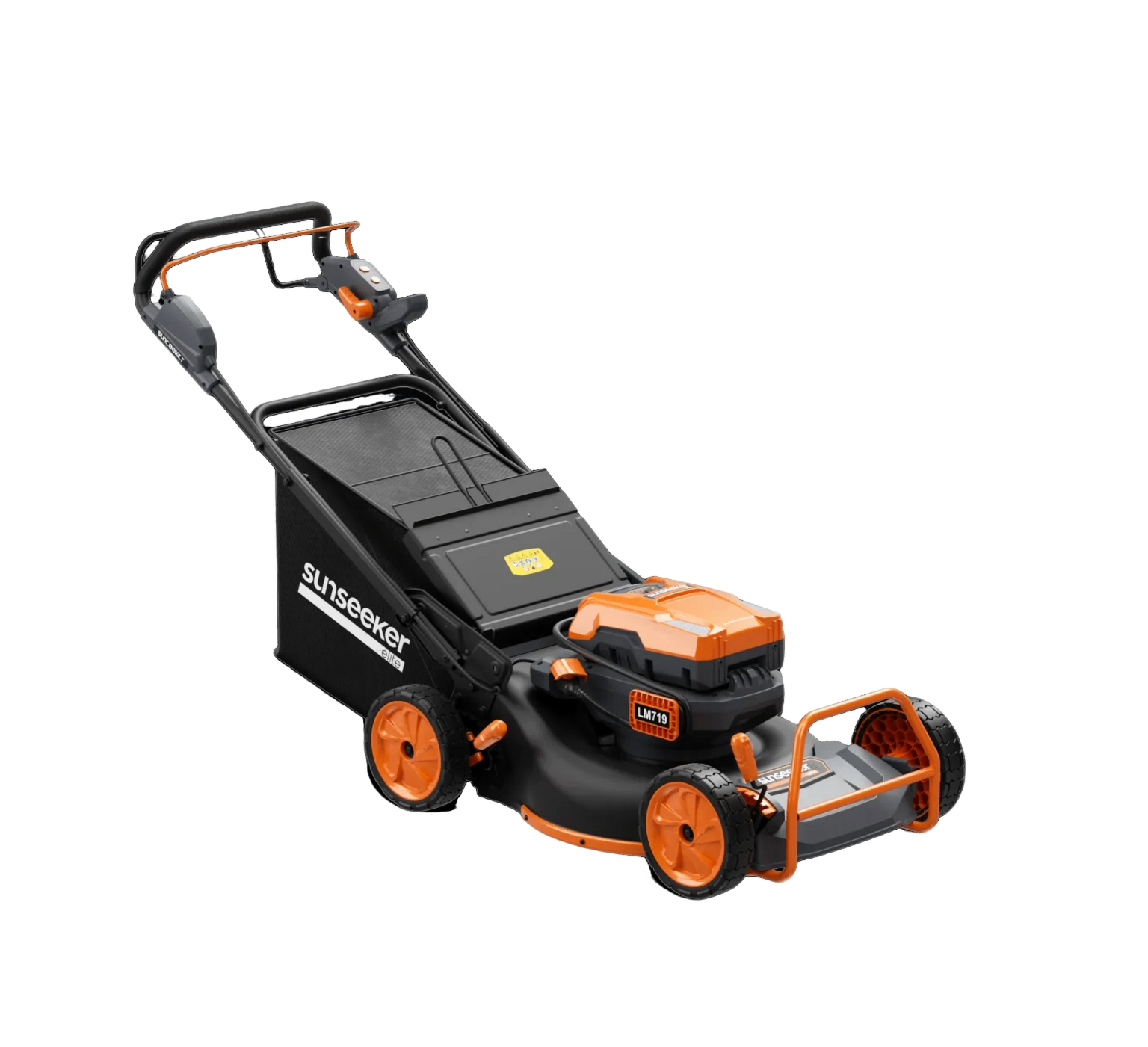
Sunseeker robot mower
- Cutting System: An electric motor drives the blades beneath the mower for frequent, light cuts.
- Wheels & Drive: Powered wheels move and steer the mower across its mapped working area.
- Battery Power: A rechargeable battery inside the body supplies power for movement, cutting and onboard electronics.
- Sensors & Navigation: Sensors and navigation systems help the mower locate itself, follow its map and detect obstacles.
- Auto Charging: The mower returns to its charging station when the battery runs low.
Types of Lawn Mowers
Lawn mowers come in a wide variety of styles and designs, and each type is suited to different yard sizes, terrain, and user preferences. Understanding the main categories will help you choose a mower that matches your lawn care needs and physical capabilities. Select a mower type to explore how it works, its advantages, and the main trade-offs.
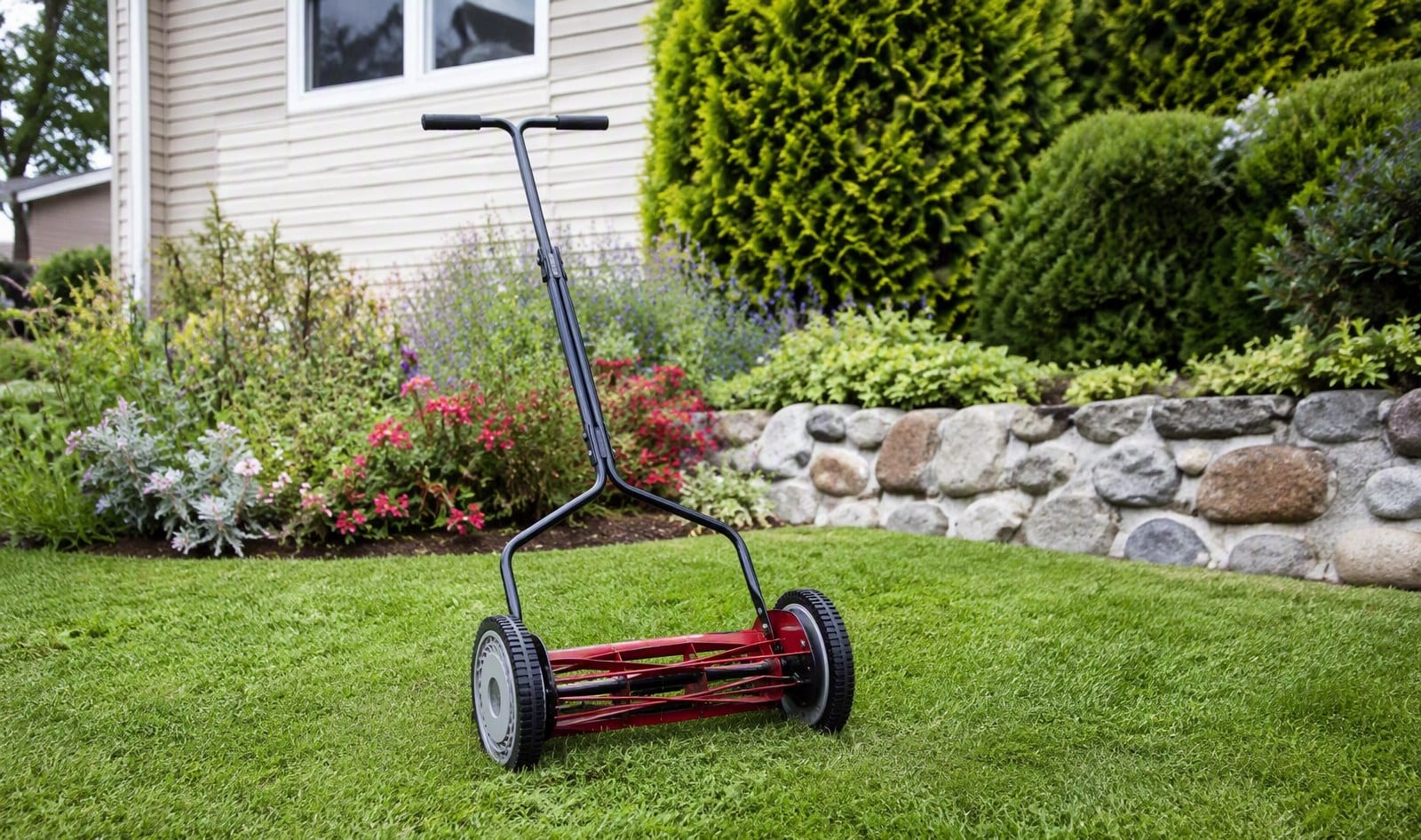
Reel Mower
A reel mower is a manual, push-powered mower that cuts grass with a set of rotating blades. It is quiet, eco-friendly, and low-maintenance, which makes it a good fit for small, flat lawns and for people who want a simple mowing routine. Reel mowers also give a clean, precise cut that helps keep grass healthy.
Key Advantages
- Quiet and eco-friendly operation
- Clean, scissor-like cut for healthier grass
- Low maintenance and running costs
Things to Consider
- Requires physical effort to push
- Less effective on tall or thick grass
- Best for small, flat lawns only
Typical power: Manual
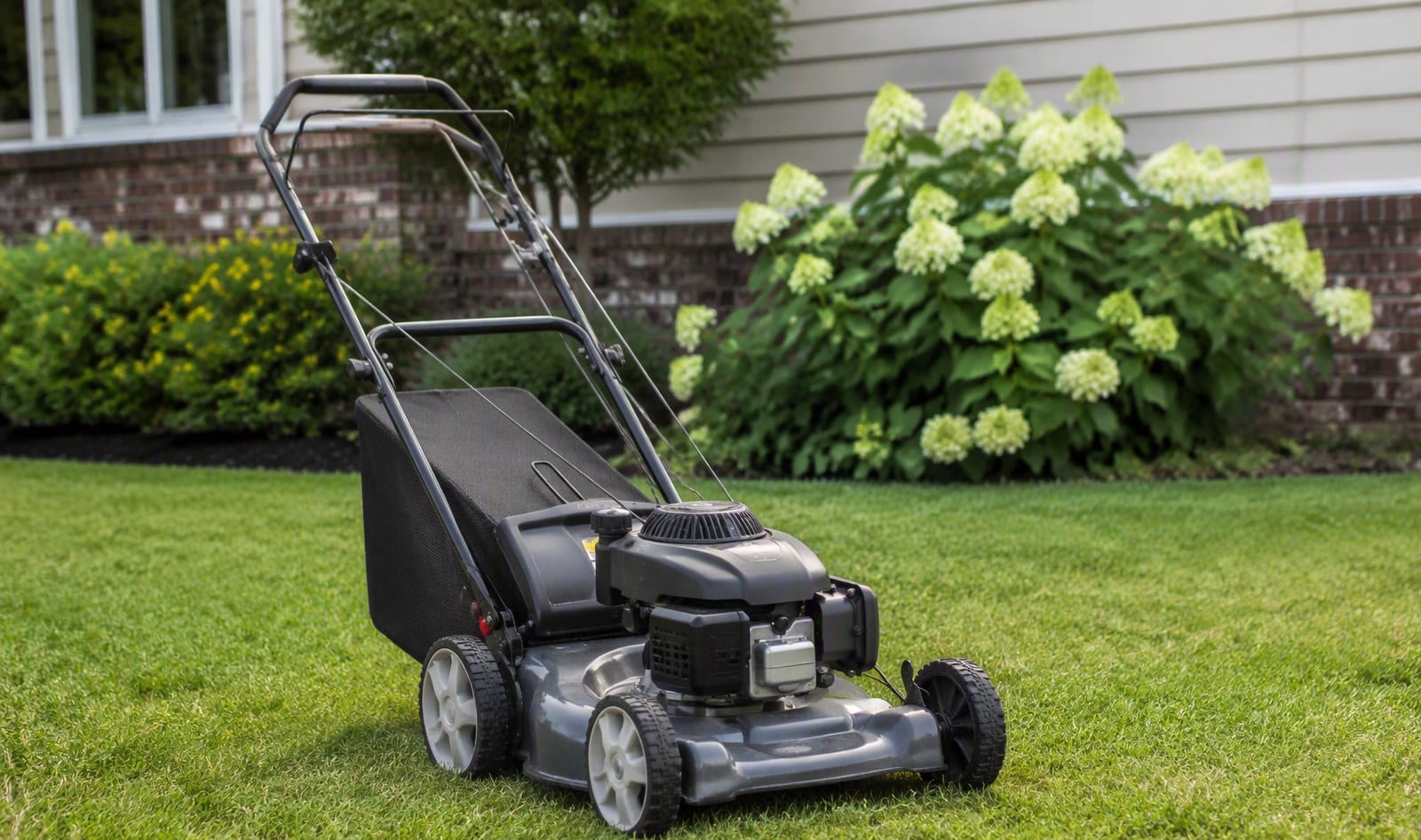
Push Mower
A push mower is a walk-behind mower that needs the user to push it forward across the lawn. It comes in gas or electric models and is one of the most common choices for small to medium yards. Push mowers are affordable, easy to store, and simple to maintain. They work best on flat ground where the user can comfortably handle the pushing effort.
Key Advantages
- Affordable and widely available
- Simple to maintain and store
- Good control on small, flat lawns
Things to Consider
- Requires steady physical effort
- Slower on large or uneven yards
- Gas models need fuel and upkeep
Typical power: Gas or electric
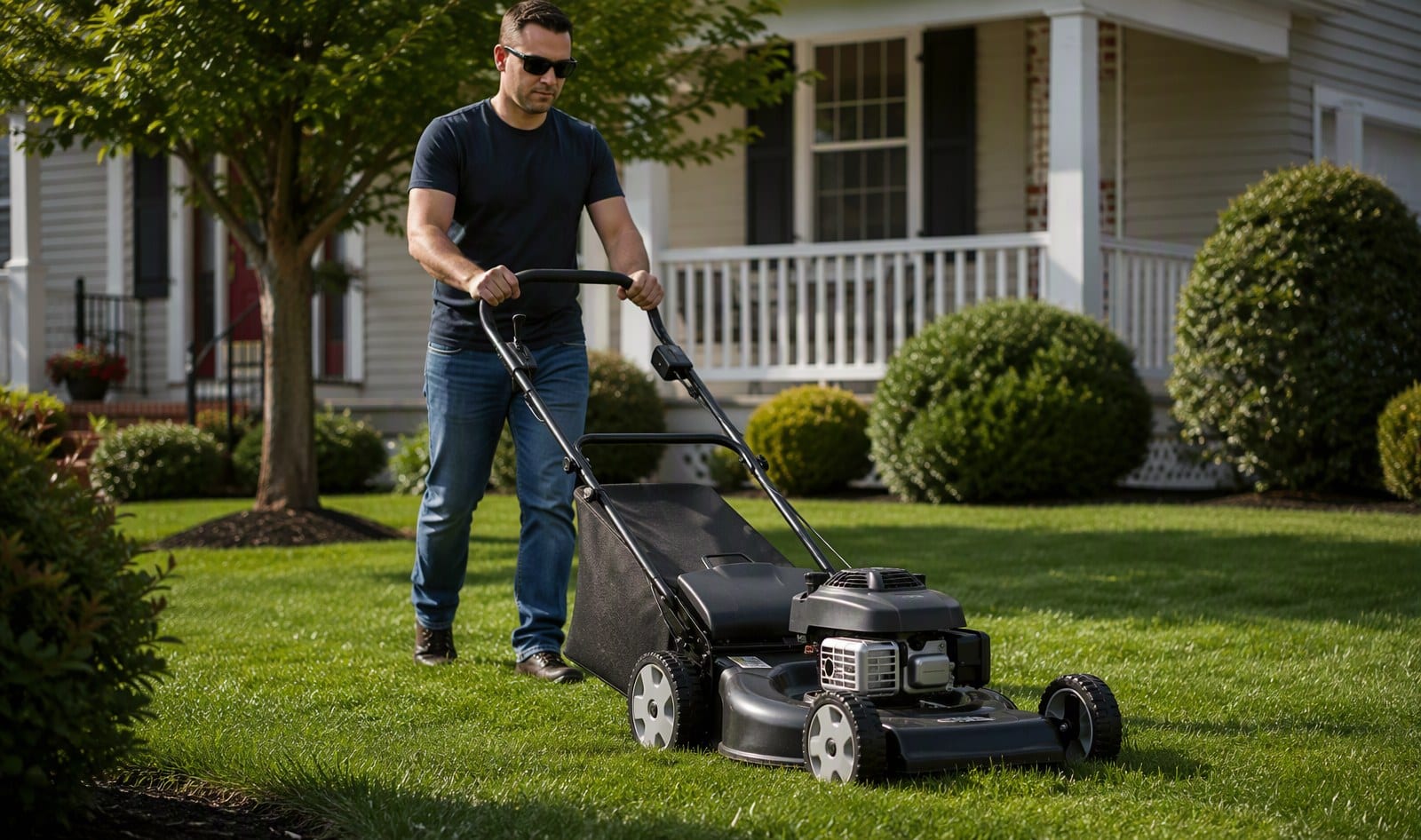
Self-Propelled Mower
A self-propelled mower moves forward on its own, so the user only needs to guide it rather than push it. This makes mowing large or hilly lawns much easier and less tiring. Self-propelled mowers are available in gas and electric versions, with front-wheel, rear-wheel, or all-wheel drive to match different terrain. Many models also let you adjust the speed to match your walking pace.
Key Advantages
- Less physical effort than push mowers
- Handles slopes and uneven ground well
- Adjustable speed for comfortable mowing
Things to Consider
- Heavier and more expensive than push mowers
- More parts can mean more maintenance
- Overkill for very small, flat lawns
Typical power: Gas or battery
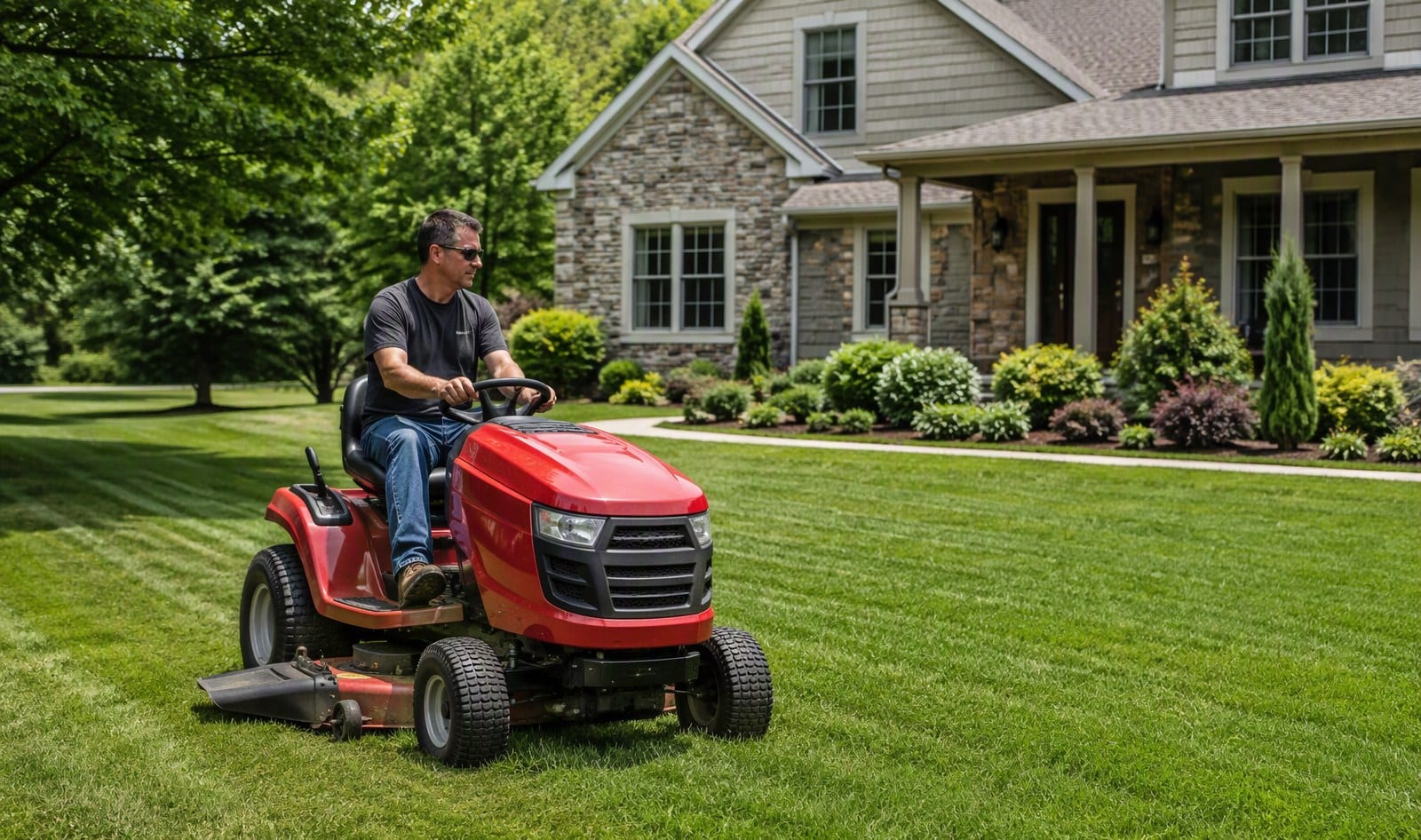
Riding Mower
A riding mower lets you sit and drive while cutting grass, which makes it ideal for large yards and properties over half an acre. Riding mowers come in lawn tractor and zero-turn styles, offering powerful engines and wide cutting decks for fast mowing. They reduce physical strain and make mowing big lawns much quicker. Many models can also pull carts or attachments for other yard work.
Key Advantages
- Fast mowing for large properties
- Minimal physical effort required
- Can tow carts and yard attachments
Things to Consider
- Higher purchase and maintenance costs
- Needs significant storage space
- Wide turning radius on lawn tractors
Typical power: Gas or battery
Zero-Turn Mower
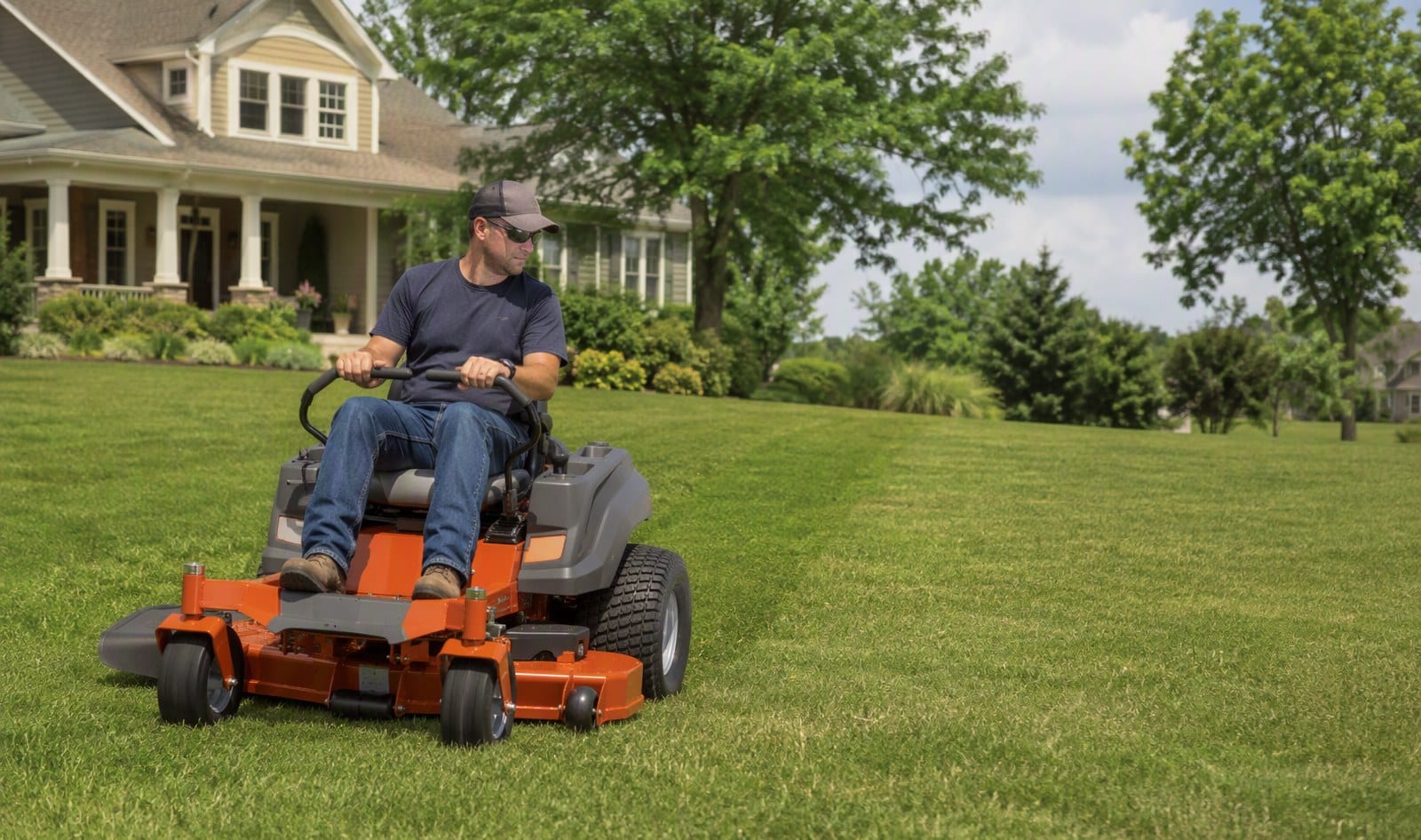
A zero-turn mower is a riding mower that can turn on the spot, thanks to independent wheel control with lap bars. This makes it highly maneuverable around trees, flower beds, and other obstacles. Zero-turn mowers cut large lawns quickly and precisely, which is why they are popular with landscaping professionals. They are best for big, open yards with lots of obstacles to navigate.
Key Advantages
- Extremely maneuverable around obstacles
- Fast mowing with wide cutting decks
- Precise control for detailed landscapes
Things to Consider
- Higher price than standard riders
- Learning curve for lap-bar steering
- Not ideal for steep slopes
Typical power: Gas or battery
Robot Mower
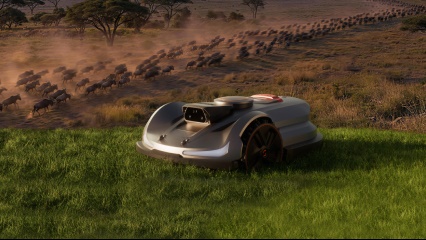
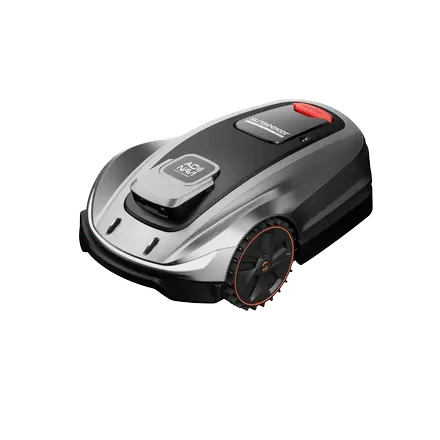
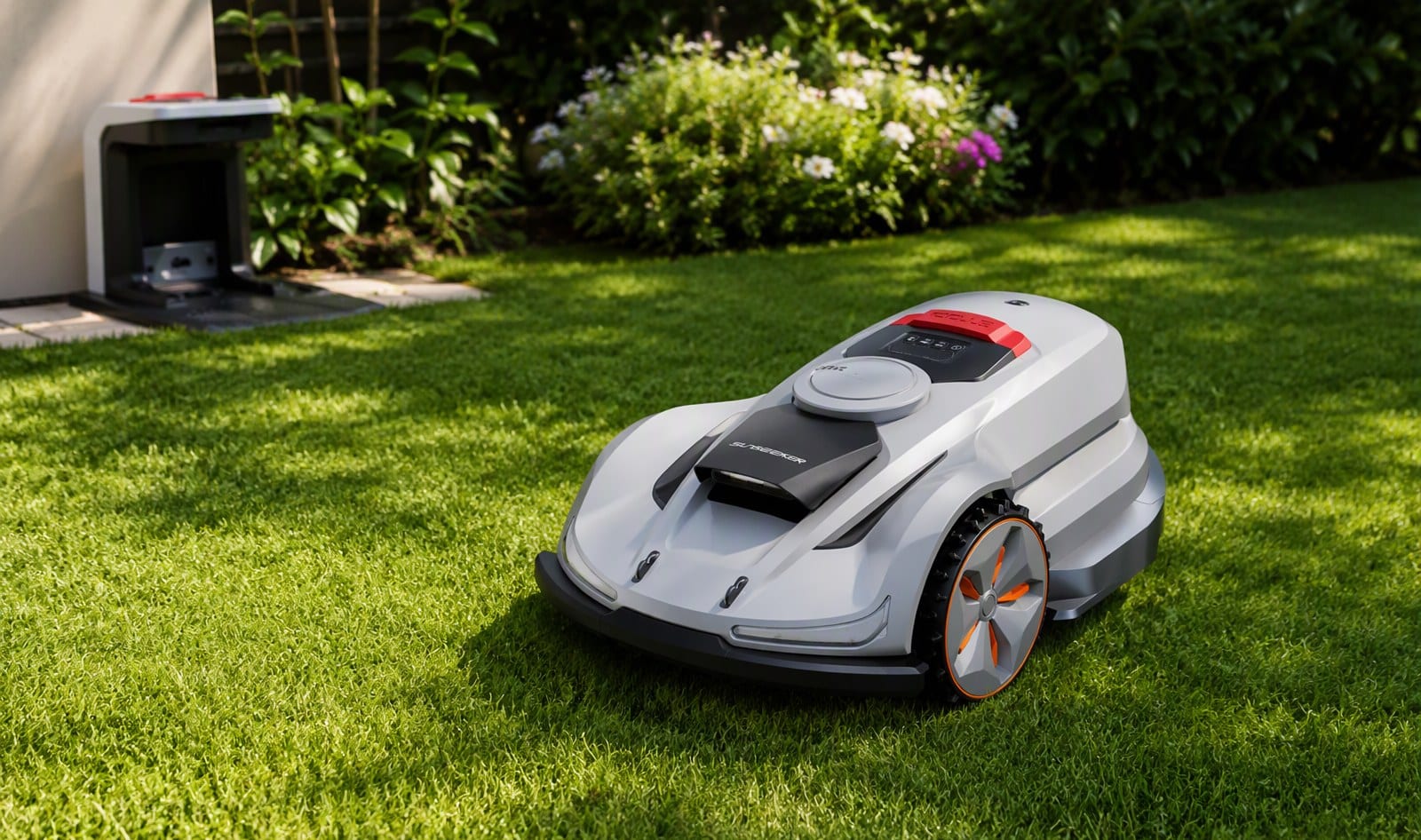
A robot mower is an automated mower that cuts grass on its own, without you pushing or driving it. It uses sensors, navigation systems, and smart mapping to move around your lawn, avoid obstacles, and return to its charging station when needed. Robot mowers save time and effort, and they are perfect for busy homeowners who want a neat lawn with minimal work. Sunseeker robot mowers use wire-free navigation and app control for fully hands-free mowing.
Key Advantages
- Fully automated, hands-free mowing
- Quiet operation, day or night
- Frequent light cuts keep lawn healthier
Things to Consider
- Higher upfront investment
- Initial setup and mapping required
- Best results on defined lawn areas
Typical power: Battery (self-charging)
Explore More Mower Comparisons
Self-Propelled vs. Push Mower
Compare effort, control, and lawn size fit for walk-behind mowing.
Riding Mower vs. Zero-Turn Mower
See how speed, turning, and yard layout affect the better choice.
Electric vs. Gas Push Mower
Look at runtime, upkeep, and noise before choosing a power source.
RTK vs. LiDAR Robot Lawn Mowers
Understand how navigation styles fit different lawn layouts and boundaries.
Lawn Mowers by Yard Size
Yard size quickly narrows the mower choices worth considering. Smaller lawns usually favour easy handling and compact storage, while larger areas put more pressure on mowing time, runtime, coverage, and the amount of physical work required.
| Lawn Size | Mower Types to Consider | Main Priority | Robot Mower Fit | Sunseeker Options |
|---|---|---|---|---|
| 0.25–0.5 acre | Reel, push, self-propelled, robot | Easy handling and storage | Excellent — small lawns are ideal for automation | Sunseeker Elite X5 Gen 2 - Up to 0.5 acre |
| 0.5–1 acre | Self-propelled, riding, robot | Cutting efficiency and comfort | Very good — robot covers the whole lawn on one charge cycle | Sunseeker Elite X7 Gen 2 - Up to 0.75 acre |
| 1–2 acres | Riding mower, zero-turn, robot | Speed and reduced physical effort | Good — choose a model rated for your full area | Sunseeker Elite X7 Plus Gen 2 - Up to 1.5 acres |
| 2–3 acres | Riding mower, zero-turn, robot | Wide decks and long run time | Good — high-capacity robot models handle it well | Sunseeker Elite X9 - Up to 3 acres |
| 3+ acres | Zero-turn, lawn tractor, high-capacity robot | Maximum coverage per session | Good — flagship robots replace hours of riding | Sunseeker Elite X9 Plus - Up to 6 acres |
Over three acres, a zero-turn mower with a 50-inch-plus deck is the fastest manual option, while lawn tractors add towing versatility. The Sunseeker X9 Plus covers up to 6 acres — the largest capacity in the lineup — turning a half-day mowing job into a fully automated routine. | ||||
Choose a Sunseeker Robot Mower by Yard Size
If you want to skip mowing altogether, these Sunseeker robot mowers are matched to different lawn sizes — pick the model rated for your yard.
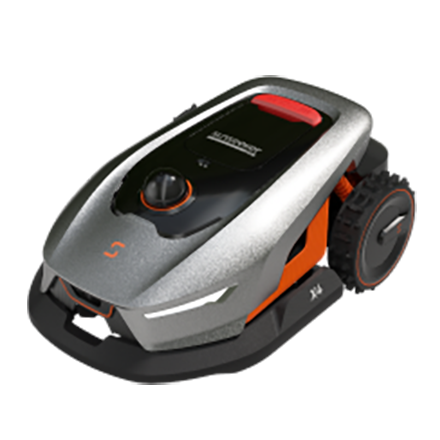
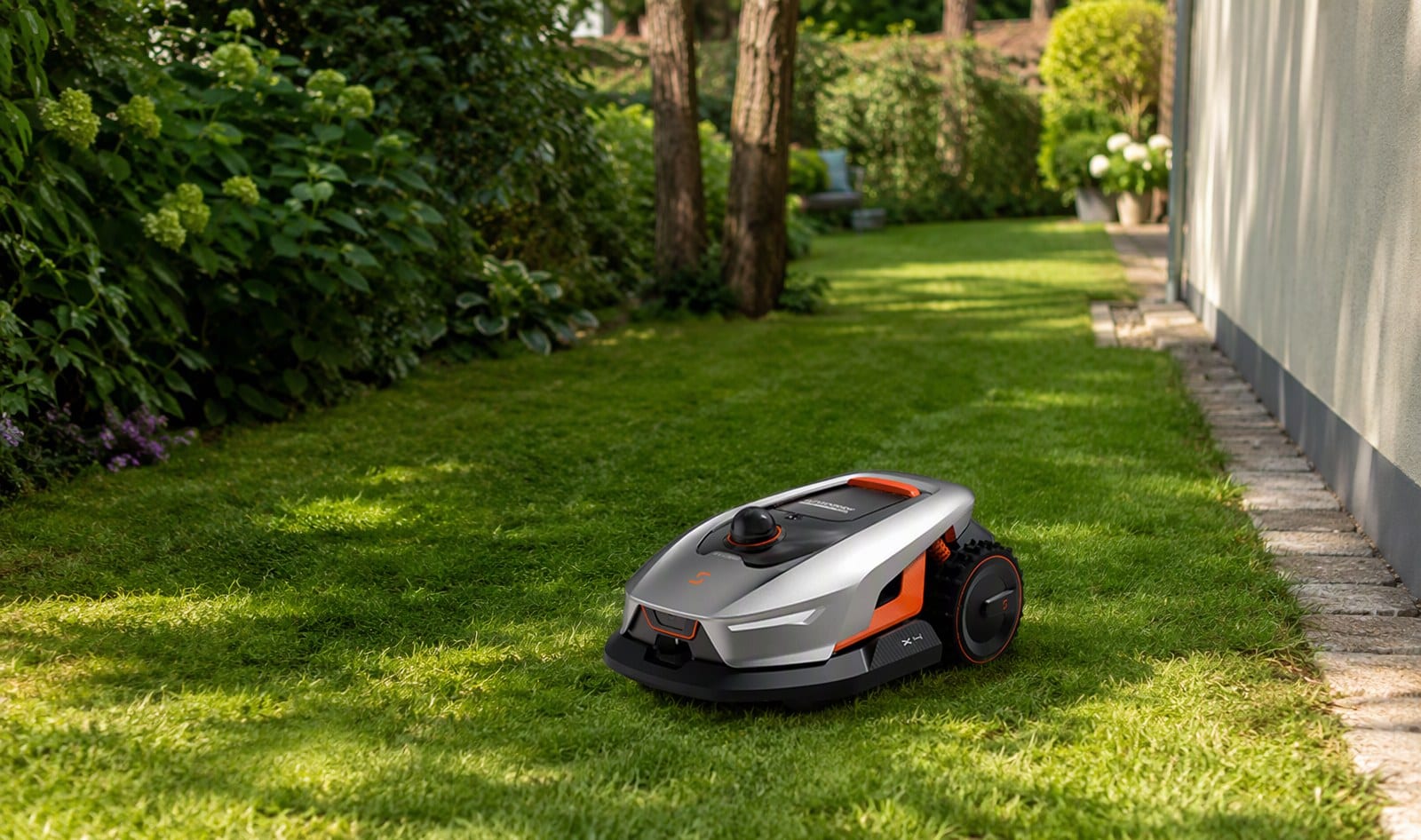 Sunseeker X4
Up to 0.25 acre · ≈1,000 m²
Compact yards and townhome lawns
View X4
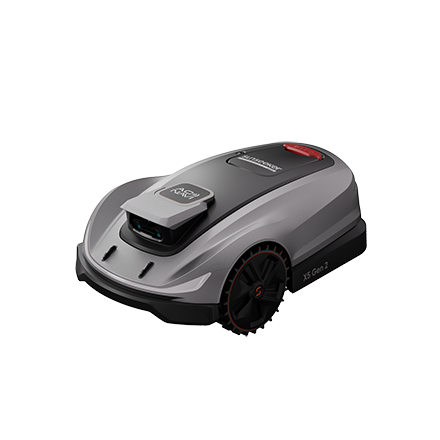
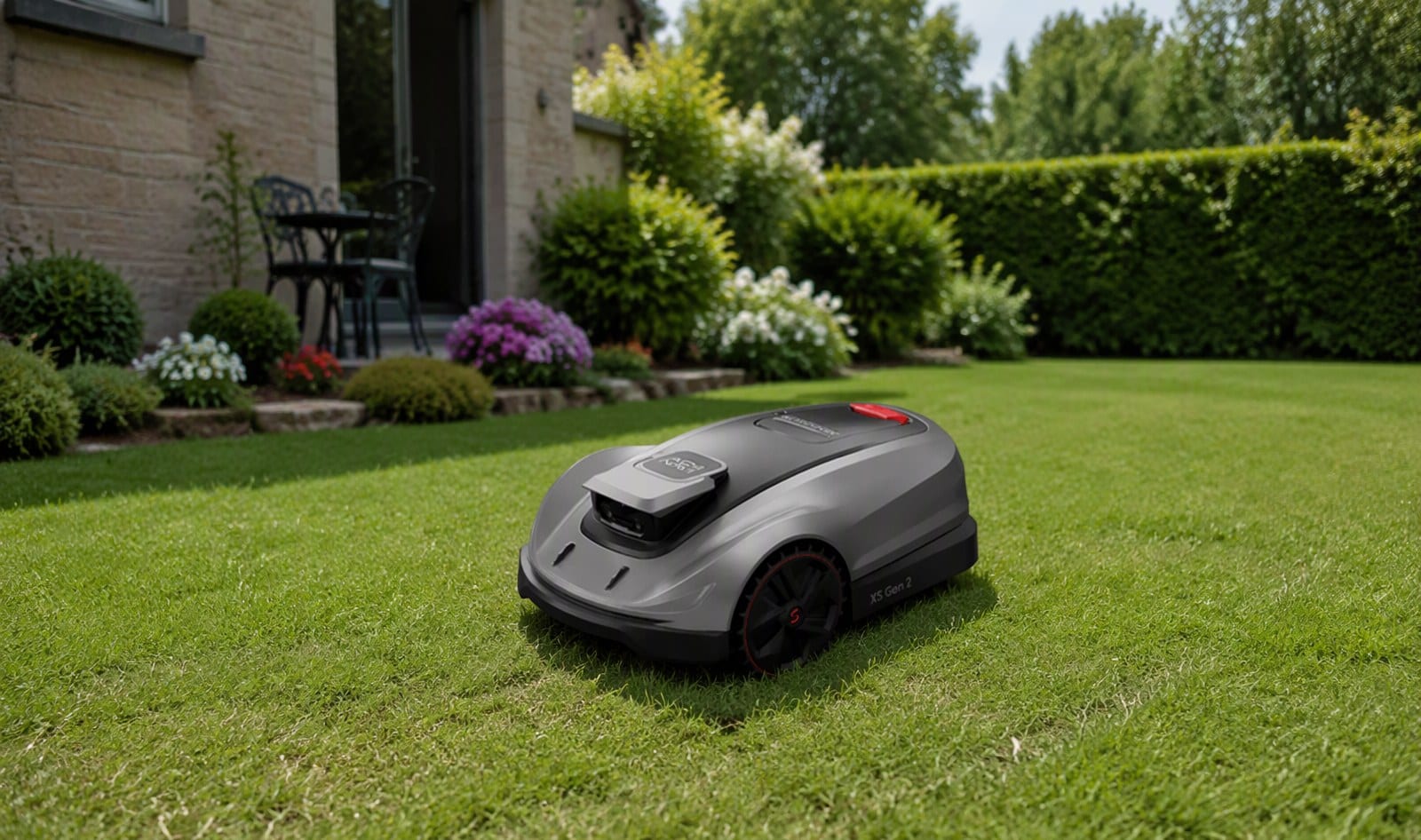 Sunseeker X5 Gen 2
Up to 0.5 acre · ≈2,000 m²
Small to medium suburban lawns
View X5 Gen 2
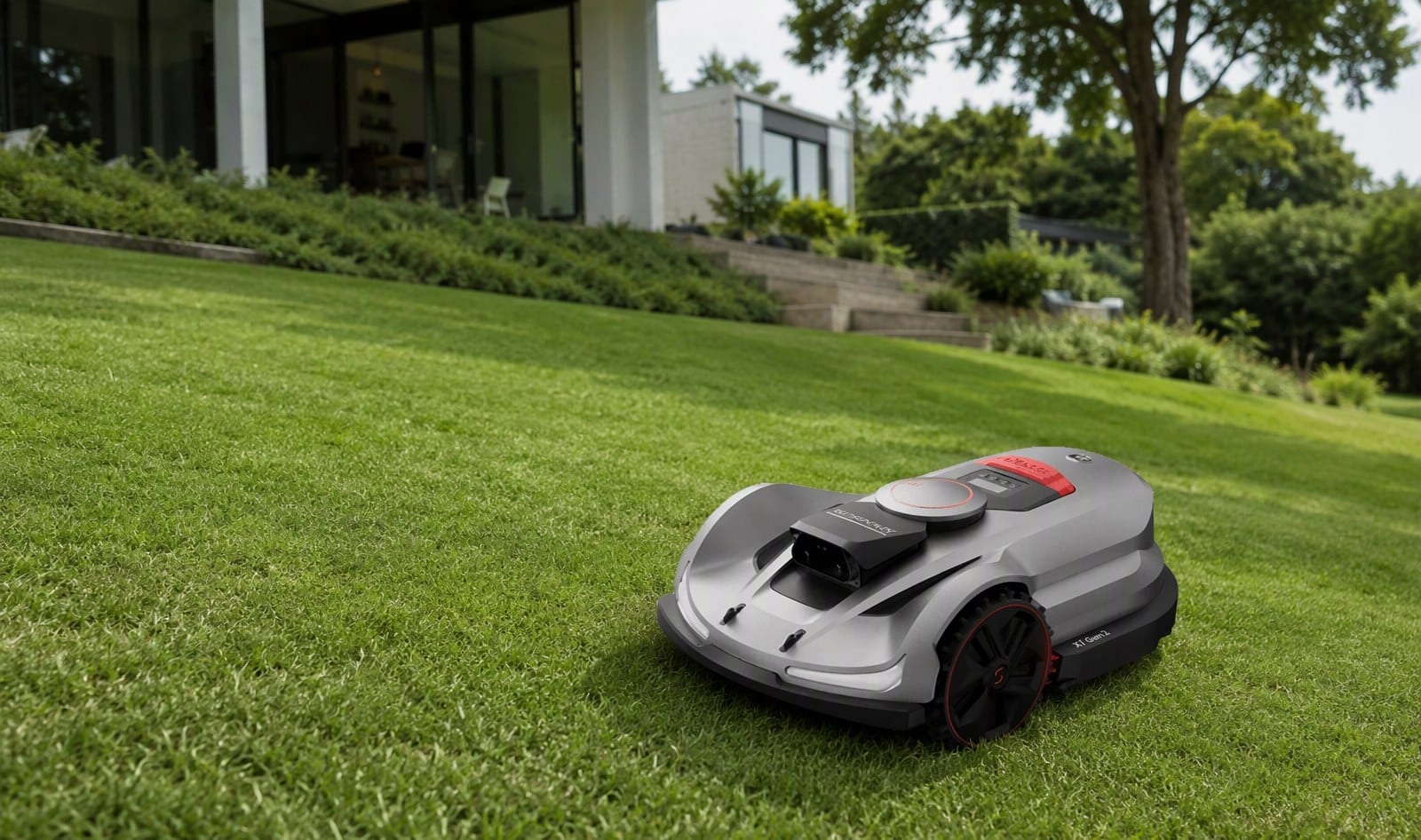 Sunseeker X7 / X7 Plus Gen 2
Up to 1.5 acres · ≈6,000 m²
Medium to large yards with slopes
View X7 Series
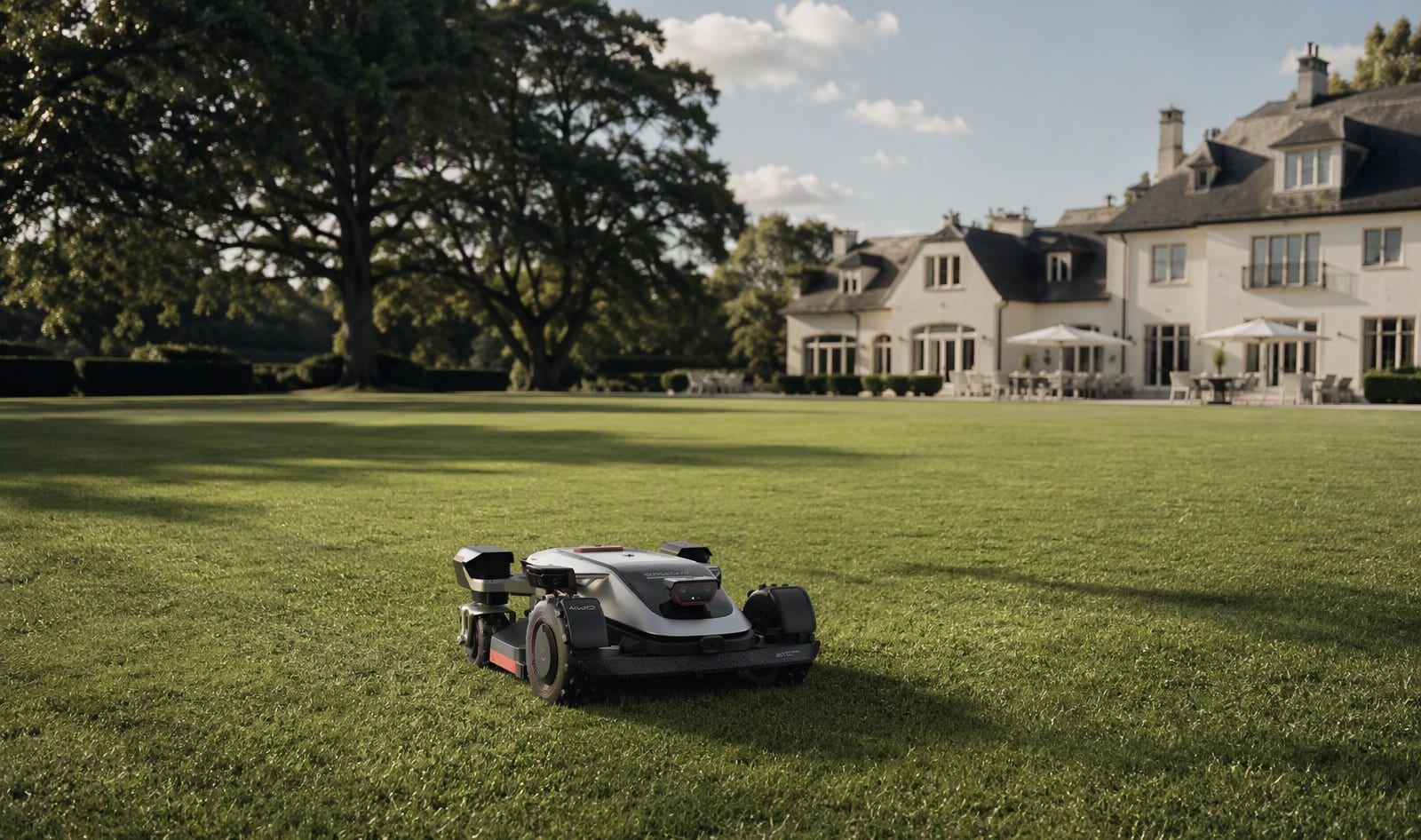 Sunseeker X9 / X9 Plus
Up to 6 acres · ≈24,000 m²
Large properties and estates
View X9 Series
Coverage tiers · not to scale
How Terrain and Yard Layout Affect Mowing
Two lawns of the same size can need very different mowers. Slopes, uneven ground, trees, narrow passages, and separate mowing areas can all change how easily a mower moves around the yard, keeps traction, and reaches every section.
Flat and Open Lawns
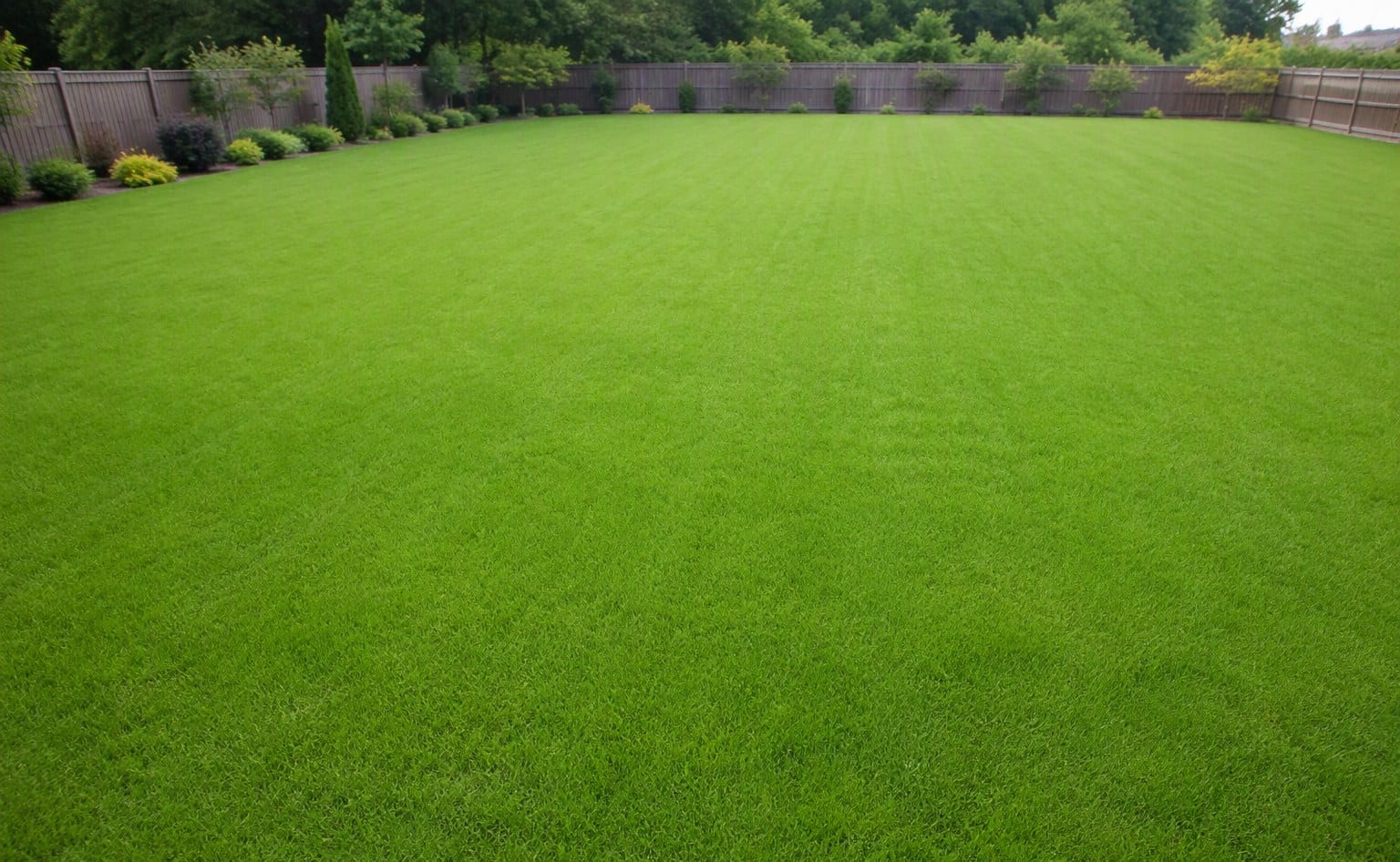
Flat, open ground gives you the widest mower choice. On a 0.5-acre lawn, even a 20-inch cutting path adds up to roughly 2.5 miles of passes before turns and overlap, so mowing time becomes important quickly.
Push and self-propelled mowers suit smaller areas, while riding, zero-turn, and robot models become more practical when choosing a lawn mower for a big yard.
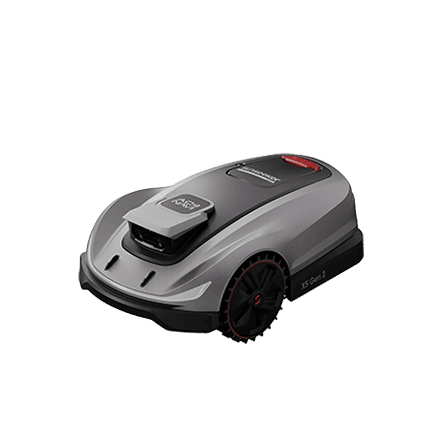 Sunseeker fit: X5 Gen 2
0.5-acre coverage · Smart path planning · Multi-angle mowing
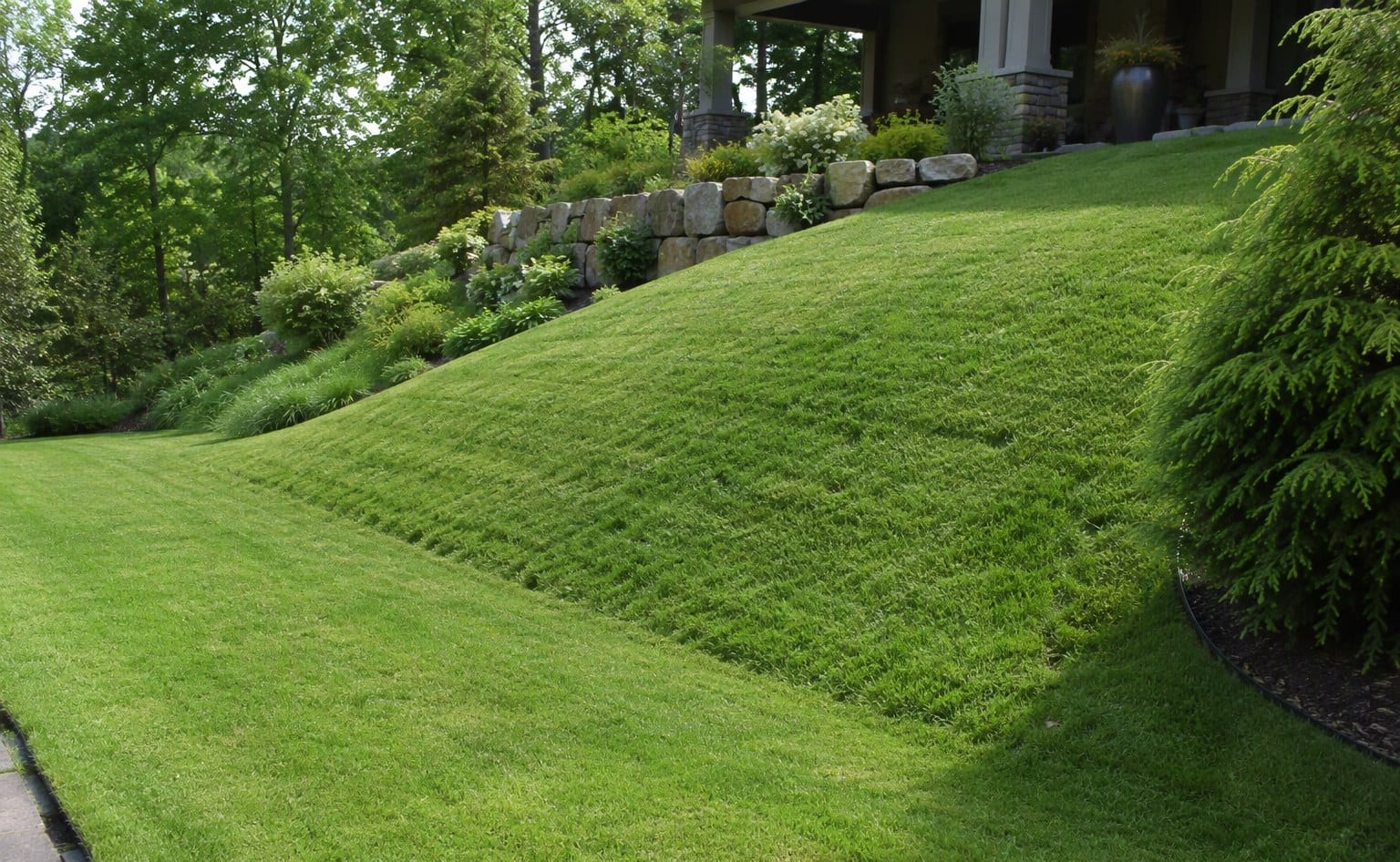
Hills and Slopes
Slopes put traction, braking, and stability ahead of cutting width. A 20% grade rises about 1 foot for every 5 feet of horizontal distance, enough to make pushing and turning noticeably harder.
Self-propelled, rear-wheel-drive, or AWD designs can reduce that effort. When comparing mowers for slopes, check the machine’s rated slope capability against the steepest part of the lawn.
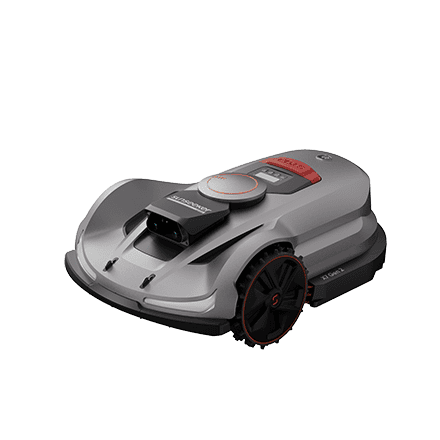 Sunseeker fit: X7 Gen 2
70% (35°) slopes · Tri-wheel AWD · Independent suspension
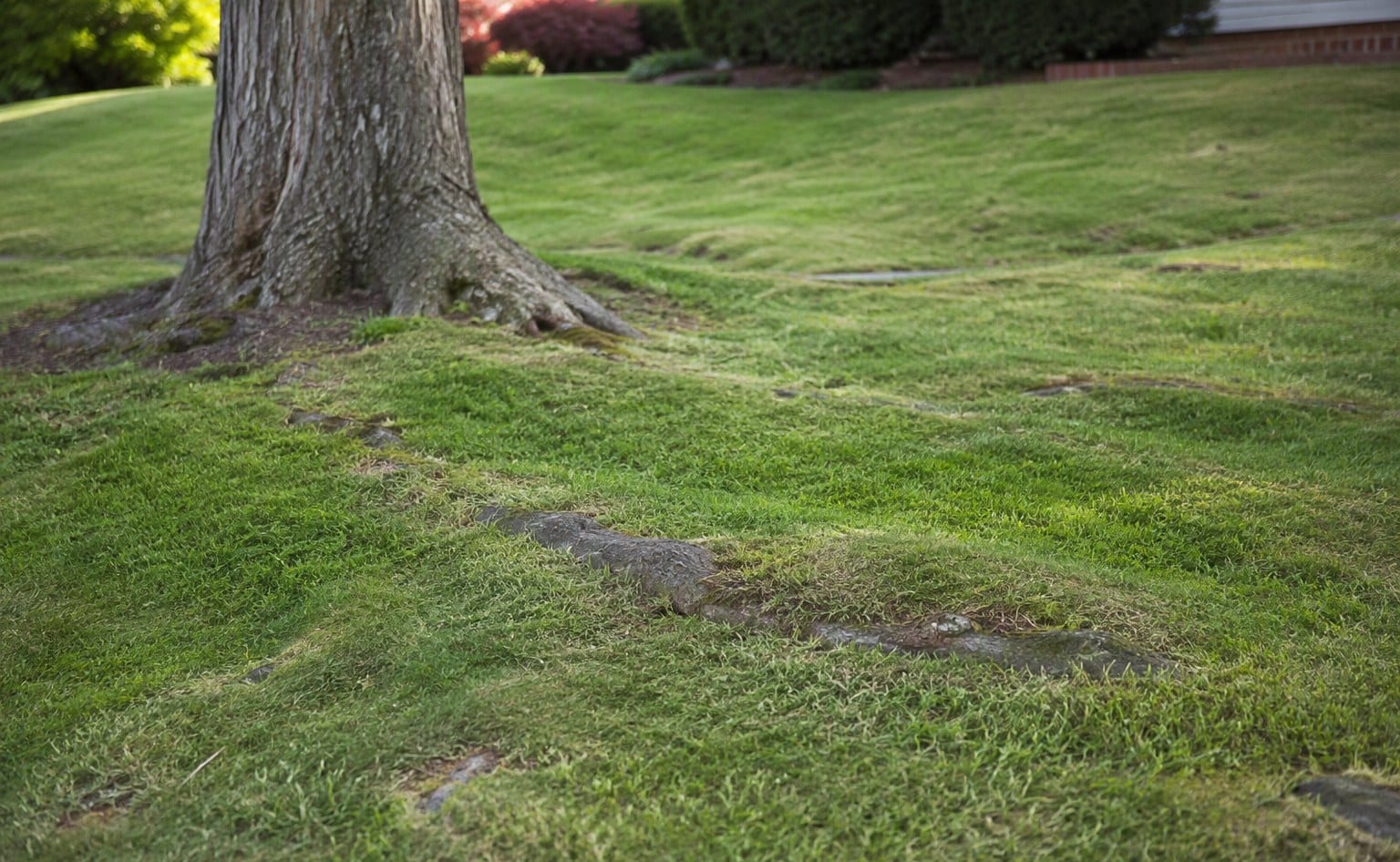
Uneven and Rough Ground
Ruts, roots, soft patches, and sudden changes in level can reduce wheel grip and make the deck follow the ground unevenly. A stable drive system, good traction, and a deck that can adapt to surface changes matter more here than maximum speed.
An AWD lawn mower can be particularly useful where several wheels need to keep driving as the ground changes.
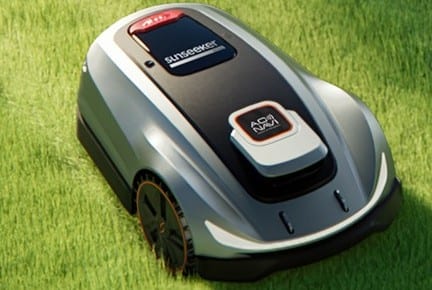 Sunseeker fit: X5
AWD traction · Front suspension · Floating cutting disc

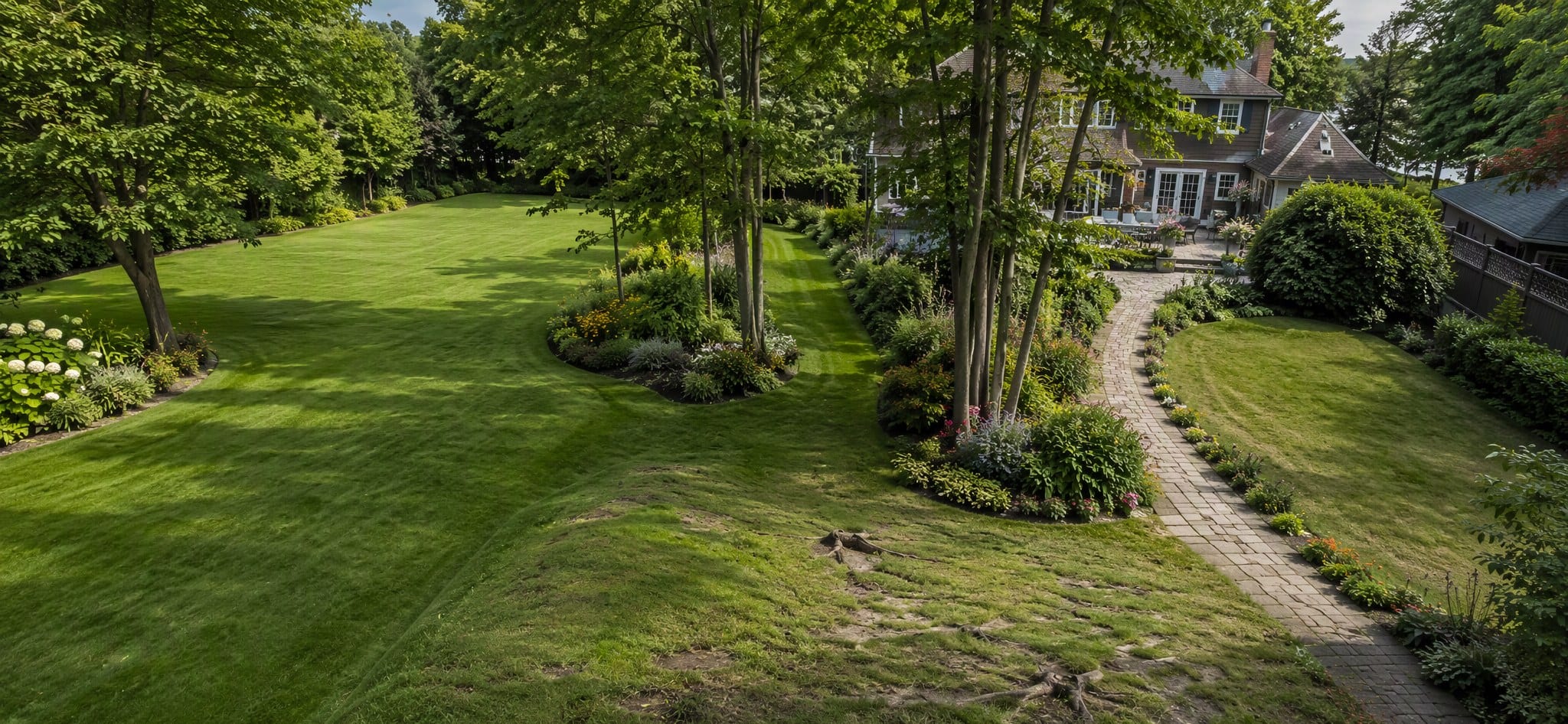
Complex Yards
Trees, beds, curved edges, and narrow passages favour maneuverability over raw cutting capacity. A 24-inch passage, for example, immediately rules out machines wider than the available gap.
Manual mowers need a manageable turning radius, while robot mowers rely more heavily on mapping and obstacle detection. A wireless robot lawn mower can also avoid routing perimeter wire around every bed and obstruction.
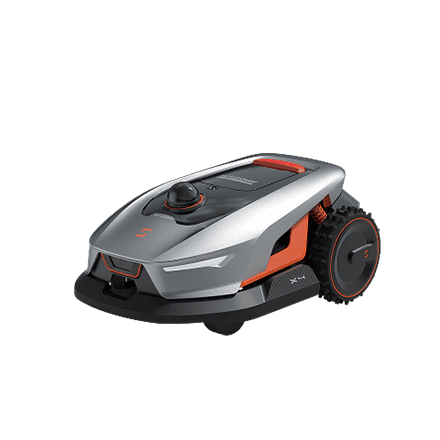 Sunseeker fit: X4
360° 3D LiDAR + Vision AI · Narrow passages · Wire-free mapping
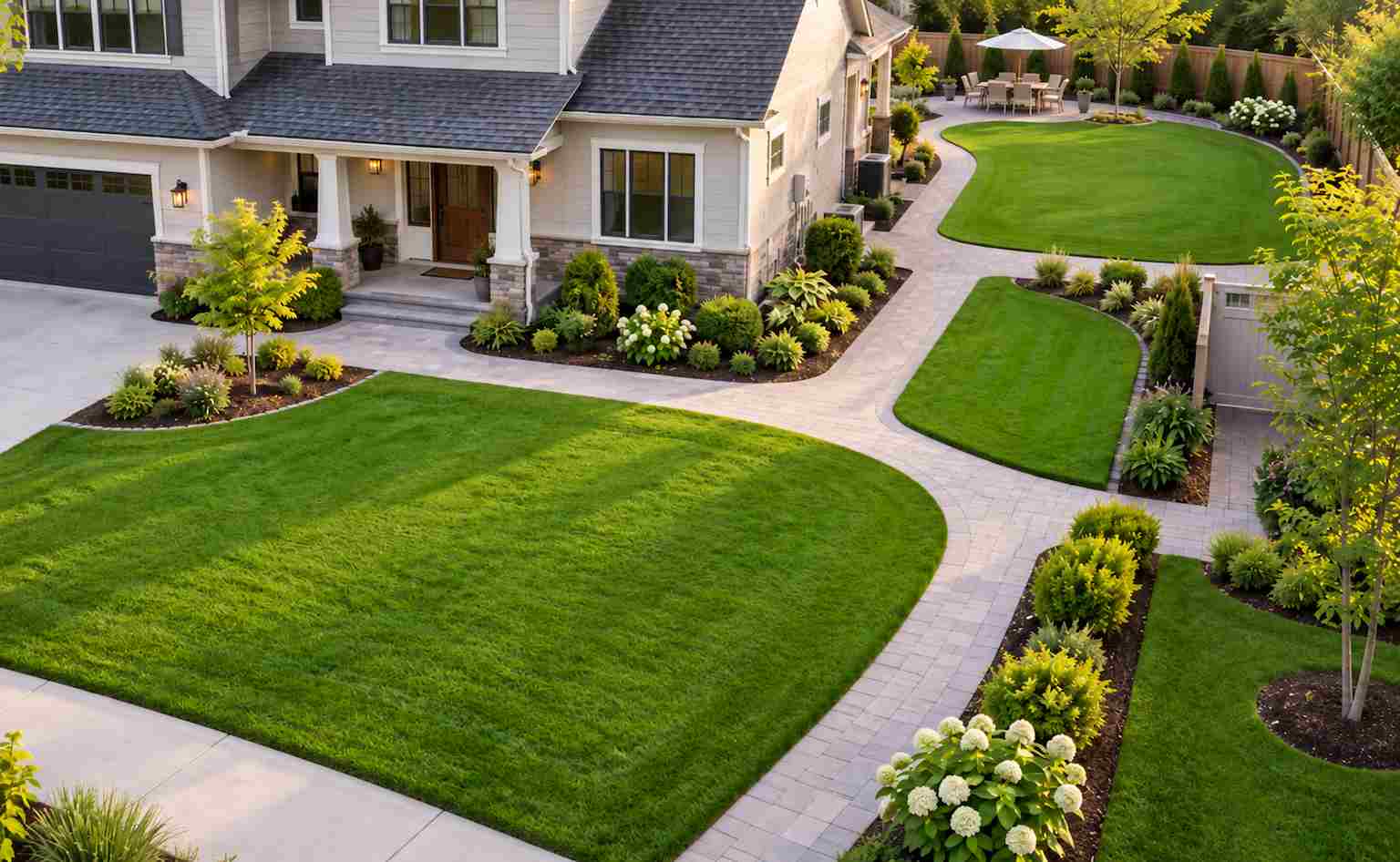
Multi-Zone Lawns
Front, back, side, and separated grass areas make route planning more important than total area alone. A 0.5-acre lawn split into four zones can be harder to manage than one open 0.5-acre rectangle because the mower must move between sections and maintain separate boundaries.
A GPS lawn mower can use mapped areas and planned routes to manage this kind of layout more efficiently.
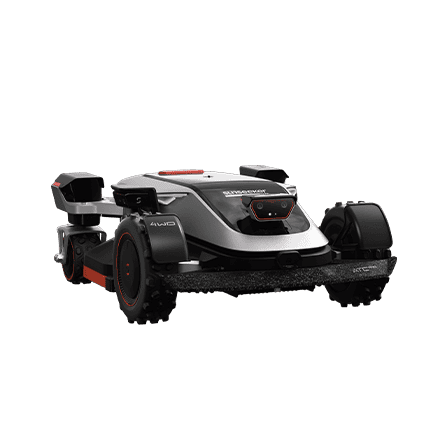 Sunseeker fit: X9
Automatic mapping · Smart route planning · Multi-zone control
Key Lawn Mower Features to Know
After lawn size and terrain narrow the field, compare the features that affect everyday mowing. The right specs can reduce mowing time, physical effort, and routine upkeep without adding features you do not need.
Power Source
Power source shapes runtime, noise, maintenance, and how quickly you can get back to mowing. When comparing an electric vs gasoline lawn mower, consider the mowing area, access to charging or fuel, and how much engine care you want to handle.
- Gas: suits longer sessions and allows quick refueling, but needs fuel, oil, and more engine care.
- Battery: quieter, easier to start, and lighter on routine maintenance. Runtime and charging time matter more on larger lawns.
- Corded electric: simple and lightweight for compact lawns, although cable reach limits where you can mow.
Cutting Width
Cutting width affects how much grass the mower covers with each pass. Walk-behind mowers commonly use decks around 16–22 inches, while riding and zero-turn models can exceed 40 inches.
A wider deck saves time on open lawns, but it needs more room around gates, beds, trees, and narrow passages. Smaller decks usually give better control in compact or irregular yards.
Drive and Operator Effort
Drive type affects how much physical work the operator has to provide. The practical difference in self-propelled vs push mower choices is often less about cutting ability and more about how much effort a full mowing session requires.
- Push mower: the operator provides all forward movement.
- Self-propelled mower: powered wheels reduce effort on longer routes and mild slopes.
- AWD models: provide extra traction on hills, uneven ground, and loose surfaces.
Cutting Height and Grass Handling
A mower should offer enough height adjustment to suit grass growth through the season. Clipping management matters too, and a mulching lawn mower is useful when you want finely cut clippings returned to the lawn instead of collected.
- Bagging: collects clippings and leaves for a cleaner finish.
- Side discharge: clears clippings quickly during heavier growth.
- Mulching: chops clippings more finely so they can fall back into the lawn.
Maintenance and Storage
Regular lawn mower maintenance affects cutting quality, reliability, and how long the machine remains practical to own. Storage needs also vary between gas, battery, and robotic models.
- Keep blades sharp and inspect them for damage.
- Remove grass buildup from the deck and wheels.
- Follow the correct battery or engine care routine.
- Store the mower in a dry, protected place between seasons.
Robot Lawn Mowers: A Smarter Way to Mow
Robot lawn mowers change the mowing routine rather than simply replacing one type of mower with another. Instead of waiting for the grass to grow and completing one long session, they maintain the lawn through frequent scheduled cuts, recharge automatically, and continue working with much less hands-on time.
How Do Robot Lawn Mowers Work?
A robot lawn mower combines electric cutting, rechargeable power, navigation, sensors, and software to mow automatically. The system still follows a simple logic: define the work area, move through it accurately, cut efficiently, avoid problems, and return to charge when needed.
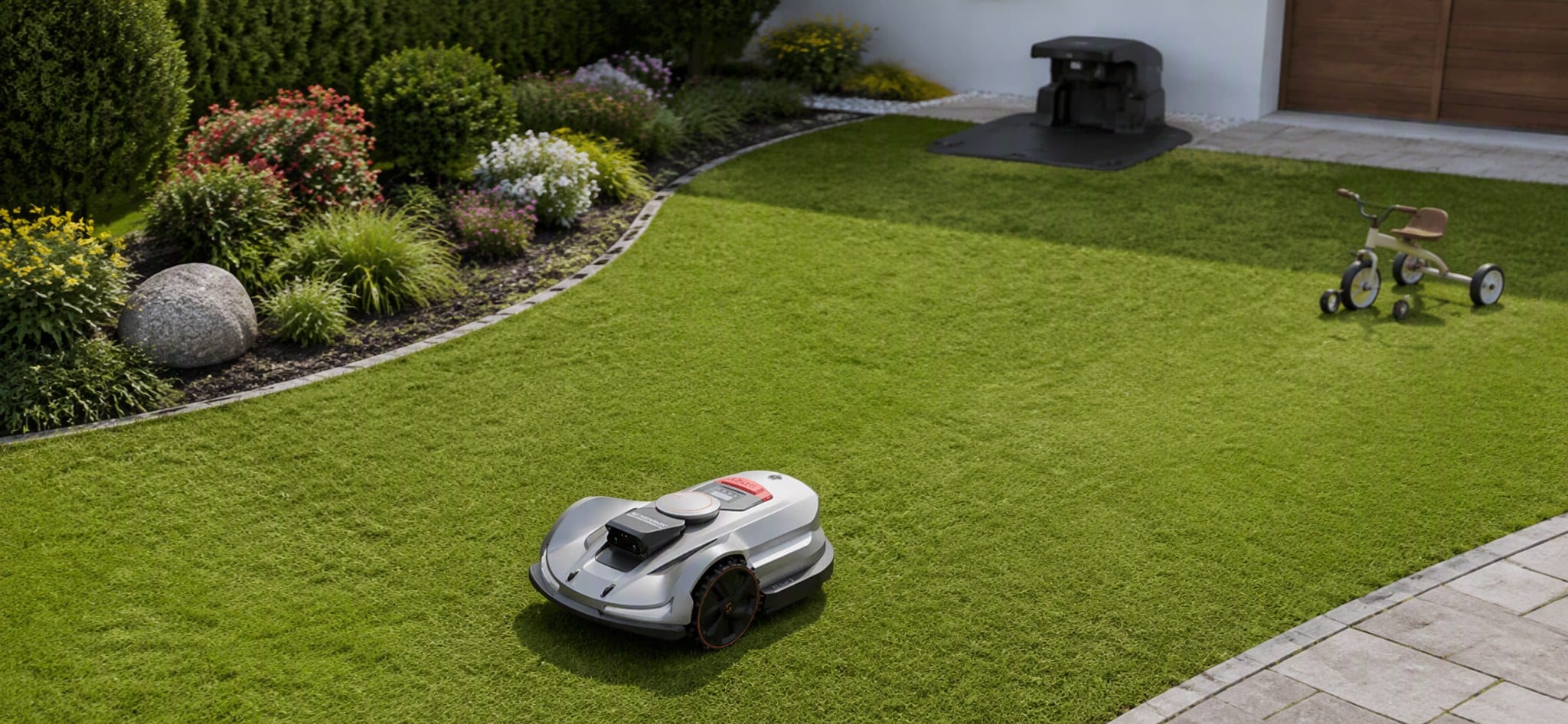

Defining the Mowing Area
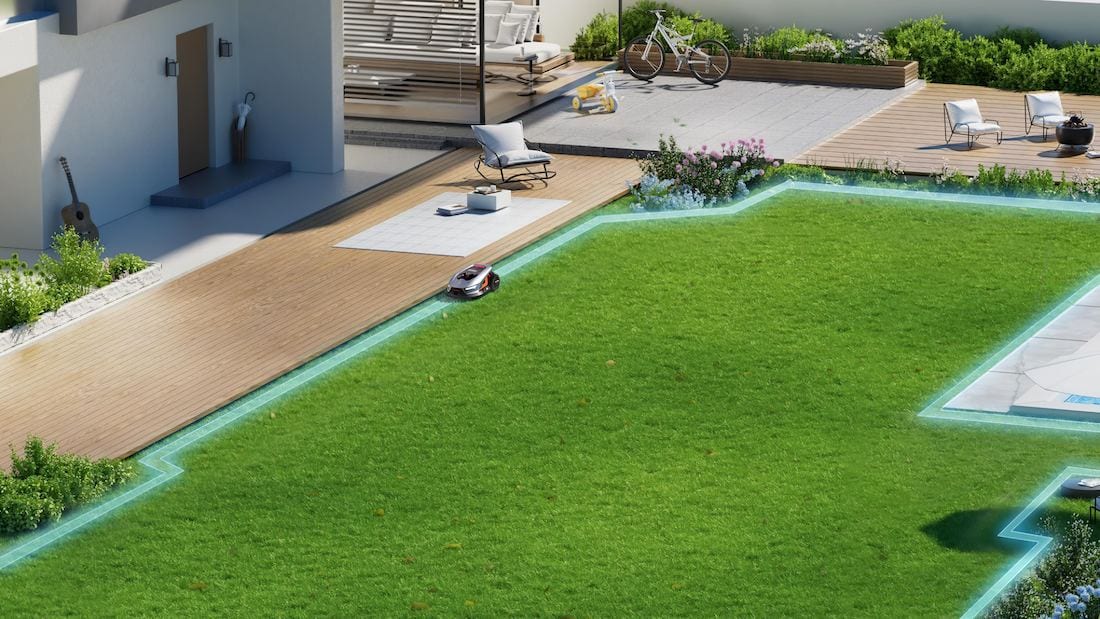
The mower needs a clear working area before cutting begins. Traditional systems use perimeter wires, while wire-free systems create virtual boundaries using RTK, cameras, or LiDAR. Digital maps also allow users to mark no-go zones around flower beds and pools, keeping the mower within its assigned mowing area.
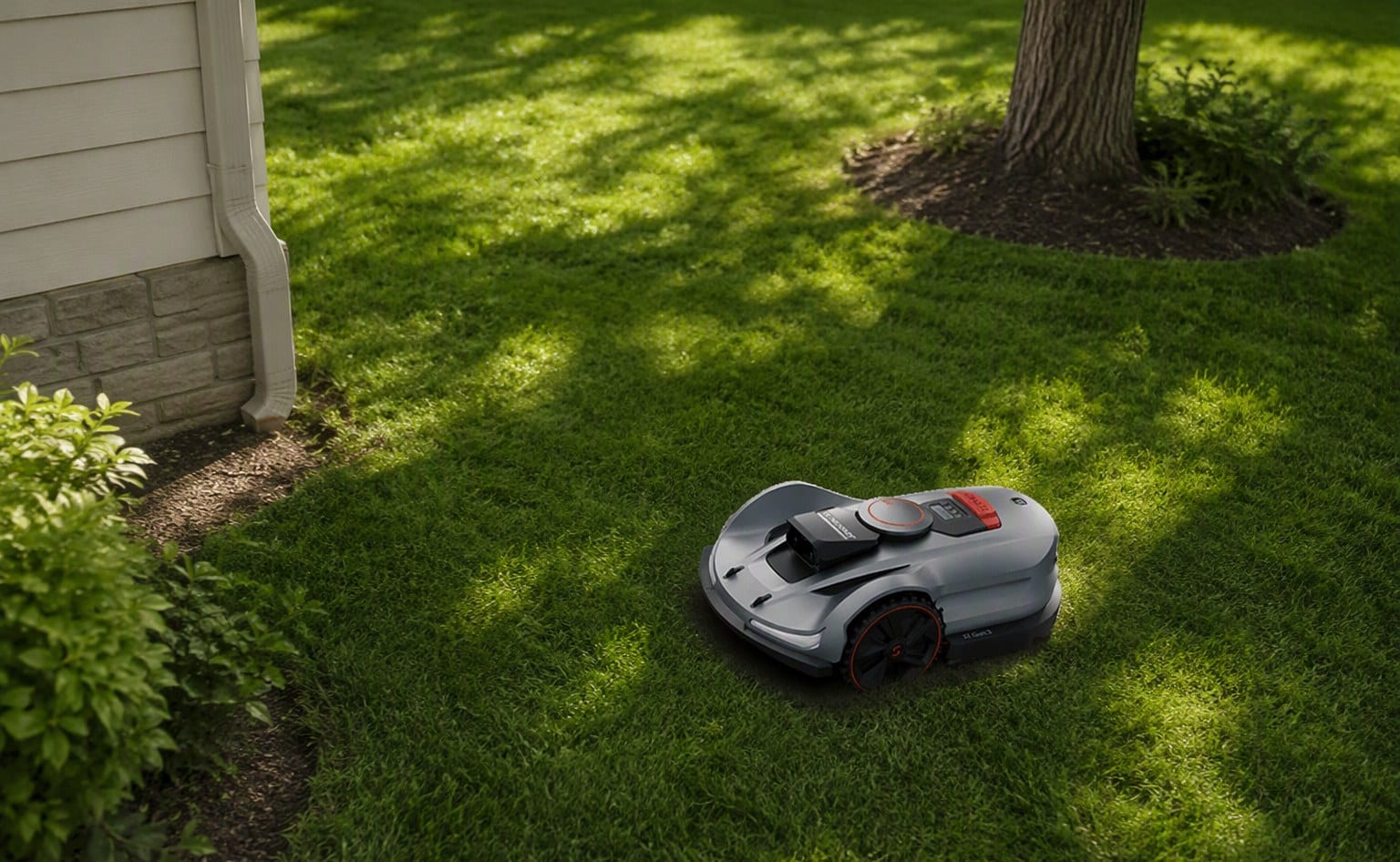
Navigating the Lawn
Navigation helps the mower track its position as it moves. RTK uses corrected satellite signals for precise positioning, while VSLAM uses camera images to recognize surrounding features. LiDAR measures distances and builds a 3D map, helping the mower maintain accurate positioning around trees, buildings, and other obstacles.
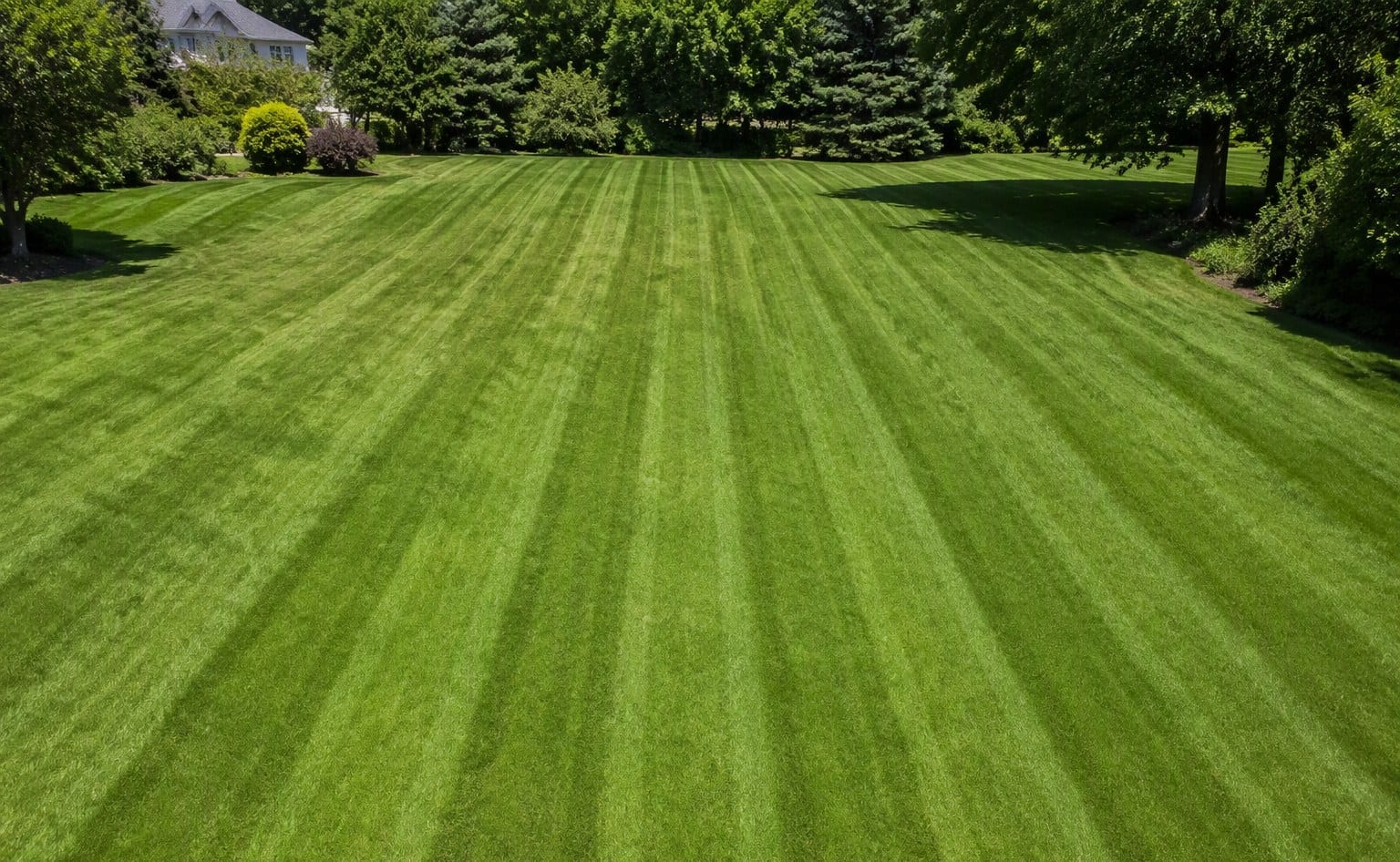
Path Planning
Smart path-planning software calculates efficient mowing routes based on the lawn’s shape and boundaries. It can divide complex lawns into smaller zones and follow parallel cutting paths to reduce overlap. When obstacles interrupt the route, the mower adjusts its path to avoid missed areas and unnecessary travel.
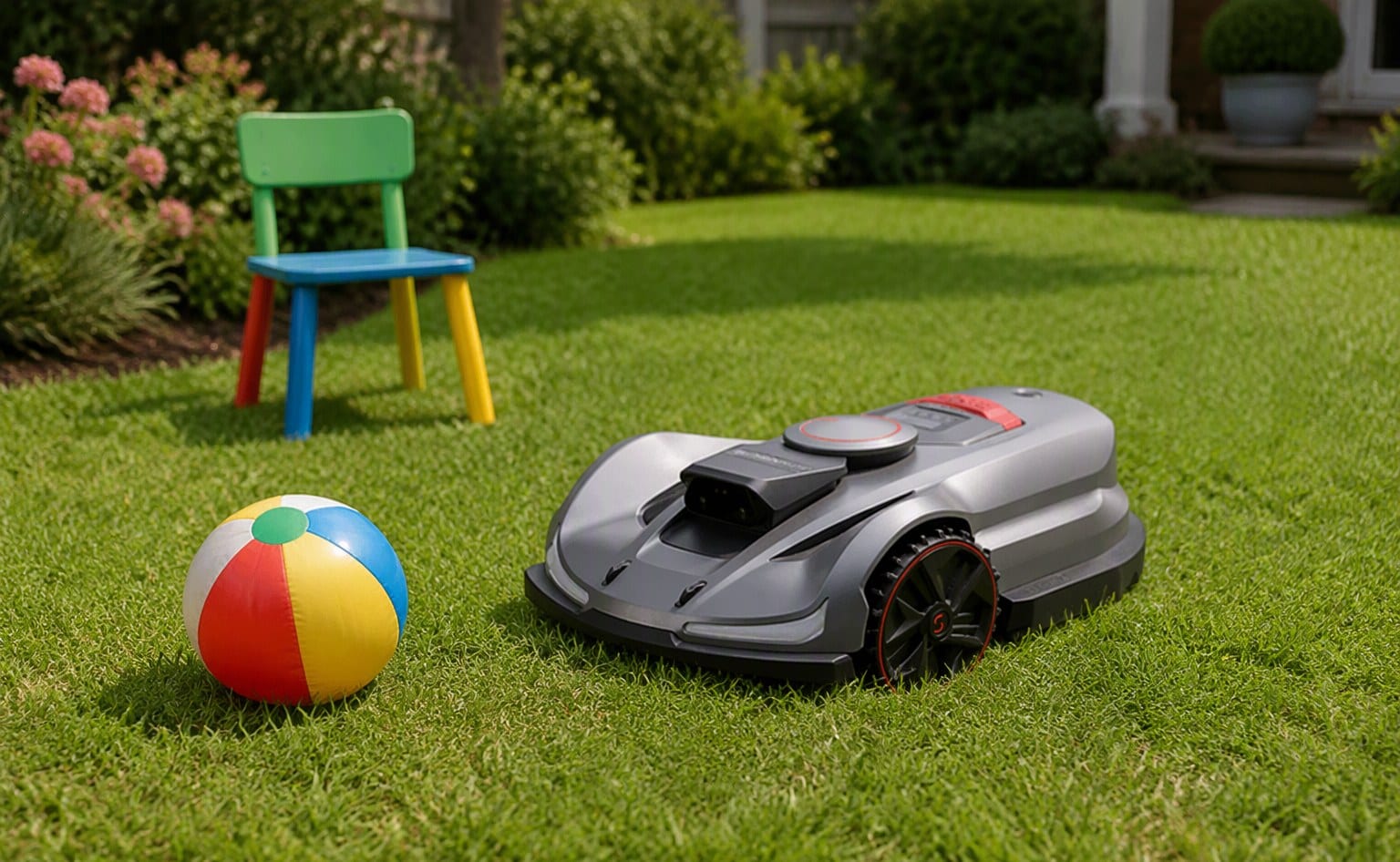
Detecting and Avoiding Obstacles
AI cameras recognize objects such as toys, garden furniture, and animals, while LiDAR and depth sensors measure their distance and position. The mower processes this information to slow down, stop, or change direction. Bump sensors and drop detection provide additional protection around unexpected obstacles and sudden changes in ground level.
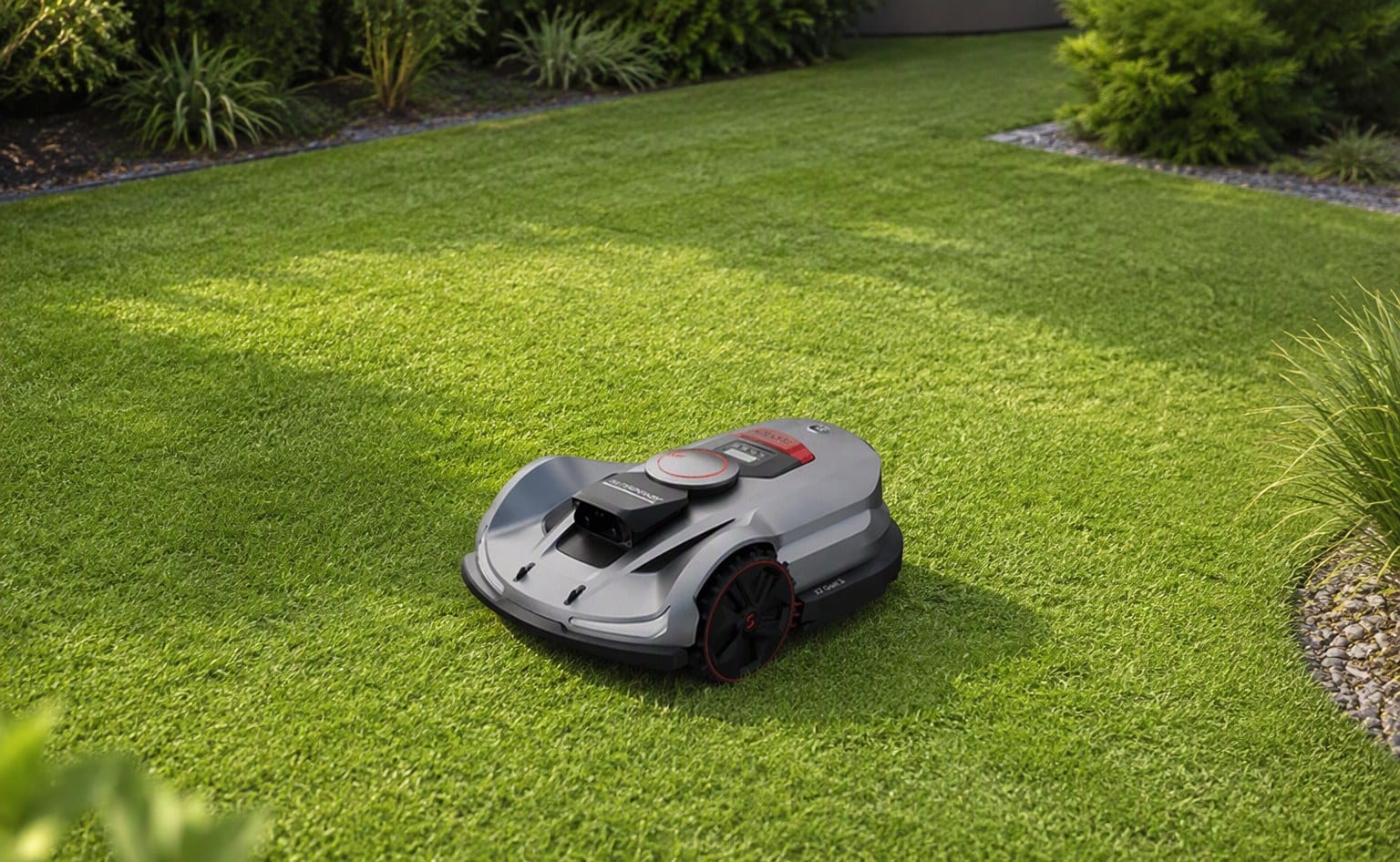
Cutting and Mulching the Grass
An electric motor spins the cutting blades beneath the mower as it follows its planned route. Adjustable cutting heights control grass length, while floating cutting systems help maintain an even cut on uneven ground. Frequent mowing produces fine clippings that decompose naturally, returning nutrients to the soil.
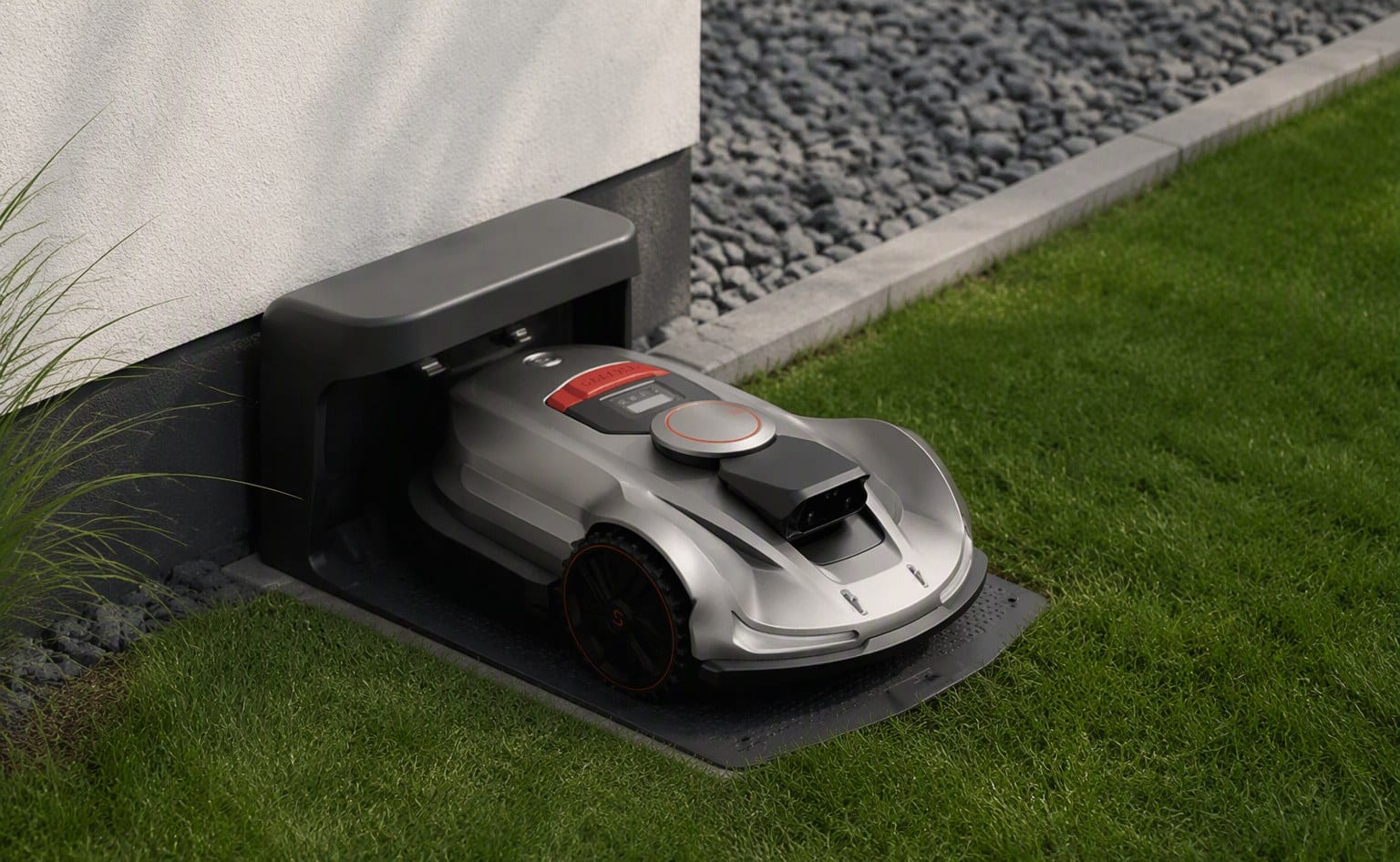
Returning to Charge
The mower monitors its battery level throughout each session. When power runs low, it calculates a return route and navigates back to its charging station. Docking sensors help align the charging contacts. After recharging, advanced models can resume mowing where they stopped, reducing repeated passes over completed areas.
How Robot Mowing Changes the Routine
Traditional mowing takes time and hands-on effort each time the grass needs cutting. A robot mower handles shorter, more frequent cuts on a set schedule, returning to its charging station when needed. The main change is how much time homeowners spend maintaining the lawn.
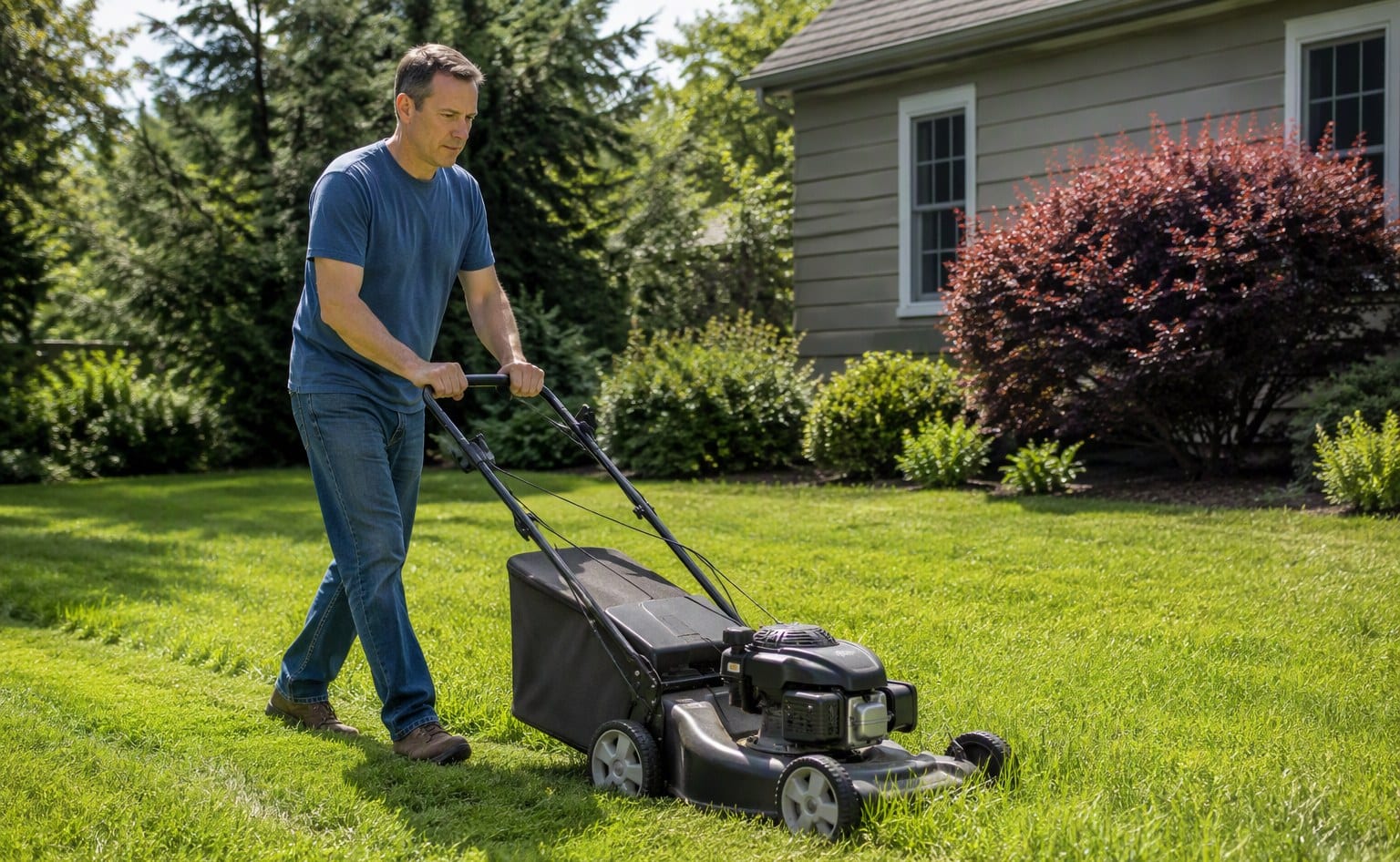
Traditional Mowing
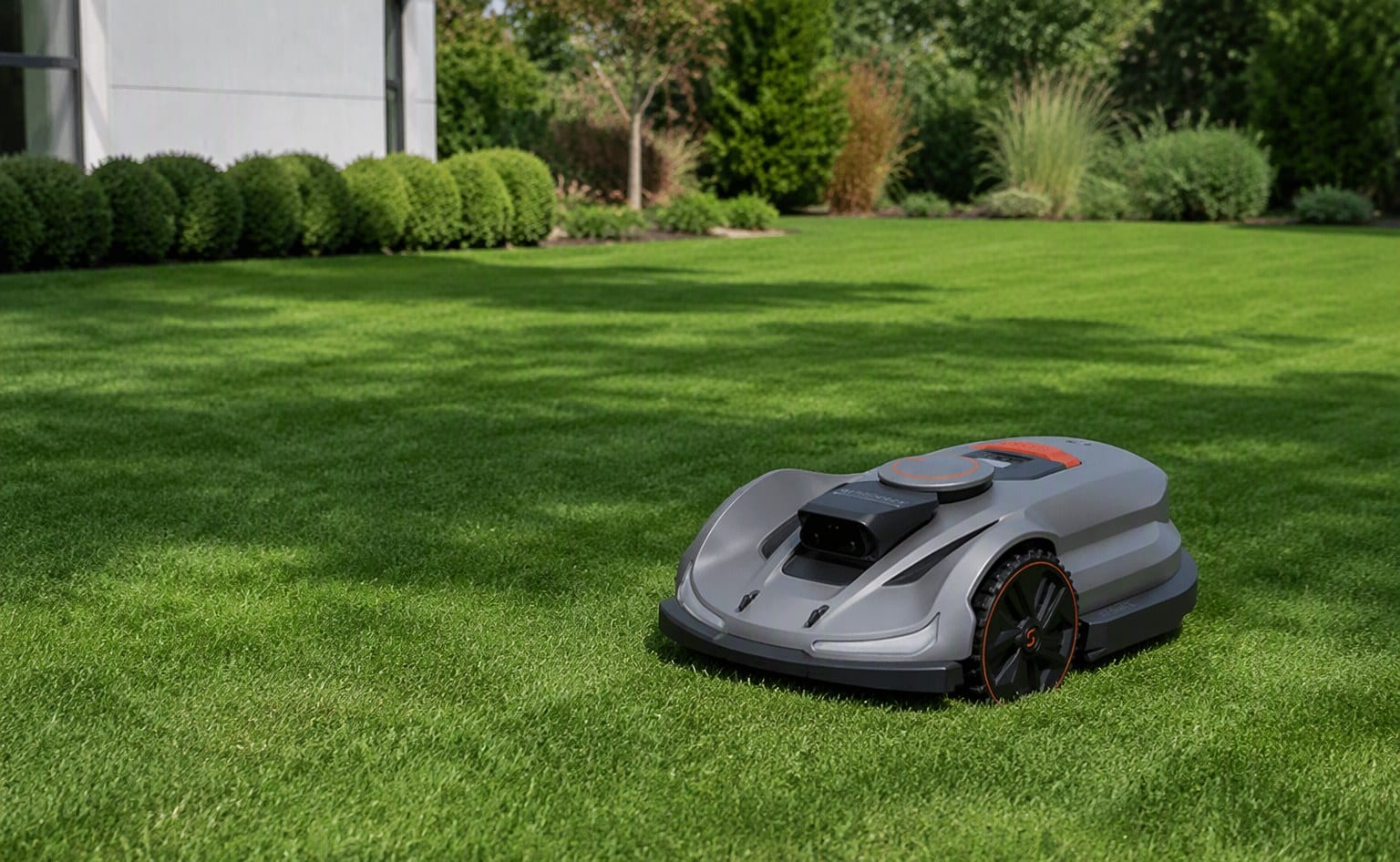
Robot Mowing
What Matters Most in a Robot Lawn Mower
A good robot mower should fit the way your yard actually works, not just look strong on paper. Focus on how confidently it can move through the space and handle the areas that usually make mowing harder.
Coverage
Rated mowing area
Tap to see the buying ruleSlope Ability
Maximum slope in % or °
Tap to see the buying ruleNavigation
RTK, LiDAR, vision, or hybrid
Tap to see the buying ruleObstacle Detection
Object recognition and avoidance
Tap to see the buying ruleEdge Performance
Distance left beside borders
Tap to see the buying ruleZone Control
Separate maps, schedules, and settings
Tap to see the buying ruleWho Is a Robot Lawn Mower Best For?
Robot lawn mowers are a good choice for homeowners who want a tidy lawn without spending hours mowing it themselves. They are especially useful for regular maintenance, keeping grass at a consistent height with frequent, light cuts. They work best for:
Busy homeowners: Set a mowing schedule and let the robot handle routine grass cutting, freeing up time for other activities.
Owners of medium to large lawns: Reduce the time spent mowing long routes, especially when the lawn needs cutting every week during the growing season.
People who want a consistently neat lawn: Frequent trimming helps maintain an even grass height without waiting for the lawn to look overgrown.
Anyone who finds mowing physically demanding: Avoid the repeated pushing, walking, and steering involved in conventional mowing.
Households that prefer quieter lawn care: Battery-powered robot mowers generally produce less noise than gas-powered machines.
A good fit also requires a practical charging location, accessible mowing areas, and a model rated for the lawn’s size and steepest slopes. Robot mowers are designed for regular upkeep, not clearing heavily overgrown grass.
Find a Sunseeker Robot Mower for Your Lawn
Sunseeker robot mowers are built to handle different lawn sizes, layouts, and terrain. Some models focus on navigating tight spaces and obstacles, while others offer stronger traction for uneven ground or greater mowing capacity for large properties. The key is finding a model that matches your yard’s main challenges.
X4
For complex and signal-challenged yards- 360° 3D LiDAR + Vision AI
- No perimeter wire or antenna
- Handles narrow passages under 28 in
X5
For uneven and rough lawns- AWD traction
- Independent front suspension
- Floating cutting disc
X7 / X7 Plus Gen 2
For larger lawns and steep slopes- X7 Plus covers up to 1.5 acres
- Tri-wheel AWD
- Handles slopes up to 70% (35°)
X9 / X9 Plus
For large estates and demanding terrain- Covers up to 3 acres (X9) or 6 acres (X9 Plus)
- Handles slopes up to 90% (42°)
- Fully automatic mapping
Lawn Mower Cost & Ownership
Lawn mower costs include more than the purchase price. Push, riding, and robotic models vary in upfront cost, while fuel or electricity, replacement parts, servicing, and routine maintenance add to the total. Looking at all three cost areas gives a more realistic budget.
How Much Does a Lawn Mower Cost?
Most homeowners spend about $300–$800 on a new mower, while riding, zero-turn, and advanced robotic models can cost several thousand dollars. The better question is not which mower is cheapest, but which type can handle the lawn efficiently without creating higher running or maintenance costs later.
Ongoing Fuel and Electricity Costs
Ongoing energy costs vary by power source. Electric options are the least expensive to run, while gas mowers have the highest fuel costs.
| Mower / Power Type | Typical Ongoing Energy Cost |
|---|---|
| Manual reel | Near $0 |
| Battery mower | Under $10 electricity / season |
| Gas push mower | $30–$80 fuel / year |
| Riding / zero-turn | $120–$300 fuel / year |
| Robot mower | $10–$20 electricity / year |
Maintenance Costs
Ownership costs also include routine servicing, blade care, and wear parts. Gas mowers usually need the most regular service, while battery and robot mowers remove much of the engine-related upkeep. Annual maintenance often lands around $45–$200, depending on the mower type and condition.
Lawn Mower Maintenance
Regular maintenance improves cutting performance, reduces unexpected problems, and can extend mower life. The exact routine depends on mower type, but several principles apply across most machines.
Cleaning
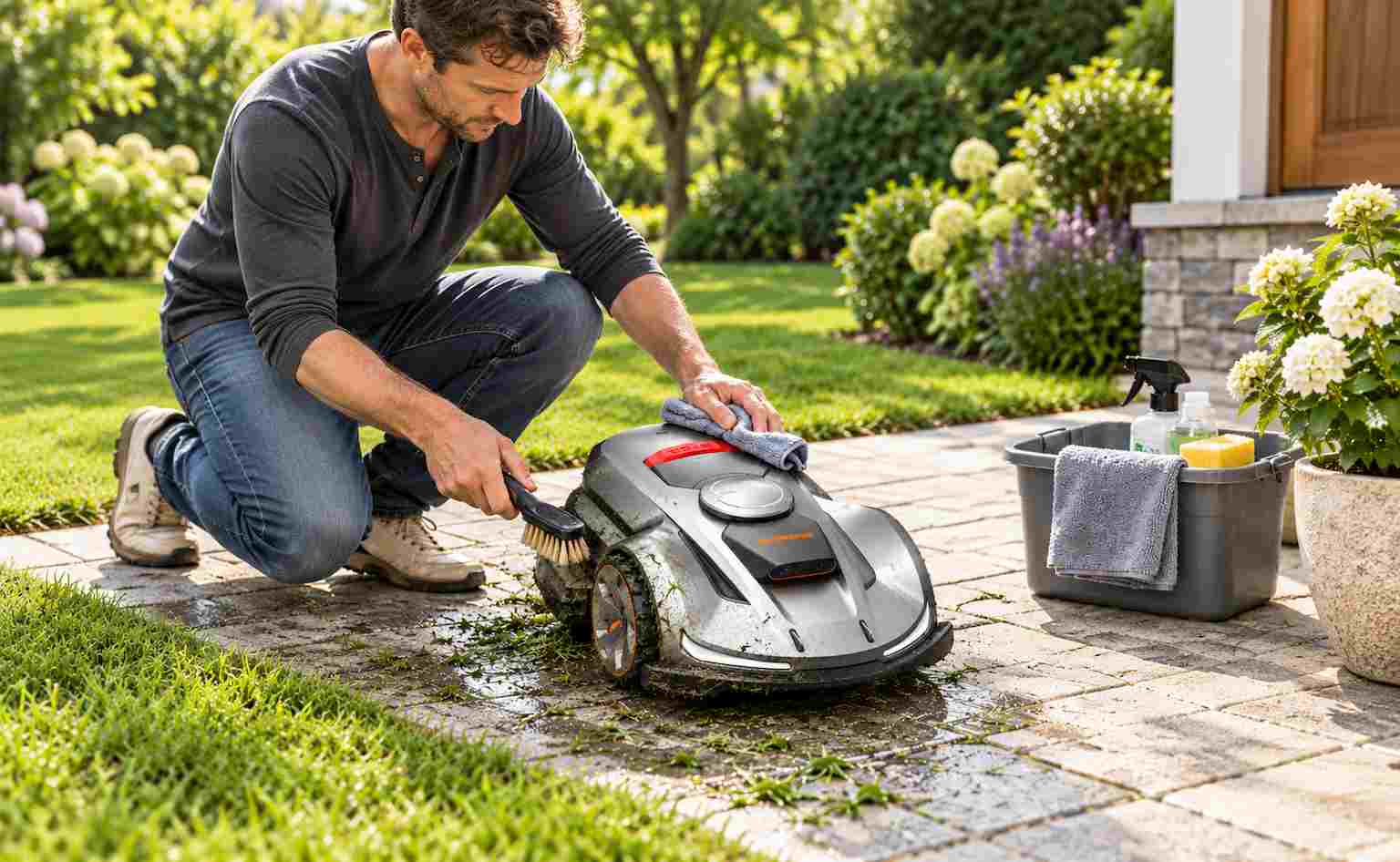
Remove grass clippings and packed debris from the deck, wheels, and discharge area after mowing. Built-up grass can hold moisture and restrict airflow.
Wipe robot mower cameras, sensors, and charging contacts with a soft cloth so dirt does not interfere with navigation or charging.
Let the mower dry before storage. Wipe away moisture after mowing or cleaning, and check if your lawn mower can get wet before rinsing it. Weather resistance does not always make hose washing safe.
Lawn Mowing Basics
Good mowing is shaped by cutting height, timing, grass condition, and what happens to the clippings afterward. A few basic habits can keep the cut more even and reduce unnecessary stress on the lawn.
 Technique
How to Mow a Lawn
Mow in straight, slightly overlapping passes and change direction from time to time. Avoid removing too much grass in one cut, since a heavy cut can leave the lawn stressed and uneven.
Read full guideFAQs About Lawn Mowers
For many residential lawns under about 0.5 acre, a 20 to 22 inch self propelled battery mower offers a useful balance of maneuverability, low maintenance, and mowing speed. Flat lawns can use a simpler push mower. Larger properties often justify a riding mower, zero turn, or higher capacity robot mower because the time saved becomes more important.
Battery mowers are often the easier choice for small and medium home lawns because they are quiet, simple to store, and need little routine service. Gas still suits long mowing sessions, heavy growth, or owners who want quick refueling. For battery models, check rated coverage and battery cost rather than looking at voltage alone.
A 18 to 22 inch walk behind mower suits many lawns under 0.5 acre. Around 0.5 to 1 acre, a high capacity self propelled mower or compact rider can reduce mowing time. Above 1 acre, 42 to 54 inch riding or zero turn decks become common. Tight gates, slopes, and obstacles may call for a narrower machine even on a large property.
A well maintained residential mower can remain useful for many years, and riding machines often stay in service for a decade or more. Engine hours, rust, storage, parts support, and service history matter more than age alone. On battery mowers, the battery may need replacement before the mower body reaches the end of its useful life.
Late summer and fall often bring clearance pricing as retailers reduce seasonal inventory, while early spring offers the widest model selection. The better time to buy is when the right mower is available at a good price, not when a discount forces you into the wrong deck size, battery platform, or drive system.