








FAQs
5/18/2026
Contents
Products
Residential Lawns

Explore
Where to Buy


A battery-electric mower is the better fit for most regularly maintained residential lawns. Choose gas when you routinely cut tall, dense grass or need long mowing sessions without charging. The deciding question is whether the included batteries can finish your usable lawn area with time to spare.
Battery mowers now compete closely with gas models on everyday cutting, so the choice is no longer simply "power versus convenience." The right electric vs. gas push mower decision depends on your normal mowing time, grass condition, maintenance habits, storage, and total ownership cost. This guide puts those practical factors first.
|
Factor |
Battery-Electric |
Gas |
Factor |
Battery-Electric |
Gas |
|
Best fit |
Regularly maintained home lawns |
Long sessions and frequently overgrown grass |
Best fit |
Regularly maintained home lawns |
Long sessions and frequently overgrown grass |
|
Starting |
Push-button |
Pull cord or electric start |
Starting |
Push-button |
Pull cord or electric start |
|
Runtime |
Limited by battery capacity |
Continues after refueling |
Runtime |
Limited by battery capacity |
Continues after refueling |
|
Maintenance |
Blade, deck, battery, and charger care |
Blade and deck plus fuel, oil, filter, and spark-plug service |
Maintenance |
Blade, deck, battery, and charger care |
Blade and deck plus fuel, oil, filter, and spark-plug service |
|
Noise |
Quieter in normal operation |
Louder engine noise |
Noise |
Quieter in normal operation |
Louder engine noise |
A gas mower uses an internal-combustion engine to drive the blade. Refueling is quick, which makes gas useful when the job runs for hours or the mower repeatedly works through heavy growth. The tradeoff is engine noise, direct exhaust, fuel storage, and routine service.
A cordless electric mower uses a lithium-ion battery and electric motor. It starts with a button and eliminates oil changes, spark plugs, and fuel-system maintenance. Voltage alone does not tell you how long or how well it will mow; battery capacity, motor and deck design, self-propel use, and grass conditions all affect results.
Several factors can affect how electric and gas push mowers perform in everyday lawn care.
For weekly mowing on dry, established turf, the best electric lawn mower for your needs can cut, mulch, and bag as effectively as a comparable gas model. Consumer Reports has found that the best battery mowers can match or outperform gas models in its cutting tests. Compare model-level results rather than assuming every mower using one power source performs alike.
Gas retains a practical advantage when grass is routinely tall or dense and the mower must sustain heavy cutting for a long session. Battery runtime falls faster under heavy load, in self-propel mode, or when bagging thick growth. Neither type should be chosen for mowing wet grass: wet blades bend and clump, clog the deck, and reduce traction.
Battery-electric and gas push mowers differ mainly in how long they can operate continuously. An electric push mower relies on battery capacity, so its mowing area is limited by the included battery runtime and charging time. They are usually a good choice for small to medium-sized residential lawns that can be completed in one session.
Gas mowers can continue working as long as fuel is available, making them more suitable for larger lawns or situations where mowing takes longer, especially when grass is tall or dense.
For most homeowners, the key question is not the total lawn size, but whether the mower can finish the actual mowing area on a single charge. If the battery runtime matches your regular mowing routine, an electric mower can provide the same convenience without the need for refueling.
Both mower types need a sharp blade, a clean deck, wheel inspection, and dry storage. A battery mower also needs proper battery storage and clean charging contacts. Follow the manufacturer's temperature and charge-level guidance, and do not leave the battery on the mower for long-term storage.
A gas mower adds oil, air-filter, spark-plug, fuel-system, and seasonal-storage tasks. Service intervals vary by engine, so use the owner's manual rather than a universal schedule. Owners who pay a shop for annual service should include that expense when comparing costs.
Compare the complete five-year cost, not the shelf price. For electric, include the mower kit, electricity, a spare battery if required, and a possible replacement battery. For gas, include the mower, gasoline, oil, filters, spark plugs, fuel-storage supplies, and paid service or repairs.
Electric usually costs less to operate and maintain, but an expensive second battery or future electric lawn mower battery replacement can affect the total five-year cost. Battery-platform compatibility improves value: if the same batteries power your trimmer, blower, or other tools, you may avoid buying duplicate packs and chargers.
Battery-powered lawn mower models are generally quieter and produce no direct exhaust at the point of use, which matters in close neighborhoods and during early or late mowing. Gas mowers are louder and release exhaust while operating. Follow the manufacturer's hearing-protection guidance for either type instead of relying on broad decibel claims.
Do not assume every electric mower is lightweight. Steel decks, dual batteries, and self-propel systems add weight. Compare operating weight with batteries installed, then check handle comfort, turning effort, storage position, and how easily the mower moves when the drive is off.
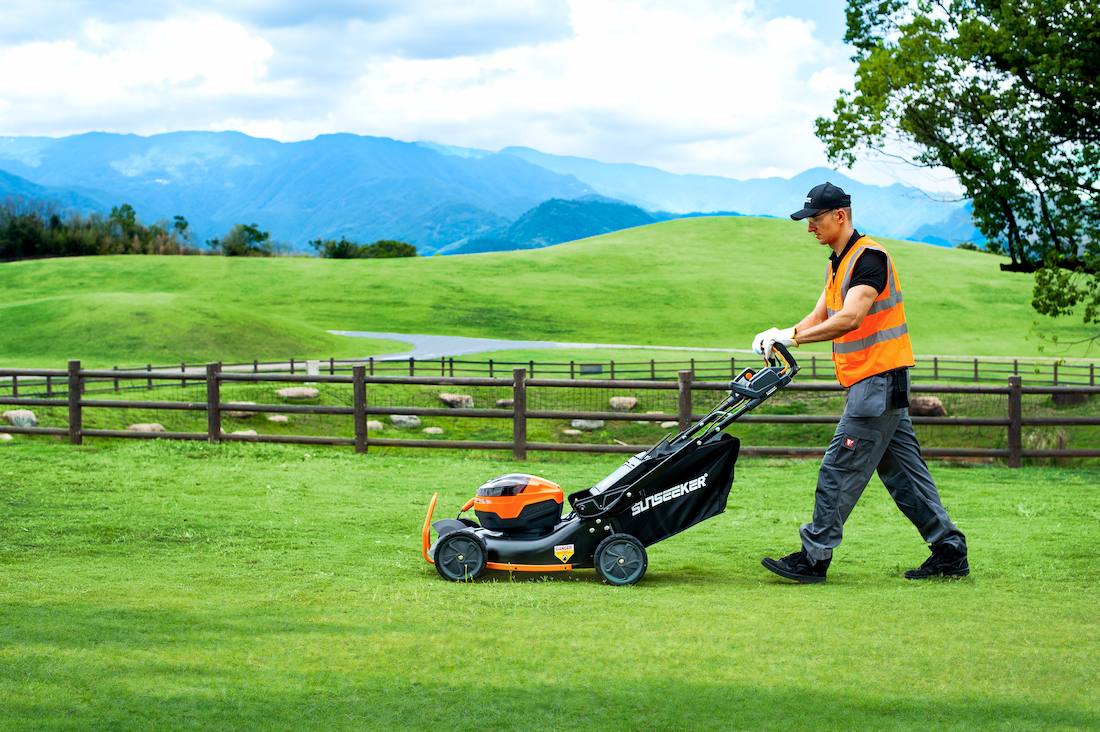
With advancements in battery technology, electric mowers have become a practical choice for many homeowners these days. But gas models still have their place. To decide which fits best, consider these guidelines.
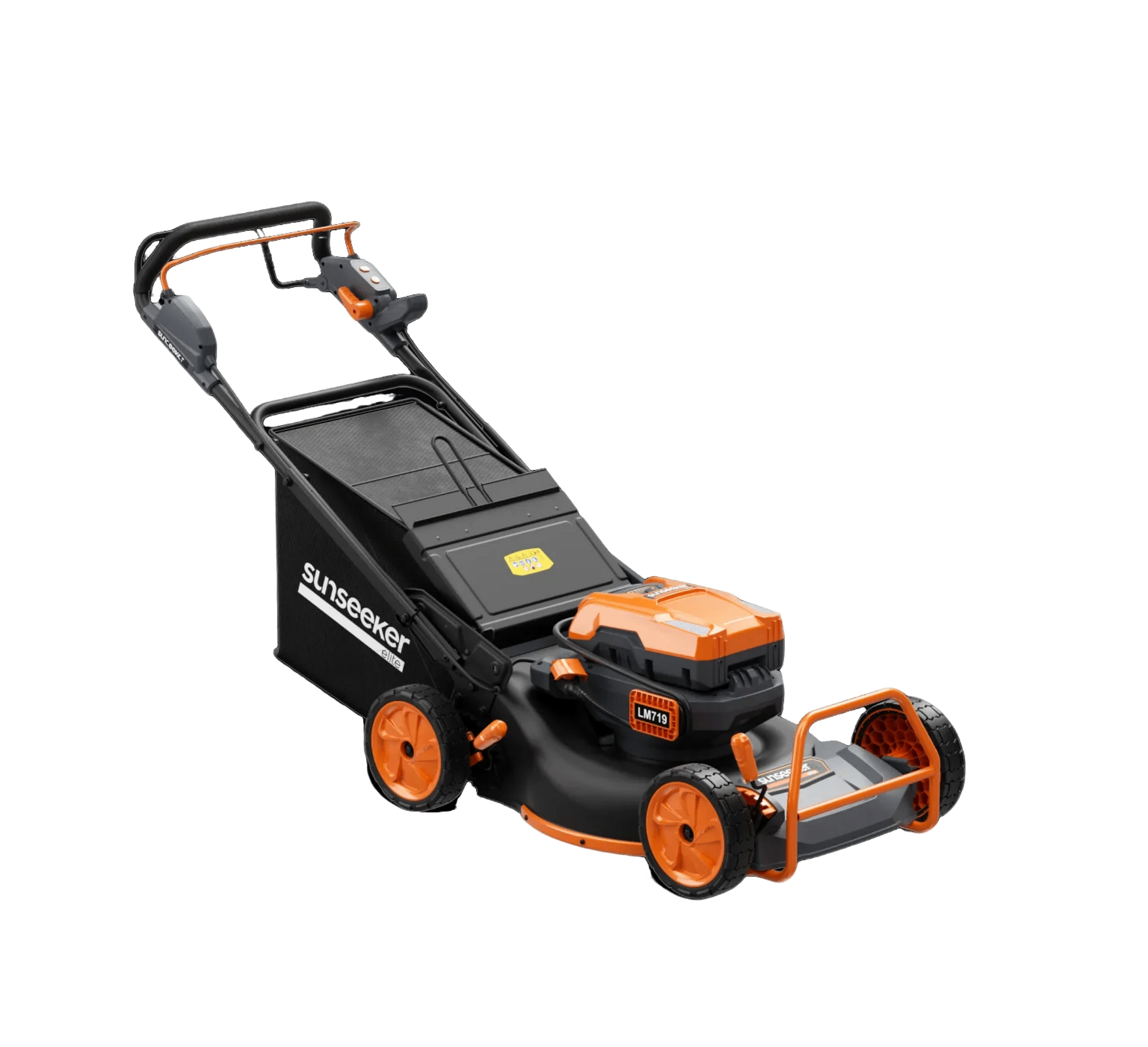
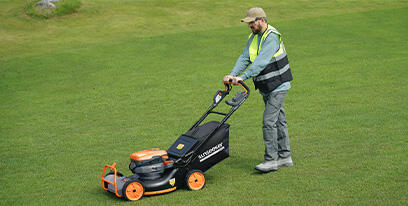
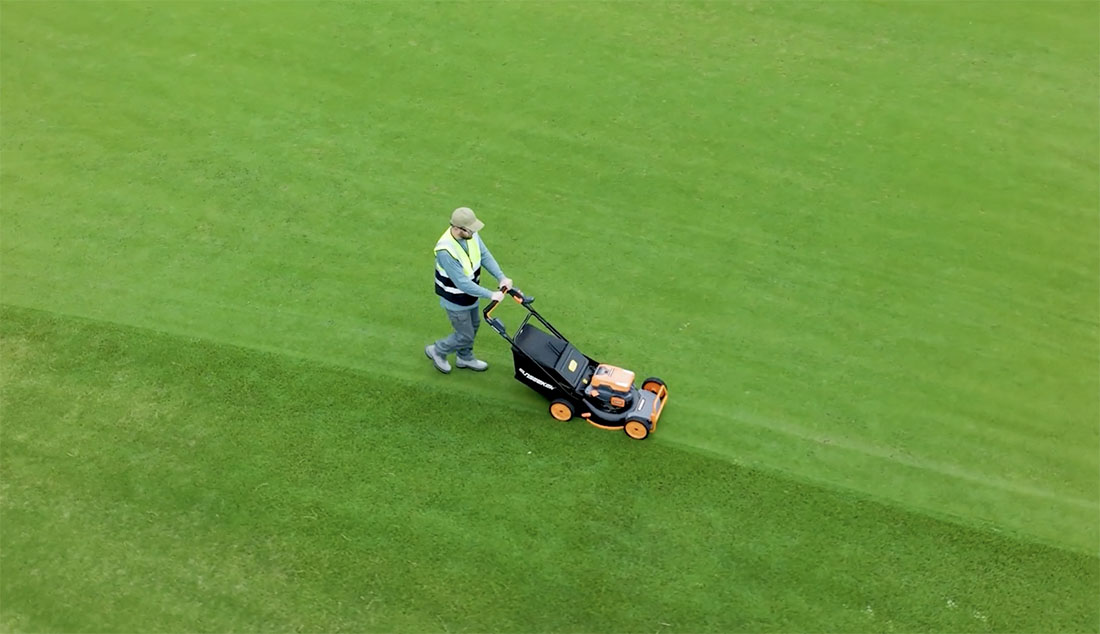
For shoppers leaning electric, Sunseeker's push mower range lists a 3000W motor, self-propelled drive, steel decks, cutting widths up to 22 inches, and mulching, rear-discharge, and bagging options. Confirm the exact model, included battery configuration, runtime, weight, and warranty before matching it to your lawn.
The electric vs. gas push mower choice comes down to workload and ownership effort. Battery-electric suits most regularly maintained residential lawns when the included runtime covers the job. Gas remains useful for long sessions and repeated heavy cutting. Compare the exact mower's test results, full battery kit, maintenance needs, and five-year cost rather than choosing by voltage, engine size, or lawn acreage alone.
The best battery mowers can match or outperform gas models in normal cutting, mulching, and bagging tests. Gas remains better suited to extended heavy-load work when grass is repeatedly tall or dense. Compare independent results for the exact models instead of treating either power source as uniformly stronger.
Consumer Reports found an average of roughly 45-50 minutes among tested battery walk-behind mowers. Actual runtime depends on battery capacity, grass height and density, terrain, cutting mode, and self-propel use. Select a kit that provides at least 20% more runtime than your normal mowing session.
Wait until the grass and surface soil are dry, regardless of power source. Wet grass bends, clumps, and can clog the deck, producing an uneven cut. Saturated soil also increases rutting and loss of traction. More motor or engine power does not remove those problems.
Neither power source guarantees a longer service life. Battery mowers have fewer engine-maintenance items, while gas mowers may remain repairable for years where parts and service are available. Compare the mower warranty, battery warranty, replacement battery price, deck material, and local parts support.