








FAQs
8/14/2026
Contents
Products
Residential Lawns









Explore
Where to Buy


Most lawns need about 1 to 1.5 inches of total water per week, including rainfall. The exact run time depends on sprinkler output, soil type, season, and grass condition. Instead of trusting a fixed minute count, measure the water depth, check soil moisture, and adjust the schedule before the lawn turns dry or soggy.
A lawn can look thirsty even when the sprinkler has been running for a long time. The opposite can also happen: the surface looks fine, but the soil stays wet for days, and the roots start to struggle. That is why the question is not only how long to water the lawn, but how much water actually reaches the root zone.
This blog will take the guesswork out of lawn watering. You can learn how much water your lawn needs each week, sprinkler run times, easy measuring tests, and warning signs of too much or too little water. We will also introduce how new grass, summer heat, and different sprinkler types change the schedule.
A useful starting point is 20 to 45 minutes per zone, but that number is only a rough range. Some spray heads can apply a half inch of water in 15 minutes, while a slow rotor may need close to an hour. The better goal is to water deeply enough to moisten the top 4 to 6 inches of soil.
For an established lawn, aim for deeper watering once or twice per week instead of a light spray every day. Deep watering encourages roots to grow lower into the soil, which helps grass handle heat, foot traffic, and short dry spells. If you are asking, “How long should you water your lawn?” start with the sprinkler type, then confirm the result with a catch can test.
New seeds need a different routine. Keep the seedbed damp, not flooded, with 5 -10 minute sessions two or three times per day. Once seedlings appear, water a little deeper and less often so young roots chase moisture below the surface.
If you have wondered, “How long should I water my lawn?” use these baselines, then adjust after checking the soil. A lawn on sandy soil may need shorter, more frequent sessions because water drains fast. A clay-heavy lawn may need cycle-and-soak watering, such as 15 minutes on, a pause, and another 15 minutes later, to prevent runoff.
Most established lawns grow best with about 1 inch of water per week in mild weather and up to 1.5 inches during hot, dry periods. This total includes rain, irrigation, or both. Grass type, soil texture, shade, slope, and local weather can push the target higher or lower.
A simple weekly plan is to apply about 0.5 inch of water per session, twice per week. In extreme heat, a third session may help, but it should still be based on soil moisture rather than habit. If a rain gauge shows that a storm has already given the lawn 0.75 inch of water, your sprinkler may only need to supply another 0.25 to 0.5 inch that week.
Cool-season grasses, such as tall fescue and Kentucky bluegrass, often need steady moisture during spring and fall growth. Warm-season grasses, such as Bermuda, zoysia, and St. Augustine, tolerate heat better but still need moisture during active summer growth. Dormant grass can survive on less water for a short time, but repeated drought stress can thin the lawn and open space for weeds.
For new lawns, the weekly total matters less than steady surface moisture at first. Grass seed can fail if the top layer dries before germination. After the first mow, gradually shift toward the deeper weekly schedule used for established turf. This is also the point where mowing height, shade, and soil preparation start to influence how often to water new lawn areas.
Two lawns can both run sprinklers for 30 minutes and receive very different amounts of water. A reliable approach to how to water lawn areas is therefore to match run time to the sprinkler type and measured output, not to copy one fixed number. Sprinkler design, water pressure, nozzle size, spacing, and wind all affect output. The table below gives a practical starting point before you measure your own system.
Sprinkler type | Common output pattern | Typical time for about 0.5 inch | Main thing to watch |
Spray heads | Fast, fan-shaped spray | 10 to 20 minutes | Runoff on slopes or compacted soil |
Rotor heads | Slow-rotating stream | 30 to 60+ minutes | Uneven coverage between heads |
Oscillating or hose-end sprinklers | Variable back-and-forth coverage | 30 to 90 minutes | Wind drift and dry edges |
Spray heads usually water quickly. In many yards, 10 to 20 minutes can place a useful amount of water on the lawn. The risk is runoff, especially on compacted soil, slopes, or clay. If water starts running down the curb before the soil is moist, split the run time into two shorter cycles with a break between them.
Rotor heads cover a larger area with a slower rotating stream. They often need 30 to 60 minutes or more to deliver the same depth as spray heads. The good part is that the slower rate often soaks in better. Check dry arcs between heads, because poor spacing can leave crescent-shaped brown areas even after long watering.
Portable sprinklers can work well for small lawns, repair areas, or new seed, but they vary a lot. A hose-end sprinkler may need 30 to 90 minutes, depending on pressure and coverage width. Place containers across the spray path, not just in the middle, because the edges often receive less water than the center.
Measuring output is the easiest way to decide how much to water your lawn without relying on sprinkler minutes alone. A few simple checks can tell you how much water reaches the lawn, how deeply it penetrates the soil, and how much rain you can subtract from your irrigation schedule.
Place 5 to 8 straight-sided cups, tuna cans, or small containers across one sprinkler zone. Run the sprinkler for 15 minutes, then measure the water depth in each container with a ruler. Add the measurements and divide by the number of containers. If the average is 0.25 inch in 15 minutes, that zone requires approximately 30 minutes to apply 0.5 inch.
Also, check the spread. If one cup has 0.4 inch and another has 0.1 inch, adjust heads, clean nozzles, or fix spacing before adding more time. Extra minutes will not correct a dry corner that the sprinkler pattern does not reach.
After watering, push a long screwdriver or soil probe into the ground. In properly watered soil, it should slide into the top 4 to 6 inches with moderate pressure. If it stops after 1 or 2 inches, the water has not moved deep enough. If the ground stays soft and sticky for days, the lawn may be getting too much water or draining poorly.
A simple rain gauge helps you avoid watering after enough rain has already fallen. Empty it weekly and compare the amount to your target. If your lawn needs 1 inch per week and the gauge shows 0.6 inch, irrigate only enough to add about 0.4 inch. This small habit saves water and reduces disease pressure.
Healthy watering is a balance. Too little water creates shallow roots, gray-green color, and footprints that stay visible. Too much water can cause fungus, weak roots, runoff, and wasted fertilizer. Watch the lawn closely and adjust before the problem becomes obvious across the whole yard.
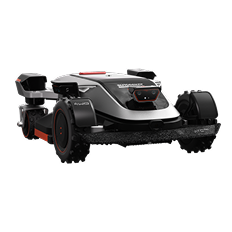
After the watering schedule is dialed in, consistent mowing helps the lawn use water more efficiently. For large properties, the Sunseeker Elite X9 supports scheduled mowing through app control and includes rain detection, so mowing can pause when the grass is wet and resume when conditions are better. Its large-lawn design and precise navigation help keep routine cuts steady across broad areas without turning irrigation into a separate mowing headache.

For homeowners comparing mulch-focused mowing setups, Robot Mowers with Mulching Blades can support a tidier routine after irrigation is corrected. Finely cut clippings will return some organic matter to the surface and help the lawn look evenly maintained between full care tasks.
The right watering time is the one that delivers the right water depth. Most lawns need about 1 to 1.5 inches per week, but sprinkler type, rainfall, soil, grass type, and season determine the actual run time. Measure output with containers, check the soil after watering, and adjust in small steps. A lawn that receives steady, deep moisture can grow stronger roots, recover faster, and stay more even through heat, mowing, and normal use.
It can be enough for fast spray heads, but it may be too short for rotor heads or hose-end sprinklers. The only reliable way to know is to place small containers in the watering zone and measure the depth after 20 minutes. If you collect about 0.5 inch, the time is useful.
Most established lawns need about 1 inch of water per week in mild weather and up to 1.5 inches during hot, dry periods. Include rainfall in that total. Sandy soil may need smaller, more frequent sessions, while clay soil often needs slower watering with breaks to reduce runoff.
Early morning is usually best, especially between 5 a.m. and 9 a.m. The air is cooler, the wind is lighter, and the grass has time to dry during the day. Midday watering loses more moisture to heat, while regular night watering can leave blades wet too long and raise disease risk.