ROS vSLAM combines camera-based motion estimation with simultaneous mapping, then exposes the result through ROS topics, transforms, and nodes. Reliable performance depends on camera choice, IMU fusion, calibration, synchronization, loop closure, compute latency, and clean coordinate frames—not only on selecting a well-known SLAM package.
A robot can publish clean camera images in ROS and still drift, jump, or lose its map after a fast turn. In many projects, the weak point is not the core algorithm but timestamps, calibration, coordinate frames, motion blur, or compute latency. ROS vSLAM therefore has to be treated as a complete sensing pipeline. The sections below connect camera and IMU inputs to tracking, mapping, loop closure, ROS 2 integration, and the practical criteria that help narrow down a stack for a real robot.
What Is vSLAM in ROS?
In ROS, vSLAM is not a single node or camera feature; it is a localization-and-mapping workflow built from synchronized sensor data, transforms, and estimation software.
Visual SLAM combines camera-based motion estimation with simultaneous map building so a robot can localize while exploring an environment. ROS is not one vSLAM algorithm; it is the middleware and software ecosystem that carries images, camera calibration, IMU data, transforms, odometry, maps, and status between nodes. A ROS vSLAM package subscribes to sensor topics, estimates camera or robot motion, publishes pose information, and may maintain a map for relocalization and loop closure. The practical challenge is integrating the estimator with the robot’s coordinate frames, timing, compute platform, and navigation stack so the pose is both accurate and available with low latency.
What Inputs Does a ROS vSLAM System Need?
Reliable vSLAM begins with sensor data that is usable at the same time and in the same coordinate system. Input quality matters before any mapping algorithm has a chance to help.
Monocular, Stereo, or RGB-D Cameras
A monocular vSLAM system uses one camera and estimates motion from the changing image, but absolute scale can be difficult without another cue. Stereo systems use a calibrated camera pair, allowing depth from disparity and providing metric scale when geometry is observable. RGB-D systems add a depth stream directly, which can simplify close-range mapping where the depth sensor works reliably. The ROS stack must receive the right image topics and camera information for the selected configuration. Field of view, shutter type, exposure, and texture in the environment can matter as much as resolution.
IMU and Visual-Inertial Odometry
An IMU supplies angular velocity and linear acceleration at a much higher rate than most cameras. Visual-inertial odometry combines those rapid inertial changes with visual feature motion, improving robustness during fast turns, brief blur, or weak visual texture. The IMU does not remove the need for good images; it complements them. Bias estimation, gravity alignment, and correct noise parameters are important. In practice, tightly synchronized camera and IMU data often gives a mobile robot a smoother short-term motion estimate than vision alone, especially when the platform accelerates or rotates quickly.
Calibration, Synchronization, and Coordinate Frames
Camera intrinsics, lens distortion, camera-to-IMU extrinsics, timestamps, and ROS coordinate frames must agree. Even small timing errors can look like geometric error during motion, while a wrong transform can destabilize an otherwise good estimator. Verify image and IMU timestamps, camera_info, and TF relationships before tuning SLAM parameters. Calibration should be treated as part of the estimator, not a one-time setup detail.
What Does a vSLAM Pipeline Do?
A vSLAM pipeline has to turn synchronized sensor observations into a usable pose and map quickly enough for control. Looking at the processing flow shows where tracking quality can weaken.
Feature Tracking and Motion Estimation
Feature-based vSLAM detects repeatable image points, describes them, and tracks or matches them across frames. Changes in their image positions constrain camera motion when combined with camera calibration and geometric models. Direct methods instead use pixel intensity patterns more directly. Either way, the system estimates how the camera moved between observations and rejects inconsistent measurements. Motion blur, repeated textures, blank walls, and sudden exposure changes can reduce the number of trustworthy constraints. A healthy pipeline monitors tracked features, inlier count, and estimator confidence rather than assuming every incoming image contributes equally.
Mapping and Localization
SLAM estimates the robot trajectory while building a representation of the environment. The map may be sparse landmarks, a denser point cloud, keyframes, or another structure chosen by the stack. Localization asks where the robot is relative to that map; mapping asks how observations should update it. In ROS, the SLAM output is usually connected to the broader transform tree and navigation stack. For long-running robots, map persistence and relocalization matter because a system should be able to restart or revisit an area without rebuilding everything from zero when the application requires repeatable autonomous routes.
Loop Closure and Drift Correction
Small pose errors accumulate as a robot travels, creating drift. Loop closure looks for a previously visited place and adds a constraint that says the current observation corresponds to an earlier map location. An optimizer can then distribute the accumulated error across the trajectory and improve map consistency. False loop closures are dangerous because one incorrect match can distort the map, so systems use geometric verification and similarity thresholds. Evaluate loop closure on the actual environment: corridors, repeated landscaping, or similar-looking rooms can be harder than visually distinctive spaces.
How Do ROS vSLAM Approaches Differ?
ROS-compatible vSLAM stacks can solve the same navigation problem with very different representations and compute demands. Those design choices shape where each approach works best.
Feature-Based vs Direct Methods
Feature-based methods reduce images to selected keypoints and descriptors, which can be efficient and robust when the scene contains distinct texture. Direct methods optimize using image intensity information over more pixels and can work well with subtle texture, but they may be more sensitive to photometric changes or require stronger compute. Semi-direct approaches mix ideas from both. The decision should consider the camera, motion, lighting, processor, and mapping goal rather than treating one family as universally superior. ROS support, maintenance activity, and debugging tools are also practical selection factors.
Sparse vs Dense Mapping
Sparse maps store a limited set of landmarks and are usually sufficient for localization and camera-pose estimation. They are computationally lighter and can run on modest hardware. Dense maps represent much more scene geometry, which is useful for obstacle reasoning, reconstruction, measurement, or visualization but consumes more memory and processing. Many robots use a sparse visual estimator for pose and build a separate occupancy or depth map for planning. Separating those jobs can be more efficient than forcing a single vSLAM component to produce every type of environmental representation.
Compute Load and Latency
A vSLAM stack must finish processing before pose data becomes too old for control. At 30 fps, a new image arrives about every 33 ms, so persistent processing delays can build a queue quickly. Measure end-to-end latency on the deployment computer while varying resolution, feature count, optimization window, and loop closure. Predictable low latency is often more useful to a mobile robot than a denser map that arrives late.
ROS 2 Integration and Deployment
Confirm ROS distribution, sensor drivers, topic names, QoS, TF frames, and hardware acceleration. Validate images, camera_info, IMU data, and timestamps first, then run repeatable routes and monitor drift, tracking loss, compute load, and restart behavior. A production stack should start consistently, expose useful diagnostics, and recover cleanly after interruptions.
How Do You Choose a vSLAM Stack for Your Robot?
Choosing a vSLAM stack starts with the robot’s available sensors, compute budget, motion profile, and the environments it must relocalize in. Those constraints narrow the viable ROS packages before benchmarking begins.
Start with the sensors and compute already available. A stereo-plus-IMU stack is a strong baseline for mobile robots because it provides metric scale and inertial robustness, but it requires good calibration and synchronization. Monocular stacks are lighter on hardware but can be more sensitive to scale and motion. RGB-D is useful indoors within the depth sensor’s range. Next compare ROS 2 support, hardware acceleration, loop closure, relocalization, map persistence, and monitoring tools. Benchmark on recorded routes that include fast turns, low texture, bright-dark transitions, and repeated scenery. Choose the stack that fails gracefully and can recover, not just the one with the lowest drift on a short clean sequence.
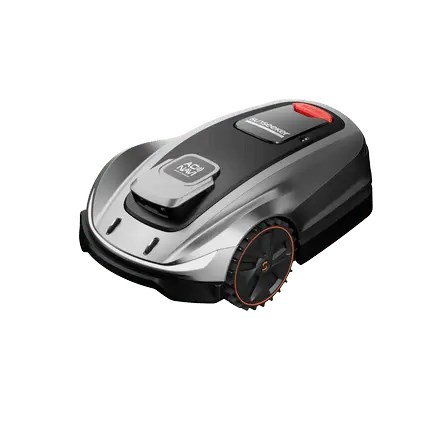
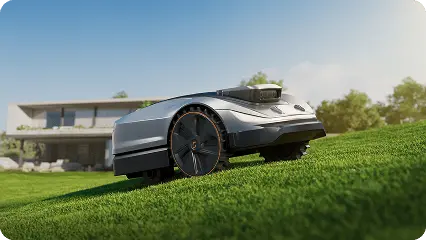
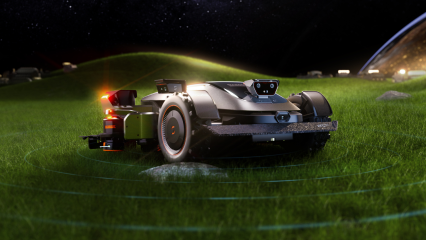
For related autonomous lawn platforms, see Sunseeker’s robot lawn mower collection and compare the navigation stack with the same sensor, terrain, and recovery criteria.
For a current Sunseeker example, Sunseeker Elite X9 combines nRTK with VSLAM 2.0 through its AONavi™ 2.0 system, helping maintain accurate positioning and navigation even in more complex lawn environments.
Conclusion
A dependable ROS vSLAM stack is built as much around data quality and integration as around the SLAM algorithm itself. Camera choice, IMU timing, calibration, transforms, loop closure, compute headroom, and recovery behavior should all be tested on the robot’s hardest route. Choosing a stack from those constraints reduces surprises during deployment. Sunseeker’s autonomous mower platforms likewise use complementary navigation and perception methods to keep mapping and motion useful across changing outdoor conditions.
FAQs
What is Visual SLAM (VSLAM)?
Visual SLAM uses camera images to estimate a robot or camera trajectory while building a map of the environment. It combines visual motion estimation, mapping, and often loop closure to reduce drift. Systems may use monocular, stereo, or RGB-D cameras and can fuse an IMU for more robust visual-inertial odometry.
What is the difference between LiDAR SLAM and visual SLAM?
LiDAR SLAM aligns laser-based geometric measurements, while visual SLAM estimates motion and structure from camera images. LiDAR is less dependent on visible texture or lighting; cameras provide rich visual information at low sensor cost. Either can struggle in specific environments, so some robots fuse LiDAR, vision, inertial sensing, or GNSS.
How does the VSLAM node acquire the image data?
In ROS, a vSLAM node subscribes to image topics published by a camera driver, usually together with camera calibration information. Stereo systems subscribe to synchronized left and right images; visual-inertial systems also subscribe to IMU data. Correct topic names, timestamps, QoS settings, and coordinate-frame transforms are essential for reliable tracking.



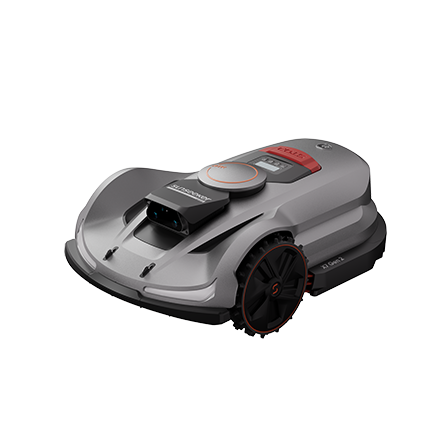
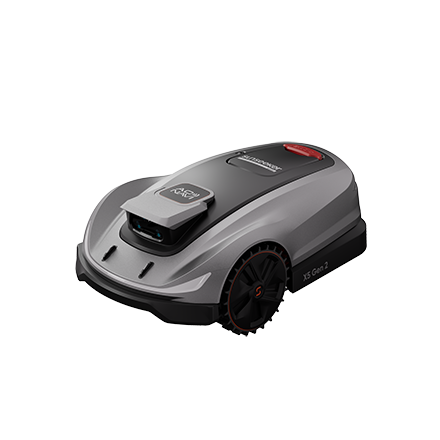
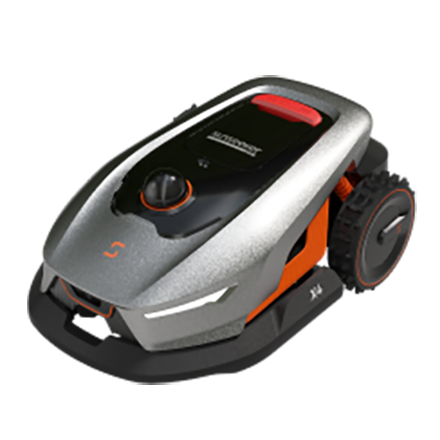
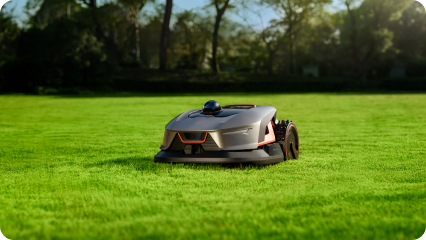
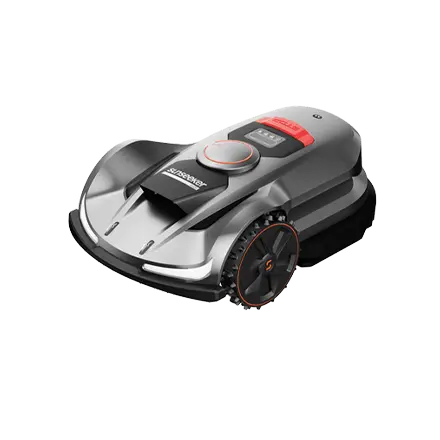
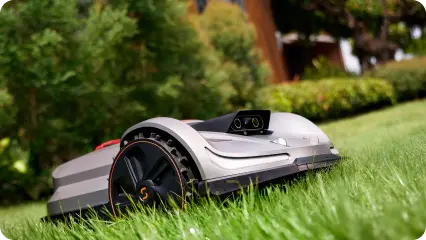
 X7 / X7 Plus Gen 2High-performance mowing for lawns up to 1.5 Acres.USD 2499 / USD 2999