On a hilly lawn, the hardest few feet often matter more than the total size of the yard. A wet incline, exposed roots, loose soil, or a tight turn on a slope can be the point where an otherwise capable mower starts losing time and needs help.
For that kind of terrain, choosing an AWD robot mower comes down to how well the machine keeps traction, balance, direction, and control across changing ground conditions. This guide explains how slope capability, drive design, suspension, navigation, turning behavior, and coverage affect real-world performance. That gives you a much clearer picture of what the mower needs to handle every week.
What to Consider Before Buying an AWD Robot Mower
AWD is most useful on lawns with real traction challenges, such as steep slopes, uneven ground, soft soil, or frequent changes in elevation. The better choice is not simply the mower with the highest slope number, but the one whose drive, suspension, navigation, and coverage match the difficult parts of your yard.
Maximum Slope Rating and Safety Headroom
Measure the steepest section the mower will actually need to cut, then compare it with the manufacturer’s rated limit. Common ratings include around 45% / 24°, 60% / 31°, 70% / 35°, and 90% / 42°.
Avoid choosing a mower that only just matches your maximum slope. Wet grass, soft soil, turns, and small dips can reduce grip even when the slope itself is within specification. Also check whether the manufacturer gives separate guidance for mowing across a slope rather than straight up and down.
All-Wheel-Drive Traction and Tire Design
AWD can keep the mower moving when one wheel loses grip, but tire design still matters. Larger wheels, deeper tread, and independent wheel control are especially useful on uneven or slippery ground.
The mower should maintain traction without repeatedly spinning or digging into soft turf. If your lawn becomes muddy after rain or includes loose soil, look beyond the AWD label and check how the wheels are designed to shed grass and mud.
Suspension and Ground Clearance
A mower may have enough power for a slope but still struggle when the ground is rough. Suspension helps the wheels stay in contact as the mower crosses shallow ruts, roots, and uneven sections, while sufficient ground clearance reduces the chance of the chassis catching on raised areas.
Obstacle-crossing capability is also worth checking if the lawn includes exposed roots, small ridges, or uneven transitions between zones.
Lawn Size and Coverage Capacity
Large or steep lawns usually take longer to mow than flat, open ones of the same size. Hills, narrow connections, frequent turns, and repeated charging trips all reduce how much ground the mower can cover efficiently.
Choose a coverage rating with some margin rather than matching the lawn area exactly. This gives the mower more room to recover after rain, maintenance, or missed mowing periods without forcing it to run near its maximum schedule every day.
Navigation Reliability on Hills and Under Trees
Good traction is less useful if the mower repeatedly loses its position. RTK works well in open areas, while vision or VSLAM can help near trees, buildings, or other places where satellite visibility becomes less stable.
For mixed terrain, a hybrid navigation system is often more practical because the mower can rely on more than one source of positioning information as conditions change around the yard.
Turning Behavior and Turf Protection
AWD gives the mower more grip, but tight turns can still damage grass if the wheels scrub or spin. This matters most near boundaries, trees, and narrow passages where the mower changes direction frequently.
Active steering and controlled turning can reduce sideways tire movement and make the mower gentler on the turf. On soft or wet lawns, smooth turns are often more important than having the smallest possible turning radius.
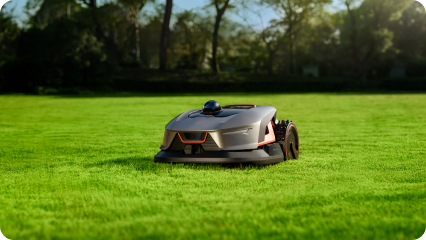
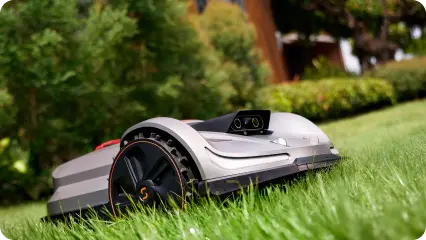
Best AWD Robot Mower - Sunseeker Elite X9
For large lawns with steep slopes, uneven ground, and long mowing routes, AWD is most useful when traction, suspension, steering, and navigation all work together rather than as separate features.
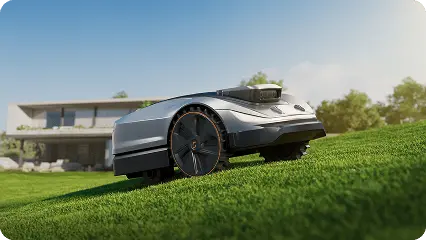
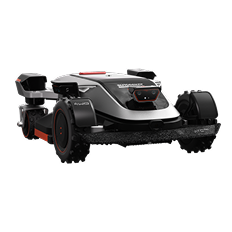
The Sunseeker Elite X9 uses the ATC Pro Drive System, combining all-wheel drive with four-wheel suspension to maintain traction across rough ground and slopes up to 90% / 42°. Its dual rear-wheel active steering helps it turn tightly without relying on harsh pivot movements that can scrub the turf.
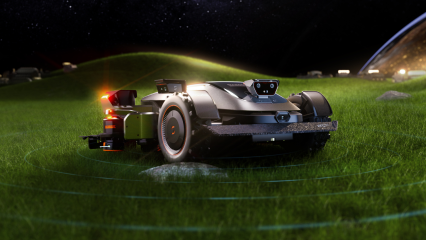
For larger properties, the X9 covers up to 3 acres per 48 hours, giving it enough capacity for estate lawns and other extensive mowing areas. AONavi™ works together with the 360° OmniSight™ system to support planned routes and positioning across open grass, under trees, along hedge edges, and through narrow passages.
AWD vs 2WD: When Is All-Wheel Drive Worth Paying For?
A 2WD mower can be entirely adequate on firm, simple lawns, while AWD earns its extra cost where traction loss is frequent. The comparison below ties drive type to real yard conditions.
|
Yard Condition
|
2WD Robot Mower
|
AWD Robot Mower
|
|
Flat, firm lawn
|
Usually sufficient and simpler
|
Often unnecessary
|
|
Gentle slopes
|
Works well within the mower’s rated limit
|
Adds extra traction but may not be essential
|
|
Repeated steep slopes
|
More likely to lose grip or need corrections
|
Better suited to sustained climbing and changing load
|
|
Uneven or rolling ground
|
Fine if bumps and dips are minor
|
Better at maintaining drive when wheel contact changes
|
|
Soft, damp, or slippery areas
|
Can struggle if a driven wheel slips
|
More driven wheels can improve traction recovery
|
|
Roots, shallow ruts, and swales
|
May need more path corrections
|
Better suited when terrain frequently unloads one wheel
|
|
Simple open layout
|
Lower cost and usually adequate
|
Extra drive hardware offers limited benefit
|
|
Complex terrain with frequent traction loss
|
May require retries or manual help
|
More likely to justify the higher cost
|
In short, AWD is worth paying for when traction problems are a regular part of the lawn, not just an occasional edge case.
How to Get Better Results From an AWD Robot Mower
Strong traction still needs a sensible setup. A few checks before and during the mowing season help an AWD machine use its slope capability without turning the lawn into a traction test.
Measure the Steepest Section Before Buying
Use a digital inclinometer, a phone level tool, or a rise-and-run measurement on the actual mowing line. For example, a 24 in rise over 39 in of horizontal run is a 60% grade, close to 31°. Measure several points because one short bank can be much steeper than the lawn around it. Also note the direction the mower is likely to travel. A short climb straight up a slope can be easier than a long cross-slope route near a boundary. Record the highest repeatable reading and compare it with the manufacturer’s stated operating limit before purchase.
Keep Wheels Clean and Avoid Wet-Slope Mowing
Grass paste, clay, and damp soil can fill tire grooves and remove much of the grip you paid for. Inspect the wheels after mowing soft areas and brush packed material away once the machine is safely powered down according to its manual. Avoid scheduling steep sections while the surface is saturated or slick after heavy rain. Even if the mower can climb, spinning tires can polish the surface, tear grass, or create small ruts that become worse on the next pass. Resume slope work after the turf feels firm and the tread can contact the ground cleanly.
Leave Traction Margin Below the Published Slope Limit
Treat the maximum slope figure as a capability ceiling, not the target for every meter of the route. If a lawn repeatedly reaches the mower’s published maximum, turns, wet grass, leaf litter, or a small rut can remove the remaining traction margin. Map the steepest banks as separate zones if the app allows, use gentler approach angles where practical, and keep boundaries away from drop-offs or retaining edges. Recheck the route after landscaping or erosion changes the surface. Consistent performance usually comes from operating comfortably inside the limit rather than testing it every mowing cycle.
Conclusion
An AWD robot mower is most valuable on lawns where steep grades, uneven ground, and changing wheel load are normal parts of each mowing cycle. Match the mower to the steepest measured section, then check suspension, tire design, navigation, turning control, and area capacity rather than judging traction alone. Keeping the wheels clean and leaving slope headroom also supports more consistent results over time. For larger or more demanding properties, Sunseeker’s robot lawn mower range includes AWD models built around traction and autonomous route control.
FAQs
What does AWD mean on a robot mower?
AWD means the mower can drive all of its main wheels rather than relying on only a front or rear pair. The extra driven contact points can improve traction on slopes and uneven terrain. Performance still depends on tire design, suspension, steering, weight distribution, software, and the mower’s published slope limit.
Do I need all-wheel drive for a hilly yard?
Not every hilly yard needs AWD. A 2WD model may handle gentle, firm slopes that sit comfortably inside its rating. AWD becomes more useful when the lawn includes repeated steep grades, cross-slopes, roots, dips, or sections where a driven wheel may unload. Measure the steepest working area before deciding.
How steep a slope can a robot mower handle?
Published limits vary widely by model. Many residential machines are rated around 45% to 70% grades, roughly 24° to 35°, while some higher-traction models reach 90% / 42°. Use the exact manufacturer rating for your mower and keep practical margin for turns, damp grass, debris, and uneven ground.



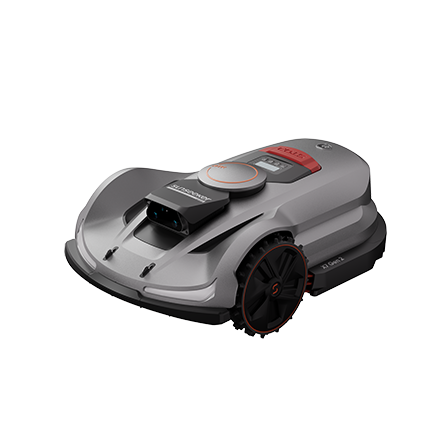
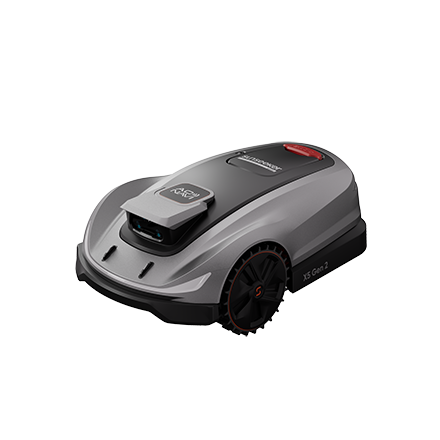

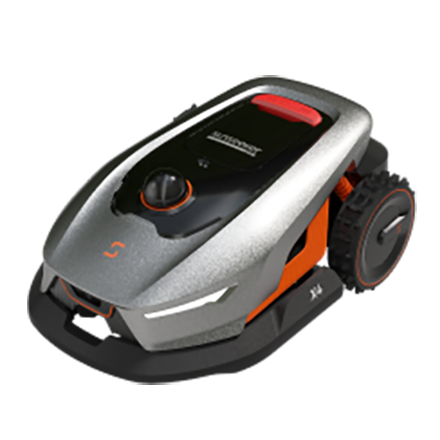
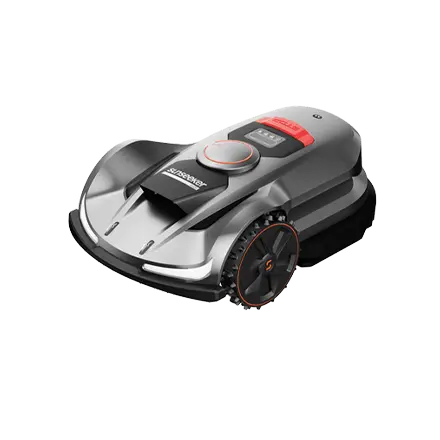
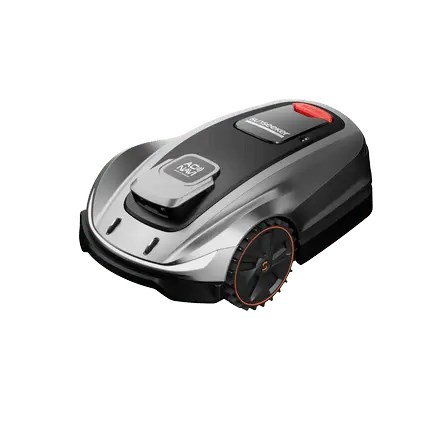
 X7 / X7 Plus Gen 2High-performance mowing for lawns up to 1.5 Acres.USD 2499 / USD 2999