





FAQs
9/11/2026
Contents
Products
Residential Lawns










Explore
Where to Buy


Healthy winter turf starts before the ground freezes. Continue mowing while grass grows, remove heavy leaf cover, fertilize only when the grass type and soil test support it, and limit traffic on frozen blades. During dry, snow-free periods, check soil moisture and water on mild days. Resume spring work only after the soil becomes firm.
Winter grass may stop growing quickly, but the lawn is still dealing with cold, moisture swings, foot traffic, and drying weather. Problems caused during this quiet period often do not become obvious until spring, when flattened patches, weak edges, or slow green-up start to show.
Good winter lawn care is mainly about protecting the grass rather than trying to push new growth. This blog explains what to do before winter sets in, which problems to watch for during cold weather, and how a few simple checks can make spring recovery easier.
Cold-weather care changes with grass type and local climate, but the same basic priorities apply to most established lawns. Use these eight actions as a seasonal checklist and adjust them to current soil and weather conditions.
Do not stop simply because the calendar reaches October. Mow while the grass is still growing, following the one-third rule so no cut removes more than one-third of the blade. For many cool-season lawns, a final height near 2.5 to 3 inches works well; follow local guidance for the species. Extremely short turf exposes crowns, while long, matted grass can hold moisture and shelter voles. Make the final cut on dry, unfrozen ground with a sharp blade.
A few dry leaves can be shredded into small pieces that settle between grass blades, but a thick or wet layer blocks light and traps moisture. Mow dry leaves repeatedly until fragments are roughly dime-sized and the grass remains visible. Rake or collect piles that clump after rain. Clear leaves from drains and low areas as well. This winter garden lawn care task reduces smothering and helps limit the damp conditions associated with snow mold.
Fertilize according to grass type, local timing, and a soil test, not a generic “winterizer” date. Cool-season turf may benefit from a late-fall nitrogen application while roots remain active, often after shoot growth slows but before the soil freezes. Warm-season grass is usually not fertilized near dormancy because tender growth is vulnerable to cold. Follow extension guidance and the label; excess nitrogen can increase disease risk, runoff, and unnecessary growth.
Core aeration is useful when foot traffic, clay, or construction has reduced infiltration. Schedule it during active growth so grass can recover: early fall for cool-season species and late spring through early summer for warm-season species. The soil should be moist, not saturated, and cores should be 2 to 3 inches deep where equipment allows. Do not aerate frozen soil. Leave cores to dry and break down naturally instead of raking them away.
Dormant grass uses less water, yet roots can still dry in windy climates with little snow. Check the upper 4 to 6 inches of soil during extended dry periods. In regions with dry winters, water once or twice a month only when air and soil temperatures are above 40°F, applying it around midday so moisture soaks in before nightfall. Skip watering when soil is frozen, saturated, or snow-covered, and obey local restrictions.
Frosted blades become brittle, and footsteps or repeated tire tracks can crush plant cells. The resulting gray or brown paths may remain visible after thaw. Keep people, pets, carts, and parked vehicles off the lawn until frost melts and the surface is firm. Create a hardscape route to sheds, gates, and play areas if daily access is unavoidable. Never pile plowed snow in one spot if it contains road salt or creates months of dense ice.
Salt spray and salty meltwater can dry roots and damage grass beside streets, driveways, and sidewalks. Use the lowest effective deicer amount, sweep up excess granules, and store snow from treated pavement away from turf when possible. Sand can improve traction without adding salt, although it requires cleanup. In spring, flush affected edges with water after the soil drains and temperatures remain above freezing. Persistent injury may require soil testing and reseeding.
After the final cut, remove dry clippings from the deck, sharpen or replace worn blades, and follow the manual for battery, fuel, and charging-station storage. Clean equipment on a dry surface and inspect wheels for packed soil.
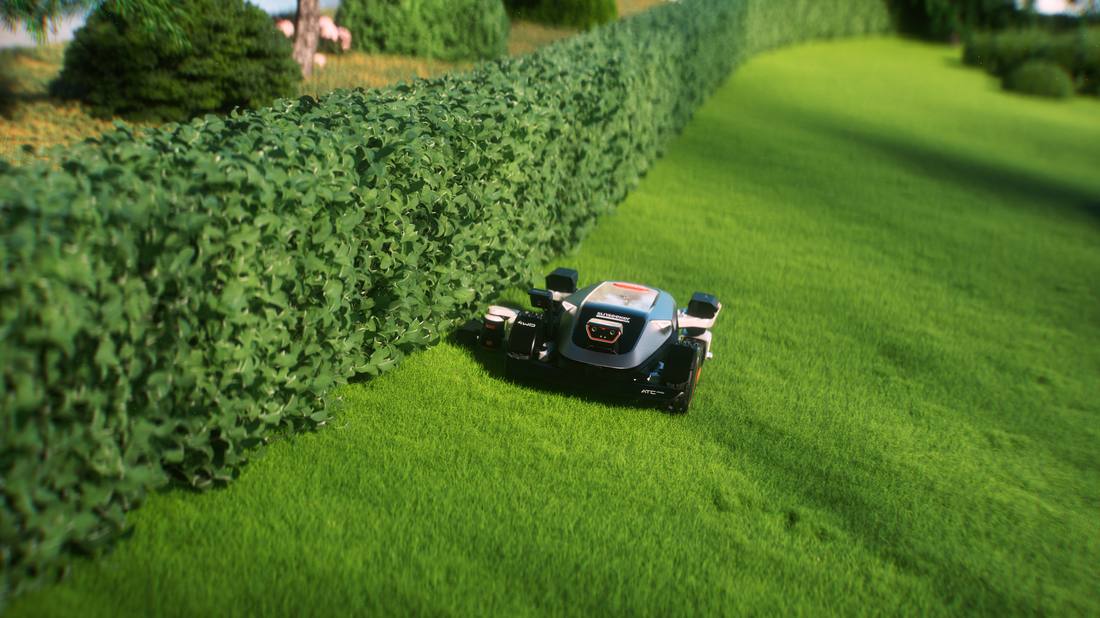
For robotic mowers such as the Sunseeker Elite X9, winter preparation should also include the model-specific maintenance and storage steps recommended in the manual. Once grass growth has stopped, or conditions become frozen, snowy, or persistently wet, finish the mowing season and store the mower and charging equipment as directed.

A short inspection after storms or temperature swings can reveal problems before they spread. Look without walking across frosted or saturated turf, and address the source rather than treating dormant grass aggressively.
Resume work according to soil condition and active growth, not the first warm afternoon. Grass and roots are vulnerable while the surface is thawing but the soil below remains wet or frozen.
Wait until snow has melted, standing water is gone, and the ground no longer feels spongy underfoot. Rake matted grass lightly once it is dry. Begin mowing after green growth reaches roughly one-third above the intended cutting height; for a 3-inch target, mow near 4 to 4.5 inches. Use a sharp blade and avoid removing more than one-third. Delay heavy equipment, core aeration, and aggressive dethatching until the turf is actively growing and able to recover.
Test bare patches with a gentle tug and inspect crowns before reseeding. Cool-season lawns are often repaired in early spring, though late summer to early fall usually offers better establishment conditions. Warm-season lawns are best repaired after consistent growth begins in late spring. Restart irrigation only when soil moisture and rainfall show a need. These measured transitions keep lawn care winter garden decisions connected to actual recovery rather than a fixed date.
Effective winter lawn care protects crowns, roots, and soil without trying to keep dormant grass actively growing. Finish mowing at the proper height, manage leaves, use fertilizer only at the correct regional time, water dry soil on mild days, and reduce frost, salt, and ice damage. Careful monitoring lowers repair work and supports a denser spring lawn. For routine upkeep after firm ground and active growth return, explore Sunseeker’s Robot Lawn Mowers for established lawns.
There is no universal month. For cool-season grass, late-fall fertilizer is often applied in October or November after rapid shoot growth slows but while roots remain active and soil is not frozen. Timing shifts with latitude and weather. Warm-season lawns generally should not receive late nitrogen near dormancy. Follow a soil test and local extension schedule.
Avoid both extremes. Many cool-season residential lawns enter winter well at about 2.5 to 3 inches, though the correct height depends on species and region. Scalping weakens crowns, while excessively long grass can mat under snow and shelter voles. Continue mowing until growth stops, use a sharp blade, and remove no more than one-third per cut.
The best product is the one supported by a soil test and local recommendation. A late-fall cool-season application often emphasizes nitrogen, with phosphorus or potassium added only when testing shows a need. Do not assume a high-potassium “winterizer” is required. Dormant warm-season turf usually needs no winter fertilizer; inappropriate nitrogen can encourage cold-sensitive growth and nutrient loss.