












FAQs
8/26/2026
Contents
Products
Residential Lawns









Explore
Where to Buy


Potash supplies potassium, the third number in an N-P-K fertilizer analysis. It helps turf regulate water, support root function, tolerate stress, and use other nutrients efficiently. Apply it only when a soil test or lawn program shows a need, then calculate the product rate carefully and spread it evenly.
When summer heat hits and your grass starts looking weary, the standard reaction is often to reach for more nitrogen. However, if your lawn remains thin despite regular feeding, a missing piece of the nutrient puzzle might be potassium. Potash provides this essential mineral to boost resilience, yet applying it blindly can do more harm than good. By starting with a soil test and following a measured application strategy, you can help your turf withstand environmental stress and maintain its vitality throughout the year.

Before exploring the benefits, it is essential to understand what this term represents on a fertilizer label. Potash is the fertilizer term used for potassium expressed as K2O on the product label. It is one of the three major nutrients listed in the familiar N-P-K analysis, after nitrogen and phosphate.
For example, a 20-0-10 fertilizer contains 20% nitrogen, no listed phosphate, and 10% water-soluble potash by weight. The grass plant uses potassium as the element K, but fertilizer labels traditionally report it as K2O. That distinction matters when you calculate an application rate because the percentage printed on the bag is the K2O value used for product math.
Potassium does not build plant tissue in the same way nitrogen supports leafy growth. Instead, it helps regulate many processes inside the plant, including water movement, enzyme activity, cell pressure, and stress responses. Because those functions are less visible than a rapid color change, potassium needs are best judged with a soil test rather than appearance alone.
Potassium serves as a vital regulator for internal plant health rather than a mere growth stimulant. It supports the grass systems that help turf stay functional during daily growth and periods of heat, dryness, traffic, or disease pressure.
This is why homeowners asking what does potash do for your lawn should think in terms of balance rather than a visible overnight response. Potassium helps the plant perform well, but it works best as part of a complete soil and mowing program.
Visual symptoms of nutrient deficiency often mimic other lawn problems like heat stress or compaction. Use the following clues as a starting point, then confirm the need with a professional soil test.
A laboratory soil test is the clearest starting point. It can show if potassium is low, adequate, or high and often provides an application recommendation for your turf and soil. Follow the laboratory's units and rating system rather than comparing numbers across unrelated reports. If potassium is already adequate, adding more usually offers little benefit. If it is high, choose a fertilizer with little or no potassium until future testing shows a need.
A potassium-deficient lawn may seem weak during stressful periods, recover slowly after traffic, or show poor overall vigor. These signs are not specific enough for diagnosis. Yellowing, thinning, and weak rooting can also result from low nitrogen, incorrect pH, drought, disease, insects, or compacted soil. If you are asking is potash good for lawns because your grass looks tired, test first instead of treating the color alone.
The following comparison helps distinguish potassium deficiency symptoms from other common lawn issues to guide your treatment plan.
Symptom | Potential Cause | How Potash Helps |
Yellowing/Thinning | Nitrogen deficiency or pH imbalance | Supports internal enzyme activity and nutrient use. |
Wilting in Heat | Drought stress or poor root system | Regulates stomata and water movement in cells. |
Slow Recovery | Soil compaction or lack of potassium | Improves resilience and energy carbohydrate movement. |
Leaf Spot/Rust | Fungal pathogens or weak cell walls | Strengthens plant tissues to resist disease pressure. |
Once a soil test confirms a potassium need, successful application depends on precision and timing. Follow these steps to ensure the nutrient reaches the roots without harming the environment.
Selecting the correct source ensures you address the deficiency without overloading the soil with unnecessary nutrients. Start with the soil test recommendation and the fertilizer's N-P-K analysis. Products may supply potassium as potassium chloride, potassium sulfate, sulfate of potash-magnesia, or as part of a complete lawn fertilizer.
If the lawn also needs nitrogen, a balanced turf fertilizer may be convenient. If potassium is the only deficiency, a product with little or no nitrogen may give better control over the nutrient rate. Consider other test results, especially magnesium, before choosing a source that also contains magnesium.
Precision is critical because applying the wrong amount can lead to nutrient runoff or soil imbalance. Use the percentage of K2O on the label to convert the soil-test recommendation into a product rate. Divide the desired pounds of K2O per 1,000 square feet by the decimal form of the fertilizer's potash percentage.
For example, if a recommendation calls for 1 pound of K2O per 1,000 square feet and the product is 0-0-50, divide 1 by 0.50. The result is 2 pounds of product per 1,000 square feet. Do not use this example as a universal lawn rate; use the amount listed by your soil test and product label.
Uniform distribution prevents "streaking" and ensures every grass plant receives its share of potassium. Measure the lawn area so the total amount is accurate, then calibrate the spreader for the product. For granular fertilizer, split the measured amount into two lighter passes at right angles when the label permits. This reduces streaking and heavy bands. Keep granules off sidewalks, driveways, and storm drains, then sweep any stray material back onto the turf. Water according to the product instructions so granules move off the leaves and into the soil without causing runoff.
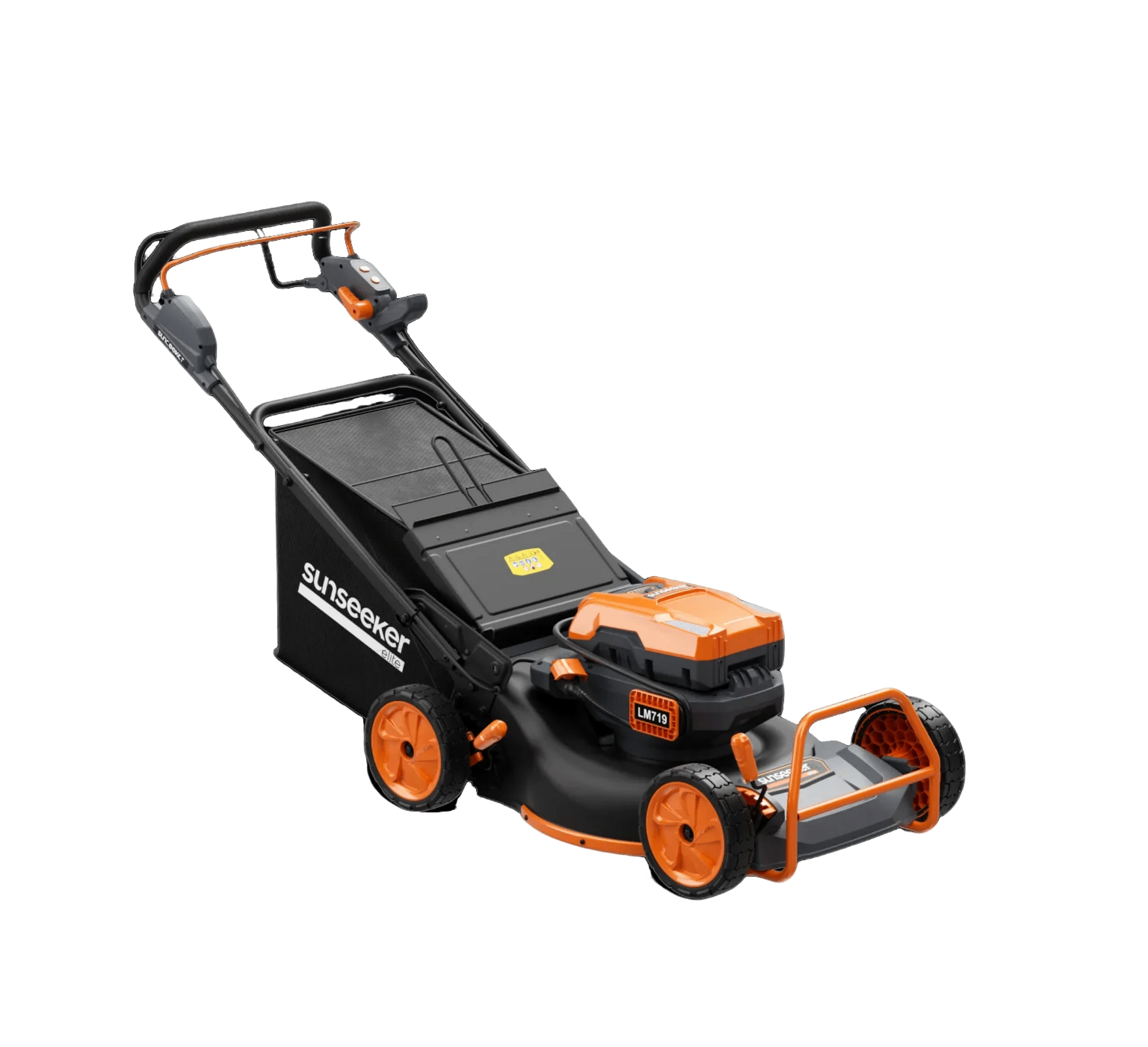
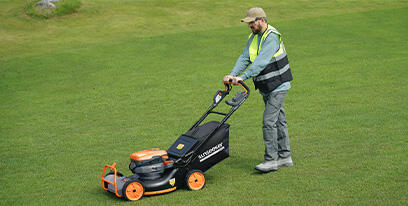
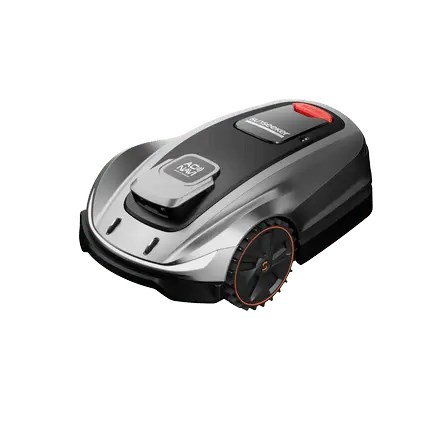
After fertilizing, regular light mowing can also recycle nutrients already stored in the grass. The Sunseeker Elite X9 is designed for large-area automated mowing and offers adjustable cutting height, planned routes, and an all-wheel-drive system, so routine cuts can stay consistent while fertilizer decisions remain based on soil needs rather than mower performance.

Such a Robot Mowers with Mulching Blades trim frequently and leave fine clippings on the turf, where those clippings can decompose and return part of their nitrogen, phosphorus, and potassium to the lawn.
Yes. More potassium is not automatically better, and a lawn with adequate or high soil potassium does not benefit from repeated high-potash applications. Excess fertilizer can also raise salt levels and interfere with nutrient balance.
If you are using potash to correct a deficiency, think of the treatment as targeted nutrition. The goal is to move the soil into an adequate range and maintain balanced fertility, not to maximize the potassium number.
Potash can be valuable when a lawn is short on potassium. It supports water regulation, root function, stress tolerance, and overall turf performance, but it is not a shortcut for instant green color. Test the soil, select a fertilizer that matches the result, calculate the K2O rate carefully, and spread it evenly. Pair balanced fertility with steady mowing, sensible irrigation, and healthy soil practices. For homeowners who want to simplify routine mowing, Sunseeker Elite offers automated options that can fit into that broader lawn-care plan.
Apply potash when a soil test shows low potassium and the grass is actively growing enough to use nutrients. Timing depends on grass species, climate, and local fertilizer rules. Avoid spreading onto frozen ground, saturated soil, or immediately before heavy rain. Follow the laboratory recommendation and the product label for seasonal timing.
Not exactly. Potassium is the nutrient element used by the grass. Potash is the fertilizer-label term for potassium content expressed as K2O. On an N-P-K label, the third number is the percentage of potash. Fertilizer calculations generally use that printed K2O percentage rather than the elemental potassium percentage.
Potash can help a potassium-deficient lawn function and recover better, but it is not the main nutrient responsible for rapid green color. Nitrogen is more directly associated with leafy growth and greening. If grass is yellow or pale, check soil fertility, pH, moisture, roots, disease, and other possible causes before applying extra potassium.