

















After mowing, you may notice orange dust on your shoes and mower wheels. A closer look at the lawn shows the same powder on yellowing grass blades. These are common signs of lawn rust, but they do not tell you why it has appeared or how much damage it might cause.
Rust fungi infect the grass, while damp leaves and slow growth help the disease take hold. That connection explains what causes lawn rust to become a problem in some lawns. This article will help you check the signs, understand how serious the problem is, and find out what care will help the grass recover.
How Can You Tell Whether Your Lawn Has Rust?
Rust usually announces itself on the leaf surface before it causes serious lawn decline. Before assuming what causes rust in the lawn is a soil problem, examine several blades at the edge of an affected patch rather than judging the lawn's color from the sidewalk.
- Raised yellow or orange bumps appear on blades. Early infections may show small pale flecks that grow into elongated, powdery pustules along the leaf.
- Orange dust rubs off. Wipe a symptomatic blade with white tissue. Rust spores often leave yellow-orange or reddish-brown powder that also stains light shoes after you cross the grass.
- The lawn has a diffuse yellow cast. Many infected blades together can make a patch look thin or rusty even though the crowns and roots are alive.
In many northern and transition-zone lawns, symptoms peak from August through October. In warmer regions, individual rust species may appear earlier.
What Causes Rust on Lawns?
Lawn rust is a fungal disease that commonly appears in late summer and early fall. It develops when rust spores infect grass leaves under favorable weather conditions, particularly when the lawn is growing slowly. Several factors can increase the risk of infection.
Rust Fungi
Lawn rust is caused by several fungal species, mainly from the Puccinia and Uromyces genera. Their spores spread through the air and infect susceptible grass leaves when enough moisture is present.
As the infection develops, small yellow spots turn into orange or reddish-brown pustules. These release powdery spores that can spread to surrounding grass, especially during favorable weather.
Slow Grass Growth
Rust is more noticeable on lawns that grow slowly or struggle to recover from stress. Low nitrogen levels, drought, compacted soil, excessive shade, and cutting grass too short can all weaken growth and leave infected leaves on the lawn longer.
For example, Kentucky bluegrass and perennial ryegrass may develop rust after hot, dry summer weather slows their growth.
Prolonged Leaf Wetness
Rust fungi thrive when grass leaves remain wet for extended periods. Heavy morning dew, humid nights, frequent light watering, and poor air circulation create favorable conditions for infection.
Many turfgrass rust fungi develop during moderately warm weather, with temperatures around 68-86°F favoring certain species. As little as 10-12 hours of leaf wetness can allow spores to infect grass. Shaded areas are particularly vulnerable because leaves dry more slowly after rain or overnight dew.
Susceptible Grass Varieties
Perennial ryegrass and Kentucky bluegrass are among the grasses most commonly affected by rust. Tall fescue, fine fescue, Bermudagrass, and Zoysiagrass can also develop the disease, although susceptibility varies among cultivars.
If rust repeatedly appears in the same area each fall, the grass variety may be contributing to the problem. When overseeding or repairing affected areas, choose locally recommended rust-resistant varieties to help reduce future outbreaks.
How Serious Is Lawn Rust?
Lawn rust usually looks worse than it is. On established lawns, the yellow-orange patches and powdery spores mainly affect appearance. As healthy grass growth resumes, new blades gradually replace infected ones, and the rust begins to fade. According to Iowa State University Extension, most lawn rust outbreaks can be managed through regular lawn care without fungicides.
The risk is greater for newly seeded or weakened lawns. Severe infections can reduce photosynthesis, slow grass growth, and leave thin or uneven patches. Watch for fresh green growth as the lawn recovers. If bare areas continue expanding or the grass shows severe wilting, check for additional problems such as drought stress, root damage, or other diseases.
How Can You Help a Rust-Affected Lawn Recover?
Lawn rust often improves as grass resumes healthy growth and produces new leaves. Proper mowing, balanced nutrition, and better watering habits can help the lawn recover while reducing conditions that encourage further infection.
Resume Appropriate Mowing
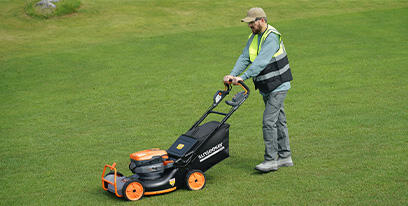
Keep your lawn at the recommended height for its grass type. For many cool-season grasses, a height of around 3-4 inches helps preserve enough leaf area for healthy growth. Mow when the grass is dry, use a sharp blade, and remove no more than one-third of its height in a single cut.
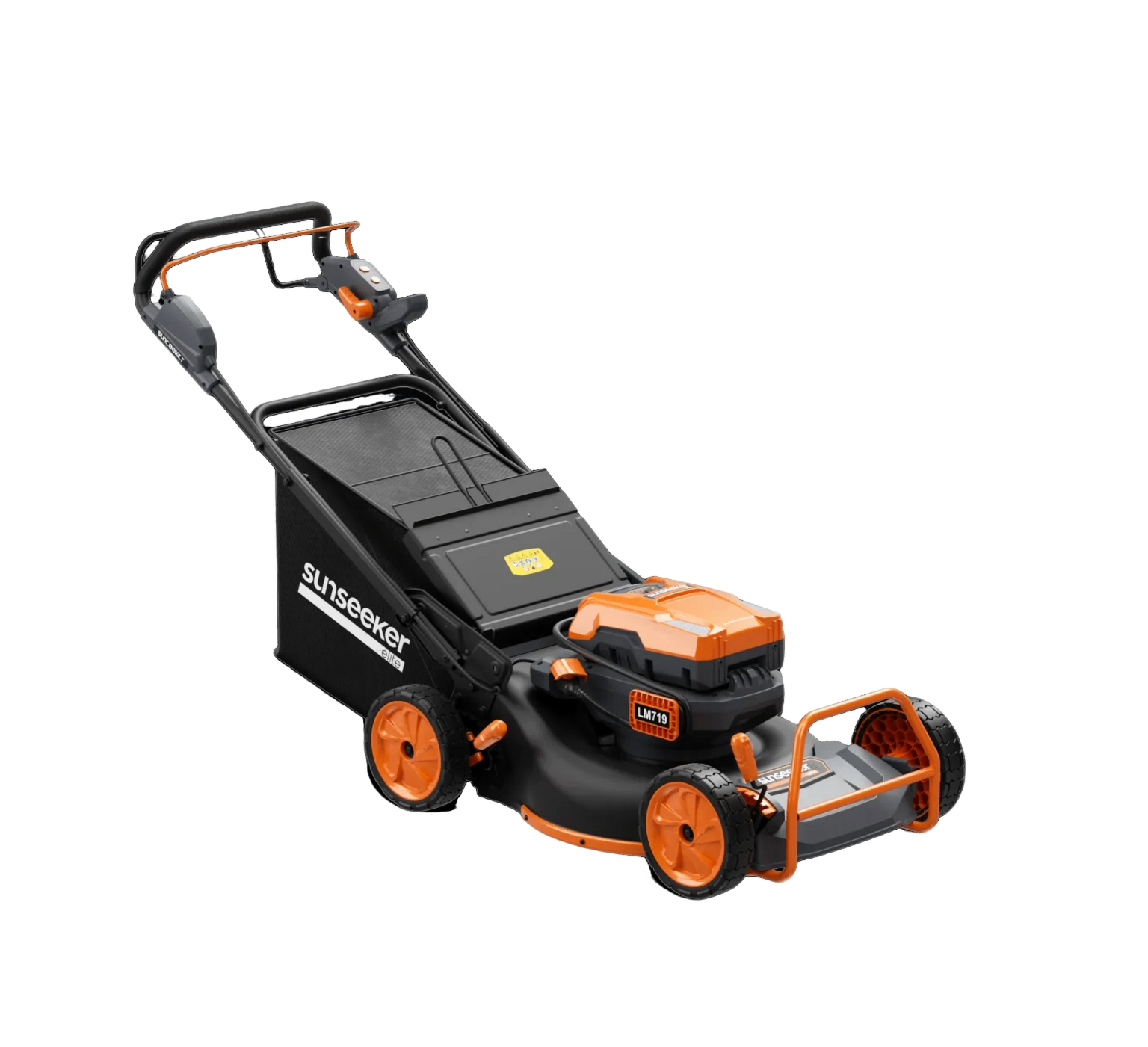
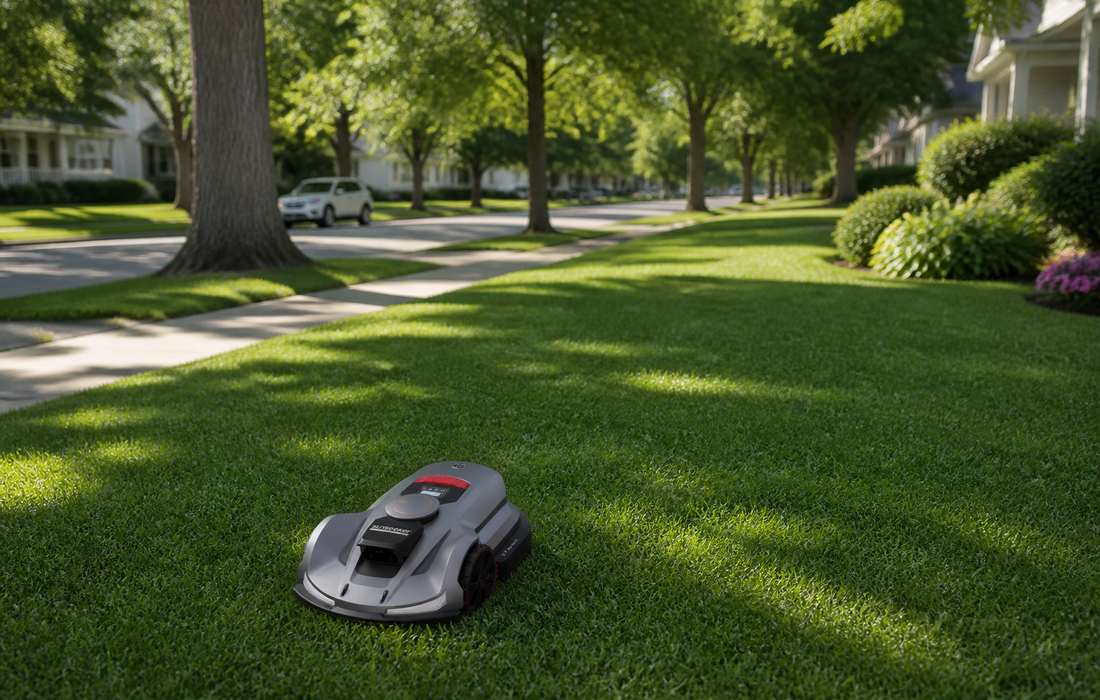
As healthy grass grows, regular mowing gradually removes infected leaves. For lawns with uneven terrain, the Sunseeker Elite X7 Plus Gen 2 features a floating dual-disc cutting system and planned mowing routes, helping maintain an even cutting height as the lawn recovers.