



Buyer's Guide
9/11/2026
Contents
Products
Residential Lawns


Explore
Where to Buy


Robot mower development in 2026 is centered on dependable navigation, safer obstacle response, cleaner edges, stronger terrain mobility, coordinated fleets, and higher daily uptime. Equip Expo gives contractors and dealers a practical setting to examine these systems closely, compare machines under working conditions, and separate useful operational gains from impressive demonstrations.
A robotic mower can look polished beneath exhibition lights, yet a commercial buyer needs answers that only close inspection and live testing can provide. Will it hold a route beside trees, recognize small objects, finish edges, cross uneven ground, and return to work quickly after charging? Those questions will shape conversations at Equip Expo 2026. This preview identifies the technologies worth watching, explains their business impact, and offers a verification checklist for serious purchasing discussions.

Equip Expo 2026 runs October 20-23 in Louisville, Kentucky, with the trade-show portion scheduled for October 21-23. Attendees should distinguish the opening reception day from the three full exhibition days when planning travel and product meetings.
The Tuesday, October 20 program begins with the Welcome Reception at Churchill Downs, scheduled for 6:30-9:00 p.m.; there is no trade show that day. Indoor exhibits and the Outdoor Demo Yard operate Wednesday through Friday at the Kentucky Exposition Center, 937 Phillips Lane. The official event materials list more than 1.3 million square feet of indoor exhibits and over 30 acres of outdoor demonstrations. Badge pickup at the North Wing Lobby starts at 8:00 a.m. Wednesday-Friday, and parking at the venue is included with a badge.
Robotic mowing has moved beyond a residential convenience story. Contractors now evaluate it as one component in a connected maintenance operation, especially where repeated mowing consumes labor that could be assigned to higher-skill work.
Commercial interest is growing because labor availability, fuel exposure, noise limits, and service consistency affect profit on recurring contracts. A robot does not eliminate site management. Crews still inspect turf, remove hazards, trim inaccessible borders, service equipment, and respond to weather. It can, however, take over frequent light mowing on established grass when the site and machine are compatible. That creates a more stable schedule and reduces the number of hours spent driving a mower across the same area each week.
Equip Expo is useful because buyers can compare competing systems in one trip and watch equipment operate outside a controlled showroom. The show promotes more than 1,100 exhibits and a large demo yard, giving contractors a chance to study traction, noise, mapping workflow, service access, and cut quality. The strongest 2026 trend is not autonomy alone; it is autonomy that can be measured, supervised, and integrated into an existing crew plan.
The most valuable innovations solve specific field problems rather than adding novelty. Attendees can use the following categories to organize booth questions and live-demo observations.
Virtual boundaries reduce installation work and make map changes easier when beds, paths, or work zones change. Performance depends on more than the absence of wire. Ask which positioning sources the mower combines: RTK, cameras, LiDAR, inertial sensing, wheel odometry, or local reference data. Then watch its behavior beside buildings, beneath tree cover, through narrow passages, and after a temporary signal interruption. A useful system should explain its position confidence, pause safely when necessary, and resume without repeatedly missing or recutting the same strip.
Obstacle recognition should be judged by object size, approach speed, lighting, and surface contrast. A mower that avoids a bright box may react differently to a dark hose, branch, irrigation head, animal, or low object in grass. Ask exhibitors to describe detection limits rather than promising universal avoidance. Confirm that bumper, lift, tilt, and emergency-stop systems halt blade motion promptly. Commercial operators also need event logs and alerts that help supervisors understand why a machine stopped and what action is required.
A narrow uncut border can erase much of the labor benefit if crews must string-trim every route after each mowing cycle. Examine blade-disc position, wheel placement, boundary tracking, and the mower’s ability to approach flush paving safely. Measure the remaining strip beside walls and raised curbs instead of relying on the phrase “edge cutting.” Also check how the system treats mulch beds, gravel, flexible edging, and drop-offs. A precise edge system reduces follow-up work, but physical barriers still influence the final result.
Slope ratings deserve context. Buyers should compare the maximum published angle with the steepest sustained working section and keep a practical safety margin for damp turf, turns, and surface changes. Suspension travel, wheel tread, steering method, weight distribution, and recovery behavior all affect turf disturbance. During a demo, watch for wheel spin, sideways drift, repeated corrections, and ruts near turning points.
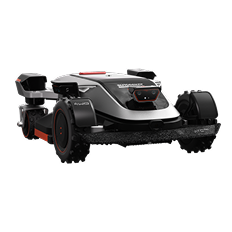
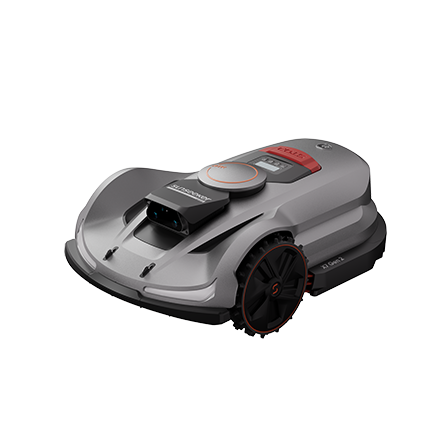
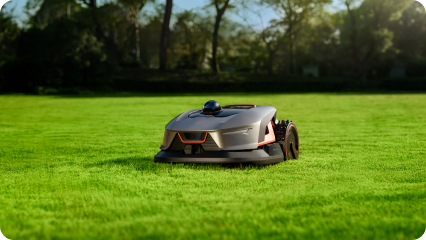
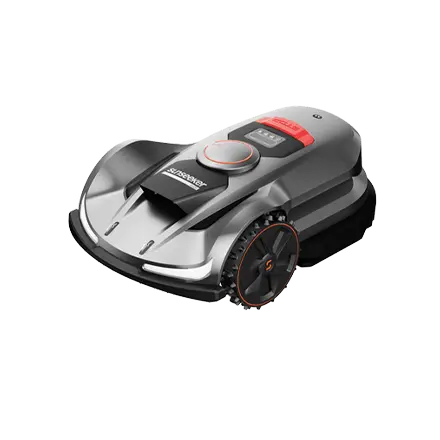
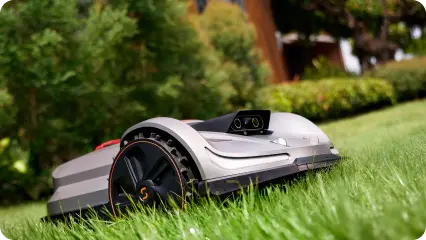
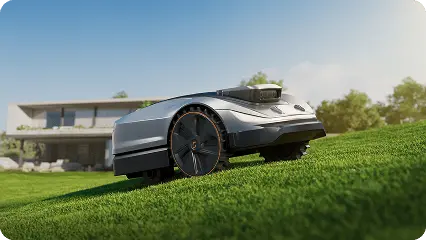
For large commercial areas, the Sunseeker Elite X9 shows how terrain mobility and wire-free routing can support commercial maintenance. Its ATC Pro all-wheel-drive system and four-wheel suspension are rated for slopes up to 90% (42°), while AONavi positioning supports planned routes without a perimeter wire. The X9 is rated to maintain established lawns up to 3 acres within a 48-hour mowing cycle, making these functions relevant to substantial sites that need frequent, consistent cutting.

Commercial value rises when one supervisor can see multiple machines, zones, schedules, and exceptions without visiting every site. Look for role-based access, machine status, location history, completion records, remote pause controls, maintenance reminders, and clear fault messages. Multi-zone tools should allow different cutting heights or schedules where turf growth and usage vary. Ask how data syncs after weak connectivity and if a contractor can separate customer sites while retaining a portfolio-wide view.
Battery capacity alone does not describe output. Daily coverage also depends on mowing speed, route efficiency, charging time, station approach, grass load, slope, and weather interruptions. Request a sample duty cycle that states minutes mowing, minutes charging, and expected acres completed in a defined day. Inspect charger power requirements and cable protection. Fast charging is useful only when battery temperature management and component life remain suitable for repeated commercial cycles.
For contractors, the main opportunity is a different division of work rather than a crew-free operation. The practical effects appear in staffing, supervision, and the consistency of recurring service.
Routine mowing can account for many predictable hours on a large contract. Moving some of that workload to robots lets trained employees focus on edging, pruning, irrigation checks, plant care, cleanup, and customer requests. A useful pilot should record the labor hours before and after deployment, including transport, setup, rescues, cleaning, and blade changes. That full measurement shows if the technology truly releases productive crew time.
Supervisors may manage exceptions instead of driving each mowing route. This changes the skills needed on the team: mapping, remote monitoring, safe recovery, software updates, and preventive maintenance become operational tasks. Companies should set response standards for stopped machines and define who can alter boundaries or schedules. Clear responsibility prevents a minor alert from leaving a visible area unfinished for several days.
Frequent light cuts can keep established turf at a stable height and leave fine clippings that settle into the canopy. For commercial properties, repeatability may improve appearance between crew visits and reduce the dramatic growth swings created by weekly bulk removal. Schedules still need seasonal adjustment. Rapid spring growth, drought stress, heavy rain, public events, and fertilization can all require a pause or a different mowing frequency.
A short demo proves that a mower can operate under selected conditions. Before approving a purchase, buyers should collect evidence about the full ownership and support experience.
Robot Lawn Mower Trends to Watch at Equip Expo 2026 point toward more dependable navigation, clearer safety behavior, better edges, stronger mobility, coordinated fleets, and measurable uptime. Buyers will gain the most value when they arrive with site data and test each claim against a real operating requirement. Review Sunseeker’s Robot Lawn Mowers to compare coverage, terrain capability, navigation, and maintenance needs before creating a focused Expo evaluation list.
Equip Exposition 2026 takes place October 20-23 in Louisville, Kentucky. The October 20 Welcome Reception is at Churchill Downs, with no trade show that day. The exhibition runs October 21-23 at the Kentucky Exposition Center, 937 Phillips Lane. A badge includes the three show days, demo yard, featured events, and free venue parking.
The official 2026 public materials confirm that the show floor operates Wednesday-Friday, October 21-23, and that badge pickup at the Kentucky Exposition Center begins at 8:00 a.m. each day. Exact daily opening and closing hours are not listed in the published attendee FAQ, so confirm them in the current event schedule or Equip mobile app before travel.
Contractor, landscape professional, dealer, retailer, and distributor passes cost $30 through September 10, 2026, $60 during September 11-October 19, and $120 once the show begins. The earlier $25 super-early rate ended May 31. Manufacturer, media-sales, and advertising-agency registration is listed at $450. Paid education can add $50-$150 per class.