






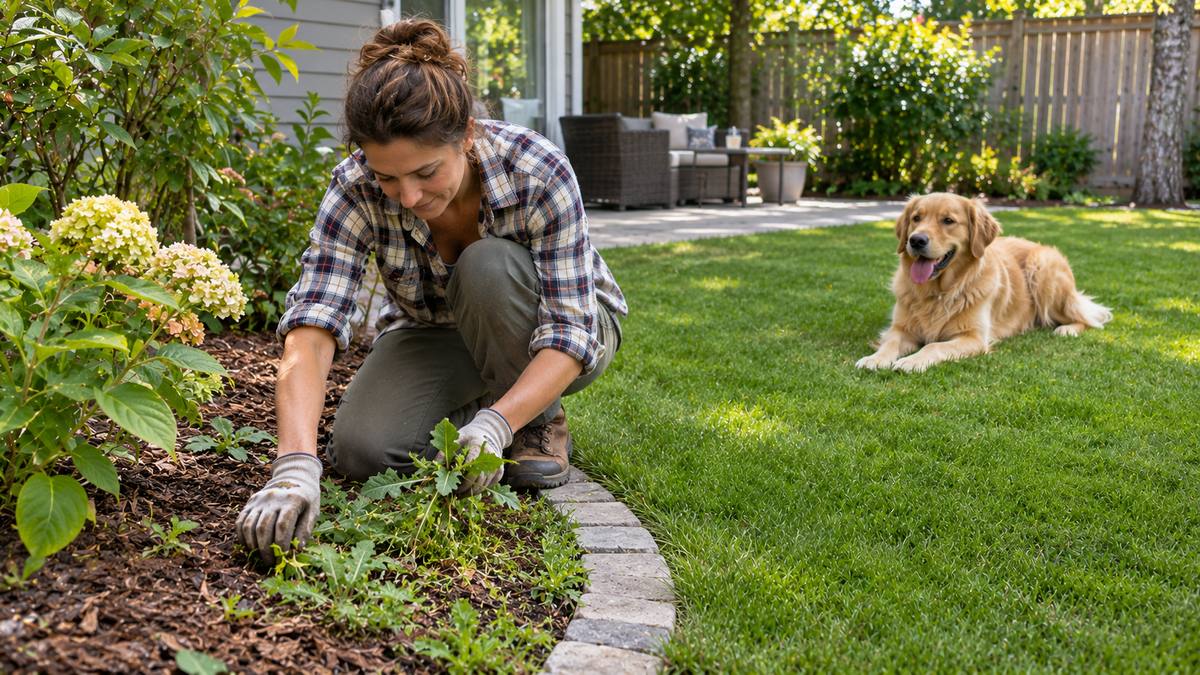
Pet safe weed control starts with thinking about how your pet actually uses the yard. Where they walk, sniff and rest should shape how, and where, you treat weeds.

Pet safe weed control


A few weeds may not seem like a big deal until they show up in the same places your dog or cat walks, sniffs, rolls, or plays every day. Suddenly, spraying the whole yard feels like a much bigger decision.


That changes the weed-control question. The safest plan is often to shrink the amount of yard that needs treatment, solve the conditions that keep producing weeds, and use a herbicide only where it has a clear job.


Pull the Easy Weeds Before You Spray Anything


A scattered dandelion beside the steps or a few young weeds in a planting bed rarely need a whole-yard response. When the soil is damp, many tap-rooted and shallow-rooted weeds can be pulled with a hand tool before they flower or set seed. Bag mature seed heads instead of dropping them back onto the soil.


This is especially useful in the places a pet visits constantly: beside a favorite gate, around a water bowl, near a digging spot, or along a narrow run between the house and lawn. Removing ten weeds by hand may be less work than blocking access to a treated area, moving toys and bowls, waiting through a re-entry period, and then monitoring the spot again.


Mulch the Places Where Weeds Keep Coming Back


Repeated weeds in the same flower bed often signal exposed soil, not a failure to spray often enough. After pulling the existing growth, add a layer of coarse organic mulch such as shredded bark or wood chips. Around established shrubs and perennials, roughly 2 to 3 inches is usually enough to shade the soil surface without piling material against stems or crowns.


Mulch reduces the light available to many germinating weed seeds and makes new seedlings easier to spot and remove. It also creates a clearer boundary between lawn and bed, which can cut down on the awkward strip of mixed grass and weeds that develops when edging is vague.


Choose the mulch with your pet in mind as well as the plants. If your dog tends to dig or chew in planting beds, avoid materials that are easy to swallow or tempting to carry around, and keep the mulch layer tidy so loose pieces do not spread into play areas.


A Weedy Lawn May Need Fixing More Than Spraying


A lawn full of weeds is often showing where the grass itself is losing the competition. Thin turf, repeated scalping, heavy pet traffic, compacted soil, poor drainage, or too little light can leave open space for weeds to establish. Killing the weeds without changing the site can leave the same openings ready for the next round.


Look at the pattern before treating the plant. Weeds concentrated along a dog route point to wear and compaction; weeds under a tree may point to thin grass in shade; weeds in a low, soggy area suggest that water movement deserves attention first.


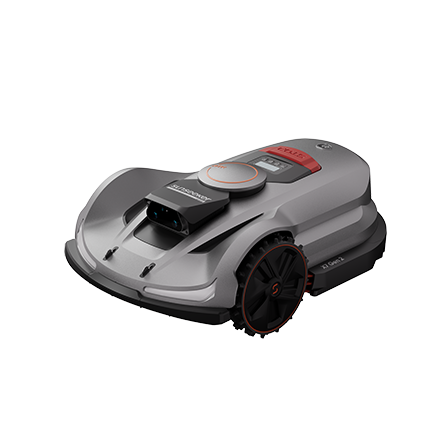
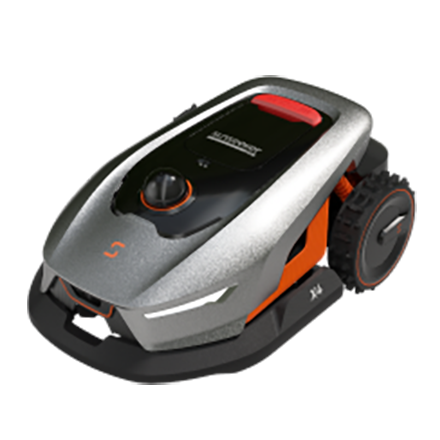
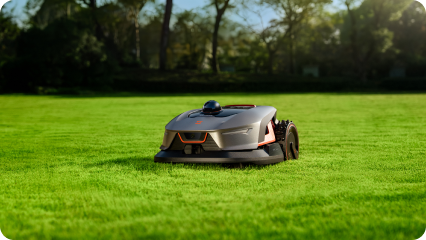
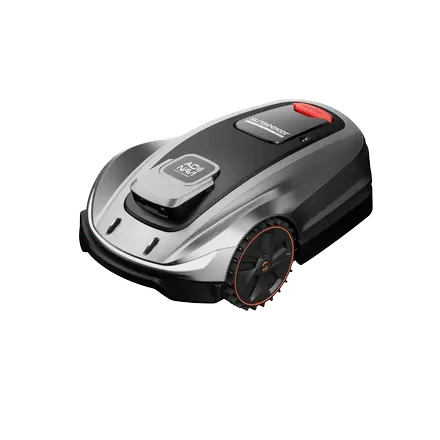
Consistent mowing is part of that repair once the lawn has the light and soil conditions to support dense grass. On sloped or uneven properties, AWD Robotic Mowers can keep routine cutting more consistent where traction makes manual mowing easy to postpone.


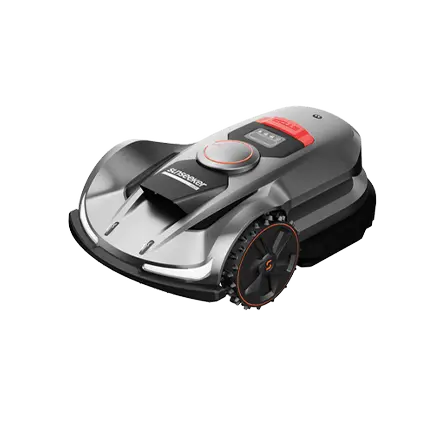
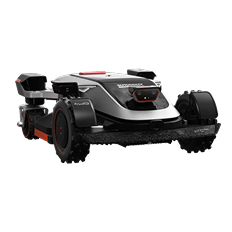
For estate-scale lawns, the Sunseeker Elite X9 Plus is rated for up to 6 acres in 48 hours and uses an infrared vision system designed to detect and avoid animals, including in low light. Keeping mowing consistent can help dense grass recover and reduce the open space where new weeds are most likely to establish.
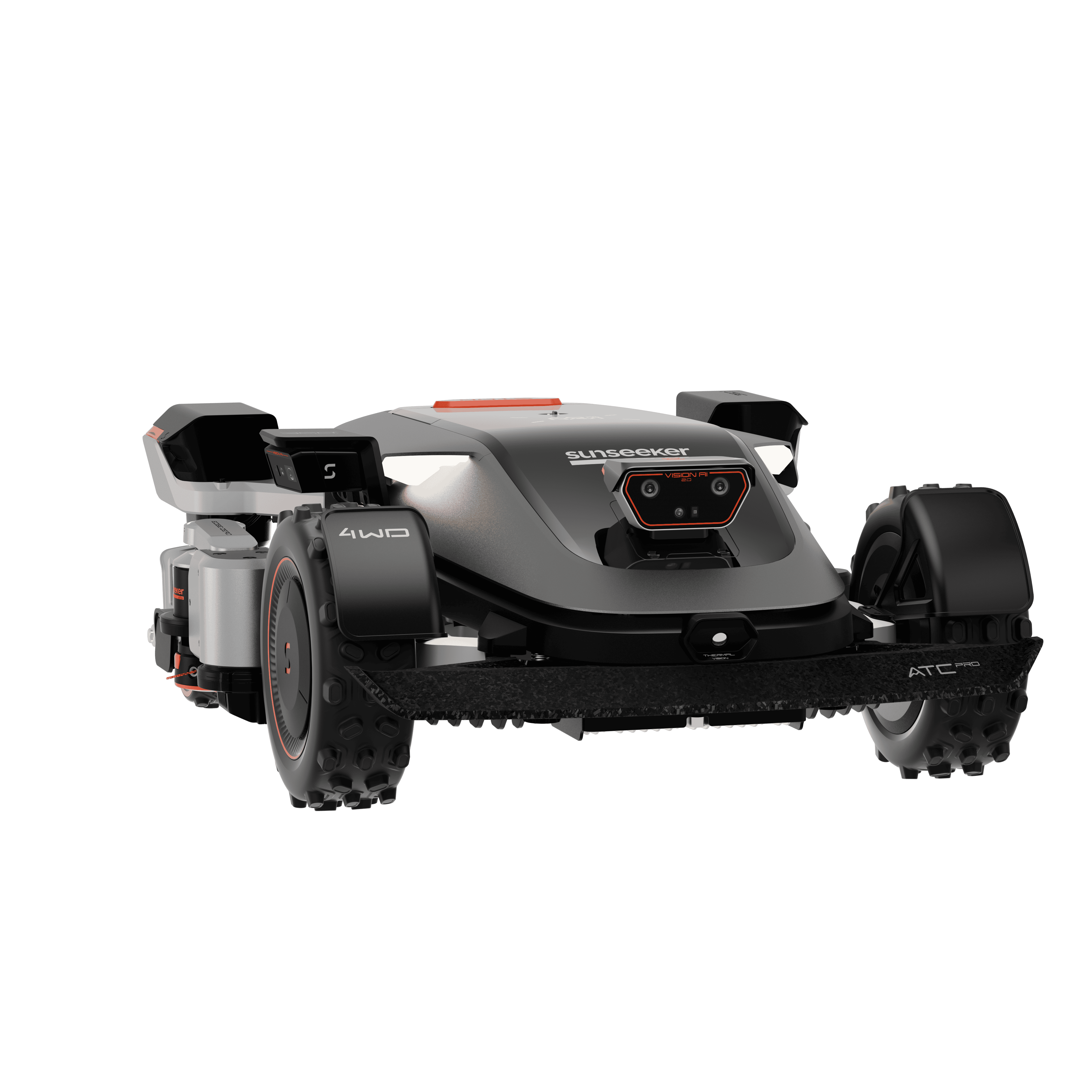

X9 Plus

X9 Plus | 6 Acres

USD 6999

  • AONavi™ Positioning and Navigation System( Fusion of RTK and VSLAM 2.0).
  • 360° OmniSight™ 24h Full Scene System. Total 16 sensors guarantee more than day & night vision & perception.
  • World's first infrared night vision robotic mower. X9 Plus ensures animal-friendly navigation, spotting even hidden animals.
  • ATC Pro Drive System.
  • All-wheel drive+ all-wheel suspension+ all-terrain wheels.
  • 90% / 42° industry-leading climbing ability.
  • EdgeZero™ trimming attachment. World's first truly edge-to-edge mowing product
  • Dual floating cut disc​s seamlessly adapts to undulating landscapes and obstacles while prioritizing turf.
  • Intelligent path planning and fully automatic mapping.
  • Cut before turn with rear-wheel steering motor.
  • 2.2 mph mowing speed.

“Natural” Does Not Automatically Mean Pet-Safe


A bottle labeled natural, plant-based, or vinegar-based can sound reassuring, but the source of an ingredient does not tell you how irritating or hazardous a concentrated product may be. Concentration, dose, route of exposure, and the way the product is used matter more than the marketing language on the front.


Horticultural vinegar is a useful example. Household vinegar is commonly around 4 to 6 percent acetic acid, while products sold for weed control can contain 20 percent or more. At those higher concentrations, acetic acid can seriously irritate or damage skin and eyes. A DIY mixture is not automatically the gentler choice just because the ingredients are familiar.


Treat any weed-control product as something that needs a real use plan. Read the active ingredient, signal word, application directions, protective-equipment requirements, and pet or re-entry instructions. “Natural” can describe where an ingredient came from; it should not replace the safety information on the label.


If You Use a Weed Killer, Let the Label Set the Rules


The label is the practical safety plan for the exact product in your hand. It tells you where the product may be used, how much to apply, what weather conditions to avoid, what protective gear is required, and how long people or pets should stay out of the treated area.


Before application, move pets indoors or to an untreated part of the property. Pick up toys, chews, bedding, food bowls, and water bowls that could catch spray or granules. Apply only to the target area, not to the entire yard by habit, and stop if a pet or person enters the area while you are treating it.


Afterward, use the product-specific re-entry direction. For many sprays, that means waiting until the treated surface is fully dry; some products require a longer interval. If the label gives a specific time, follow that time rather than relying on a general rule.


Wet Spray and Granules Need Different Precautions


A wet spray and a granular lawn product create different ways for a pet to make contact. Fresh spray can transfer to paws, fur, toys, and skin before it dries. Granules can lodge between paw pads, stick to fur, collect beside paths, or be picked up directly if they remain visible on the surface.


For sprays, keep pets away for the label-specified period and until the application is completely dry when that is the longer restriction. For granular products, read the directions to see if the material must be watered in. Some granular lawn treatments can require 24 hours or longer while the granules dissolve and the surface dries.


Your Pet’s Favorite Part of the Yard Deserves Different Treatment


Some parts of the yard get far more pet traffic than others. The grass beside the back door may be where your dog runs, rests, plays, or goes to the bathroom several times a day. A cat may have one favorite patch of grass, while an older dog may return to the same shaded corner every afternoon.


Notice those high-use areas before deciding how to deal with weeds. In places your pet touches often, pulling weeds, cutting them back, adding mulch, or changing the surface may be more practical than spraying. If you use a herbicide, keep the treated area as small as possible and keep pets away until the label says they can return.


Sometimes the best fix is to change the area itself. A simple path, denser groundcover, a defined potty spot, or a tougher lawn edge can reduce both weed problems and repeated wear in the places your pet uses most.


Keep the Package After the Yard Is Treated


Do not throw away the container or transfer leftover product into an unmarked bottle once the application is finished. The original package carries the active ingredient, EPA registration information, storage and disposal directions, first-aid instructions, and the manufacturer contact details tied to that exact formulation.


Keep it stored securely where pets and children cannot reach it, at least until the treatment period is over and you know the yard is back in normal use. If you ever suspect an exposure, having the original label in hand gives a veterinarian or poison resource far more useful information than trying to remember the brand name or the color of the bottle.


A Safer Yard Usually Needs Less Treatment


Pet-safe weed control is less about finding one “safe” bottle and more about reducing unnecessary treatment, fixing the conditions that keep inviting weeds, and planning around the way an animal actually uses the yard. That approach usually leaves you with fewer treated surfaces, fewer repeat applications, and a landscape that asks for less intervention over time.