














7 Low-Maintenance Front Yard Landscaping Ideas That Still Look Polished

  • Homepage
  • Blog
  • 7 Low-Maintenance Front Yard Landscaping Ideas That Still Look Polished
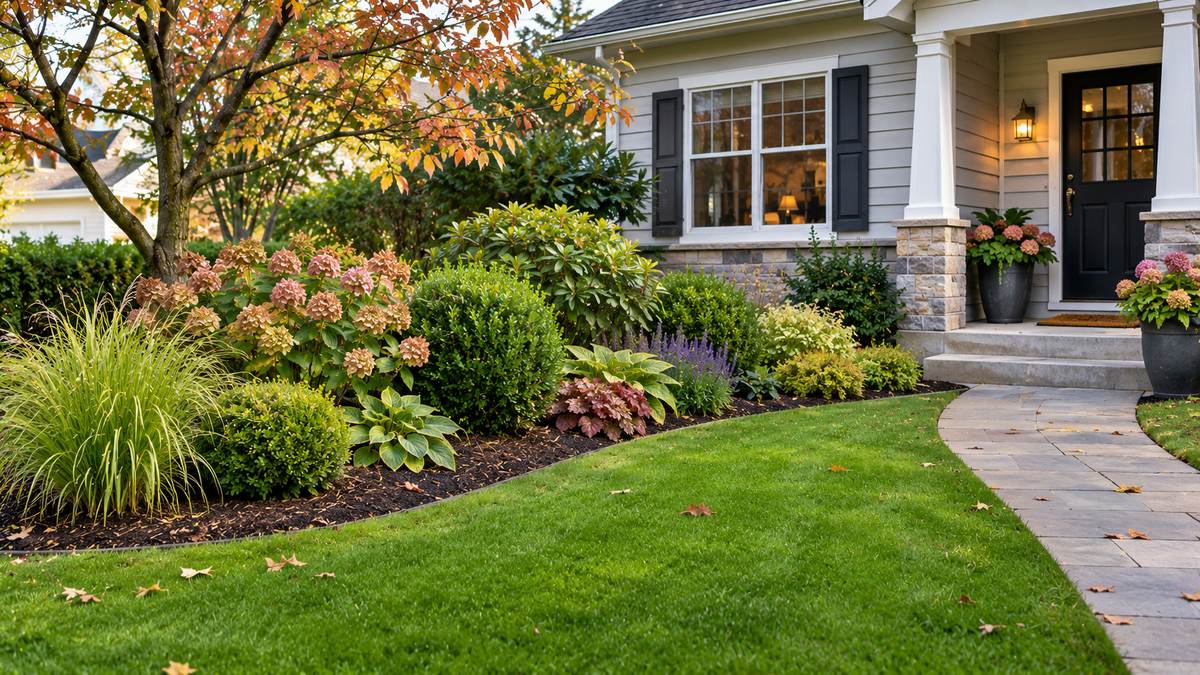
A low-maintenance front yard can still look neat, intentional and welcoming. The key is reducing the areas that demand repeated mowing, weeding, watering or seasonal attention.

Low maintenance front yard landscaping


A front yard can look calm and polished while quietly creating a long maintenance list. Small beds need edging, narrow strips of grass need trimming, thirsty plants pull you back outside, and every empty patch seems to produce another round of weeds.


Low-maintenance front yard landscaping works best when it removes those repeated jobs without stripping away the parts that make the entrance feel cared for. The goal is a simpler layout, a tighter plant palette, and a few intentional places where seasonal color or detail is worth the extra attention.


7 Low-Maintenance Front Yard Landscaping Ideas


The easiest front yards to maintain are rarely the barest. They are designed so mowing, watering, weeding, and pruning follow a simpler pattern, while the strongest visual elements do more of the work.


1. Turn Several Small Planting Beds Into One Larger Border


A front yard broken into several tiny beds can create more work than one generous border. Every island adds another lawn edge to trim, another patch to weed, and another awkward curve for the mower to follow. If two or three beds sit close together, connecting them can simplify both the layout and the weekly routine.


The larger border usually looks more deliberate too. A continuous bed can carry one repeated line of shrubs, grasses, or perennials across the front of the house, which gives the eye a clear shape to follow. Keep the outline broad enough for a mower to pass cleanly beside it and avoid tight inward curves that turn edging into a precision job.


2. Replace the Strip of Grass That Is Always Annoying to Mow


Most front yards have at least one piece of lawn that takes far more effort than its size suggests. It might be a strip between the driveway and a bed, a steep piece beside the sidewalk, or a narrow wedge around a utility box. If it always needs a second pass with a trimmer, the shape is probably the problem.


You can widen an adjacent bed, replace the strip with a low groundcover suited to the site, or use gravel or another permeable surface where plants are not practical. The best choice is the one that removes an awkward mowing path without creating a new weekly chore somewhere else.


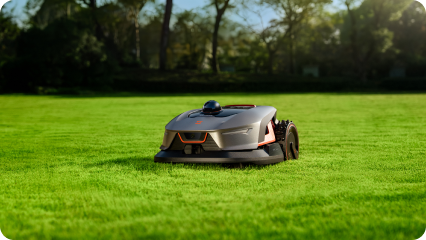
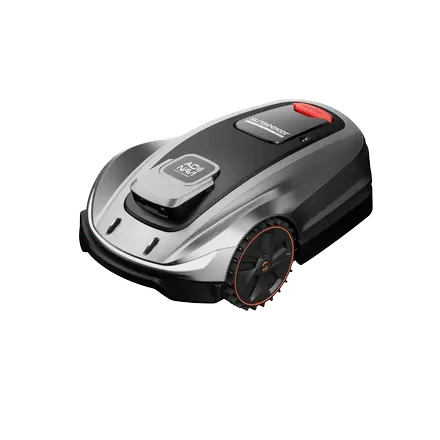
Where the lawn itself is worth keeping but the terrain is uneven or sloped, AWD Robotic Mowers can take some of the physical work out of those repeat mowing routes. All-wheel drive is most useful where traction and stability matter, so the technology has a clear job rather than simply adding another gadget to an easy, flat lawn.


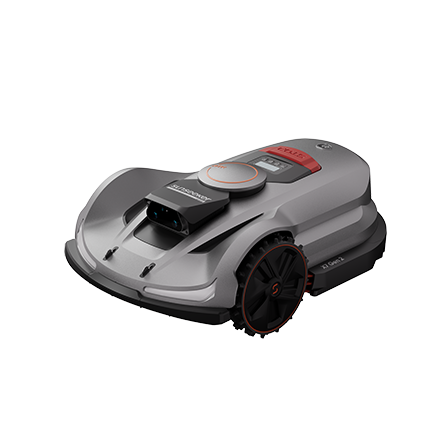
On estate-scale properties, the Sunseeker Elite X9 Plus is built for a much larger version of the same problem. It is rated for up to 6 acres in 48 hours, and its ATC Pro drive system combines all-wheel drive with four-wheel suspension for rough or steep ground; EdgeZero is standard on the X9 Plus for close boundary cutting. That makes it relevant when the front lawn is only one part of a much larger mowing job.


X9 Plus

X9 Plus | 6 Acres

USD 6999

  • AONavi™ Positioning and Navigation System( Fusion of RTK and VSLAM 2.0).
  • 360° OmniSight™ 24h Full Scene System. Total 16 sensors guarantee more than day & night vision & perception.
  • World's first infrared night vision robotic mower. X9 Plus ensures animal-friendly navigation, spotting even hidden animals.
  • ATC Pro Drive System.
  • All-wheel drive+ all-wheel suspension+ all-terrain wheels.
  • 90% / 42° industry-leading climbing ability.
  • EdgeZero™ trimming attachment. World's first truly edge-to-edge mowing product
  • Dual floating cut disc​s seamlessly adapts to undulating landscapes and obstacles while prioritizing turf.
  • Intelligent path planning and fully automatic mapping.
  • Cut before turn with rear-wheel steering motor.
  • 2.2 mph mowing speed.

3. Use Fewer Plant Varieties, but Repeat Them More


A front yard can become high-maintenance simply because every few feet introduces a different plant with a different habit. One needs deadheading, another flops after rain, another spreads into the path, and a fourth needs dividing just as the others settle down. Variety can be beautiful, but too many one-off plants create a collection of unrelated care jobs.


Repeating a smaller palette creates rhythm and makes the planting look more designed. The same ornamental grass can echo along a walk, the same flowering perennial can appear in several pockets, and one dependable shrub can anchor both sides of the entrance. Repetition gives you visual continuity without needing a new plant trick in every square foot.


It also makes seasonal maintenance easier to batch. Plants that are cut back at the same time or need similar watering can be handled together, and replacements are simpler when you already know which varieties perform well in that site.


4. Let Evergreen Shrubs Do Most of the Visual Work


A polished front yard needs some structure when flowers are finished and deciduous plants are bare. Evergreen shrubs can provide that background without asking you to rebuild the view every season. Place them where the eye naturally looks first: beside the entrance, at the corners of the house, or along a prominent foundation line.


The important part is choosing shrubs that fit the space at their mature size. An evergreen that naturally stays close to the height and width you need will usually require less corrective pruning than one that has to be sheared into submission several times a year. Leave enough room around doors, windows, paths, and utilities so the plant can keep its natural outline.


Evergreens do not need to fill the whole yard. A few well-placed masses can carry the design through winter, while perennials, bulbs, or flowering shrubs add the seasonal change around them. That balance keeps the front yard looking finished even when the more temporary color disappears.


5. Keep the High-Maintenance Planting Close to the Front Door


Low-maintenance does not have to mean giving up containers, roses, annual color, or plants you enjoy fussing over. It is easier to keep those details when they are concentrated where you already walk every day.


A planter beside the steps or a small flowering bed near the porch is much more likely to get watered, deadheaded, and noticed than an equally demanding patch at the far edge of the property.


Treat the front door area as the high-attention zone and let the outer edges get progressively simpler. Farther from the house, use plants that hold their shape, tolerate the site, and do not need constant intervention. The yard still gets its moments of color and personality, but the labor is concentrated where it has the most visual payoff.


6. Use Mulch Where Weeds Keep Returning - Not Everywhere


Mulch is most useful in the places where bare soil keeps turning into a weed nursery. Around young shrubs, between new perennials, and in open stretches of a border, a 2- to 4-inch layer of organic mulch can suppress many weed seedlings and slow moisture loss. Keep it pulled back from trunks, stems, and plant crowns rather than piling it against them.


The low-maintenance move is to target the exposed ground that actually causes work. A bed already filled by spreading groundcovers or mature plants may need very little extra mulch, while a sunny gap that you weed every two weeks is a better priority.


Use the pattern of last season's weeds as your map. If the same strip beside a walkway or under a loose shrub border keeps filling in with seedlings, that is where mulch is doing a job.


7. Make Watering Something You Don't Have to Think About Every Day


A front yard becomes surprisingly demanding when every plant seems to need water on a different schedule. Grouping plants with similar moisture needs is one of the quietest ways to simplify the space.


Drought-tolerant shrubs and perennials can share one area, while plants that prefer more consistent moisture can stay together closer to a reliable water source.


Then make the routine predictable. Drip irrigation can deliver water directly to planting beds, while a controller or timer can handle the basic schedule so watering is not based on memory alone. Adjust for rainfall, heat, and newly planted areas rather than leaving the same program running all season.


A system that matches the planting layout makes the garden easier to care for because the design and the routine are working together.


Make the Maintenance Fit the Design


A polished front yard does not need constant attention; it needs fewer places that create the same job over and over. Simplify the bed shapes, remove awkward lawn fragments, repeat plants that already work, and keep the fussier details where you will actually enjoy them. When the layout supports the way you mow, weed, water, and walk through the space, low maintenance starts to look intentional rather than stripped back.