




FAQs
9/9/2026
Contents
Products
Residential Lawns









Explore
Where to Buy


Winter preparation should begin while the lawn is still actively growing, not after the ground freezes. For many cool-season lawns, keep mowing near the normal 2.5- to 3-inch range, clear heavy leaf cover, address compaction, and use soil-test-based fertilizer. Finish irrigation before freeze-up if soil is dry, while warm-season lawns need a different fall strategy as growth slows.
A lawn can look fine in early fall and still enter winter stressed. Heavy leaves block light, compacted soil limits roots, and a late burst of fertilizer can push growth at the wrong time. The useful window for winter preparation is the period when grass can still recover from mowing, aeration, and traffic before hard freezes arrive.
That window shifts with grass type and climate. A northern cool-season lawn may still be green while bermudagrass farther south is already moving toward dormancy, so use lawn condition rather than a single calendar date. This blog breaks winter prep into practical checks and steps, from final mowing to leaf cleanup, fertilizer timing, and protection during dormancy.
Start when daytime growth is slowing but the turf is still green and roots remain active. In many cool-season regions, that means late summer through fall; the exact weeks depend on first-frost and soil-freeze timing.
Colorado State University Extension, for example, recommends making the final fall nitrogen application to cool-season turf while grass is still green and at least two to three weeks before the ground begins to freeze. Aeration is also most useful while the lawn can recover. In colder regions, core aeration and overseeding are commonly scheduled in late summer to early fall rather than close to winter dormancy.
Winter prep is not a reason to scalp the lawn. CSU mowing guidance generally recommends 2.5 to 3 inches and notes that mowing below 2 inches can reduce heat and drought tolerance; local species guidance still takes priority.
A quick inspection helps separate work that will benefit the lawn from treatments that are unnecessary or poorly timed. Base each task on what the lawn actually needs before winter.
Cool-season grasses such as Kentucky bluegrass, perennial ryegrass, and tall fescue remain active into cooler weather and can benefit from fall recovery work. Warm-season grasses such as bermudagrass and zoysiagrass slow as temperatures fall and should not be pushed with late nitrogen once dormancy approaches.
If you are unsure of the species, check blade texture and growth habit before making fertilizer or mowing decisions. A cool-season lawn that is still green and growing may need several more cuts; a warm-season lawn that has stopped active growth should be treated as dormant rather than forced into fresh growth.
Push a screwdriver or soil probe into several areas. If it is difficult to penetrate moist soil or foot traffic has created hard pathways, compaction may be limiting air and water movement. Core aeration is most useful when soil is moist enough for tines to enter but not so wet that machinery smears the surface.
Typical core aeration removes plugs about 2 to 3 inches long when conditions are right. Very dry soil often produces shallow plugs, while saturated soil can be damaged by the machine. Water a dry lawn a day or two before aerating if local restrictions and conditions allow.
Estimate how much turf is missing and identify why. Small worn patches can be repaired, while widespread thinning may signal shade, drainage, disease, or compaction that must be corrected first. For cool-season lawns, late summer to early fall is often a strong overseeding window because soil is warm and competing summer weeds are declining.
Seed needs time to germinate and establish before severe cold. Kentucky bluegrass can take up to about three weeks to germinate under suitable conditions, so last-minute seeding just before freeze-up is risky.
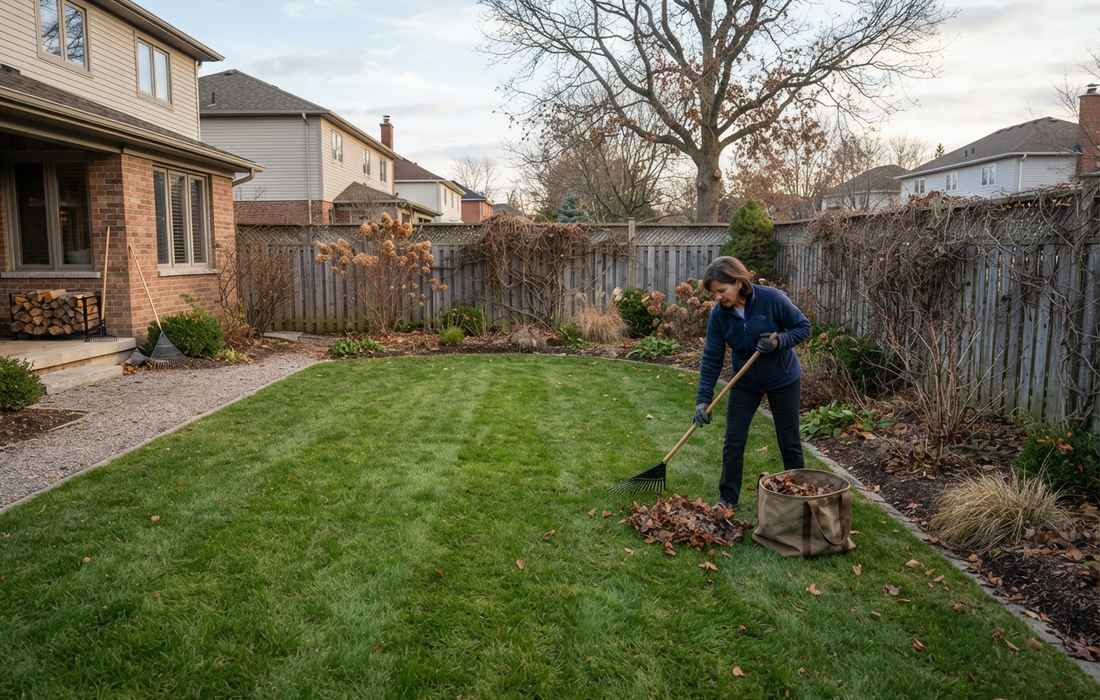
A light layer of shredded leaves can decompose, but dense wet leaves can mat the canopy, block light, and create a humid surface. Mow or mulch manageable leaf fall frequently instead of waiting until the lawn disappears under a thick layer.
Remove branches, toys, hoses, and other objects before snow cover so they do not flatten turf for months.
The sequence matters because mowing, aeration, seeding, fertilizer, and watering interact. Complete disruptive work while the lawn still has enough growing time to recover.
Clear heavy leaf cover first so you can see thin areas and operate equipment safely. If leaves are dry and the mower can chop them into small pieces without forming mats, several passes can return some organic material to the lawn. Bag or collect leaves when the layer is too heavy to shred evenly.
Continue mowing while grass is growing. For many cool-season home lawns, a 2.5- to 3-inch height is a practical reference; avoid suddenly cutting a 4-inch lawn down to 1.5 inches. Follow the one-third rule so no more than about one-third of the blade is removed in a single mowing.
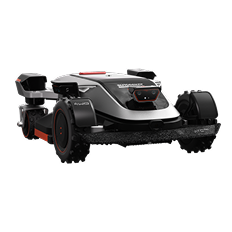
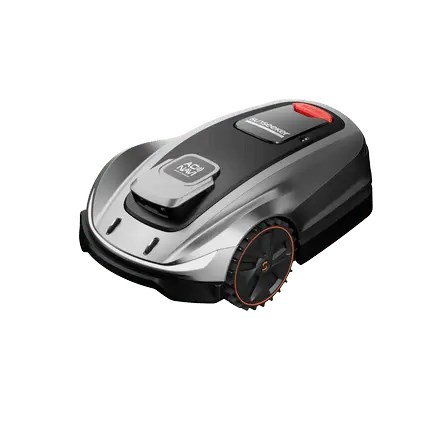
Robot Lawn Mowers can support final seasonal cuts while the grass is still growing and the ground remains firm enough for traffic. For large properties, Sunseeker Elite X9 Plus offers target-height management across 0.8–4 in, helping maintain a planned seasonal height instead of making one abrupt short cut. Sunseeker rates the X9 Plus for up to 6 acres per 48 hours, which suits estate-scale final mowing before growth stops.

Aerate only when compaction or excessive traffic justifies it. Core aeration removes plugs and creates temporary channels for air, water, and seed-to-soil contact. Make enough passes that holes are reasonably close together in compacted areas; a single sparse pass may have little effect.
Leave healthy soil plugs to break down naturally, and avoid aerating when the turf has no recovery time before a hard freeze.
Choose seed adapted to the existing lawn and regional climate. Rake or aerate so seed reaches soil rather than sitting on leaves or thatch. Keep the surface consistently moist during germination, then gradually reduce watering frequency as roots develop.
Do not overseed just because fall has arrived. Warm-season turf has a different establishment window, so follow regional guidance for the species you actually have.
Use a soil test and a species-specific schedule. On established cool-season lawns, a common Extension example is about 0.5 to 1 pound of actual nitrogen per 1,000 square feet for a fall application, but the exact rate depends on species, prior fertilization, soil, and product label. Purdue nitrogen math also explains why the calculation should start with actual nitrogen, not bag weight.
Skip late nitrogen on warm-season lawns as dormancy approaches. Also avoid fertilizing frozen soil, saturated soil, or immediately before heavy rain that could move nutrients off-site.
If fall has been dry, water deeply enough to rehydrate the root zone before the soil freezes. The goal is not to keep the lawn continuously wet through winter. Stop irrigation when the ground is frozen or when local winterization of the irrigation system requires it.
In dry climates with open winters, CSU lawn care basics note that occasional winter watering may be needed during extended snow-free periods if the ground is thawed and can accept water. Follow local rules because frozen soil, drainage, and municipal water restrictions differ widely.
Grass physiology sets the seasonal schedule, so cool-season and warm-season lawns need different fall treatment. Use this comparison as a starting point, then adjust for local first-frost dates and regional guidance.
Grass type | Typical fall behavior | Practical winter-prep focus |
Kentucky bluegrass / perennial ryegrass | Cool-season; continues growth in cool fall weather | Keep mowing near 2.5–3 in; consider timely aeration, overseeding, and soil-test-based fall N while still green |
Tall fescue | Cool-season; strong fall root activity | Maintain roughly 2.5–3 in as a general reference; some regional programs allow slightly higher growth, so follow local guidance |
Fine fescue | Cool-season; lower fertility demand | Use lighter fertility; prioritize leaves, traffic control, and appropriate mowing rather than heavy N |
Bermudagrass | Warm-season; slows and goes dormant after frost | Avoid late fall N; manage leaves and final mowing based on regional warm-season guidance |
Zoysiagrass | Warm-season; enters dormancy as temperatures fall | Avoid pushing late growth; keep surface clean and reduce traffic on dormant turf |
Once growth has stopped, the priority shifts from active work to protecting dormant turf and avoiding preventable winter damage. The following habits cover the most common risks through the cold months.
Preparing a lawn for winter works best when each task responds to grass type and current conditions. Keep mowing at an appropriate height while growth continues, remove heavy leaf cover, aerate only compacted areas, seed early enough to establish, and fertilize only when the species and soil test support it. Water before freeze-up if fall has been dry. A consistent seasonal routine matters more than one last-minute overhaul, and Robot Lawn Mowers can keep that routine going with steady, scheduled cuts.
The best time to prep your lawn for winter depends on grass type. For cool-season lawns, begin major work in late summer or early fall while turf is still growing, completing seeding and aeration early enough for recovery. For late-fall nitrogen, CSU guidance recommends applying while grass is green and at least two to three weeks before the ground freezes.
No. Fertilizer need depends on grass species, previous applications, soil test results, and local climate. Cool-season turf often benefits from fall nitrogen, while warm-season grasses generally should not receive late nitrogen near dormancy. A typical cool-season fall application may be around 0.5–1 pound actual nitrogen per 1,000 square feet when locally recommended.
Mulch light, dry leaf cover when the mower can chop it into small pieces that disappear into the canopy. Bag or remove leaves when they form a thick, wet mat or continue covering most of the turf after mowing. The goal is to prevent prolonged shading and moisture buildup, not to remove every leaf from the property.