























Fall can change a lawn quickly. Some areas may still be growing, while shaded spots stay wet under fallen leaves and cooler nights slow the grass down. Doing every fall job at once can be unnecessary and may put extra stress on the lawn.
When planning how to care for your lawn in fall, focus on what still needs attention before winter. Mowing may continue for a while, feeding or aerating may suit some lawns, and reseeding can help in the right conditions. A few well-timed jobs now can make spring care much easier.
When Should You Start Fall Lawn Care for Your Grass Type?
For cool-season lawns such as tall fescue, Kentucky bluegrass, and perennial ryegrass, late summer through early fall is often the best repair window: roots and shoots become active as hot weather eases. In northern states, seeding may begin in August; farther south, conditions stay workable into September or October. New grass must establish before repeated freezes.
Warm-season lawns follow a different clock. Bermudagrass, zoysia, and St. Augustinegrass recover most strongly during warm months. As growth slows in autumn, concentrate on removing leaf cover, mowing appropriately, and checking drainage. Save major aeration or patch renovation for late spring or early summer, when regional turf guidance shows these grasses spread and heal.
How Do You Care for Your Lawn in Fall Step by Step?
Fall lawn care is easier to manage when tasks are spread throughout the season. Some jobs need to be done while the grass is still actively growing, while others are better handled as temperatures drop and winter approaches.
Step 1. Assess the Lawn’s Condition
Walk the lawn after the dew dries. Look for thin grass, bare soil, flattened leaf-covered patches, puddles, and worn paths. Pull apart a small patch to see whether the soil is damp but crumbly or compacted and slick. Brown blades do not mean dead grass; check for green growth near the crown.
Mark areas needing different treatment. A shady, consistently wet corner may need drainage, not more seed. Where weeds or thinning recur each year, a soil test can guide fertilizer or pH decisions before you buy amendments.
Step 2. Clear Heavy Leaf Cover
Remove thick blankets of leaves before they mat down wet against the turf. A thin scattering of dry leaves can often be shredded with a suitable mower so the pieces settle between grass blades. If grass is hidden under a continuous mat, rake or collect the excess for garden beds or compost.
Check again after windy days, not just once at the end. Keep leaves off newly seeded spots, where shade and smothering can interfere with germination. Rake matted areas only; healthy turf needs no scraping.
Step 3. Adjust the Mowing Height
Continue mowing in fall as long as the grass is actively growing. Keep tall fescue around 3-4 inches, Kentucky bluegrass around 2.5-3.5 inches, and zoysia around 1.5-2.5 inches. Follow the one-third rule to avoid cutting too much at once. For example, if your target height is 3 inches, mow when the grass reaches approximately 4.5 inches.
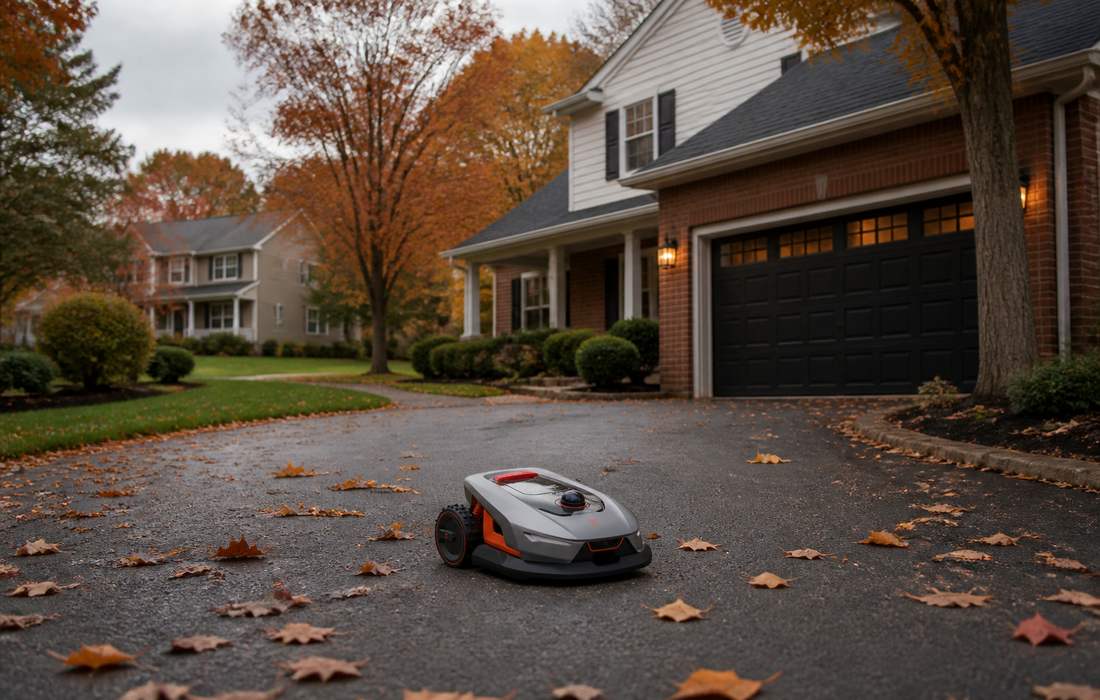
Frequent, light cuts also produce finer clippings that break down more easily on the lawn. Robot Mowers with Mulching Blades can help maintain this routine through scheduled mowing, keeping grass at a consistent height as growth gradually slows in fall.
Step 4. Aerate Compacted Soil
If your lawn has compacted areas, poor water absorption, or thinning grass caused by heavy foot traffic, use a hollow-tine core aerator to improve soil structure. For cool-season lawns, late summer to early fall is a suitable time because grass is actively growing and can recover quickly.
Aerate when the soil is moist enough for the tines to penetrate but firm enough to support the equipment. Leave the extracted soil plugs on the lawn to dry and break down naturally. For warm-season grass, schedule aeration during active growth in late spring or early summer.
Step 5. Repair Thin and Bare Areas
Fall is an excellent time to overseed cool-season lawns. Aim to sow grass seed at least six weeks, or roughly 45 days, before the average first fall frost to give seedlings time to establish.
Rake away dead grass and debris, loosen the topsoil, and spread seed at the recommended rate for your grass type. Lightly rake the seeds into the soil to improve contact, then water gently to keep the upper seedbed consistently moist during germination.
For warm-season lawns, plan major seeding or planting repairs for spring or early summer when growth resumes.
Step 6. Apply Suitable Fall Fertilizer
For cool-season lawns, fall fertilization can support root development and improve grass density before winter. Use your soil test results to choose a suitable fertilizer and apply it during periods of active nutrient uptake.
A common reference is 0.5-1 pound of actual nitrogen per 1,000 square feet per application, with the exact rate guided by local recommendations and fertilizer formulation. Spread it evenly using a calibrated spreader, and sweep granules off sidewalks and driveways.
Warm-season lawns have different feeding needs. Complete nitrogen fertilization before growth slows toward dormancy, following your region's recommended timing. Apply lime or additional potassium when soil testing indicates a need.
Step 7. Adjust Watering as Growth Slows
Cooler temperatures and shorter days gradually reduce your lawn's water needs. While grass is actively growing, around 1 inch of water per week, including rainfall, is a useful reference. Check soil moisture before irrigating and reduce watering as growth slows.
Newly seeded areas need more frequent, light watering until germination and early root establishment are complete. Once the grass develops stronger roots, gradually switch to deeper, less frequent watering.
As winter approaches, keep an eye on dry conditions and stop irrigating when the soil freezes. Drain and winterize your sprinkler system before freezing temperatures arrive.
How Should You Space Fall Lawn Tasks Before Winter?
Recovery time between tasks matters as much as the tasks. Much of how to take care of a lawn in fall is spacing: use the growing window as your timeline, then adjust for weather.
- Early fall, while growth is active: Inspect the turf and test soil if needed. For cool-season grass, schedule core aeration before overseeding so the new seed reaches soil.
- At least 45 days before a typical first frost: Complete cool-season seed repairs where possible. Keep the seedbed lightly moist and traffic-free while roots establish.
- Over the following 2-4 weeks: Track germination and new growth. Keep leaves off repaired patches, and wait until new grass is tall and firmly rooted enough for a first cut.
- As growth approaches dormancy: Reduce mowing and watering to match actual conditions. Clear leaf buildup, finish any suitable fertilization within local rules, and protect irrigation hardware before a freeze.
Spacing works only if the mowing schedule moves with it. The Sunseeker Elite X4 runs app-based schedules and planned routes across mapped zones, so the interval can be reset as the season requires. A schedule set during July growth will cut far more often than an October lawn needs; on turf held within a 1.6-3.2-inch range, it is the interval, not the height, that changes. Slowing it as growth eases keeps these lawns neatly trimmed without a peak-summer pace.