



FAQs
9/9/2026
Contents
Products
Residential Lawns




Explore
Where to Buy


Diatomaceous earth can effectively treat lawn pests, but only if applied correctly. It requires a pesticide-labeled product, completely dry weather, and precise placement. To see results without harming beneficial insects, you must target active pest trails rather than dusting the entire yard, and always follow the label's safety and reapplication guidelines.
Finding a trail of ants or fleas in your yard might tempt you to dust the entire lawn with diatomaceous earth (DE). However, DE isn't a catch-all solution for every turf problem. To get results without harming beneficial insects or wasting product, you need to know if your specific pest will actually come into contact with the powder. Below, we will walk through how to check your product label, prepare your yard, and apply DE safely and effectively.
Before dusting your yard, make sure DE is the right tool for the job. Understanding how this powder works will save you time and prevent unnecessary applications.
Diatomaceous earth, or DE, is a mineral powder made largely from silica-rich fossilized diatoms. Instead of poisoning insects chemically, it works physically. The sharp, microscopic particles damage the protective waxes on an insect's exoskeleton, causing it to dry out and die. For this to work, the insect must crawl directly through a dry deposit of the powder.
Identify your pest first. DE works well against crawling insects like ants or fleas, but it won’t help with grubs living deep in the soil, lawn diseases, or drought stress.
Always check the product label. If "lawns" or your specific outdoor area isn't listed, don't use it there. Application rates and legal uses vary widely between formulations.
Proper preparation ensures the powder stays exactly where you need it without drifting. Here are the essential steps to take before opening the container.
Use a registered pesticide product. The National Pesticide Information Center notes that "food grade" DE often lacks proper pest-control instructions and safety warnings, making it unsuitable for treating lawn pests.
Find the exact application rate for your specific pest. Measure your yard space and follow the label's math rather than guessing.
DE only works when dry. Never apply it right before rain, during heavy morning dew, or on windy days. Even a light breeze can blow the fine dust away from your target area.
Wait until the morning dew has completely evaporated and the forecast shows clear skies. If you use sprinklers, turn them off until the treatment period is over.
Clear the area of toys, pet bowls, and bedding. Keep kids and animals inside while you work and for the duration specified on the label. Just because DE is naturally derived does not mean it is safe to inhale or rub into eyes.
If you are treating near a pet area, ensure the dust is placed where normal play won't kick it into the air.
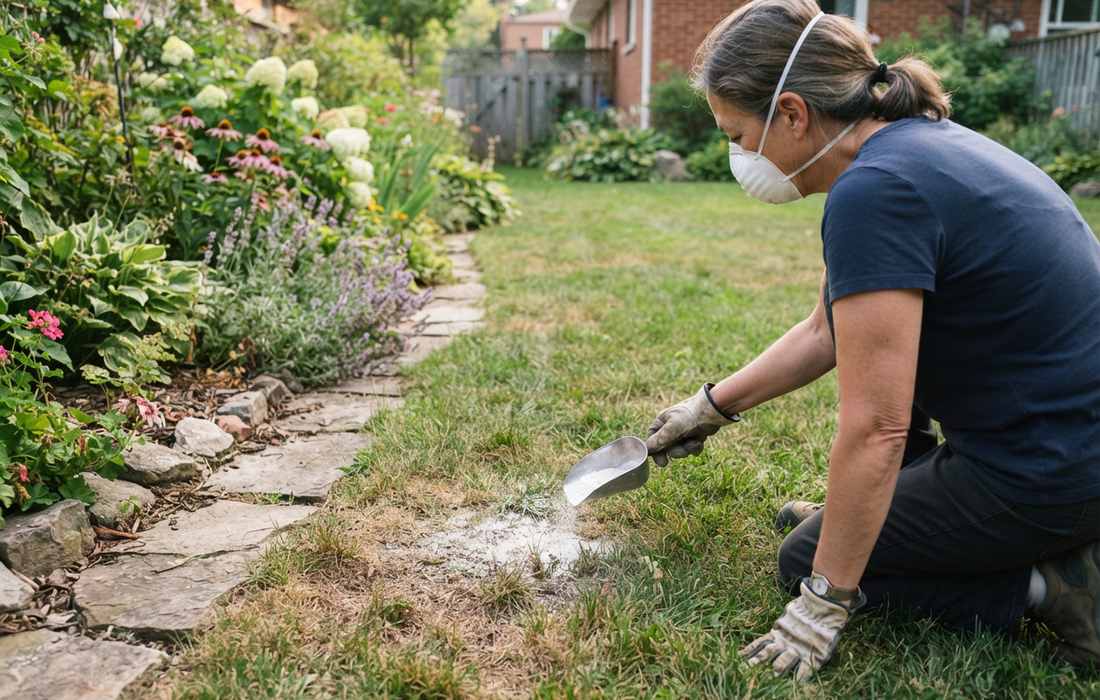
Breathing in fine dust irritates the lungs, throat, and eyes. Wear the specific dust mask or respirator recommended on the label—a simple cloth won't cut it. Pour the powder close to the ground to minimize airborne dust, and stop immediately if the wind picks up.
A successful DE treatment is highly targeted. Follow these steps to keep the application localized and effective.
Mow the grass only if you need to expose the soil or pest trails, and let any wet grass dry completely. Rake away leaves or heavy thatch that might block the powder from reaching the ground. Avoid mowing right after applying, as the mower blades will blow the dust away. Mark your treatment boundaries so you don't accidentally over-apply.
Measure the length and width of your problem area to find the total square footage. For example, a 10-by-20-foot patch is 200 square feet. Multiply this by the label's recommended rate. Resist the urge to add a little extra; a thicker layer isn't more deadly to bugs, but it does create a bigger mess and increases the risk to non-target insects.
Using a hand duster or shaker, keep the nozzle close to the ground. Move steadily to leave a faint, even dusting rather than heavy white clumps. Focus strictly on active pest trails, dry soil edges, and nesting sites. Never blanket the entire lawn unless the label explicitly directs you to do so.
Keep the powder away from blooming flowers, vegetable gardens, and water runoff zones to protect bees and aquatic life. Leave a buffer zone near windy edges. If you spill any on a patio or driveway, sweep it up according to the label's cleanup directions instead of washing it down the storm drain.
Monitor the treated spots after a few days. Look for a drop in pest activity rather than just checking if the white powder is still there. If it rains or you run the sprinklers, you may need to reapply, but always wait the minimum time interval required by the label.
Even a perfect application can fail if outdoor conditions change. Here are the most common reasons DE stops working:
Sometimes one dusting isn't enough, or the method simply isn't working. Here is how to decide your next move.
Only reapply based on the label's timeline. Just because a rainstorm washed the powder away doesn't mean you can immediately put down more. Check the weather and the label limits first. If the bugs are ignoring the dust or the damage is getting worse, it’s time to pivot. You might need to fix drainage issues, dethatch the lawn, or switch to a different targeted treatment.
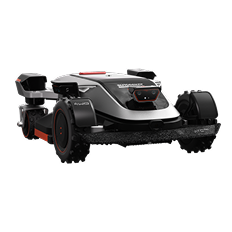
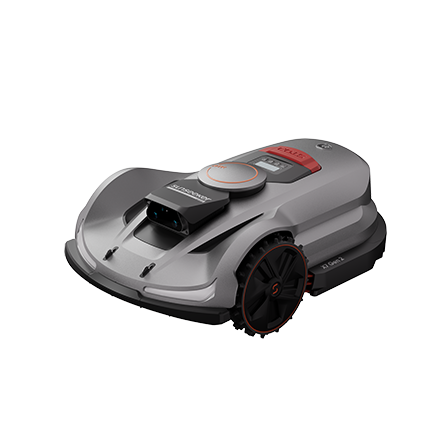
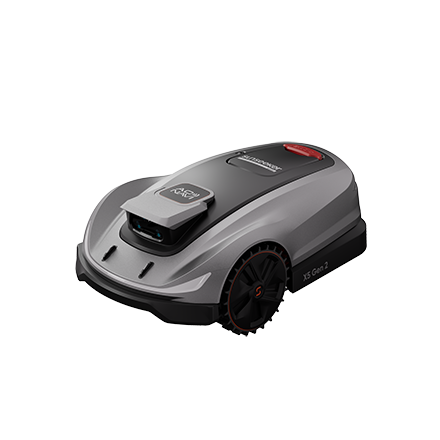
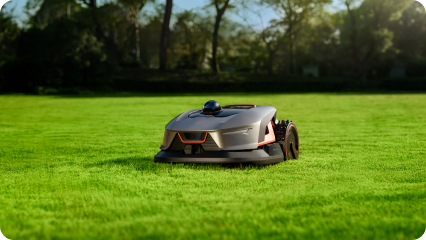
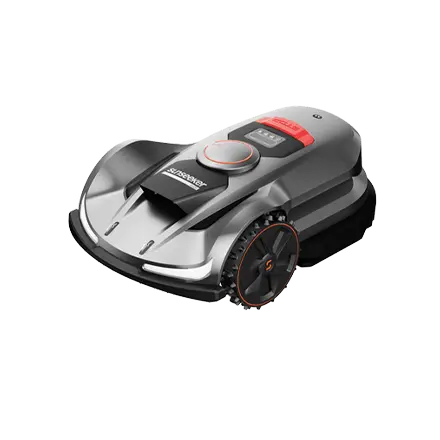
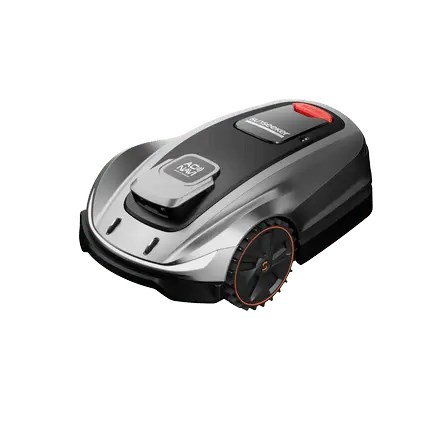
If you need to manage treated patches separately, smart lawn care tools can help. For instance, if you apply powder to a specific corner, you can use the Sunseeker Elite X5 to set up no-go zones via its app. This allows routine mowing to continue in untreated areas without disturbing the freshly applied dust, keeping your yard maintenance on track while the pest control does its job.

Successfully managing lawn pests with diatomaceous earth requires the right timing, dry conditions, and precise application. Always prioritize pesticide-labeled products and protect beneficial insects by targeting only the necessary spots. If your yard requires ongoing maintenance across tricky terrains while avoiding these treated patches, Sunseeker AWD Robotic Mowers can handle sloped or uneven lawns without disrupting your pest control efforts. By combining targeted treatments with smart maintenance, you can keep your outdoor space healthy and pest-free.
Not necessarily. The National Pesticide Information Center (NPIC) recommends using a pesticide-labeled version because it includes specific instructions for approved pests, application rates, and safety gear. Products sold strictly as food-grade or for filtration lack these crucial guidelines, making them unreliable and potentially unsafe for lawn pest control.
No, its effectiveness drops significantly when wet. The particles must be dry to absorb the protective oils from an insect's shell. While it may regain some effectiveness once it dries out, rain or irrigation usually washes it away or clumps it up, meaning you will likely need to reapply once the weather clears.
Yes, DE does not discriminate. It will harm any insect that crawls through it, including ladybugs, beetles, and pollinators. To protect beneficial bugs, avoid dusting near blooming flowers, never broadcast it over the entire yard unnecessarily, and strictly target the specific areas where pests are active.