










FAQs
9/9/2026
Contents
Products
Residential Lawns










Explore
Where to Buy


Freshly overseeded soil should stay consistently moist near the surface without becoming saturated. A useful starting point is light irrigation two or three times daily during the first 15-20 days in suitable conditions, then less often as seedlings root. Kentucky bluegrass can take up to about three weeks to germinate, so the schedule should follow establishment stage rather than a fixed number of days.
Overseeding often fails in the gap between “wet enough to germinate” and “so wet the seed washes away.” A sprinkler can leave one part of the lawn dry while low spots stay muddy, and a sunny slope can need attention sooner than shaded clay only a few yards away.
The solution is not one permanent watering time. New seed needs frequent surface moisture first, then progressively deeper and less frequent irrigation as roots develop. Use the schedule below as a starting framework and adjust it by soil, weather, seed type, and actual moisture.
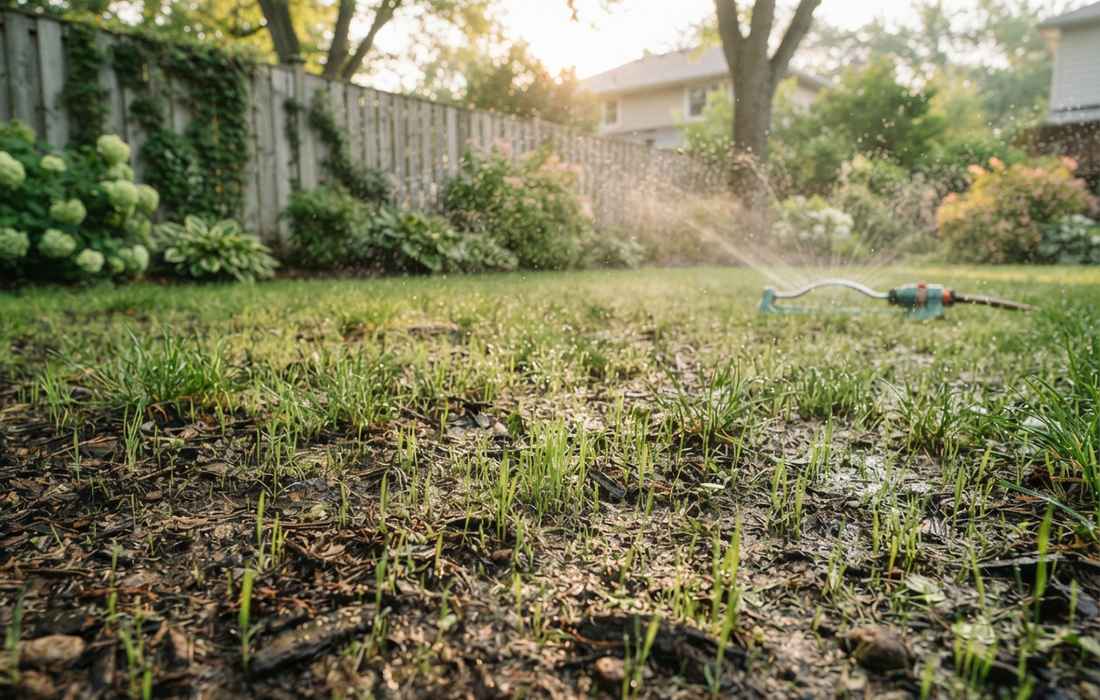
Immediately after spreading seed and achieving good seed-to-soil contact, water gently enough to moisten the upper soil without creating runoff. NC State Extension recommends keeping roughly the top 1.5 inches moist during establishment and notes that light irrigation two to three times a day for about 7-21 days can be appropriate for new lawn seed under its regional conditions.
That is a frequency example, not a command to run every irrigation zone for the same number of minutes. A fine-textured soil may need only a short cycle, while sandy soil or a windy slope dries faster. Start with brief applications, then check the soil with a finger or small screwdriver. The surface should feel damp and cool, not slick, puddled, or spongy.
Water early enough that the seed does not dry for long periods. Morning plus one or two daytime touch-ups is often easier to manage than a heavy evening soaking that leaves the surface saturated overnight.
The root system changes rapidly during establishment, so irrigation should shift with it. Move to the next stage when you see the lawn’s development, not simply because a calendar reminder appears.
Keep the seedbed surface consistently moist. In warm, breezy weather, that can mean two or three light waterings per day. Each cycle may be only 5-10 minutes with a spray sprinkler, but actual time depends on nozzle output and soil infiltration, so judge by moisture rather than minutes alone.
Avoid letting the top layer repeatedly dry to a pale crust. At the same time, stop before water begins running downhill or collecting in low areas.
As seedlings begin appearing, continue frequent light watering because some seeds in the same mixture may still be ungerminated. This is especially important with Kentucky bluegrass, which can take up to about three weeks to germinate and often emerges later than ryegrass or fescue in the same mix.
Do not reduce watering as soon as the first green shoots appear. Wait until most of the intended seed has emerged, then gradually extend the interval between waterings.
Shift gradually toward fewer, longer applications. Instead of three short cycles every day, a lawn may move to once daily and then every other day as roots penetrate deeper and the surface can dry slightly between irrigation events.
Watch the seedlings at midday. A temporary darker or blue-gray cast, folding leaves, or footprints that remain visible can signal developing moisture stress. Constantly soft soil, algae, or water sitting around seedlings points toward excess irrigation.
Once seedlings are established enough to mow and have been cut several times, transition toward normal deep watering. After about the third mowing, irrigation can gradually shift toward soaking the soil to a depth of around 6-8 inches about once a week or as needed, depending on rainfall, soil type, and weather conditions.
Do not force that schedule if roots are still shallow. Increase watering depth and the interval between sessions gradually, and count rainfall toward the lawn’s total weekly water.
Two lawns seeded on the same day can need different irrigation. Read the site itself before deciding when the surface needs another light cycle.
High temperature, low humidity, and wind accelerate drying. A 90°F afternoon with a 15 mph breeze can dry exposed seed much faster than a calm 70°F day. On hot days, inspect slopes and edges first because they lose moisture quickly.
Do not compensate with one very heavy watering. Short additional cycles are safer during the germination stage because runoff can carry seed into low spots.
Full-sun areas dry sooner, while shaded soil can stay wet for hours longer. If an irrigation zone covers both, use catch cans or small containers to compare sprinkler output and hand-water the dry edge rather than overwatering the shade.
Dense shade also slows seedling growth. Persistent moisture in a low-light area can favor disease, so once seedlings emerge, allow more surface drying between cycles.
Sandy soil drains quickly and may require more frequent light irrigation during germination. Clay holds water longer but accepts it more slowly, so short cycle-and-soak watering can prevent runoff. Compacted soil magnifies both problems by reducing infiltration.
After overseeding, the target is damp seedbed soil rather than a saturated profile. If footprints sink or water squeezes to the surface, wait before irrigating again.
Perennial ryegrass often germinates relatively quickly, while Kentucky bluegrass can take up to about 21 days. Tall fescue typically falls between those extremes. A mixture therefore needs enough surface moisture for the slowest useful component to establish.
Seed labels list species percentages. Use that information to avoid reducing watering too soon simply because the fastest species has already turned the lawn green.
Too little water usually shows first as a dry, light-colored seedbed, curled or wilted seedlings, and uneven emergence on sunny edges or slopes. Gently scratch the top 1/4 to 1/2 inch; if it is dry and powdery shortly after irrigation should have reached it, coverage or frequency is insufficient.
Too much water creates different signs: puddles that remain after a cycle, seed floating into channels, constantly saturated soil, algae, or soft seedlings that pull out easily. Fungal problems also become more likely when the canopy remains wet for long periods with poor air movement.
A simple catch-can test improves decisions. Place several straight-sided containers in one irrigation zone, run it for 10 minutes, and compare depths. If one cup has 0.2 inch and another has 0.05 inch, the problem is distribution rather than watering frequency.
The safest way to water newly seeded soil is to apply moisture slowly and evenly. Use a fine-spray hose nozzle or sprinkler that produces small droplets, and aim for a light soak that moistens the upper soil without creating puddles or surface runoff. During germination, check the seedbed once or twice a day and water again when the surface begins to lose moisture.
Slopes need a slightly different approach because water moves downhill before it can soak in. Divide the normal watering amount into two or three short cycles, leaving about 20-30 minutes between each pass. This gives the soil time to absorb water while keeping the seed in place.
Seed placement also improves stability. After sowing, lightly rake the seed into the surface and gently press or roll the area so the seed has firm soil contact. Most cool-season lawn seed performs best close to the surface, where moisture and light remain accessible.
Once seedlings have rooted firmly and reached mowing height, regular lawn care can resume gradually. A robotic lawn mower such as the Sunseeker Elite X4, with a 1.6-3.2 inches cutting-height range and floating cutting system, can support gentle maintenance as the lawn becomes established, especially where the surface has small height variations.

Overseeded lawns need frequent surface moisture during germination, followed by deeper, less frequent watering as roots develop. Two to three light watering cycles per day may be useful during the first 15-20 days, but adjust the schedule according to rainfall, temperature, soil, shade, and seed type. Check the soil surface regularly and extend watering intervals gradually as the grass establishes.
After several mows, transition toward normal deep irrigation. On lawns with slopes or uneven ground, AWD Robotic Mowers can then help maintain a consistent cutting routine while providing better traction across changing terrain.
During early germination, light watering two or three times daily can be appropriate, with the goal of keeping roughly the top 1.5 inch of soil moist. Reduce frequency after most seedlings emerge, then shift toward deeper watering. After about the third mowing, established turf can often move toward deep irrigation about weekly, adjusted for rainfall and soil.
Yes. Use a soft shower or fan nozzle so droplets do not displace seed or cut channels in the soil. Move the spray slowly and overlap coverage. For a small patch, 5-10 minutes may be enough to moisten the surface, but check the top 1.5 inch rather than relying only on time because hose flow varies widely.
Dry, pale soil, wilting seedlings, and patchy emergence suggest too little water. Puddles, floating seed, algae, or soil that stays soft and saturated suggest too much. Test beneath the surface with a finger or screwdriver. During germination, aim for consistently damp soil near the top without standing water or runoff.