









FAQs
8/20/2026
Contents
Products
Residential Lawns










Explore
Where to Buy


Lawns typically require 1 to 1.5 inches of water per week during summer to reach a root depth of 4 to 6 inches. Instead of daily shallow spraying, water deeply one to three times per week to encourage downward root growth. Adjusting this schedule based on soil type and heat stress prevents common issues like fungal disease and shallow, weak turf.
Watching your green grass turn dull and patchy after a few hot afternoons is frustrating. Most homeowners try to fix this by watering every single day, but frequent light sprays often backfire, leading to shallow roots and fungal issues. Real resilience comes from how deep the moisture penetrates the root zone, not just how often the sprinklers run. This article walks you through simple routines to adjust your watering based on grass type and weather. Following these practical steps will help you maintain a thicker, healthier turf throughout the peak of summer.

Most established lawns need about 1 inch of water per week in mild summer weather and up to 1.5 inches during long hot spells. Rainfall counts toward that total, so if your lawn receives 0.5 inches of rain, you may only need another 0.5 to 1 inch from irrigation.
Each watering session should moisten roughly the top 4 to 6 inches of soil, where most active grass roots are found. Sandy soil drains quickly and often responds better to shorter, more frequent sessions, while clay soil absorbs water more slowly. For clay, a cycle-and-soak method-two shorter watering cycles about an hour apart-can help reduce runoff.
Rather than relying only on sprinkler run time, measure actual output. Place several shallow cans across the lawn and run the sprinklers for 15 minutes. If they collect 0.25 inches, about 60 minutes per week would deliver 1 inch. This matters because spray heads, rotors, and impact sprinklers can apply water at very different rates.
Setting a summer schedule based on a timer alone is guesswork. Follow these steps to calibrate your irrigation system for the exact needs of your lawn:
Step 1. Perform a Catch-Can Test
Place several flat-bottomed containers (like empty tuna cans) across your lawn and run the sprinklers for exactly 15 minutes. This measures the actual volume of water reaching the soil, which can vary significantly between different sprinkler heads.
Step 2. Calculate Your Weekly Run Time
Measure the average depth of water in the cans. If you collected 0.25 inches in 15 minutes, you know your system delivers 1 inch per hour. Since most summer lawns need 1 to 1.5 inches a week, you would set your total weekly run time for 60 to 90 minutes per zone.
Step 3. Adjust for Your Soil Type
Fine-tune the frequency based on absorption. In sandy soil, split your 60 minutes into three 20-minute sessions to prevent leaching. For clay soil, use a "cycle-and-soak" method-running two 30-minute sessions with an hour break in between to prevent runoff on heavy ground.
Step 4. Monitor and Tweak Based on Rainfall
Check a rain gauge weekly. If a summer storm delivers a soaking 0.5-inch rain, reduce your scheduled sprinkler time accordingly. Never "set and forget" your timer, as summer weather shifts rapidly.
Measuring your system’s output once a season moves you past generic timer settings. This tailored approach prevents water waste and ensures your lawn stays hydrated without reaching critical stress points.
Watering frequency depends largely on your grass species and its ability to store moisture during peak heat. Compare specific watering needs and stress signs below:
Grass Type/State | Watering Frequency | Weekly Water Amount | Key Signs of Stress |
Cool-Season Grass (Fescue, Bluegrass) | Every 3 to 4 days | 1.0 - 1.5 inches | Slowed growth above 90°F; dull blue-gray color. |
Warm-Season Grass (Bermuda, Zoysia) | Every 4 to 7 days | 1.0 inch | Folding blades; footprints remain visible for minutes. |
Dormant Lawns (All Types) | Every 2 to 3 weeks | 0.25 - 0.5 inches | Tan or brown color; soil feels bone-dry and hard. |
While these schedules provide a strong baseline, always monitor your local weather patterns. A week of extreme humidity or unexpected rain can shift these needs, so it is best to use the table as a starting point and adjust based on the actual feel of your soil.
The timing of your irrigation is just as important as the amount of water used, as it affects evaporation rates and disease risks. Let’s look at the most efficient windows to run your sprinklers for maximum plant health:
Stick to a morning window to hydrate the soil before the heat peaks. An afternoon rinse might save a wilted lawn in an emergency, but it can’t replace a deep, early routine.
Fixed schedules don’t account for shifting summer weather or yard layouts. Use these key factors to adjust your irrigation plan as the season progresses:
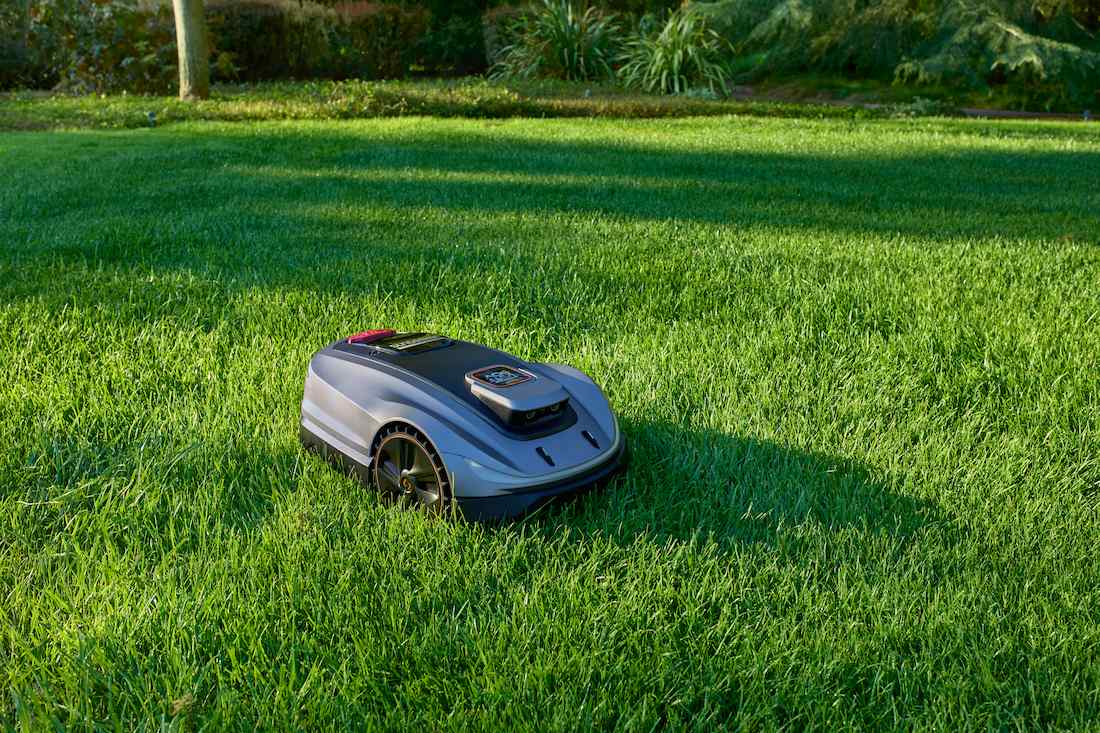
A steady mowing routine also supports a better watering plan because grass under less cutting stress tends to hold moisture more evenly. For established lawns that need consistent summer upkeep, the Sunseeker Elite X5 combines all-wheel drive traction with app-based scheduling, helping homeowners maintain a regular cut while adjusting care around heat, rain, and growth rate.
Identifying whether your lawn is drowning or parched can be difficult since both issues can lead to yellowing and thinning. Use the following physical signs and soil checks to diagnose exactly what your turf needs:
The screwdriver test is a reliable tie-breaker: if you can’t push it six inches deep, the soil is too dry. Catching these early signs prevents temporary stress from becoming permanent damage.
Most lawns do not need water every day in summer. A better plan is to apply about 1 to 1.5 inches per week, water early in the morning, and adjust the schedule based on grass type, rainfall, soil, and stress signs. Deep watering builds stronger roots and helps prevent waste, disease, and shallow growth. For homeowners building a more consistent lawn routine, Sunseeker’s AWD Robotic Mowers collection can support regular mowing as part of broader summer care.
Usually, no. Daily watering is only useful for new seed or very specific repair areas. An established summer lawn is better watered deeply one to three times per week. Frequent light watering keeps moisture near the surface, which can lead to shallow roots and weaker grass during heat.
Run time depends on sprinkler output, not the clock alone. Use catch cans to measure how much water your sprinkler applies in 15 minutes. If it delivers 0.25 inch in that time, you need about 60 minutes total to apply 1 inch in that zone.
Morning is ideal, specifically between 5 a.m. and 9 a.m. This window allows water to soak into the soil before the sun causes heavy evaporation. While evening watering saves water from the heat, it keeps the grass wet overnight, which significantly increases the risk of fungal growth and pests.