










FAQs
8/26/2026
Contents
Products
Residential Lawns










Explore
Where to Buy


Most established lawns require approximately 1 inch of total water per week, including rainfall, to maintain deep roots and drought resilience. This amount varies based on soil drainage, grass species, and local evaporation rates. For the best results, water deeply in one or two weekly sessions, use rain gauges to track natural precipitation, and adjust schedules during extreme heat.
A lawn can look dry even when the sprinkler runs often, especially when short watering sessions wet only the top layer of soil. The opposite problem is common too: long, frequent cycles can waste water, encourage shallow roots, and leave grass vulnerable to disease. A better routine starts with a weekly target, then adjusts for your yard. The sections below show practical amounts, measurement methods, timing, and signs that tell you when to change the schedule.

Instead of sticking to a rigid timer, successful irrigation focuses on the specific depth required to saturate the root zone. Aim for a weekly depth target to ensure your lawn remains resilient without wasting resources.
Deep watering gives moisture time to reach the active root zone instead of keeping only the surface damp. The goal is not to flood the soil, but to wet it thoroughly and then allow the upper layer to begin drying before the next irrigation.
Heavy clay or sloped soil may not absorb the full amount in one continuous run. Use a cycle-and-soak approach: run the zone until water is close to pooling, stop for 20 to 60 minutes, then resume. The total applied depth can stay the same while runoff drops sharply.
The 1-inch rule is a starting point, not a universal prescription. While depth is important, several yard conditions determine how often you should run your sprinklers to reach that goal efficiently.
The species of grass in your yard dictates its natural thirst and its ability to withstand temporary dry spells. Cool-season grasses such as Kentucky bluegrass and perennial ryegrass often use more water during hot summer weather than during spring or fall. Warm-season grasses like bermudagrass and zoysia are typically more heat-adapted and may tolerate lower irrigation once established.
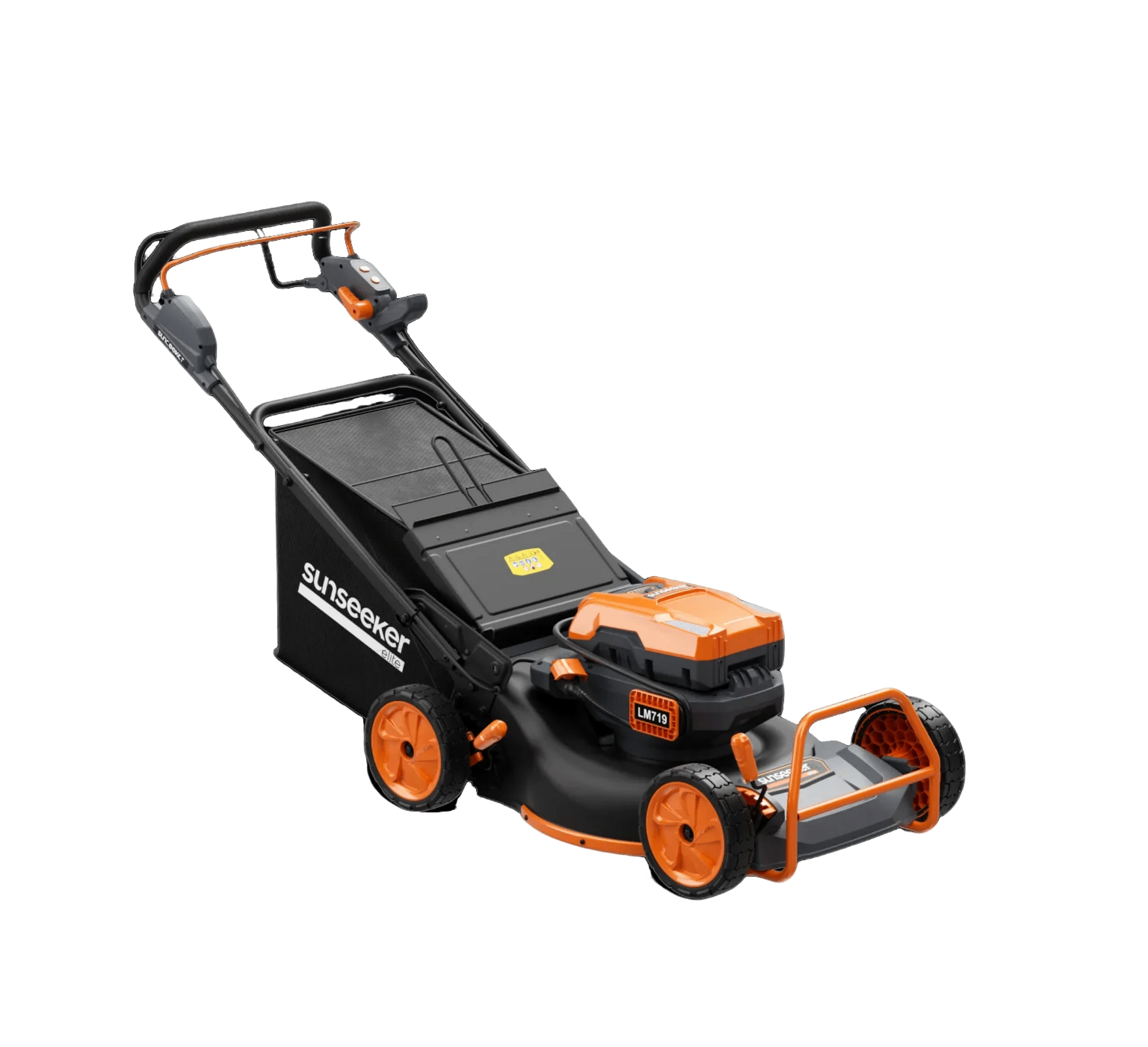
Mowing height also plays a critical role in moisture retention. For homeowners who automate routine cutting, the Sunseeker Elite X4 provides an adjustable cutting height of 1.6 to 3.2 inches and a floating cut system for uneven ground. Maintaining a consistent, taller height with a precision machine helps shade the soil and reduces evaporation, which is vital when the lawn is under summer water stress.

Your soil’s texture determines how much water it can store and how quickly it can absorb it. Sandy soil drains quickly and holds less plant-available water, meaning it may need smaller, more frequent applications. Loam is the ideal middle ground, balancing drainage and storage. Clay soil holds water for long periods but accepts it very slowly; if your clay soil begins to puddle, use shorter "cycles" with 30-minute "soaks" in between to ensure water reaches the roots instead of running off.
Environmental factors like heat, wind, and humidity can change your lawn's demand for water within a matter of days. Treat rainfall as a direct credit to your weekly 1-inch total. For instance, if your rain gauge records 0.35 inch of precipitation, you only need to apply 0.65 inch through irrigation. During unusually hot or windy stretches, it is better to inspect the soil depth with a screwdriver test rather than automatically adding an extra watering day.
The physical layout of your property creates "microclimates" that require different watering runtimes. Full-sun areas dry much faster than shaded turf, though grass under large trees may still struggle due to root competition. Slopes present a unique challenge as water often runs downhill before soaking in. On these areas, use lower-precipitation sprinkler heads or multiple soak periods to keep the moisture in the root zone rather than on the sidewalk.
The following table summarizes how core yard features influence your irrigation frequency and water retention:
Feature | Water Retention | Watering Strategy |
Sandy Soil | Very Low | Smaller amounts, 2-3 times per week. |
Loamy Soil | Balanced | Deep watering, 1-2 times per week. |
Clay Soil | Very High | Cycle-and-soak to prevent runoff. |
Cool-Season Grass | Moderate | Higher demand during summer peaks. |
Warm-Season Grass | High | More drought-tolerant once established. |
Minutes on a timer rarely tell the full story of your irrigation. Follow these steps to turn a vague watering routine into a repeatable, data-driven schedule.
Place four to six straight-sided cans around one sprinkler zone, including one near the edge and one near the center. Run the zone for 15 minutes, then measure the average water depth. If the cans average 0.25 inch in 15 minutes, that zone applies about 1 inch per hour. To provide 0.5 inch in one session, run it for about 30 minutes. Repeat the test for each zone because coverage can vary.
Look for large differences between cans. One can holding twice as much water as another points to poor distribution, a blocked nozzle, pressure problems, or a head that needs adjustment. Use the average depth to calculate runtime: target depth divided by measured inches per hour, multiplied by 60. For example, a system applying 0.6 inch per hour needs about 50 minutes to deliver 0.5 inch. Fix uneven coverage before simply running the whole zone longer.
A simple rain gauge prevents unnecessary irrigation after storms. Check it at least once a week and subtract that amount from your target. Smart controllers can help, but a gauge gives you a direct reading for your property. Reset it after recording the total. If rainfall was uneven or brief, check the soil several inches deep before assuming the entire lawn received enough moisture.
Early morning is usually the best window because temperatures are lower, wind is often lighter, and grass leaves can dry after sunrise. A practical target is roughly 4 a.m. to 8 a.m. when local watering rules allow it.
Avoid routine irrigation during the hottest part of the afternoon, when evaporation and wind can reduce efficiency. Late-night watering can leave foliage wet for many hours, which may increase disease risk in humid climates. If the lawn is severely wilted or showing heat stress, do not wait days for a perfect schedule; provide needed water, then return to an early-morning routine.
Keep mowing and watering schedules coordinated. Freshly cut turf can be more exposed to heat if it is cut too short, so avoid scalping during hot, dry weather. Leaving fine clippings on the lawn can also return small amounts of nutrients and organic matter. For homeowners who prefer frequent, light automated trimming, Sunseeker’s Robot Mowers with Mulching Blades are designed to trim small amounts regularly and leave fine clippings behind. That supports a tidy mowing routine without changing the lawn's actual irrigation requirement.
For most established lawns, about 1 inch of total water per week is a sensible starting point, with rainfall included. The best schedule is deep, measured, and flexible: adjust for soil, grass type, heat, shade, slope, and recent storms. Use catch cans and a rain gauge to replace guesswork with real numbers. Pair accurate irrigation with consistent mowing for deeper roots and better water efficiency; explore Sunseeker Elite options if you want a lower-effort routine.
Usually not for an established lawn. Daily light watering can encourage shallow roots and keep the surface wet too often. Most lawns perform better with one or two deeper irrigations per week, adjusted for rainfall and soil. New seed and new sod are exceptions because they need more frequent moisture while roots establish.
There is no universal runtime because sprinkler output varies widely between systems. Measure your system with catch cans to find its "precipitation rate." If your system applies 0.5 inch per hour, it needs 120 minutes total to deliver 1 inch. Always split long runtimes into smaller cycles if you notice water pooling or runoff.
Common signs include a dull blue-green or gray cast, folded or curling blades, slow spring-back after walking, and footprints that remain visible for several minutes. Dry soil a few inches below the surface supports the diagnosis. Check moisture before increasing irrigation because compacted soil, disease, or root damage can create similar symptoms.