





FAQs
8/26/2026
Contents
Products
Residential Lawns









Explore
Where to Buy


For a healthy established lawn, overseeding rates typically range from 1 to 5 pounds per 1,000 square feet, depending on the grass species. Turf-type tall fescue usually requires about 4 pounds, while Kentucky bluegrass needs only 1-2 pounds due to its smaller seed size. To find your specific requirement, calculate your actual turf square footage and multiply it by the rate recommended on your seed tag.
A thin lawn can make every bare patch and weed stand out, but spreading seed without measuring first often leads to poor coverage or an expensive pile of leftovers. The right amount depends on lawn size, grass type, and how much existing turf is still alive. A simple calculation keeps the job predictable. Below, you will find practical overseeding rates, a square-foot formula, and clear adjustments for thin areas, bare spots, seed quality, and application technique so new seedlings have room to establish.

Calculating the right amount of seed is about balancing new growth with your lawn's existing density. Use the following species-specific rates to ensure you achieve a lush result without the risks of overcrowding.
Grass type | Typical overseeding rate | Germination Time | Practical note |
Turf-type tall fescue | About 4 lb / 1,000 sq ft | 7 - 14 Days | Good benchmark for established cool-season lawns |
Kentucky bluegrass | About 1-2 lb / 1,000 sq ft | 14 - 21 Days | Small seed size means fewer pounds cover a large area |
Fine fescue | About 2-3 lb / 1,000 sq ft | 10 - 14 Days | Useful in suitable lower-light cool-season sites |
Perennial ryegrass | About 3-5 lb / 1,000 sq ft | 5 - 7 Days | Often chosen for relatively fast germination |
Always treat the instructions on your specific seed bag as the final authority, as manufacturers often include specialized coatings that help retain moisture. These coatings add weight to the bag, which may slightly alter the recommended spread rate compared to raw, uncoated seed. Checking the "purity" and "germination" percentages on the seed tag will further help you decide if you need a standard application or a slightly heavier hand.
Overseeding is a supplemental process rather than a complete lawn replacement. The lower application rate accounts for the fact that existing grass already occupies most of the available soil and resources.
If your yard has more than 40% bare soil or is dominated by weeds, consider it a partial renovation rather than a standard overseed. In these cases, using a rate closer to "new lawn" guidelines ensures the open soil is fully occupied by desirable grass before weeds can return.
The recommended bag rate is your starting point, but site conditions often dictate whether you should lean toward the higher or lower end of that range. Consider these four critical factors before you begin pouring seed into the spreader.
Measure only the turf you plan to seed. For a rectangular lawn, multiply length by width. Split irregular yards into rectangles, triangles, or other simple sections and add the areas together. Subtract patios, driveways, buildings, large mulch beds, and permanent landscape features. A 60-by-40-foot turf area is 2,400 square feet, not the full lot size shown on a property record.
Seed size and growth habit change how many pounds are needed. Kentucky bluegrass seed is small and is normally applied at a lower pound rate than tall fescue or perennial ryegrass. Warm-season species have their own rates and seasonal requirements. Matching the species to your climate and existing turf also matters; adding an incompatible grass merely to increase density can create uneven color, texture, or summer performance.
A generally thin lawn should stay close to the normal overseeding rate. Bare patches need a more deliberate repair because there is little existing turf to fill the surface. Instead of raising the rate over the entire yard, calculate the thin lawn normally and treat bare patches separately using the label rate for repair or new seeding. This concentrates extra seed where it can actually use the open soil.
Read the seed tag before adjusting the quantity. Germination percentage tells you how much pure seed is expected to sprout under test conditions, while purity indicates how much of the bag is the named grass rather than inert material or other seed. Fresh, high-quality seed with a strong germination percentage usually gives better results than simply applying more old or low-quality seed. Coated seed can also weigh more per bag, so compare coverage claims rather than bag weight alone.
Calculating your seed requirement doesn't have to be complicated math. By breaking your yard down into measurable units, you can ensure you buy exactly what you need for consistent coverage.
Measure the actual grass surface in feet. For example, a 75-foot by 50-foot rectangle contains 3,750 square feet. If the yard has multiple sections, calculate each section and add them together. A phone map or online measuring tool can help with large properties, but a tape measure or measuring wheel is useful for checking narrow strips and irregular edges.
Find the package line for overseeding, not new-lawn establishment. Suppose a tall fescue blend recommends 4 pounds per 1,000 square feet for overseeding. Use that figure even if another bag or website lists a slightly different range, because the manufacturer knows the composition, coating, and intended coverage of that specific product.
Divide the lawn area by 1,000, then multiply that number by the overseeding rate. For a 3,750-square-foot lawn at 4 pounds per 1,000 square feet, the calculation is 3.75 x 4 = 15 pounds of seed. For 6,200 square feet at 1.5 pounds per 1,000 square feet, the result is 9.3 pounds. Round only after the calculation, and buy the nearest practical bag size above the amount you need.
Formula: (lawn square feet / 1,000) x overseeding rate = pounds of seed needed
Do not automatically add 10 or 20 percent to the whole job. First measure the bare patches. If a 200-square-foot area is nearly bare, calculate it using the repair or establishment rate on the label and add that amount to the overseeding total. This is more accurate than scattering extra seed everywhere. It also reduces crowding in portions of the lawn that already have decent turf density.
Correct seed quantity only works when every grain makes direct contact with the soil. Preparing the surface and using a strategic spreading pattern prevents uneven patches and ensures a uniform, dense result.
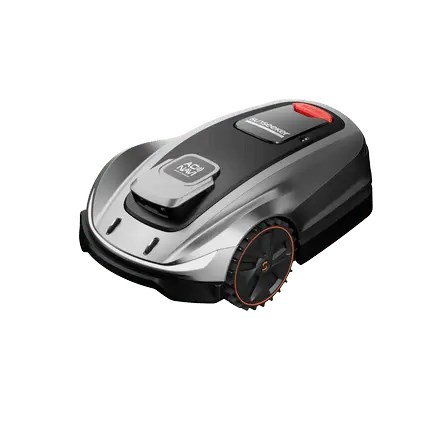
Once the new grass is established and the lawn is ready for regular mowing, consistent light trimming can help maintain an even canopy without repeatedly taking off large amounts of leaf tissue. For homeowners who prefer automated upkeep, the Sunseeker Elite X4 uses wire-free mapping, planned mowing, and app-based control for routine maintenance on compatible lawns. Keep any mower off tender seedlings until the new turf is firmly rooted and has reached an appropriate mowing height.

Finding how much seed to overseed lawn areas starts with measurement, not guesswork. Calculate the turf square footage, use the overseeding rate on the seed label, and treat bare patches separately instead of overloading the whole yard. Good seed-to-soil contact, even spreading, and careful watering matter just as much as the number of pounds you buy. After the lawn is established, regular mowing supports a denser appearance; homeowners looking for lower-effort upkeep can also explore Sunseeker Robot Lawn Mowers for ongoing lawn maintenance options.
It depends on the grass species and the seed product. Typical cool-season overseeding rates are roughly 1 to 5 pounds per 1,000 square feet. Tall fescue is often around 4 pounds, Kentucky bluegrass around 1 to 2 pounds, and fine fescue around 2 to 3 pounds. Always check the specific bag label before spreading.
Yes. Excess seed can produce overcrowded seedlings that compete for water, nutrients, light, and root space. Thick clusters may also stay damp longer and become more vulnerable to disease. Use the recommended overseeding rate and apply extra seed only where bare soil truly needs repair instead of increasing the rate across the whole lawn.
Aeration can be useful when soil is compacted or the lawn has poor air and water movement. Core aeration creates openings that can improve seed-to-soil contact, but it is not required for every lawn. If the soil is already loose and the turf is only mildly thin, mowing, light raking, and even seed distribution may be enough.