







FAQs
8/20/2026
Contents
Products
Residential Lawns









Explore
Where to Buy


For most new lawns, plan on about 4-8 pounds of grass seed per 1,000 square feet, then follow the seeding rate on the bag. Measure the area, adjust for bare soil or slopes, spread in two passes, and keep the seedbed evenly moist until seedlings are established.
Starting a new lawn often looks easy until you need to work out how much seed to buy. The right amount depends on the lawn size, grass type, and whether you are starting from bare soil or filling thin areas. Using too little seed can leave gaps, while too much can crowd young grass and raise the cost.
In this blog, you’ll learn how much lawn seed do I need, how to calculate the amount for your yard, and how seed type and lawn condition can change the final number.

A new lawn usually requires a higher seeding rate than overseeding. As a general planning range, many cool-season lawn grasses fall around 4-8 pounds per 1,000 square feet, while Kentucky bluegrass typically requires less and tall fescue or ryegrass blends require more. Below comes a table about the average rates of various grass types for your reference.
|
Seed type |
Common new-lawn rate |
Helpful note |
|
Tall fescue blend |
6-8 lb per 1,000 sq ft |
Common choice for sunny or mixed-use cool-season lawns. |
|
Perennial ryegrass blend |
5-10 lb per 1,000 sq ft |
Fast germination, often mixed with other grasses. |
|
Kentucky bluegrass |
2-3 lb per 1,000 sq ft |
Small seed; spreads slowly through rhizomes. |
|
Bermudagrass |
1-2 lb per 1,000 sq ft |
Warm-season grass for sunny, hot regions; rate can vary with coated vs. uncoated seed. |
|
Zoysia seed |
1-3 lb per 1,000 sq ft |
Slow to establish; seeded varieties are less common than sod, plugs, or sprigs. |
|
General mixed lawn seed |
Follow the product label |
Rates vary with the species and percentage of each grass in the mixture. |
Buying a small amount extra can help cover lawn edges and minor corrections. However, do not automatically increase the seeding rate. Using too much seed can create unnecessary competition among seedlings, so follow the product label unless a local lawn-care recommendation says otherwise.
There is no single seeding rate that works for every lawn. Lawn size, grass type, seed blend, and whether you are establishing a new lawn or overseeding are main factors. Soil preparation also affects how well the seed establishes.
Lawn size directly determines how much seed you need. Measure only the area that will actually be seeded, leaving out patios, paths, garden beds, tree rings, sheds, and driveways. For an irregular lawn, divide the area into smaller sections, calculate each section, and add the totals.
Different grass species have different recommended seeding rates. Kentucky bluegrass, for example, is typically seeded at a lower rate by weight than turf-type tall fescue or perennial ryegrass. Seed blends also vary because the recommended rate depends on the species and percentage of each grass in the mix. Choose a grass that fits your climate, sunlight, and lawn use, then follow the recommended rate for that specific seed.
Establishing a new lawn generally requires more seed because bare soil needs to be covered from the start. As for overseeding, existing turf already covers part of the soil, but the exact reduction depends on the grass type and product. If your yard has both bare soil and thin turf, calculate the two areas separately and use the appropriate rate for each.
Soil preparation affects establishment more than the basic seeding rate. A smooth, firm seedbed with good seed-to-soil contact helps seeds germinate more evenly. Compacted, crusted, or heavily clumped soil can lead to poor seed contact and uneven emergence. For a new lawn, correct major grading problems, loosen the top 2-3 inches where needed, remove large debris and clods, and rake the surface smooth before seeding.
Calculating how much grass seed you need is straightforward once you know two numbers: the area you plan to seed and the seeding rate listed on the product label. Measure the lawn first, then use the rate for new lawn establishment rather than guessing from the bag size or a general rule.
For a rectangular area, multiply length by width. For example, a 40-foot by 25-foot space equals 1,000 square feet. For a circular area, use this formula: Area = 3.14 × radius². For irregular lawns, divide the area into smaller sections, calculate each section, and add the results. Exclude patios, paths, garden beds, tree rings, sheds, driveways, and other areas that will not be seeded. One acre equals 43,560 square feet, but most residential lawn projects are easier to calculate in square feet.
Seed labels may provide different rates for lawn establishment and overseeding. If you are planting a new lawn over bare soil, use the rate listed for new lawn establishment. For example, if the label recommends 6 pounds per 1,000 square feet and your lawn measures 2,500 square feet, the seeds needed would be:
2,500 ÷ 1,000 × 6 = 15 pounds
If the label lists different coverage amounts for new lawns and overseeding, use the rate or coverage figure specifically provided for new lawn establishment. Do not choose a rate simply because it gives a larger or smaller coverage area.
Sloped or erosion-prone areas may lose seed during heavy rain or irrigation. You can add roughly 5-10 percent extra seed; however, a more recommended method is to keep the seed in contact with the soil. Apply seed evenly and consider a light layer of clean straw mulch or an erosion-control blanket where site conditions call for additional protection.
Avoid piling extra seed onto problem areas. Excessive seeding can create an overly dense stand and increase the risk of disease or mowing problems. Follow the recommended seeding rate and address seed movement or poor soil contact with the appropriate site-preparation and erosion-control measures.
Even spreading matters as much as the total amount. A lawn with the right seed quantity can still look patchy if most of the seed lands in strips, corners, or low spots. Prepare the spreader, split the seed, and work in crossing passes for better coverage.
Aftercare plays a major role in how well new grass establishes. During the first few weeks, young seedlings need consistent moisture, limited traffic, and timely mowing as their roots develop. Good early care helps the new turf establish evenly and reduces the risk of thin or patchy growth. Use these habits after seeding to help the new grass establish:
establishing. Foot traffic can disturb the seedbed, compact damp soil, and damage young plants.
when the new grass is about one-third taller than your target mowing height. For example, if you plan to maintain the lawn at 3 inches, mow when the grass reaches about 4 inches. Remove no more than one-third of the leaf tissue at a time.
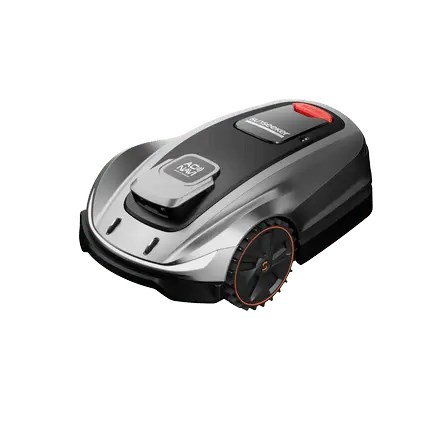
Once a new lawn reaches the appropriate mowing height, regular cutting helps maintain an even turf stand. If you’re looking to reduce manual mowing, the Sunseeker Elite X7 Plus Gen 2 can be a good alternative. You can set a regular mowing schedule through its smart App. Its 0.8- to 4.0-inch cutting-height range supports different grass types and mowing preferences. Furthermore, the wire-free AONavi™ navigation system combines nRTK and VSLAM 2.0 work together to support reliable navigation across larger mowing areas.

The best answer to how much seed for new lawn projects starts with accurate measurement, not guesswork. Most new lawns need about 4-8 pounds of seed per 1,000 square feet, but the grass type and bag label should guide the final rate. Prepare the soil well, spread seed in two passes, keep it moist, and protect young growth until it is ready for regular mowing. For long-term lawn care after establishment, you can also explore more robot lawn mowers without perimeter wires as part of a steady maintenance routine.
How much seed to put down for a new lawn
The amount depends on the grass type and the seeding rate listed on the product label. As a general guide, many common cool-season grasses fall within about 2-8 pounds per 1,000 square feet, but individual rates vary. For example, Kentucky bluegrass typically uses 2-3 pounds, perennial ryegrass 4-5 pounds, and turf-type tall fescue 6-8 pounds per 1,000 square feet. For a new lawn, always use the rate listed on the seed label.
Yes. Applying too much seed can create an overly dense stand, increasing competition among seedlings and the risk of disease or mowing problems. Follow the seeding rate on the product label rather than adding extra seed to make the lawn fill in faster. For more even coverage, divide the recommended amount in half and spread it in two passes in opposite directions.
A light covering can help protect the seed, but avoid burying it too deeply. After spreading the seed, lightly rake it into the soil or apply a thin layer of suitable topsoil or finished compost. Around ¼ inch is a common target, although the product and site conditions may call for a different approach. Straw can also be used as a light mulch to help retain moisture and reduce seed movement. The goal is good seed-to-soil contact with enough coverage to protect the seed without preventing emergence.