









A dog does not experience a backyard as a plan view. It becomes a set of routes, lookout points, cool spots, digging places, shortcuts, and favorite patches of grass. After a few weeks, those habits usually leave visible clues in the yard itself.
A dog-friendly backyard works better when the design follows those clues rather than constantly trying to erase them. Watch what your dog repeats, then make the repeated behavior easier on the lawn, the planting, and the dog.
If Your Dog Runs the Same Route, Turn It Into a Path
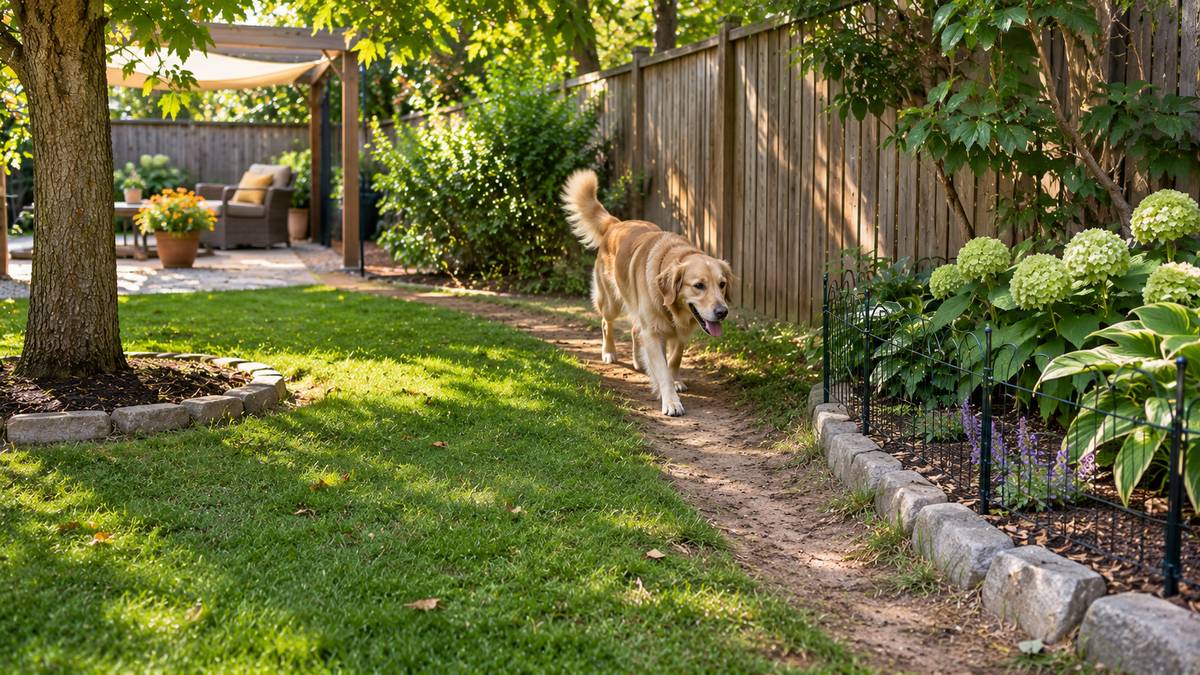
A faint line through the grass can become a bare track surprisingly quickly when a dog uses the same shortcut every day. The route often connects obvious destinations: the back door to the gate, the patio to a favorite tree, or one side of the fence to the other. Trying to reseed that exact line over and over usually fights the way the yard is actually being used.
If the route is consistent, formalize it. A simple path of smooth pavers, compacted fines, or another paw-friendly surface can protect the surrounding turf and make the shortcut look deliberate. Keep the route clear of sharp edging and avoid surfaces that become painfully hot in summer.
If Digging Never Stops, Give It a Place Where It Is Allowed
Digging becomes much easier to design around once you know where and when it happens. A dog that repeatedly works the same loose corner of a bed may be showing you that the texture and location already suit the behavior. One dedicated digging zone can be easier to live with than patching several holes across the yard.
Use loose, clean soil or sand in a clearly defined area, preferably somewhere you can see from the house or patio. A low border helps distinguish it from nearby planting beds, and a few buried toys can make the spot more interesting at first.
Keep fertilizers, bulbs, compost, and other garden materials out of that zone so the place intended for digging does not double as a place to investigate things that should not be chewed or swallowed.
Notice Where Your Dog Chooses to Rest Before Adding Shade
Before buying a shade sail or planting a tree, look at where your dog already settles. Some dogs choose a cool patch beside the house in the morning, then move as the sun shifts. Others want a spot close to the family rather than the deepest shade at the back of the yard. Those choices tell you where shade will actually be used.
Build around the resting pattern with tree canopy, a pergola, an umbrella, or a covered corner, and make sure fresh water is easy to reach. Hard surfaces deserve extra attention because concrete, pavers, and artificial turf can heat up far beyond the air temperature.
If Your Dog Keeps Cutting Through the Beds, Rethink the Borders
A flower bed placed across a natural route often loses the same stems again and again. The first reaction is usually to add a taller border, more stakes, or another barrier, but repeated shortcuts are useful information. Your dog may simply be taking the fastest line between two places that matter.
Move delicate plants out of that line and leave a narrow passage where the traffic already occurs. In wider beds, a stepping route can divide planting into two stronger masses while giving the dog a clear way through. Where access really must be blocked, use a border that is easy to see and large enough to redirect movement before the dog is already inside the bed.
Watch Which Parts of the Lawn Wear Out First
Not every thin patch is a lawn-care failure. Grass beside a gate, along a fence, at the bottom of steps, or on the turn into a favorite running route may simply be receiving far more traffic than the rest of the yard. Those areas need a different response than a random bare spot in the middle of the lawn.
For small high-traffic zones, a path, mulch strip, or tougher surface may be more realistic than constant reseeding. Where the grass still makes sense, avoid cutting it too short and fix drainage or compaction if the soil is staying hard and bare. The useful question is not how to make every square foot look identical; it is which parts of the yard are being asked to function like a walkway while still being treated like ornamental turf.
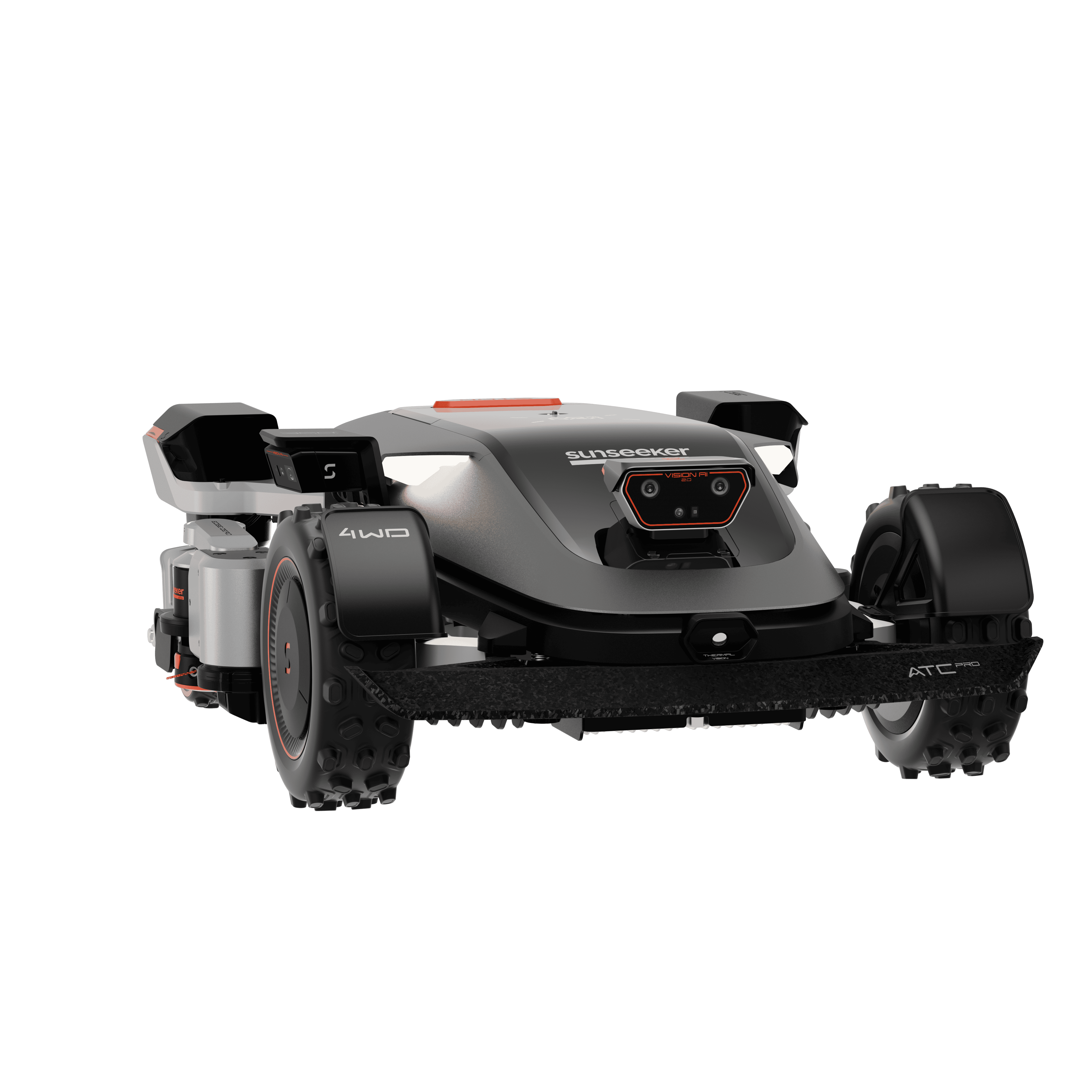
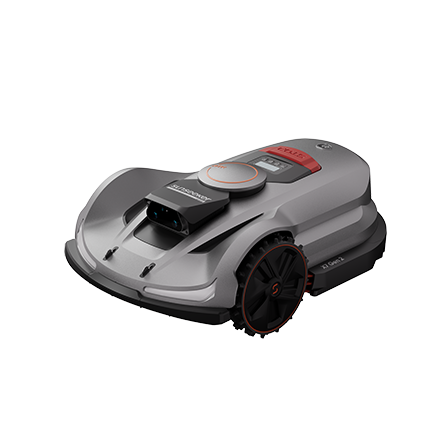
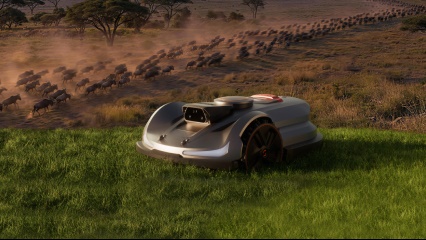
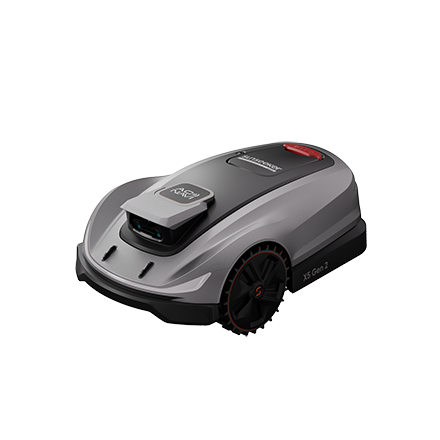
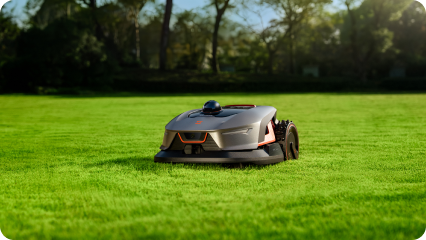
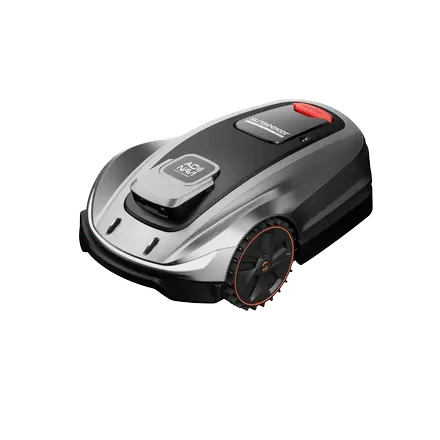
If the same lawn is also sloped or uneven, mowing can become a second recurring job. AWD Robotic Mowers are most relevant in that kind of terrain because all-wheel drive adds traction where a simple flat-lawn setup is not the reality. The technology does not solve dog traffic, but it can remove some of the manual effort from maintaining the grass that remains.
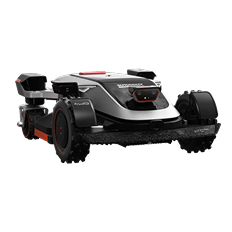
On very large properties, the Sunseeker Elite X9 Plus is designed for up to 6 acres in 48 hours. Its ATC Pro system combines all-wheel drive with four-wheel suspension for rough or steep ground, and its infrared sensing system is designed to detect animals and other low-profile obstacles. For a shared yard, the practical setup is still to schedule mowing for times when the dog is indoors, then let those sensing features add another layer of awareness.