












FAQs
8/26/2026
Contents
Products
Residential Lawns










Explore
Where to Buy


Used coffee grounds can be useful on an established lawn in small amounts, but they are not a complete fertilizer and should not be piled on grass. Their main value is organic matter and support for soil microbes. Dry them, spread them very thinly, water them in, or compost them first for a safer approach.
Morning coffee can leave a surprising amount of grounds in the kitchen bin, so tossing them over the lawn can sound like an easy recycling win. The problem is that grass needs balanced nutrition, good airflow, and reliable water movement, while wet or heavy layers of grounds can interfere with all three. Used carefully, coffee grounds can fit into lawn care. Used heavily, they can create new problems. The practical approach is to understand what the grounds actually contribute, then choose a low-risk application method.

Yes, used coffee grounds can have a place in lawn care, especially when they are composted or scattered sparingly over established turf. They contain organic material and small amounts of nutrients, but they should be treated as a soil amendment rather than a stand-alone lawn fertilizer.
The key distinction is quantity. Coffee grounds contain roughly 1% to 2% nitrogen along with smaller amounts of phosphorus, potassium, calcium, magnesium, and trace minerals. Much of that nutrition is not immediately available to grass. Soil organisms must break the material down first, so the response is slower and less predictable than a labeled turf fertilizer.
That is why the answer to are coffee grounds good for the lawn is a qualified yes. They can add organic material and feed soil microbes, yet a thick layer can clump, crust, or temporarily tie up nitrogen near the surface. Healthy turf benefits most when the grounds are only one small part of a broader routine that includes appropriate mowing, watering, soil testing, and fertilizing when a test shows a need.
Coffee grounds are often described as a natural fertilizer, but their strongest contribution is organic matter. They support biological activity and can improve soil structure as they decompose, while the nutrient contribution remains modest compared with a formulated lawn fertilizer.
Used coffee grounds also do not reliably acidify soil. Brewing removes much of the acidity, and the final pH varies with the beans and brewing method. If soil pH is a concern, use a soil test rather than spreading coffee grounds in hopes of changing it.
Coffee grounds are not automatically safe just because they are organic. Problems usually appear when too much material is applied at once, when wet clumps sit on the turf, or when grounds are used around germinating seed.
If your question is are coffee grounds good for your lawn, look at the lawn's current condition first. Established, actively growing turf can handle coffee grounds better than grass that is dry, newly seeded, or growing in soil that stays too wet.
A safe routine keeps the amount low and prevents clumps. Start with a small test section before treating the whole yard, especially if you have never used grounds on your turf or do not know how quickly your soil drains.
Spread used grounds on a tray or shallow container until they are cool and crumbly rather than wet and sticky. Break apart dense clumps with your fingers or a small rake. Dry grounds are easier to distribute evenly, which reduces the chance of creating dark patches that hold moisture against grass blades. Use plain spent coffee grounds; do not spread coffee mixed with milk, sweeteners, flavor syrups, or other kitchen ingredients.
Scatter the grounds so grass blades remain clearly visible. A cautious starting rate is about 1 cup of dry grounds per square yard, which is 9 square feet. For a 100-square-foot test area, that works out to roughly 11 cups. Rake lightly so the particles fall through the canopy instead of sitting in piles. Treat this as a light organic amendment, not a fertilizer application rate that must be repeated on a fixed schedule.
After spreading, apply enough irrigation to wash fine particles off the blades and toward the soil surface. About 1/4 inch of water is usually enough for this settling step on already moist, well-drained soil. Stop if runoff begins. Do not use coffee grounds as a reason to overwater; the lawn's normal irrigation needs still depend on grass type, weather, soil texture, and rooting depth.
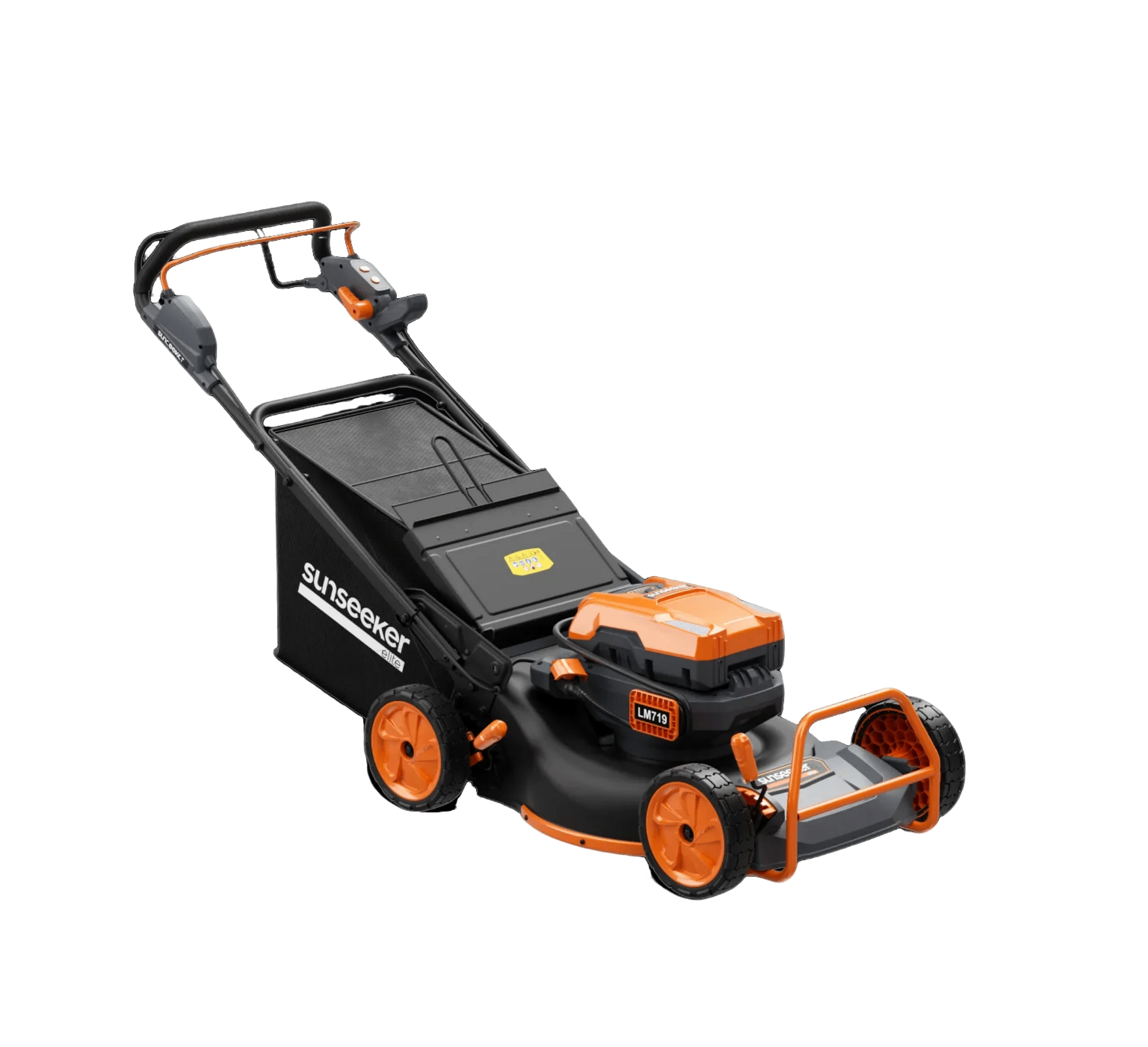
Coffee grounds also should not replace the maintenance practices that support dense turf. Once the lawn is healthy and dry enough to mow, frequent light trimming can keep growth even while returning small clippings to the soil. For lawns up to about 0.5 acre, the Sunseeker Elite X5 combines wire-free mapping with AWD traction and planned mowing routes, helping maintain consistent mowing as part of regular lawn care.

Composting is the safer choice when you generate a lot of coffee grounds. Oregon State University Extension recommends keeping grounds at no more than about 20% of a compost pile by volume and balancing them with other materials. A useful mix is three parts dry leaves, one part fresh grass clippings, and one part coffee grounds by volume. After the compost is mature, apply a light topdressing to the lawn rather than placing concentrated grounds directly on the turf.
Compost is also a better option if you plan to overseed. Direct coffee-ground applications can interfere with germination, while finished compost has already gone through much of the decomposition process. Keep the topdressing thin enough that existing grass blades are not buried.
There are times when the possible benefit is too small to justify the risk. Skip direct applications when the turf needs precise correction or when the surface is already struggling with air, water, or establishment problems.
For anyone asking are coffee grounds good for a lawn after seeing quick-fix advice online, the safest rule is simple: use small amounts only on established grass, and choose compost when you are uncertain. If the lawn is thin, yellow, or failing, diagnose the cause before adding kitchen scraps.
Coffee grounds can support a lawn in modest amounts, but they work best as organic material rather than as a replacement for fertilizer. Dry them, spread them thinly, water them into established turf, or compost larger quantities first. Avoid direct use around new seed, drainage problems, and stressed grass. Long-term lawn quality still depends on mowing, irrigation, and soil care. For easier frequent mowing that returns fine clippings naturally, you can also explore robot mowers with mulching blades.
Yes, on established grass, but use only a thin, even amount of plain used grounds. Let them dry, break up clumps, scatter them so grass remains visible, then rake and water lightly. Avoid direct application on newly seeded areas. If you have a large supply, composting is a lower-risk way to use it.
They may support soil biology and contribute a small amount of nitrogen, but they do not guarantee a greener lawn. Grounds contain only modest nutrients, and decomposition can temporarily tie up available nitrogen. If grass is pale, a soil test can identify the real limitation and help you choose a fertilizer with a known nutrient analysis.
There is no standard lawn schedule for coffee grounds. Avoid treating them like a monthly fertilizer. Apply a small amount occasionally during active growth, watch how the turf responds, and stop if clumps, crusting, or discoloration appear. Frequent or large-volume supplies are better added to compost, where the material can decompose in a balanced mix.