






FAQs
2/4/2026
Contents
Products
Residential Lawns

Commercial Landscapes
Explore
Where to Buy


Shopping for a new lawn mower can feel overwhelming with so many options and price points. So, how much does a lawn mower actually cost? There isn’t one fixed answer. Entry-level manual reel mowers can be found for well under €100, while advanced options like robotic or riding mowers can climb beyond €6,000. Whether you're tending a small city garden or a sprawling country lawn, your budget and your yard’s needs must align. This comprehensive guide breaks down the costs for every type of mower, helping you navigate the market and find the perfect machine for your space and your wallet.
Before diving into the detailed specifications and considerations for each category, it’s helpful to have a high-level view of the investment landscape. The below table is a quick overview of the typical price ranges for the most common types of lawn mowers available today. These averages give you a foundational understanding of what to expect, from the most hands-on manual equipment to fully autonomous systems:
|
Type |
Price Range (USD) |
Ideal For |
Key Advantages |
Key Considerations |
|
Manual Reel Mower |
€80 - €300 |
Eco-conscious owners of very small, flat lawns |
Zero operating cost, silent, no emissions, minimal maintenance |
Requires physical effort, not suitable for tall grass or uneven terrain |
|
Electric Push Mowers |
€150 - €600+ |
Urban/suburban homeowners with small to medium lawns |
Quiet, low maintenance, easy startup, cordless offers freedom of movement |
Corded models have limited range; battery runtime may limit cordless coverage |
|
Gas-Powered Push Mowers |
€250 - €600+ |
Owners of larger lawns or those dealing with thick/overgrown grass |
Maximum power, unlimited runtime, handles tough conditions |
Noisy, produces emissions, requires regular maintenance and fuel |
|
Basic Riding Mower |
€1,000 - €2,500 |
Homeowners with 2000-4000m² of flat to gently sloped lawn |
Saves time and physical effort, covers ground quickly |
Limited functionality beyond mowing, requires significant storage space |
|
Lawn Tractor |
€2,000 - €4,000+ |
Owners of 4000-8000m²+ properties needing multi-purpose equipment |
Versatile (accepts attachments), powerful, efficient for large areas |
Higher initial investment, larger footprint, more complex to operate |
|
Zero-Turn Mower |
€3,000 - €8,000+ |
Owners of 8000m²+ properties or commercial users prioritizing speed |
Exceptional maneuverability, dramatically reduces mowing time |
Steep learning curve, challenging on slopes, premium price point |
|
Robotic Mower (All Types) |
€800 - €6,000+ |
Busy homeowners valuing time, convenience, and hands-free maintenance |
Fully automated, saves significant time, operates quietly |
Varies by model: entry-level may need boundary wires; premium models require higher investment |
Walk-behind mowers are the workhorses of suburban lawn care, offering a balance of affordability, power, and control. The category is diverse, with technology and price scaling to match different lawn sizes and user preferences.
For the minimalist gardener with a small, flat lawn, a manual reel mower is the most economical and eco-friendly choice. Priced between €80 and €300, these mowers require no fuel, oil, or electricity. They operate with a gentle scissoring action that produces an exceptionally clean cut, which is excellent for grass health. Their operation is nearly silent, making them perfect for early mornings in quiet neighborhoods.
However, they demand a consistent mowing schedule, as they struggle with tall, overgrown grass and can be challenging to push on anything but a smooth, level surface. Maintenance is refreshingly simple, usually limited to keeping the blades clean and occasionally sharpened.
Corded electric mowers offer a significant step up in ease of use without a dramatic jump in price, typically costing between €150 and €350. They provide consistent, unlimited power as long as they are plugged into an outlet, eliminating concerns about battery life or fuel. They start with the push of a button, run quietly, and produce zero emissions.
The primary limitation is the power cord itself, which restricts your mowing radius and requires careful management to avoid running it over. These mowers are ideal for small to medium-sized urban or suburban lawns with a convenient outdoor power source and relatively few obstacles.
Battery-powered push mowers provide the freedom of gas models with the quiet, clean operation of electric ones. Prices range from €200 to €600, influenced by battery voltage (which correlates with power), amp-hour capacity (which dictates runtime), and whether the model is self-propelled. A self-propelled feature, which drives the wheels for you, adds convenience, especially on slopes, but also increases the cost.
These mowers are perfect for medium-sized lawns where the runtime (usually 45 to 90 minutes per charge) is sufficient. They eliminate the hassle of cords and gasoline, offering true plug-and-play convenience with minimal maintenance beyond blade care and battery charging.
When you need maximum power and independence, a gas-powered push mower is the traditional choice. Prices start around €250 and can exceed €600 for high-performance models with larger engines and self-propelled systems.
They offer the strongest torque, easily chewing through thick, wet, or tall grass that might stall an electric model. With no cord to manage and a tank of gas providing long runtime, they are suited for larger lawns (over 2000m²) or properties with uneven terrain.
The trade-off is in maintenance and operational costs. They require regular oil changes, air filter replacements, spark plug checks, and of course, the ongoing purchase of gasoline. They are also louder and produce exhaust emissions.
When your lawn measures in square meter rather than square feet, a walk-behind mower becomes impractical. Riding mowers transform lawn care from a chore into a seated task, but the investment increases accordingly.
Entry-level riding mowers, priced from €1,000 to €2,500, are designed for efficiency on flat to gently sloped lawns up to about 4000m². They typically feature a cutting deck between 30 and 42 inches wide. These models focus on the core task of mowing, offering a comfortable seat, simple controls, and significantly faster mowing times than a push mower.
They are a fantastic time-saver but offer limited versatility beyond cutting grass and require substantial storage space in a garage or shed.
For properties between 4000m² and 8000m², a lawn tractor is a more capable investment, with prices ranging from €2,000 to over €4,000. They are built on a stronger frame with a more powerful engine than a basic riding mower.
The key advantage is versatility; most lawn tractors are equipped with a hitch and a power take-off (PTO) system, allowing you to use various attachments. You can add a utility cart for hauling mulch or yard waste, a lawn aerator, or a broadcast spreader for fertilizer. This makes them a multi-purpose machine for serious homeowners who view their property as a small estate to manage.
At the top of the riding mower spectrum are zero-turn radius (ZTR) mowers, with prices from €3,000 to €8,000 or more. These machines are built for speed and precision on large lawns (8000m² and up).
Instead of a steering wheel, they use two independent levers that control the drive wheels separately, allowing them to turn 360 degrees in their own length. This eliminates the need for time-consuming three-point turns around trees and flower beds, drastically cutting mowing time.
Their wide cutting decks (often 106 to 152 cm) cover vast swaths of grass quickly. They are the choice for efficiency but can be tricky to operate on steep slopes and generally come with a steeper learning curve.
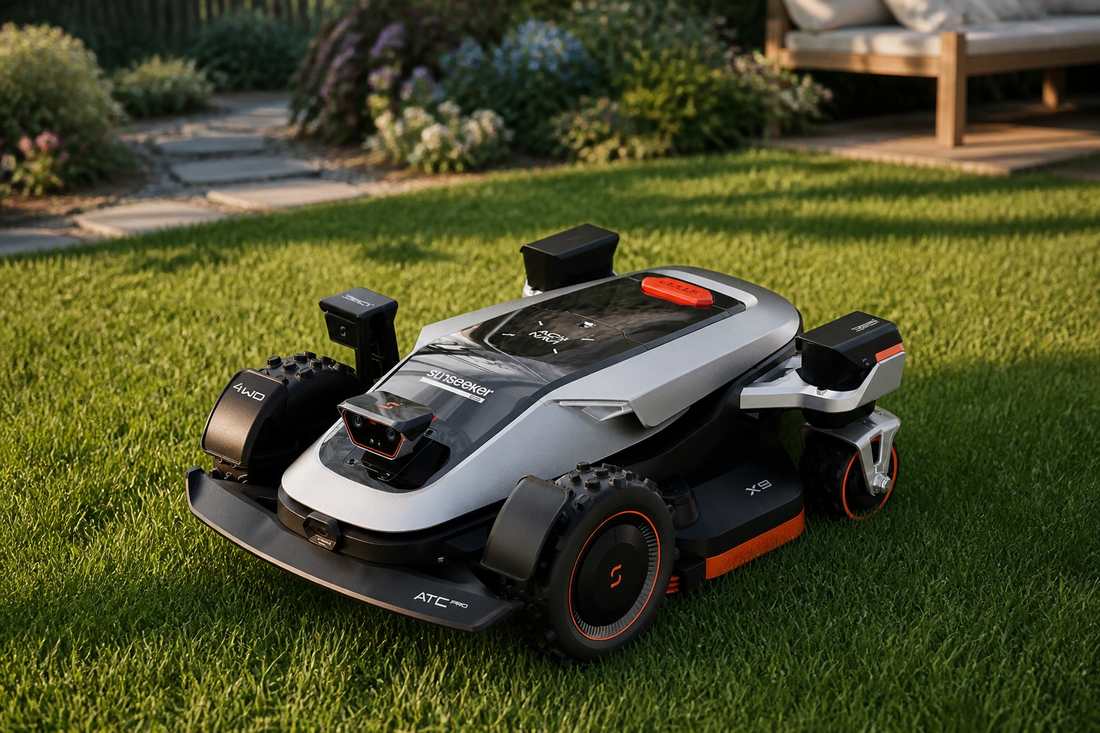
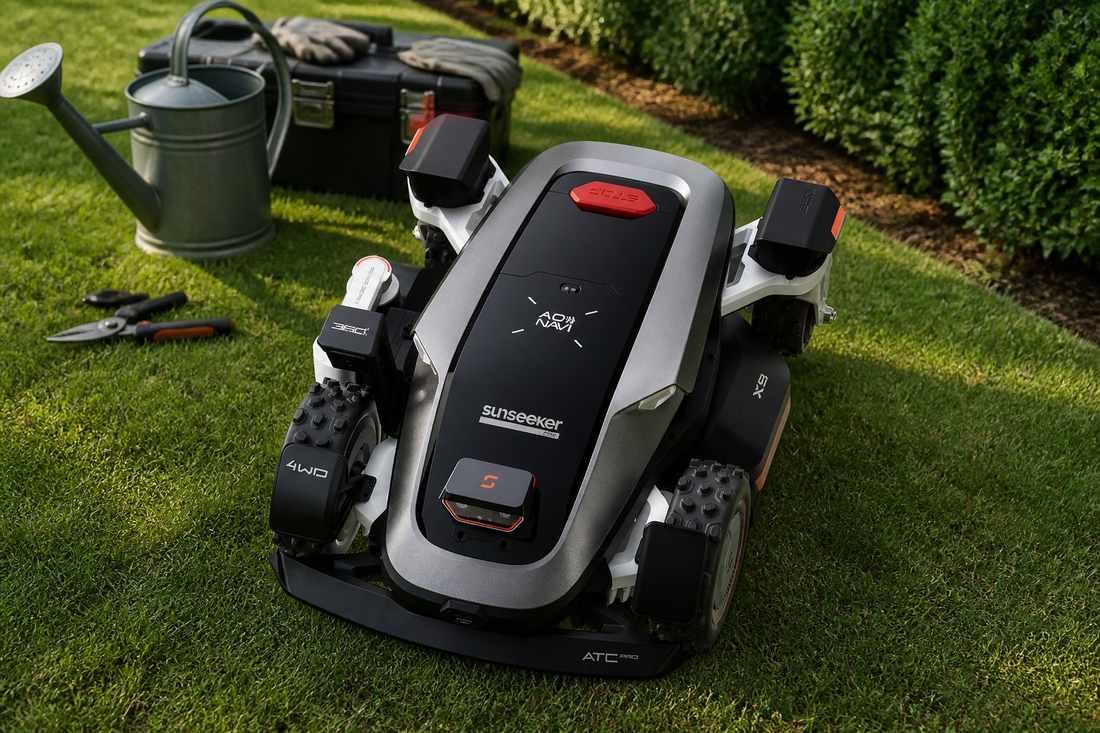
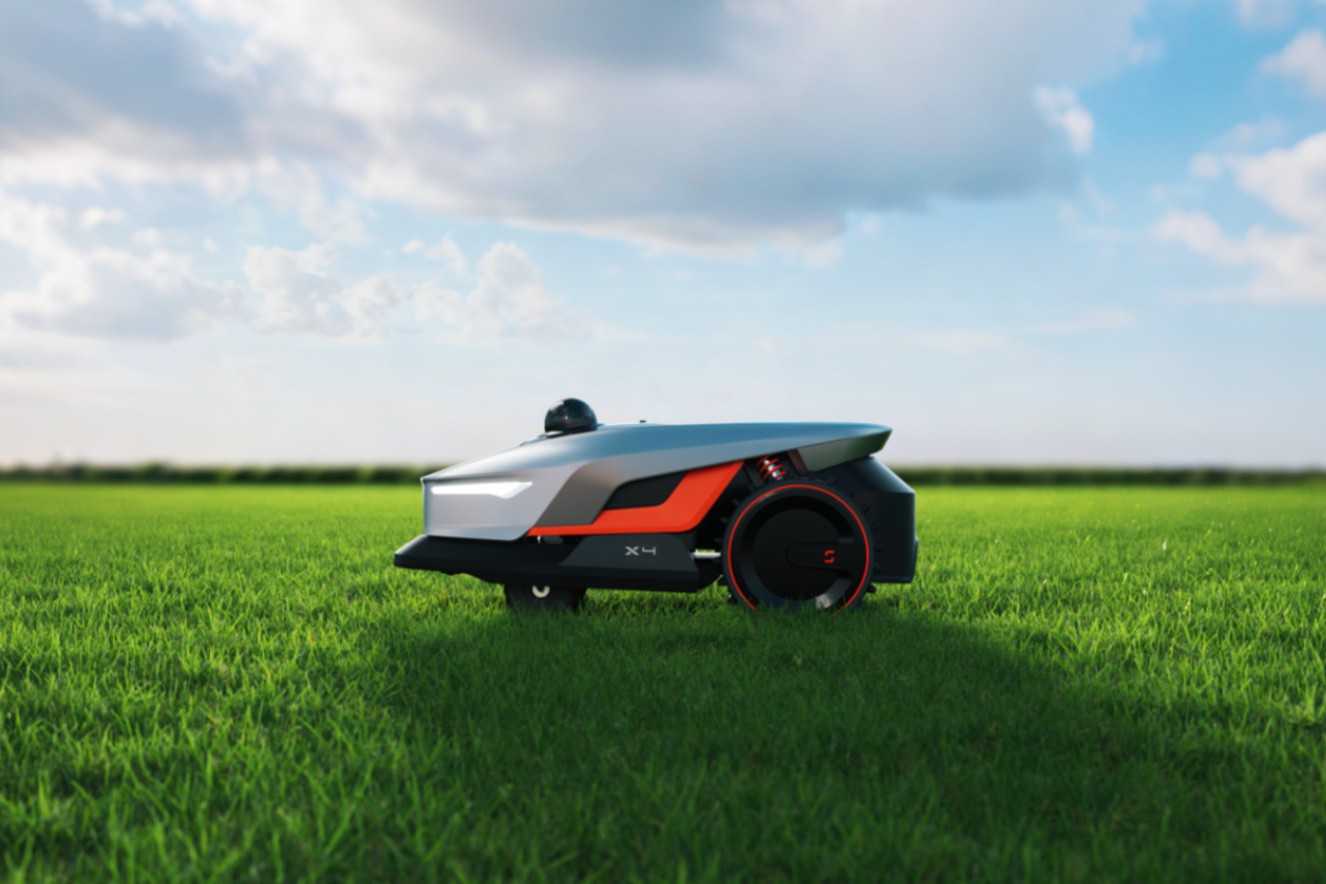
Robotic mowers represent the pinnacle of convenience, turning lawn care into a fully automated, background process. If you’d like to explore whether they truly justify their cost, see Are Robot Mowers Worth the Money? The True Cost Explained, which details the benefits and compares long-term value against gas-powered riding mowers. Their pricing reflects the sophisticated technology required for autonomous navigation and operation.
Priced between €800 and €1,500, entry-level robots suit small lawns, typically under 1000m². Most navigate using a perimeter wire or basic Vision AI. Wire-based models require laying a boundary and follow a random or systematic pattern within it. Vision AI models map the lawn digitally without wires.
Both return to their charging station when low on power and resume automatically, providing essential automation with simple scheduling via a control panel or app.
In the €1,500 to €3,000 range, robotic mowers become significantly more intelligent and capable, typically covering lawns of up to around 3000m². These models typically feature advanced navigation systems, such as RTK-GPS or LiDAR combined with Vision AI, eliminating the need for perimeter wires. Full smartphone app control enables precise scheduling, multi-zone management, no-go zones, and real-time status monitoring.
Upgraded motors and traction systems allow reliable performance on moderate slopes (around 35%-70%) and more complex lawn layouts, making this category well suited for most modern homeowners.
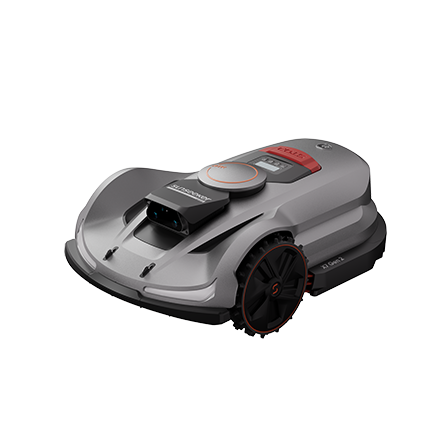
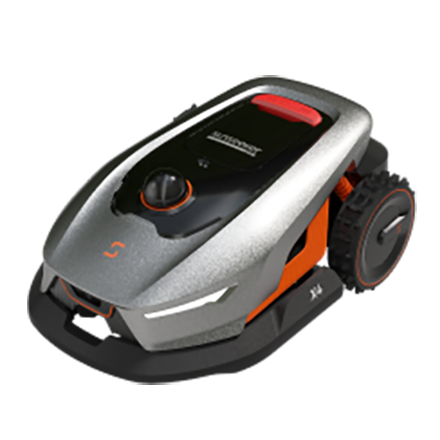
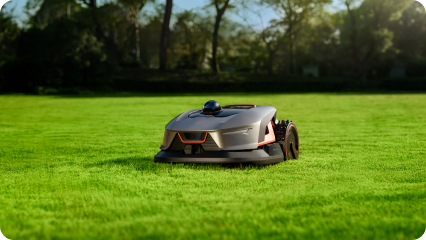
For example, the Sunseeker Elite X4 exemplifies these advancements, featuring a 360° LiDAR and Vision AI Dual Fusion Sensing System for unmatched obstacle detection and positioning. With wire-free setup, it starts instantly, automatically creating a 3D map of your yard for smart path planning, adaptive zone management, and seamless mowing without manual configuration.
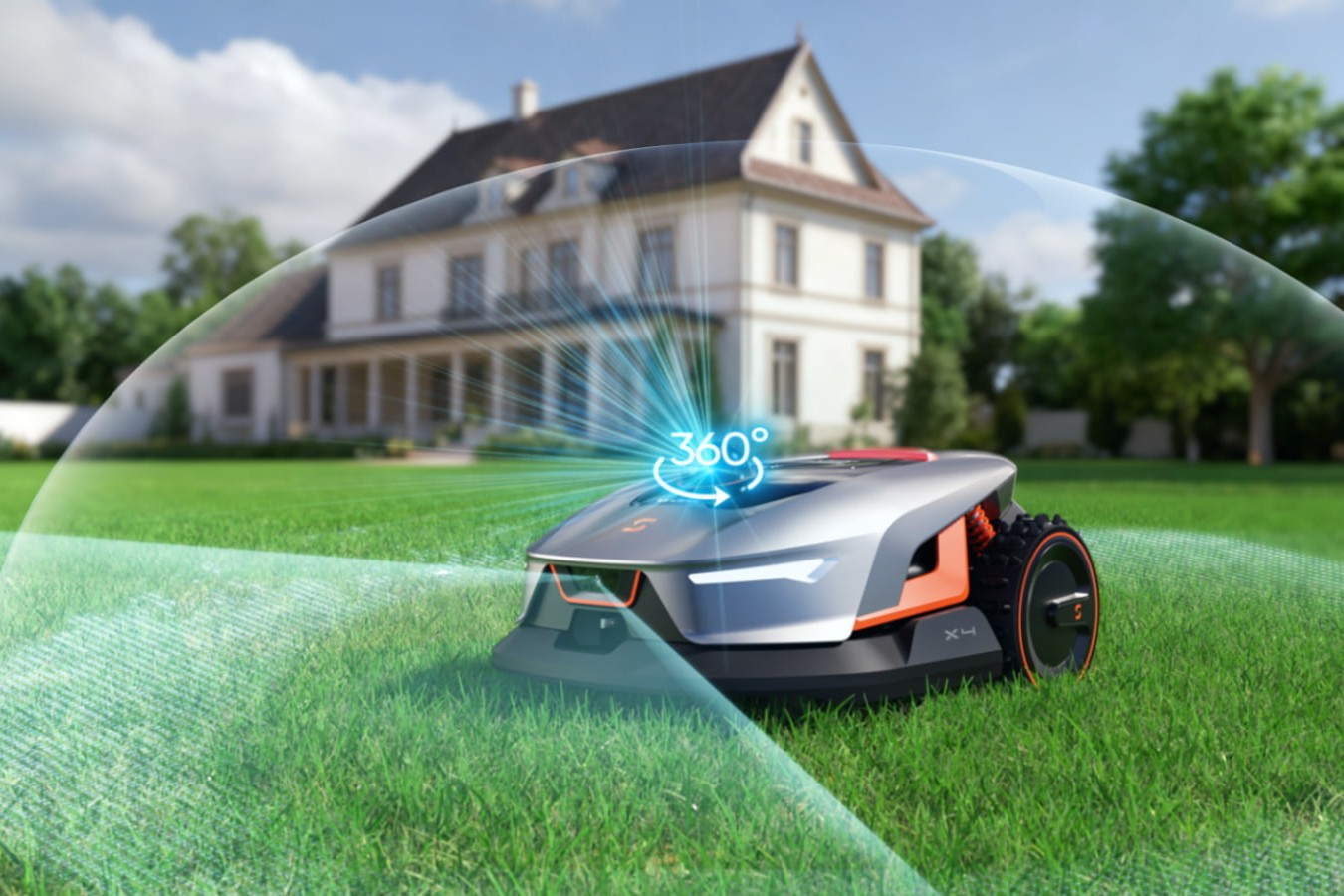
Sunseeker Elite X4 with 360° 3D LiDAR and Vision AI Dual Fusion Sensing System
High-end robotic mowers, costing from €3,000 to over €6,000, are designed for extra-large and demanding properties, often reaching light commercial-grade performance. Equipped with top-tier onboard chips, they process navigation data with exceptional precision to support advanced autonomy and multi-zone management.
Powerful all-terrain drive systems enable confident operation across steep slopes, uneven ground, and complex layouts. High-power fast-charging technology further minimizes downtime, allowing these models to work longer and more efficiently with minimal human intervention.
Beyond the basic type, several key factors influence the final price tag of a mower. Understanding these will help you decipher why one model costs more than another that seems similar.
This is the most critical factor. The size of your yard dictates the necessary power, runtime, and cutting width. A small 1,000m² lawn has vastly different requirements than an 8,000m² property.
Similarly, a flat lawn is less demanding than one with hills, valleys, or numerous garden beds. More challenging terrain requires more powerful engines, better traction systems (like all-wheel drive on robots), and often more sophisticated steering, all of which increase cost.
The choice between electric (corded, battery) and gas power carries cost implications related to performance and convenience. Within electric models, higher voltage and larger battery capacity command a premium. For gas mowers, a larger engine (measured in cubic centimeters) means greater power and a higher price.
In robotic mowers, the sophistication of the navigation system (basic boundary wire vs. advanced RTK-GPS) is a major cost driver. Essentially, greater performance and autonomy come at a higher price.
Established brands with long histories in outdoor power equipment often charge more for their products. This premium typically reflects consistent quality, reliable engineering, extensive dealer networks for service, and robust customer support. Warranty terms are also crucial; a longer and more comprehensive warranty can justify a higher initial cost by protecting your investment and reducing long-term risk.
Optional features can significantly affect the price. On a walk-behind mower, a self-propelled drive system can add €100-€200. On a riding mower, a electric start, headlights, or a comfortable high-back seat are upgrades.
For any mower, accessories like mulching kits, grass collection bags, or snow blade attachments (for tractors) are additional costs. In the robotic world, features like rain sensors, anti-theft GPS tracking, and integration with smart home systems are value-adds that raise the price.
So, how much is a lawn mower? The answer is not a single price point. Basic manual reel mowers can start under €100, while fully automated robotic systems can exceed €6,000.
For homeowners with a medium-sized lawn who prioritize effortless setup, a model like the Sunseeker Elite X4 robot mower is an ideal choice. Its wire-free, antenna-free design allows for true "drop-and-go" installation, making advanced robotic mowing accessible without complex procedures.
Whether you have a small city garden or a sprawling suburban yard, the key is to match the machine to your yard's size and terrain while considering long-term costs. This approach ensures you invest wisely in a tool that delivers a great lawn without overspending.
The value depends on your priorities. A robotic mower offers significant time savings and fully automated care, while a gas mower provides more power for less upfront cost but requires manual operation and ongoing fuel expenses.
With proper maintenance, gas mowers often last 7-10 years, while quality electric models can last 5-8 years. Battery lifespan (3-5 years for replacement) is the limiting factor for electric mowers, whereas engine wear determines gas mower longevity.
Yes, many retailers and manufacturers offer financing plans, especially for riding and zero-turn mowers. These programs often feature low or zero-interest options for qualified buyers, making premium equipment more accessible through manageable monthly payments.