




FAQs
1/27/2026
Contents
Products
Residential Lawns





Commercial Landscapes
Explore
Where to Buy


Choosing the right time to mow your lawn is about more than just fitting it into your schedule. It directly impacts the health of your grass, the performance of your mower, and your standing with the neighbors. From the dampness of morning dew to the intense heat of a summer afternoon, timing plays a crucial role. This guide will help you identify the best windows for mowing and explain the science and courtesy behind them.
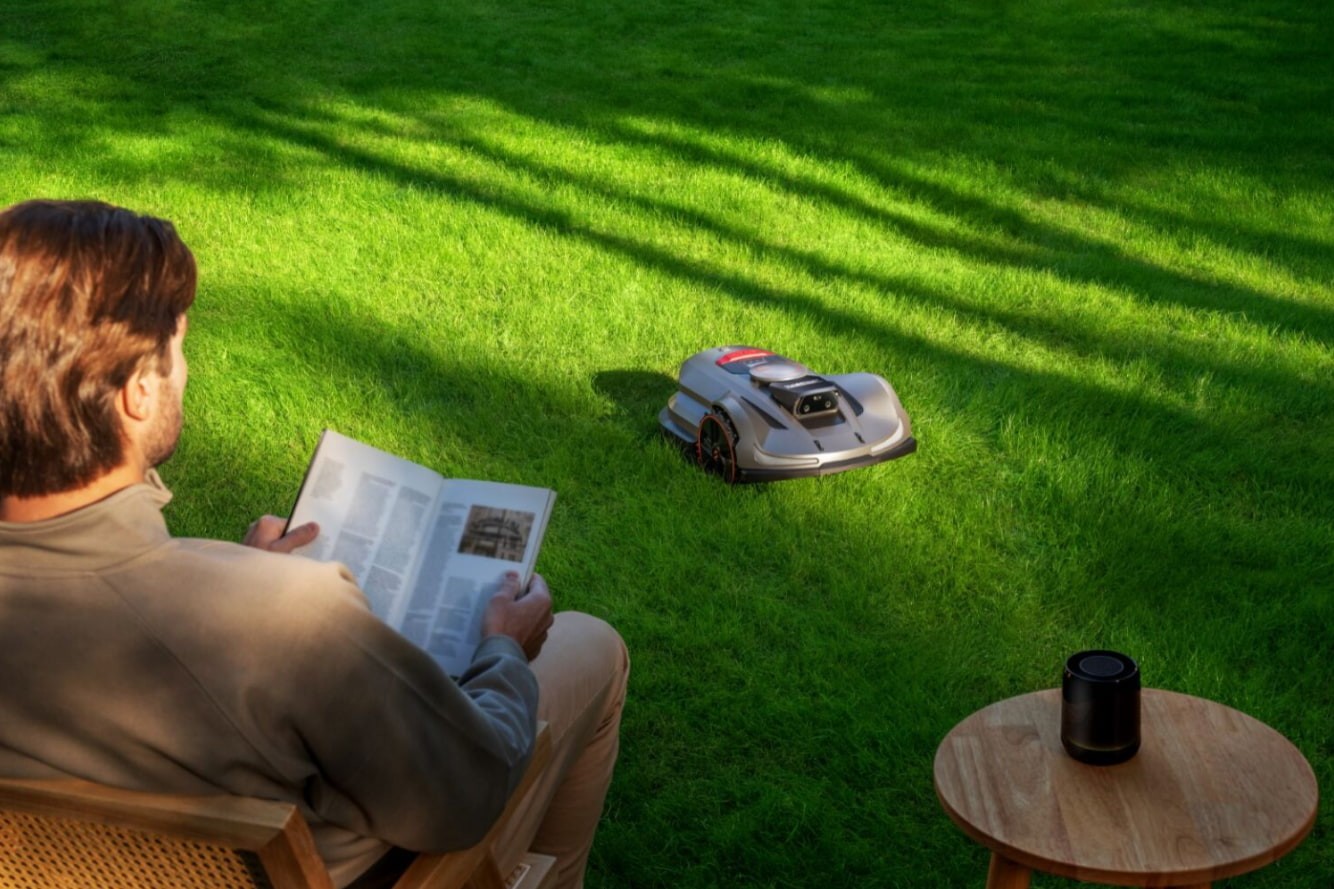
For optimal results, aim for two specific windows during the day when conditions are most favorable for both your lawn and your effort.
The prime time for mowing is typically around 10:00 AM, once the morning dew has completely evaporated from the grass blades. At this time, the grass is dry and standing upright, allowing the mower blades to make a clean, sharp cut. The air temperature is also mild, reducing stress on both the grass and the person operating the mower. This clean cut helps the grass heal quickly and maintains a neat, professional appearance.
The second-best option is the late afternoon, typically between 4:00 PM and 6:00 PM, when temperatures start to ease and the grass has recovered from midday heat stress. Mowing at this time still allows for a clean, even cut without exposing the lawn to extreme heat. However, it’s important to finish before dusk so the grass has time to heal before nightfall, reducing the risk of moisture-related disease.
Just as there are ideal times, there are periods you should actively avoid to prevent damage and disruption.
Mowing between 6:00 AM and 8:00 AM, while the grass is still heavy with dew, is counterproductive. Wet grass clumps together, clogs the mower deck, and results in an uneven, ragged cut. This messy cut not only looks bad but also tears the grass blades, creating open wounds that are highly susceptible to disease.
Mowing during the peak heat of the day, especially in summer, subjects your lawn to severe stress. The intense sun and high temperatures cause rapid moisture loss from the freshly cut tips, potentially scorching the grass and further depleting soil moisture. It is an uncomfortable and potentially dangerous time for you as well.
Mowing after dark is strongly discouraged. It is a major disturbance to neighbors trying to relax or sleep. Furthermore, poor visibility makes it difficult to see obstacles, achieve an even cut, or operate the machinery safely. The grass is also more likely to be damp with evening moisture, leading to all the problems associated with mowing wet grass.
Beyond grass health, knowing when you can legally and politely start your mower is essential for community harmony.
Before choosing a mowing time, it’s important to consider local noise regulations. Most municipalities and homeowners associations (HOAs) enforce quiet hours that restrict the use of loud power equipment like lawn mowers—often before 8:00 AM and after 8:00 PM on weekdays, and before 9:00 AM on weekends or holidays. Ignoring these rules can lead to complaints or fines.
To avoid issues, check your city or town’s official website under sections such as “codes,” “ordinances,” or “noise control,” and review HOA guidelines for exact requirements.
Even if local rules allow mowing at 8:01 AM, being a good neighbor means going a step further. Avoid firing up the mower first thing on weekend mornings and try not to mow during common dinner hours in the early evening. Small choices like these help keep neighborhood relationships positive.
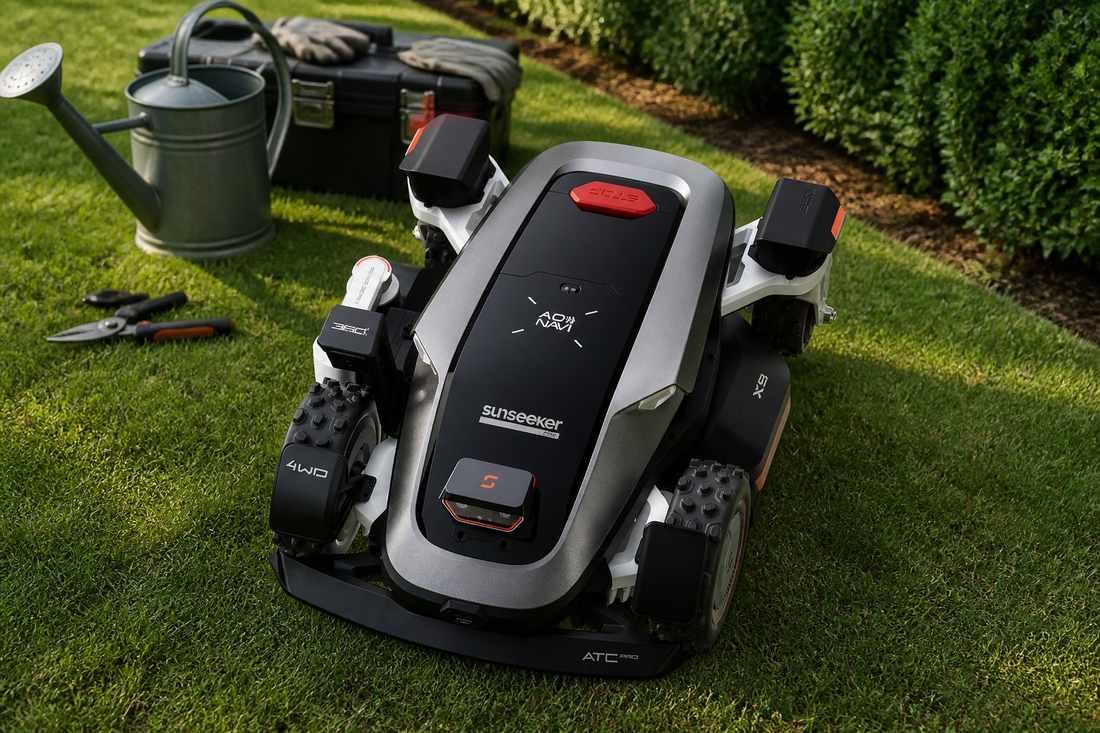
If noise is a concern, consider switching to a battery-powered mower. These are significantly quieter than gas models and create far less disturbance. For example, the Sunseeker Elite X7 Gen 2 robotic mower operates at around 60 decibels, covers lawns up to 3,000 m², and produces zero direct exhaust emissions, making it a quieter, cleaner, and more neighbor-friendly option.
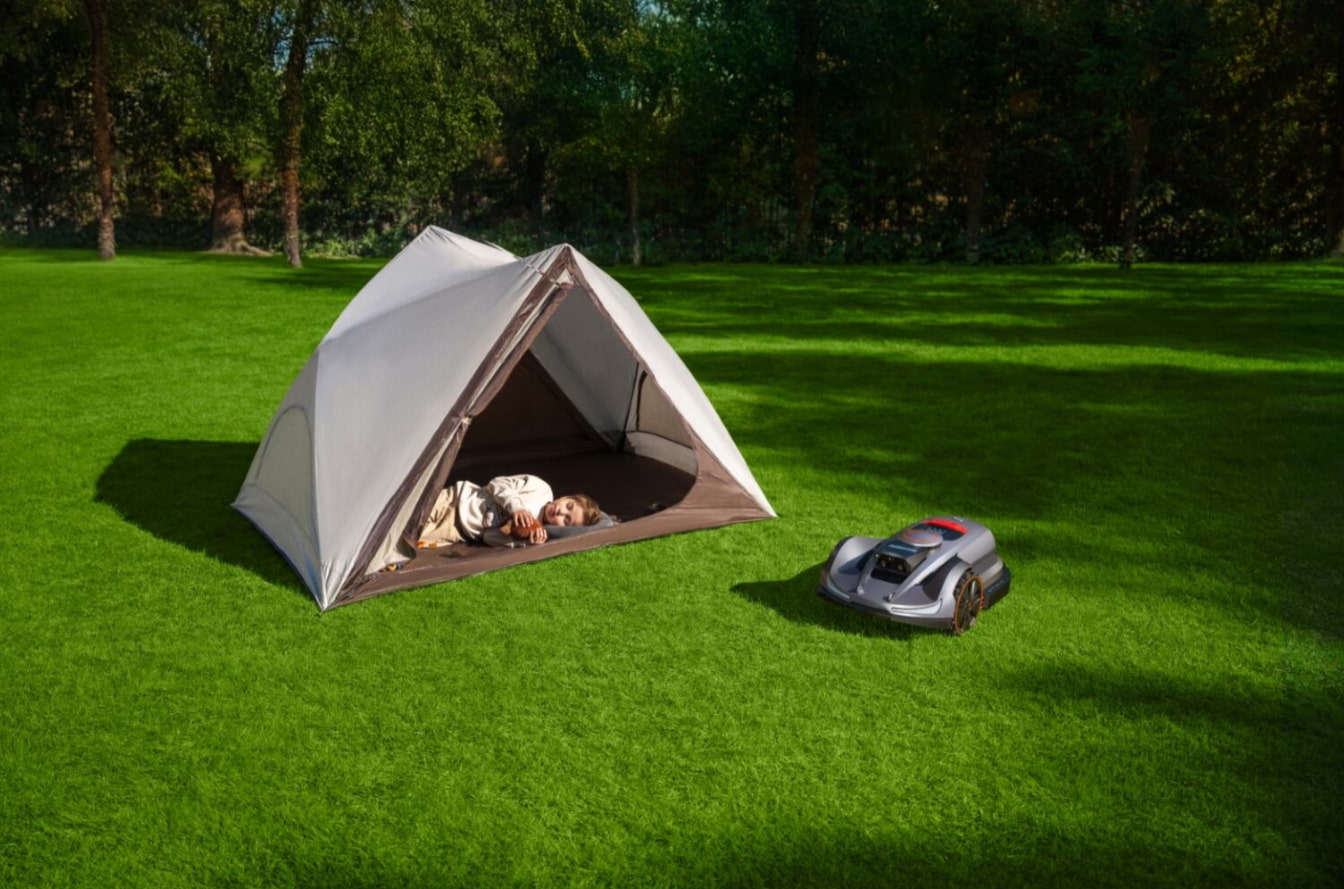
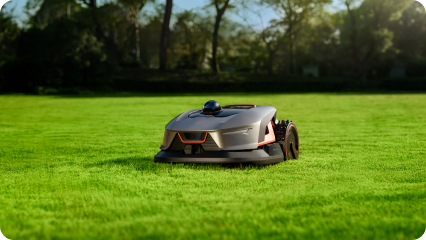
Sunseeke Elite X7 Gen 2 operating quietly on the grass
Your local weather and the time of year should fine-tune your mowing schedule.
In arid, hot regions, the best mowing window is mid-morning, after dew has dried but before temperatures peak. This timing allows grass to recover more efficiently and reduces heat stress. Keep your mower blades sharp for clean cuts that heal faster. Raising the cutting height helps shade the soil, slow moisture loss, and protect roots. Besides, pair mowing with early-morning watering so moisture reaches the soil before heat-driven evaporation begins.
In areas with cool, damp weather, grass grows more slowly, and frequent rain or morning dew keeps soil moisture high. Mowing when the lawn is fully dry is essential to prevent turf damage and disease. Late morning to early afternoon is often ideal, as moisture has evaporated and there is still enough daylight and warmth for the grass to recover, reducing the risk of fungal problems.
Seasonal changes should guide both how often and when you mow. In spring and fall, grass grows quickly, so more frequent mowing helps maintain a healthy, even height without removing too much blade at once. During peak summer heat, growth slows and stress increases, making it best to mow less often and stick to cooler parts of the day. Adjusting mowing this way protects roots, preserves soil moisture, and supports long-term lawn health.
For a detailed, season-by-season guide on caring for cool-season and warm-season grasses, you can check out Year-Round Lawn Care Schedule Tips.
Pairing good timing with the below proper technique will give you the healthiest lawn on the block:
1. Mow When Grass is Dry: This is the golden rule. Always wait until the grass is completely dry from dew, rain, or irrigation. Dry grass cuts cleanly, doesn't clump, and is far less likely to spread disease.
2. Alternate Your Mowing Pattern: Change the direction you mow each time. If you mowed horizontally last week, mow vertically this week. This prevents the grass from developing a grain (leaning in one direction) and encourages more upright, even growth.
3. Follow the ⅓ Rule: Never remove more than one-third of the grass blade's height in a single mowing session. Cutting too much at once shocks the plant, weakens the root system, and can lead to a brown, stressed lawn.
4. Keep Your Mower Blade Sharp: A sharp mower blade is non-negotiable for a healthy lawn. A dull blade tears and shreds grass tips, leaving them vulnerable to disease and causing the lawn to look whitish or brown. Inspect and sharpen your blades several times throughout the mowing season.
Finding the best time to mow is a small habit that delivers big results. Choosing dry, mild hours helps grass recover faster, while respecting noise rules keeps your routine neighbor-friendly. Adjusting your schedule for local climate and seasonal growth shows real care for long-term lawn health. When smart timing is paired with sharp blades and proper cutting height, the result is cleaner cuts and stronger turf.
With euipment like the Sunseeker Elite robot mower, efficient and precise cutting, quiet operation, and intelligent app control make it easy to maintain perfect timing automatically. The reward is a healthier, greener lawn that looks great, and stays effortless all season long.
It's best to mow after the grass has fully dried, typically a day after rain. Mowing wet grass leads to uneven cuts, clumping, and can spread lawn disease. It also puts extra strain on your mower.
The optimal window is in the late morning or early afternoon. The dew has evaporated, and the grass isn't stressed by midday heat. Avoid mowing at dawn (wet grass) or dusk (dampness returns).
Respect local noise ordinances, which often restrict very early mornings (before 8-9 AM) and late evenings (after 8 PM). Mowing during standard daytime hours is generally the most neighbor-friendly approach.