





FAQs
11/7/2025
Contents
Products
Residential Lawns
Commercial Landscapes
Explore
Where to Buy


A robot mower is most likely to pay off when mowing is frequent, the lawn is compatible, and saved time matters. Over several seasons, the value comes from lower hands-on mowing, consistent trimming, and potentially lower service costs. Very small, fragmented, or infrequently cut lawns may see less benefit.
Weekly mowing can quietly take up more time than expected. Once mowing, edging, cleanup, and mower maintenance are added together, a large part of the weekend can disappear into routine lawn care. That is where an autonomous mower starts to become worth comparing with manual mowing or a lawn service.
The real question is whether the time saved justifies the upfront and ongoing costs for your particular yard. Are robot mowers worth the money? This blog compares purchase and ownership costs, mowing hours saved, professional lawn-service fees, and the lawn conditions that have the biggest effect on whether a robot mower is a good investment.
The purchase is easiest to justify when several practical conditions line up. These are the situations that usually create enough recurring value to offset the initial cost.
Sticker price is only one part of the calculation. A realistic budget includes setup, consumable parts, electricity, battery replacement, and occasional service across the years you expect to keep the machine.
Residential robot mowers commonly cost about €600 to €1,300 for small, simple lawns. Advanced machines for large areas, steep terrain, or complex navigation may reach €1,700 to €5,100 or more. Wire-based models can add dealer installation charges, while wire-free systems trade cable work for careful mapping and station placement.
Electricity may total roughly €10 to €35 per season, depending on lawn area, battery size, schedule, and utility rates. Replacement blades often cost €15 to €50 per set and may need attention every one to three months during heavy use. Annual dealer inspection may add about €85 to €260.
The battery is the largest midlife expense. Many lithium-ion packs last three to five years. Replacement commonly costs €130 to €430. Over five years, a €1,700 mower plus €430 for blades, electricity, and battery allowance averages about €425 per year before repairs.
The clearest comparison uses the same time horizon for all three options. The figures below illustrate five years of routine mowing for a typical residential lawn; local prices and equipment choices will change the result.
Option | Upfront Cost | Ongoing Cost | Owner Time | 5-Year Estimate |
Robot mower | €1,300-€2,600 | €60-€170/year | Setup plus brief checks | €1,600-€3,450 |
DIY push mower | €300-€775 | €70-€190/year | 20-40 hours/year | €650-€1,700 |
Lawn service | Usually none | €35-€70/visit | Scheduling and access | €4,300-€8,600 |
DIY mowing may have the lowest cash cost, but it consumes personal time. A 75-minute weekly routine across 26 weeks equals 32.5 hours annually, or 162.5 hours over five years. Valuing that time at €17 per hour adds an implicit cost of about €2,760 before equipment and maintenance.
A service removes most labor but creates a recurring bill. At €50 per visit for 26 visits, the cost is about €1,300 yearly and €6,500 over five years. A robot mower occupies the middle ground: more initial spending than a push mower, less recurring labor, and direct ownership instead of a service contract.
A robot mower offers the most value when your lawn fits what the machine is designed to handle. Lawn size matters, but slopes, narrow passages, separate mowing areas, and obstacles can have just as much impact on how well it works.
Measure the actual grass area, not the total property size. Also check the steepest slopes, the narrowest paths between lawn sections, and any curbs or steps the mower would need to cross. Simple, open lawns are easiest to automate, although the right model can also handle multiple zones and more challenging terrain.
Robot mowers are especially useful for medium to large lawns that need regular mowing, particularly during long growing seasons. Yards with loose gravel, exposed tree roots, standing water, or grass areas that cannot be reached from one another may need some changes or occasional manual mowing.
A lower-priced mower is not economical if it regularly gets stuck or cannot cover the full property. Match the following capabilities to measured yard conditions and the amount of oversight you are prepared to provide.
Choose a rating above the measured turf area. A 20% to 30% capacity buffer helps when slopes, narrow corridors, dense grass, or multiple zones slow progress. Check expected daily coverage as well as maximum mowing area, since route efficiency and charging frequency affect completion time.
The cutting range must suit the grass species and season. Many cool-season lawns are kept near 6 to 10 cm, while some warm-season grasses are shorter. Confirm the adjustment increments, and remove no more than about one-third of the leaf blade after rapid growth or a schedule interruption.
Virtual boundaries avoid buried cable, but navigation must match the property. Trees, tall buildings, walls, and covered passages can challenge satellite positioning. Ask how mapping works, how the mower handles signal loss, and if it resumes accurately after charging.
Separate schedules help when front and back lawns grow at different rates. Confirm the mower can store every required zone, navigate connecting passages, and create temporary no-go areas for new seed or seasonal furniture.
Obstacle sensing reduces contact with toys, furniture, trees, pets, and garden objects, but owners should still clear the lawn. Check minimum detectable object size and low-light performance. Lift, tilt, and bumper systems should stop the blades promptly.
Traction matters on slopes, uneven ground, and damp grass. Compare the manufacturer’s maximum slope rating with the steepest measured section, leaving a safety margin rather than treating the limit as a normal target. All-wheel drive and active steering can reduce slipping and turf scuffing on demanding properties.
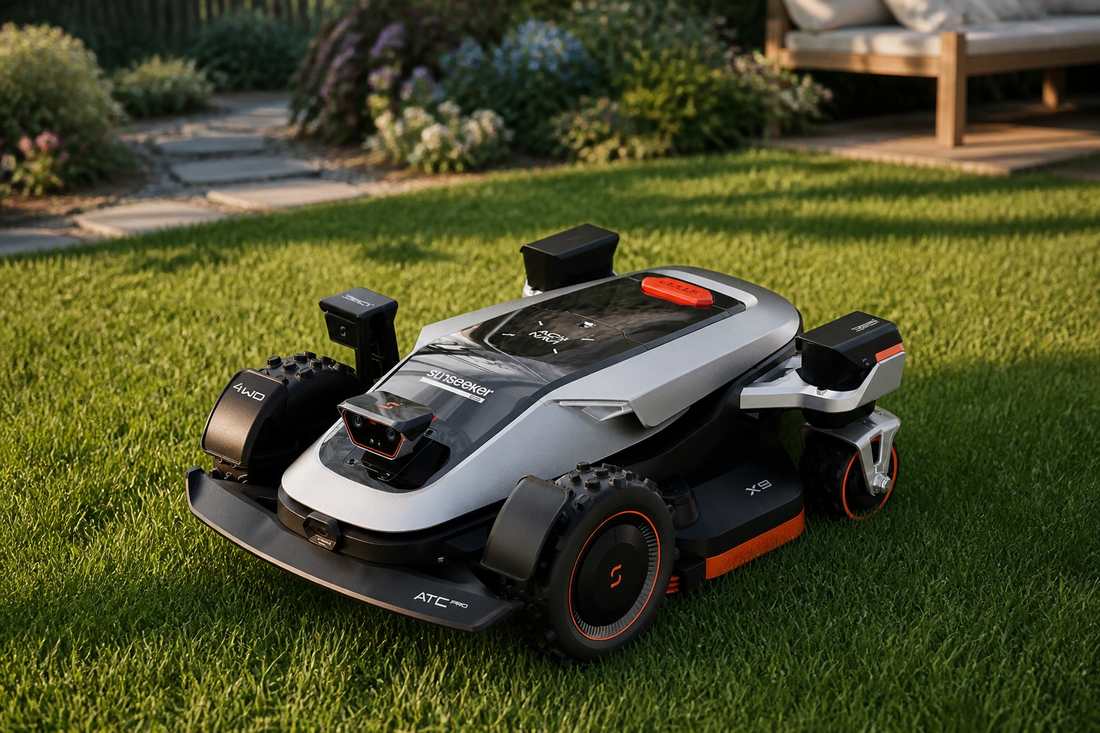
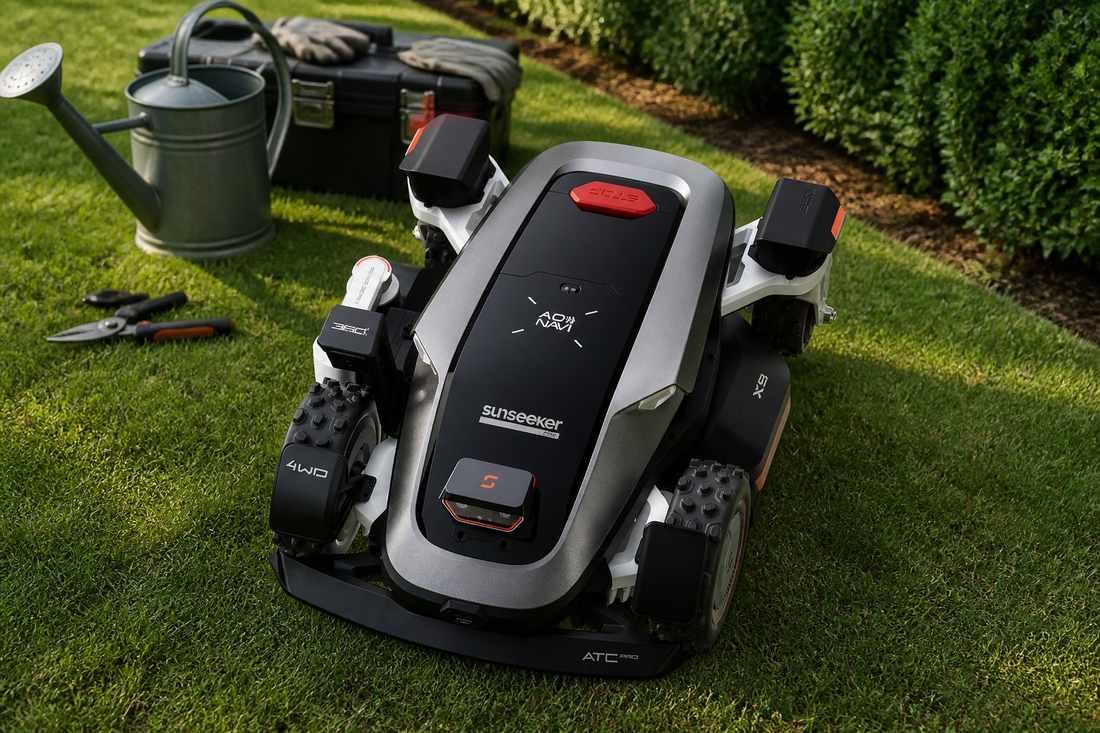
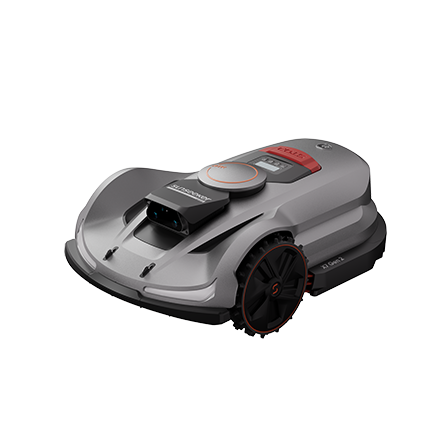
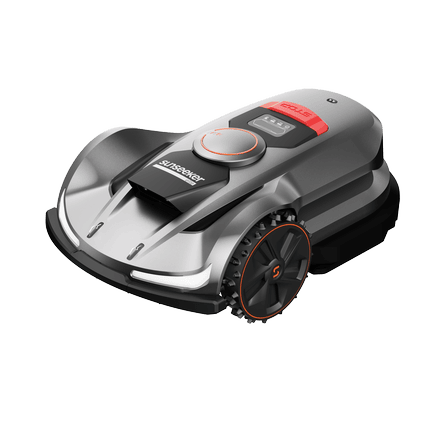
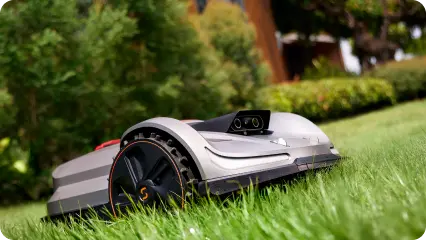
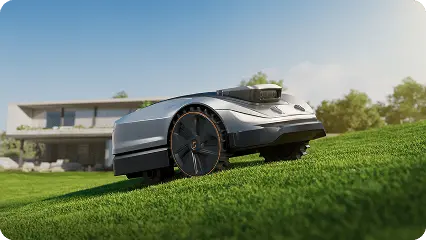
For large, complex sites, the Sunseeker Elite X9 is designed to maintain established lawns up to 12,000 m² within a 48-hour mowing cycle. Its ATC Pro all-wheel drive and four-wheel suspension support uneven ground and slopes rated up to 90% (42°), while AONavi positioning enables planned routes without a perimeter wire. These capabilities suit substantial properties with stable turf that needs frequent, consistent cutting.
Automation has limits, and some properties will not generate enough use to repay the investment. The following warning signs point toward a basic mower, occasional rental, or professional service instead.
The answer to “are robot mowers worth the money” is yes for many owners with an established, compatible lawn and a recurring mowing burden. Compare five-year cost, hours recovered, yard geometry, parts support, and battery expense instead of focusing only on purchase price. A well-matched machine can provide steady maintenance across many seasons. Explore Sunseeker’s Robot Lawn Mowers to compare coverage, navigation, terrain capability, and cutting ranges against your property measurements.
Against a €50-per-visit lawn service used 26 times yearly, annual mowing costs about €1,300. A €2,150 robot mower with roughly €130 in yearly operating allowance could recover its cost in about two years. Against DIY mowing, cash payback may take five years or longer unless you assign a value to saved time.
Electricity is generally inexpensive, often about €10 to €35 per season for a residential unit. Add blade sets, periodic cleaning, possible service, and a battery allowance. A practical annual budget is about €60 to €170 outside major repairs, though large machines, long seasons, abrasive sites, and dealer service can raise it.
A quality robot mower can often serve five to ten years with regular cleaning, sharp blades, dry winter storage, and timely repairs. The lithium-ion battery may need replacement after about three to five years. Climate, operating hours, terrain, collisions, parts availability, and maintenance habits influence the useful life more than age alone.