





FAQs
6/30/2026
Contents
Products
Residential Lawns










Explore
Where to Buy


Nitrogen deficiency is the most common cause of yellow lawn grass, but watering issues, fungal disease, pests, and mowing habits all contribute. Most cases are reversible with the right diagnosis and targeted treatment.
A healthy lawn should be consistently green through the growing season. When it starts going yellow, why is my lawn going yellow is the right question to ask before reaching for any product. The cause determines the fix, and applying the wrong treatment can make things worse. This guide walks through what yellow grass typically signals, the most common causes, and how to address each one.
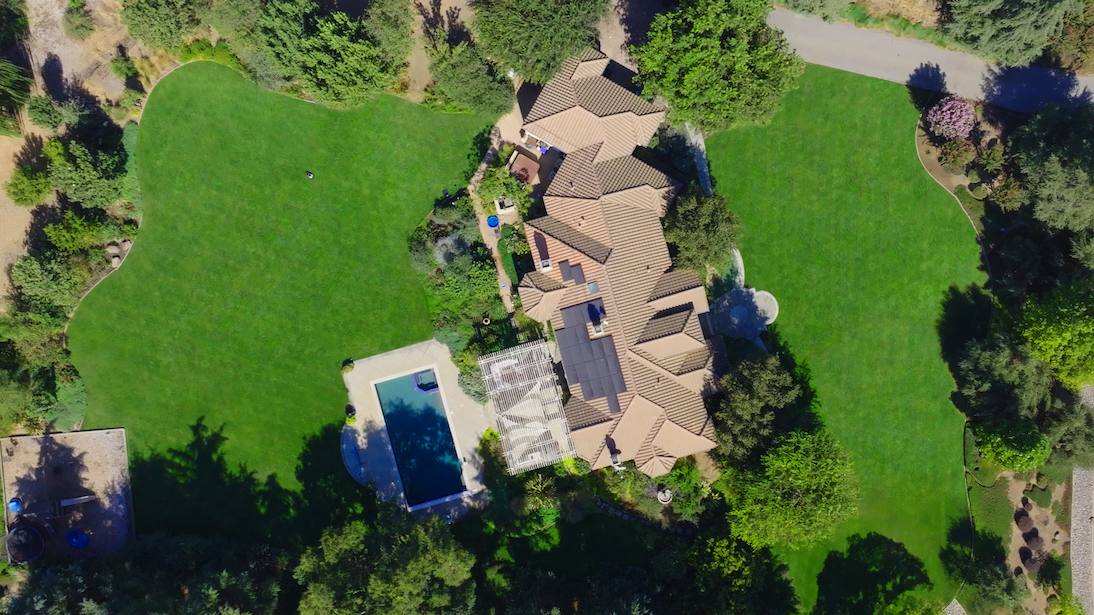
Yellow grass is the lawn's way of showing that something in its environment or care routine is off. The pattern of yellowing is often the first diagnostic clue:
Yellow grass is not always dying grass. Dormant grass, for example, turns yellow or straw-colored during drought or extreme heat but recovers once conditions improve. Understanding the pattern first saves time and avoids misdiagnosis.
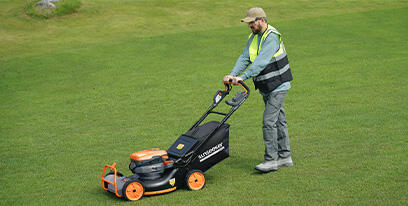
Keeping grass consistently healthy and dense is the most reliable way to prevent most yellowing issues. A robot lawn mower maintains regular mowing on an automatic schedule, which helps turf stay thick enough to resist the stress and disease pressure that often lead to yellowing.
Knowing how to fix a lawn that is turning yellow starts with diagnosis: the pattern, location, and timing of the discoloration point toward the likely cause. Use the table below as a quick reference, then match it to the detailed breakdown.
What You See | Likely Cause |
Uniform yellow across the whole lawn | Nitrogen deficiency, drought stress, or dormancy |
Yellow stripes or streaks after fertilizing | Nitrogen burn |
Circular or spreading yellow patches | Fungal disease |
Spongy patches that lift like carpet | Grub damage |
Small round patches with dark green ring | Dog urine |
Yellow tips with ragged edges after mowing | Dull mower blades |
Yellow with green veins on new growth | Iron deficiency |
Yellow only in shaded areas | Too much shade |
Spongy feel + yellow despite watering | Thatch buildup |
Hard ground + yellow in high-traffic areas | Compacted soil |
Nitrogen is the nutrient grass needs most for green color and healthy growth. According to Purdue University Extension, turfgrass needs 2–4 lbs of nitrogen per 1,000 sq ft annually, depending on grass type. Both too little and too much can turn your lawn yellow, just in different ways.
What it looks like: Uniform pale yellow-green color across the entire lawn, starting with older leaf blades at the base while new growth stays slightly greener. Growth slows noticeably.
How to fix: Apply a nitrogen-rich fertilizer during active growth: spring and fall for cool-season grasses, late spring through summer for warm-season varieties. Slow-release formulas feed steadily over several weeks and reduce the risk of burn. Confirm with a soil test from your local cooperative extension office before applying.
What it looks like: Yellow or brown streaks and patches appearing shortly after fertilizer application. Often appears in stripes where a spreader overlapped, or in spots where granules concentrated.
How to fix: Water the affected area deeply immediately to dilute the nitrogen concentration in the soil. Allow recovery time. Mild burn cases green up within a few weeks. For severe burn, overseeding may be needed once the soil has recovered.
Watering is one of the first things to check when a lawn starts turning yellow. Too much water can suffocate roots and invite disease, while too little water forces grass into drought stress.
What it looks like: Soft, mushy patches, grass that pulls up easily, and a uniform pale yellow that may be accompanied by visible fungal growth or a sour smell from the soil.
How to fix: Reduce watering frequency. Check soil moisture 2–3 in deep before watering. Water deeply two to three times per week rather than lightly every day, and always in the early morning.
What it looks like: Grass starts as a dull, blue-gray tinge before turning yellow and eventually straw-brown as it enters dormancy. Footprints that stay visible in the grass for more than 30 minutes are a reliable sign of drought stress.
How to fix: Water deeply during dry periods. Most cool-season grasses can tolerate 4–6 weeks of drought dormancy before permanent damage occurs. Consistent deep watering during this period helps maintain the crowns and allows recovery once conditions improve.
Mowing can either support healthy growth or add extra stress to an already struggling lawn. Cutting too short, mowing with dull blades, or mowing irregularly can weaken the grass, reduce photosynthesis, and make yellow patches appear quickly after each cut.
What it looks like: Widespread yellowing shortly after mowing, particularly if the lawn looks scalped, with soil visible through thinned grass. Cutting too short removes the leaf blade that drives photosynthesis, stressing the plant and causing it to yellow quickly.
How to fix: Raise the cutting height. Most cool-season grasses perform best at 3–4 in; warm-season grasses generally prefer 1.5–3 in. Never remove more than one-third of the blade in a single mow.
What it looks like: A ragged, frayed appearance on grass blade tips that turn white or tan a day or two after mowing. Unlike scalping, the yellowing is at the tips rather than across the whole blade, and the lawn looks dull rather than brown.
How to fix: Sharpen mower blades at least once per season. A sharp blade makes a clean cut that heals quickly; a dull blade tears and shreds, leaving the grass vulnerable to disease and moisture loss.
Mowing at the correct height consistently is one of the most effective ways to prevent stress-related yellowing. The Sunseeker Elite X4 removes the guesswork entirely. Drop it on the lawn and it maps the yard automatically, mows on a regular schedule at a consistent height, and handles obstacles without manual intervention. No scalping, no missed sessions, no stress from irregular cuts. Check out the X4 if you're ready to take mowing off your to-do list for good.

What it looks like: Yellow tissue with green veins on individual blades, particularly on new growth at the top of the plant. Most common in centipede grass and lawns with alkaline soil. University of Florida IFAS Extension research shows centipede grass is particularly sensitive to iron chlorosis when soil pH exceeds 6.5.
How to fix: Apply chelated iron foliar spray for the fastest result. Granular ironite products work but take longer. Check soil pH. If it's above 7.0, acidifying amendments may be needed to make iron available.
What it looks like: Circular or irregular yellow or brown patches that spread outward over days or weeks. Dollar spot creates silver-dollar-sized spots; brown patch produces larger circles with a darker ring at the edge, most visible in morning dew. Unlike nutrient deficiencies, fungal diseases create localized damage rather than uniform lawn-wide yellowing.
How to fix: Improve air circulation by raising mowing height and reducing excessive thatch. Water in the morning so grass dries before evening. Apply a lawn fungicide matched to the specific disease, as identification matters because different fungi respond to different active ingredients. For identification help, Colorado State University Extension provides a comprehensive resource covering common turf diseases.
What it looks like: Irregular yellow patches that don't respond to watering or fertilizing. Grubs feed on grass roots, causing sections of turf to feel spongy and lift like a carpet. Chinch bugs attack grass blades directly, creating spreading yellow patches in sunny areas.
How to fix: Check for grubs by cutting a 1 sq ft section of sod and counting. More than five grubs per square foot generally warrants treatment. Apply beneficial nematodes as a natural option or a targeted grub insecticide. For chinch bugs, look for the insects themselves at the edge of yellow patches and treat with an appropriate insecticide.
What it looks like: Small circular yellow or brown patches, often surrounded by a ring of darker green where the diluted nitrogen actually fertilized the surrounding grass. Common in areas where a dog regularly urinates.
How to fix: Water the area immediately after your dog urinates to dilute the nitrogen concentration. Train the dog to use a designated area with mulch or gravel. Overseed damaged spots once the soil has recovered.
What it looks like: The grass in affected areas looks thin, sparse, and pale yellow, with visible soil between blades. The ground feels hard underfoot even after watering, and puddles tend to form on the surface after rain or irrigation rather than soaking in.
How to fix: Core aeration (pulling small plugs of soil across the lawn) opens up the soil structure and restores water, oxygen, and nutrient access. Aerate in spring or fall for cool-season grasses, or late spring for warm-season. Pair with overseeding to fill in thinned areas.
What it looks like: The lawn looks thin and pale yellow despite regular watering and fertilizing. Walking across it feels spongy or bouncy underfoot. If you pull back a small section of turf, you'll see a brownish layer of matted organic material between the grass blades and the soil surface. Thatch over 0.5 in thick creates a barrier that blocks water and nutrients from reaching roots.
How to fix: Dethatch using a power dethatcher or thatching rake when the grass is actively growing. Follow with aeration and overseeding for the best recovery.
What it looks like: The entire lawn turns uniformly yellow or straw-colored during periods of extreme heat or drought. Unlike disease or deficiency, dormant grass affects the whole lawn evenly and the crowns remain firm and white when pulled back, a sign the plant is alive.
How to fix: Dormancy is a natural survival mechanism, not a problem to solve. Avoid over-fertilizing or over-watering a dormant lawn. Water lightly to keep the crowns hydrated. The lawn will green up naturally once temperatures cool or rainfall returns.
What it looks like: Thin, pale yellow grass in areas consistently shaded by trees, fences, or buildings. Unlike other causes of yellowing, shade-related decline happens gradually and worsens season by season as trees grow larger.
How to fix: Trim tree branches to allow more light through. If the shaded area is permanent, replace the grass with shade-tolerant varieties such as fine fescue for cool-season lawns, or St. Augustine for warm-season. Ground covers are another option for areas too shaded to support any grass.
Why is my lawn yellow usually comes down to one of a handful of root causes: nutrient deficiency, watering problems, disease, pests, or mowing habits. The pattern of yellowing points to the right diagnosis, and most cases are fully recoverable once the cause is addressed. Start with a soil test if the cause isn't clear; it's the single most useful tool for diagnosing and correcting lawn problems before they worsen.
It depends on the cause. For nitrogen deficiency, a slow-release nitrogen fertilizer applied during active growth is the most effective option. For iron deficiency (yellow tissue with green veins), chelated iron spray works fastest. A soil test from your local cooperative extension office identifies exactly what's lacking before you apply anything.
In most cases, yes. Grass bounces back once the underlying cause is corrected. Grass with severely damaged roots from prolonged drought, heavy pest damage, or repeated chemical burn may need overseeding to fully recover.
The fastest fix depends on the cause. Nitrogen deficiency responds within 7–14 days with a fast-release fertilizer. Iron deficiency greens up within days with foliar chelated iron spray. Why is my new lawn turning yellow after establishment? Usually overwatering or iron deficiency — reduce watering and apply iron spray for a quick turnaround.