








FAQs
6/30/2026
Contents
Products
Residential Lawns









Explore
Where to Buy


For most lawns, spring and early fall are the two reliable windows. The right timing depends on grass type, soil temperature, and whether you're targeting existing weeds or preventing new ones. Cool-season grasses and warm-season grasses follow different schedules, and understanding the difference is the starting point for getting results.
Getting the timing right is the single most important factor with weed and feed products. Applied correctly, when to apply weed and feed can mean the difference between a thick, weed-free lawn and patchy results that leave you retreating the same spots weeks later. This guide walks through when to apply, what to check first, how to apply it properly, and when to skip it entirely.
Weed and feed is a combination lawn care product that pairs a broadleaf herbicide with a granular fertilizer. The fertilizer component feeds the grass with nitrogen, phosphorus, and potassium to support healthy growth. The herbicide component targets common broadleaf weeds like dandelions, clover, and chickweed.
Most weed and feed products are available in two herbicide types:
Some products combine both types. Always read the label before applying, as formulas are often designed for specific grass types and may harm others if used incorrectly.
One thing worth considering before reaching for weed and feed: if your lawn is already healthy and well-fertilized from a previous application, you may only need a standalone herbicide to target the weeds, not a combined product. Adding unnecessary fertilizer can push excessive growth and increase mowing frequency without real benefit.
The best application windows align with when grass is actively growing and weeds are present. According to University of Minnesota Extension and University of Florida IFAS Extension, timing varies by grass type. Both agree that applying outside the active growth window reduces effectiveness and increases the risk of lawn damage.
Grass Type | Spring Window | Fall Window | Temperature Range |
Cool-season (Kentucky bluegrass, tall fescue, perennial ryegrass) | April–May, after first 1–2 mows | September–mid-October (most effective) | 60–90°F |
Warm-season (Bermuda, zoysia, St. Augustine, centipede) | Late April–early June, after full green-up | Early September only; avoid late-season nitrogen | 60–90°F |
Cool-season grasses grow most actively in spring and fall.
Warm-season grasses grow most vigorously in late spring and summer.
Note for transition zone lawns: If you're in a region with mixed grass types (such as Virginia, Tennessee, or North Carolina), your lawn may contain both cool-season and warm-season grasses. In this case, follow the cool-season schedule for spring (early April through mid-May) and fall (mid-September through early November), and limit warm-season grass treatment to September only. When in doubt, contact your local cooperative extension office for region-specific guidance.
Knowing when to put weed and feed on lawn goes beyond picking the right season. A few on-the-day conditions determine whether the product works or gets wasted.
Soil temperature. For pre-emergent products, apply before soil temperatures reach 55°F. Once soil warms past this point, target weed seeds have already germinated and pre-emergent is no longer effective. For post-emergent products, soil temperature matters less than air temperature; apply when daytime air temperatures are consistently between 60°F and 85°F for best herbicide absorption.
Lawn moisture and weather. The lawn should be slightly moist before applying. Granules stick better to damp weed leaves and begin dissolving more evenly. Avoid applying immediately after heavy rain (waterlogged soil causes runoff and uneven distribution) or during drought (dry, stressed grass is more vulnerable to chemical burn). Check the forecast and skip the application if rain is expected within 24 hours or if temperatures are likely to spike above 90°F in the following days.
Recent mowing. Mow the lawn two to four days before applying weed and feed. This allows weed leaves to regrow enough surface area for the herbicide to contact and absorb. Avoid mowing for at least two to four days after application.
New lawns. Wait until a new lawn has been mowed at least twice before applying any weed and feed product. Early application can burn tender new shoots or, with pre-emergent formulas, prevent grass seed from germinating.
Knowing when to apply weed and feed to lawn is only half the equation. How you apply it matters just as much. Follow these steps for the best results:
1. Mow two to four days before application. Weeds need some leaf surface for the herbicide to contact.
2. Water lightly the day before if the lawn is dry. Granules stick better to slightly moist grass.
3. Use a broadcast or drop spreader for even coverage. Follow the label rate exactly. Over-application burns the lawn, under-application reduces herbicide effectiveness.
4. Apply in the early morning when temperatures are cooler and wind is minimal. This reduces evaporation and drift risk.
5. Avoid watering for 24–48 hours after application. The herbicide needs time to absorb into weed tissue before being washed off.
6. Wait two to four days before mowing after application to allow full herbicide absorption.
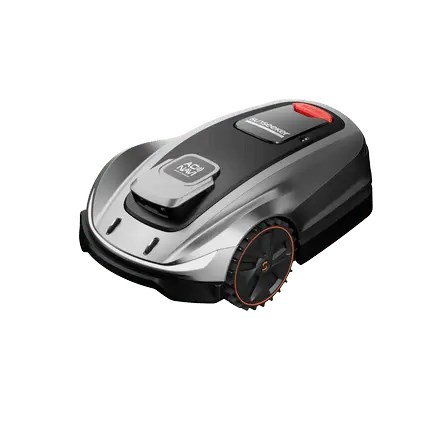
After applying weed and feed, timing the next mow correctly is important — too soon and you remove treated weed tissue before the herbicide has fully absorbed. The Sunseeker Elite X5 takes the guesswork out of this by running on a set app-based schedule with wire-free AONavi™ navigation. Set the right interval after application and it handles the rest automatically. Check out the X5 if you want mowing taken care of automatically while your weed and feed does its job.

Weed and feed works only when the lawn is actively growing and the conditions are mild enough for grass to recover. Applying it at the wrong time can burn the turf, block new seed growth, or let chemicals move unevenly through the soil, so avoid these situations before spreading it.
During heat or drought. Applying weed and feed when temperatures exceed 90°F or during dry spells stresses the grass with chemical load on top of environmental stress, leading to browning and potentially permanent damage.
Before or after seeding. Pre-emergent herbicides in weed and feed stop seeds from germinating, including grass seed. If you plan to overseed, skip weed and feed that season, or wait until the new grass has been mowed at least twice before applying post-emergent products.
More than twice per year. Applying more than twice annually over-fertilizes the lawn and allows herbicide residue to accumulate in the soil. If a second treatment is needed, allow at least two months between applications, enough time for the chemicals to break down and the lawn to recover fully before the next dose.
During dormancy. Applying to dormant grass wastes the product and can damage the lawn. The grass needs to be actively growing to process the fertilizer without burn risk.
On wet, waterlogged soil. Granules clump, distribution becomes uneven, and product can wash into storm drains, an environmental concern with herbicide-containing products.
Beyond each treatment, the best long-term defense against weeds is a dense, healthy lawn that crowds them out before they can establish. A robot lawn mower builds that density through frequent, consistent cuts that keep turf thick throughout the season. Find the right robot mower for your yard and let it handle the consistency your lawn needs.
When to weed and feed lawn comes down to grass type, temperature, and what you're targeting. Cool-season grasses respond best in early fall; warm-season grasses need a spring application after full green-up. The product works only when grass and weeds are both actively growing. Applying outside those windows wastes effort and risks damage. Check the temperature, moisture, and mowing schedule before applying, and avoid the situations where weed and feed does more harm than good.
For cool-season grasses, September through mid-October is the most effective window, with a secondary spring window in April through May. For warm-season grasses, late April through early June is the primary window. When to weed and feed your lawn depends on whether your grass type is actively growing and temperatures are in the 60–90°F range.
Start by mowing two to four days before applying to give weed leaves time to regrow enough surface area for the herbicide to contact. Water lightly if the lawn is dry. Check the forecast to ensure no rain within 24 hours and no heat spike above 90°F within the next few days. Confirm the product is compatible with your grass type by reading the label.
Mow two to four days before applying, not right before, as weeds need time to regrow enough leaf surface for the herbicide to work. After applying, when should you weed and feed your lawn relative to the next mow? Wait at least two to four days post-application before mowing again, so the herbicide has time to fully absorb into weed tissue.