








FAQs
6/30/2026
Contents
Products
Residential Lawns










Explore
Where to Buy


Cool-season grasses reseed best from mid-August through early October. Warm-season grasses need late spring to early summer. Both windows exist for the same reason: the grass needs warm enough soil to germinate and enough time to establish roots before facing heat, cold, or drought stress.
A lawn may need reseeding when damage is too widespread for overseeding to fix. Knowing when to reseed lawn and when is the best time to reseed a lawn correctly is the difference between a strong, even recovery and wasted effort on seed that never establishes. This guide covers the best timing by grass type, what factors affect that timing, how to prepare, and what to do after.

Both approaches add new grass, but they serve different situations.
Overseeding means spreading new seed over an existing lawn without removing the current turf. It's used to thicken thin areas, improve density, or introduce more resilient grass varieties. The existing grass stays in place.
Reseeding (also called lawn renovation) involves killing off the existing grass and weeds first, then starting fresh with new seed. It's the right approach when more than half the lawn is covered in weeds, bare patches, or severely damaged turf that overseeding can't fix.
If the lawn is mostly healthy with isolated thin spots, overseed. If the damage is widespread and the lawn structure is fundamentally compromised, reseed.
Seed germinates best when the grass is in its active growth phase. Knowing when to reseed lawns correctly means planting within this window. Too early or too late and germination stalls, seedlings struggle, and the effort is largely wasted.
Cool-season grasses (Kentucky bluegrass, tall fescue, perennial ryegrass) reseed best from mid-August through early October. Soil is still warm from summer, accelerating germination, while cooling air temperatures reduce stress on new seedlings. Plant at least 45 days before the first expected frost. New seedlings need this minimum to develop roots before winter arrives.
Spring is a secondary option for cool-season grasses if fall wasn't possible, but weeds germinate aggressively in spring and compete directly with new seed. Fall is consistently the stronger choice.
Warm-season grasses (Bermuda, zoysia, St. Augustine, centipede) reseed best from late spring through early summer (May–June). Soil temperatures need to be consistently above 65°F for good germination. Plant at least 90 days before the first expected fall frost to give the new grass time to establish before dormancy.
Grass Type | Best Window | Soil Temperature | Minimum Before First Frost |
Cool-season (Kentucky bluegrass, tall fescue, perennial ryegrass) | Mid-August–early October | 50–65°F | 45 days |
Warm-season (Bermuda, zoysia, St. Augustine, centipede) | Late May–June | 65–75°F | 90 days |
Matching the calendar window to your grass type is the starting point. But when do you reseed your lawn for the best results? A few other factors determine whether reseeding within that window will actually succeed.
Germination speed varies by species, which affects where in the planting window you should seed. Perennial ryegrass germinates in 5–10 days; Kentucky bluegrass is slower but spreads laterally over time. Among warm-season grasses, Bermuda is relatively fast while zoysia needs a longer window. Slower varieties need to go in earlier to ensure roots establish before cold or heat arrives. For planting windows, refer to the table above.
Choosing a variety suited to your climate and soil type matters as much as timing. Planting cool-season grass in a warm climate, or vice versa, leads to poor establishment regardless of timing.
Within each grass type, timing shifts by location. Cool-season reseeding starts as early as late August in northern states like Minnesota, and extends to mid-October in milder mid-Atlantic regions. Warm-season grasses can begin as early as March in Florida but need to wait until late April or May in the transition zone. If you're in a transition zone state like Tennessee, Virginia, or North Carolina, follow cool-season timing for cool-season grass and warm-season timing for warm-season grass.
Soil temperature is more important than air temperature for germination. A digital soil thermometer at 2 in depth gives the most reliable reading. Target 50–65°F for cool-season seed and 65–75°F for warm-season seed.
Compacted, nutrient-poor soil reduces germination rates and slows establishment. Core aeration before reseeding opens up compacted areas, improves water penetration, and gives seed better contact with soil. A soil test identifies pH and nutrient deficiencies that should be corrected before seeding.
If the current lawn has a heavy weed presence, herbicide application is needed before reseeding. Non-selective herbicides like glyphosate require at least two to four weeks after application before the area can be reseeded. For tough perennial weeds like nutsedge, a longer waiting period or multiple applications may be necessary. Factor this preparation time into the overall timeline. For fall reseeding, herbicide applications often need to begin in late summer.
Preparation determines how well new seed establishes. Rushing this step is the most common reason reseeding fails.
1. Kill existing vegetation. Apply a non-selective herbicide at least two to four weeks before seeding. Persistent weeds may need a second application.
2. Remove dead material. Rake or dethatch to clear dead grass and debris. Seed needs direct soil contact to germinate.
3. Aerate. Core aeration improves seed-to-soil contact, reduces compaction, and helps water and nutrients reach the root zone.
4. Amend the soil if needed. Correct pH outside 6.0–7.0 and apply a starter fertilizer high in phosphorus before seeding.
5. Grade and level. Fill low spots and ensure adequate drainage for even germination.
Once the lawn is prepared, the seeding process itself is straightforward. Follow these steps in order for the most even and reliable results.
1. Choose the right seed. Select a grass variety matched to your climate, soil type, and intended use. Premium seed varieties offer better disease resistance, deeper color, and stronger establishment than bargain mixes. For cool-season lawns, blends with multiple species are more resilient than single-variety seed.
2. Spread seed evenly. Use a broadcast or drop spreader set to the rate recommended on the seed label. Seeding rates vary significantly by grass type. According to UMass Amherst Extension, Kentucky bluegrass needs around 2 lbs per 1,000 sq ft, while tall fescue and perennial ryegrass require 8–10 lbs due to their larger seed size. Bermuda and zoysia need only 1–2 lbs. Divide the total seed in half and apply in two directions: one horizontal pass, one vertical, for more even coverage. Overlap each pass slightly to avoid missed strips.
3. Rake lightly. After spreading, rake the seed lightly to improve seed-to-soil contact. The goal is to get most seed into the top 0.25 in of soil without burying it so deep it can't receive light.
4. Water immediately and consistently. Water the seeded area within a few hours of spreading. During germination, keep the top 1 in of soil consistently moist. This typically means light watering two to three times daily. Never let the surface dry out completely between waterings.
5. Apply a light topdressing (optional). A thin layer of compost or topsoil spread over the seeded area helps retain moisture, moderates soil temperature, and improves germination rates. Keep the layer under 0.25 in to avoid smothering the seed.

The first six to eight weeks after seeding are the most critical. What you do during this window determines whether the new lawn establishes evenly or struggles from the start.
Keep off the lawn. Foot traffic disrupts fragile root development. Stay off the reseeded area until the lawn has been mowed at least two or three times.
Water consistently. Keep the top 1 in of soil moist during germination (typically 7–21 days), then gradually shift to less frequent deep watering to encourage roots to grow downward.
First mow at 3–4 in. Wait until new grass reaches this height before the first cut. Remove only the top third of the blade. Cutting too short too early sets back establishment by weeks. A robot lawn mower can be useful later for keeping the lawn at a steady height.
Fertilize after the first mow. A light balanced fertilizer application supports the transition from germination to active growth. Avoid high-nitrogen formulas until the lawn is fully established.
Manage weeds carefully. Hand-pull isolated weeds where practical. Wait until the lawn has been mowed at least two or three times before applying any herbicide.
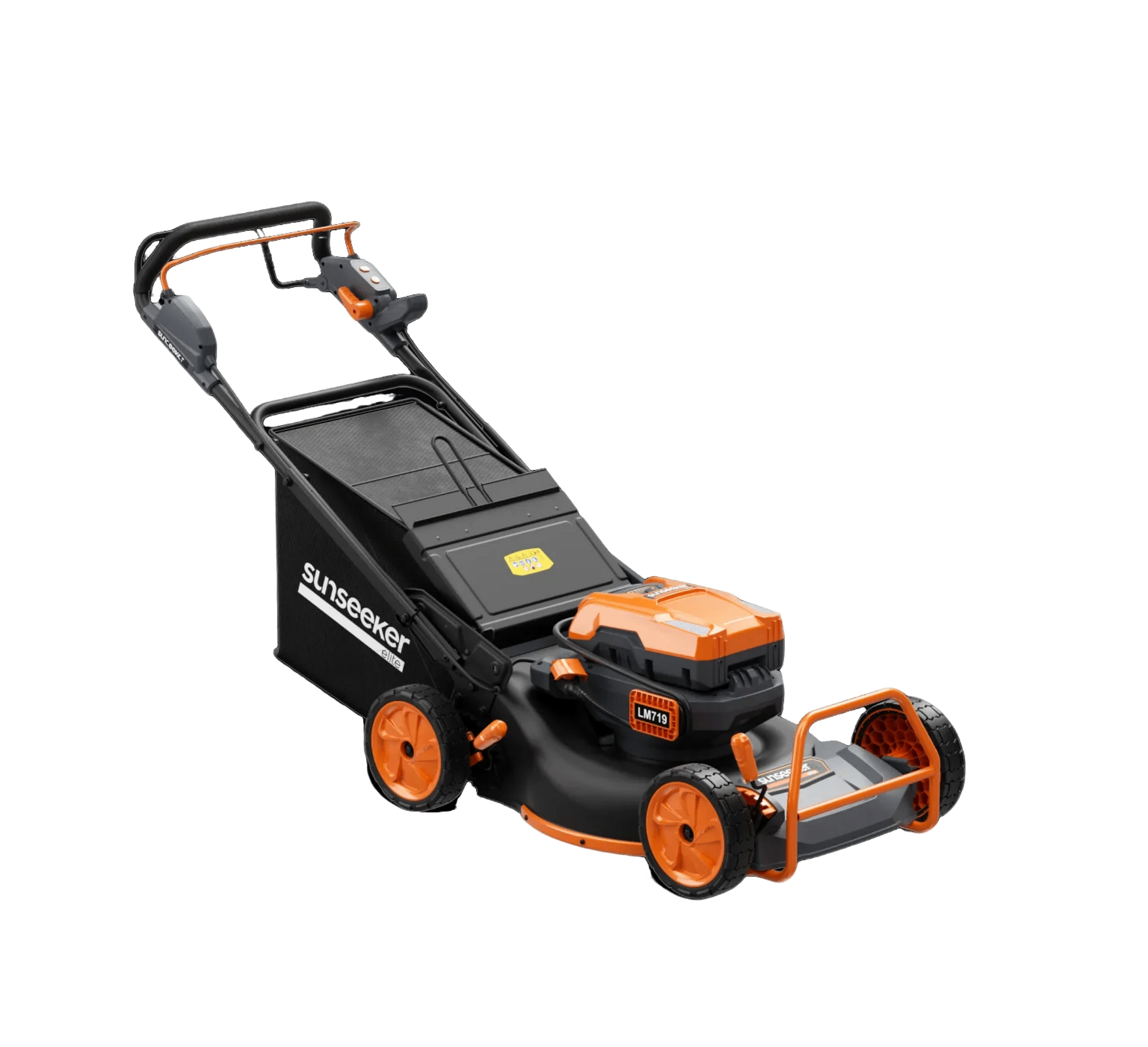
Once the new lawn is established, consistent mowing at the correct height is the single most important factor in keeping it healthy and preventing the conditions that lead to reseeding in the first place. The Sunseeker Elite X9 makes this effortless on larger or more complex properties. With EdgeZero™ true edge-to-edge cutting, infrared night vision for around-the-clock mowing, and ATC Pro handling slopes up to 90% (42°), the X9 covers up to 6 acres without any manual effort. The X9 doesn't need you to babysit it. Check it out.
Timing is the most important variable in reseeding success. When to reseed the lawn correctly means matching soil temperature and grass type to the right growth window, with enough recovery time before the next stress event. Get the timing right, prepare the soil properly, and the new lawn will establish quickly and evenly.
For cool-season grasses, mid-August through September is the most effective window. For warm-season grasses, late May through June. Soil temperature matters more than the month: 50–65°F for cool-season, 65–75°F for warm-season at 2 in depth.
That's overseeding, not reseeding. Without soil preparation, most seed fails to make contact with the soil and never germinates. For thin or patchy areas, overseeding with aeration can work. For widespread damage or heavy weeds, full preparation is needed before seed goes down.
Overseed when the lawn is mostly healthy but thinning. When should I reseed my lawn rather than overseed? When more than half is weedy, bare, or severely damaged. Overseeding into a compromised lawn produces inconsistent results. Full preparation followed by reseeding in fall consistently outperforms spring overseeding on a struggling lawn.