








FAQs
6/30/2026
Contents
Products
Residential Lawns









Explore
Where to Buy


Soil temperature, not the calendar, determines when spring fertilizer actually works. Cool-season grasses need soil consistently at 55°F before the first application. Warm-season grasses need to wait until full green-up. Getting this right sets the lawn up for the whole season.
It is easy to fertilize too early in spring. The first warm day may feel like the right time, but grass needs to be actively growing before it can use those nutrients well. If you apply fertilizer while the lawn is still waking up, much of it may be wasted or end up feeding weeds instead of strengthening the grass.
So, when to fertilize lawn in spring? The answer depends on your grass type, soil temperature, and how the lawn looks after winter. This guide explains the best timing for cool-season and warm-season lawns, what kind of fertilizer to use, and which spring fertilizing mistakes to avoid.

Spring fertilizer replenishes nutrients depleted over winter and supports the root and shoot growth that builds dense, healthy turf going into summer. A well-fertilized lawn in spring recovers faster from winter dormancy, develops deeper roots that resist summer drought, and builds the turf density that naturally suppresses weed germination.
Soil temperature is the most reliable guide for timing spring fertilizer. Grass roots need to be actively growing before they can absorb nutrients. Apply before that point and the fertilizer either washes away or feeds weeds instead. According to University of Minnesota Extension, cool-season root growth is optimal between 50 and 65°F. For warm-season grasses, roots become active when soil consistently reaches 65–70°F, which is why late spring is the right window for Bermuda, zoysia, and St. Augustine.
Cool-season grasses, including Kentucky bluegrass, tall fescue, perennial ryegrass, and fine fescue, grow most actively when soil temperatures are between 55 and 65°F.
Best window: Wait until soil temperatures at 2–4 in depth have been consistently at 55°F for several days, and the lawn has been mowed at least once or twice.
Warm-season grasses, including Bermuda, zoysia, St. Augustine, and centipede, grow most actively when soil temperatures are consistently above 65–70°F.
Best window: Wait until the grass has fully broken dormancy and greened up on its own. Applying fertilizer before full green-up stresses the plant during its most vulnerable transition period. In most southern regions, this means late April through May.
Grass Type | Soil Temp Trigger | Typical Spring Window |
Cool-season (Kentucky bluegrass, tall fescue, perennial ryegrass) | 55–65°F | Late April–May (northern regions) |
Warm-season (Bermuda, zoysia, St. Augustine, centipede) | 65–70°F+ | Late April–May (south), May–June (transition zone) |
Avoid applying too early. Fertilizing when soil is still below 50°F means the grass cannot absorb the nitrogen. It either leaches away with spring rain or feeds early-germinating weeds. If you only fertilize once a year, fall is more important than spring for cool-season lawns. A well-fertilized lawn in fall requires only a light spring application.
Spring rate: Apply 0.5–1 lb of nitrogen per 1,000 sq ft. If the lawn was fertilized well in fall, stay on the lighter end. Avoid late-season nitrogen for warm-season grasses, as it delays dormancy and increases winter-kill risk.
Choosing the right product and applying it correctly makes the difference between a green lawn and a patchy one. A few decisions matter most.
Choose the right NPK ratio. Fertilizer bags show three numbers representing nitrogen (N), phosphorus (P), and potassium (K). For spring, look for a product higher in nitrogen to support green growth. A balanced formula like 20-5-10 or 16-4-8 works well for most spring applications.
Choose slow-release nitrogen. Slow-release formulations feed the lawn gradually over 6–8 weeks, reducing the risk of burn and providing more even growth than fast-release nitrogen. They're especially important in spring when soil temperatures and moisture levels vary.
Don't mix with pre-emergent herbicide timing. Pre-emergent needs to go down when soil temperatures hit 50–55°F, which is before most lawns are ready for fertilizer. Clemson Extension explicitly warns that the timing for pre-emergent herbicide does not match the fertilizer schedule. Apply them separately rather than using a combined "weed and feed" product that forces both at once.
Water before and after. Apply fertilizer to slightly moist soil. Water in the application within 24–48 hours to move the nutrients into the root zone. Avoid fertilizing if heavy rain is forecast within 24 hours, as it will wash the product away.
Use a spreader for even coverage. A broadcast or drop spreader set to the correct rate and overlapped slightly on each pass produces the most even results and avoids the striping that comes from uneven hand application.
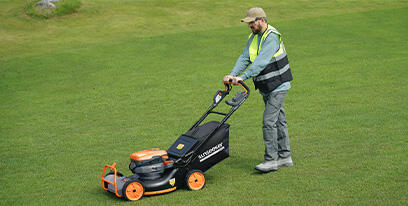
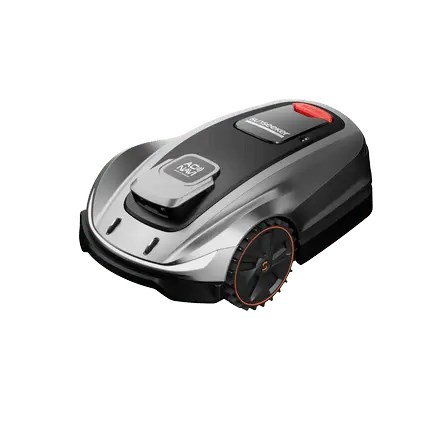
Consistent mowing after fertilization is what turns nutrients into visible results. The Sunseeker Elite X4 handles this automatically, mapping the yard on first run and mowing on a set app-based schedule without manual effort. Covering up to 0.3 acres with 360° 3D LiDAR and Vision AI obstacle detection, it keeps grass at the right height after every application.

Even well-intentioned fertilization can backfire if the timing or approach is off. These are the most common errors.
Fertilizing too early. The most common mistake. Applying fertilizer when soil is still cold means roots can't absorb it. The nitrogen feeds weeds, leaches away, or pushes weak top growth without root support. Wait for soil temperature, not air temperature or calendar date.
Using too much nitrogen. Excessive nitrogen in spring causes rapid, shallow top growth that exhausts the plant's carbohydrate reserves and leaves it vulnerable to summer stress and disease. Follow the label rate.
Fertilizing dormant warm-season grass. Applying to Bermuda or zoysia before full green-up stresses the plant during its most vulnerable period. Wait until the lawn is actively growing and the color is consistent across the yard.
Skipping a soil test. Fertilizing without knowing what the soil actually needs often means applying the wrong nutrients. A soil test from your county extension office identifies pH or nutrient issues that fertilizer alone won't fix.
Applying before rain. Heavy rain within 24 hours of application washes fertilizer off the surface before it absorbs, wasting product and contributing to nutrient runoff into waterways.
Fertilizing lawn in the spring works best when you follow the grass, not the calendar. Cool-season grasses are usually ready when soil temperatures reach about 55°F and the lawn has been mowed once or twice. Warm-season grasses should wait until full green-up, when they are actively growing and ready to use the nutrients.
Use a slow-release nitrogen fertilizer at a conservative rate, water it in properly, and avoid pushing weak early growth. After feeding, steady care matters just as much as the fertilizer itself. Regular mowing at the right height helps turn that spring growth into thicker, healthier turf, and a robot lawn mower can make that part of the routine easier to keep consistent through the season.
A slow-release nitrogen formula with an NPK ratio higher in the first number, such as 20-5-10 or 16-4-8, works well for most spring applications. Slow-release nitrogen feeds gradually over 6–8 weeks, reducing burn risk and providing more consistent growth. If your lawn was well-fertilized in fall, a lighter spring application is usually sufficient.
It's not recommended. Fertilizing before soil temperatures consistently reach 55°F means grass roots aren't yet active enough to absorb the nutrients. The nitrogen either washes away with spring rain or gets taken up by early-germinating weeds instead. When to fertilize lawn in the spring starts with confirming soil temperature, not air temperature or calendar date. Wait until the lawn has been mowed at least once as an additional confirmation that active growth is underway.
Avoid spring fertilizer when soil is still cold, when the lawn is dormant, during drought or heat stress, and within 24 hours before heavy rain. For warm-season grasses, avoid fertilizing before full green-up in spring and avoid high-nitrogen applications late in the season. Fertilizing lawn in the spring too aggressively pushes leafy growth at the expense of root development, leaving the lawn less resilient through summer.