












FAQs
6/25/2026
Contents
Products
Residential Lawns










Explore
Where to Buy


The best time to plant grass seed really comes down to your grass type and local climate. Cool-season grasses usually do best in early fall or spring, while warm-season varieties thrive in late spring to early summer. The right time helps seeds sprout faster and grow stronger roots for a more resilient lawn over time.
Timing plays a critical role in whether your lawn thrives or fails. Plant too early or too late, and seeds may not germinate properly, leading to patchy or weak growth. So, when is the best time to plant grass seed? This guide provides everything you need to know. You can discover why timing matters, the best time to seed a lawn, and methods to ensure successful germination and long-term lawn health.

Before introducing the best time to seed your lawn, let’s have a look at why timing is so important:
The best time to plant a lawn depends on your grass type and climate. Generally, you should plant during periods when temperatures support steady growth. Below is a clear breakdown based on different grass types
Cool-season grasses, for instance, Kentucky bluegrass, perennial ryegrass, tall fescue, and fine fescue, grow best during moderate temperatures, typically between 60-75°F, during the day. These grasses are ideal for northern regions, including the Midwest, Northeast, and parts of the transition zone.
Warm-season grasses, including Bermuda, Zoysia, Bahia, and Centipede, thrive in hot climates and grow most actively during the summer months. They are commonly used in southern and southwestern regions.
Regional differences play a significant role in determining when to plant lawn seeds. It’s best to check local frost dates and soil conditions for accuracy. Meanwhile, a soil thermometer is a handy tool that can help you identify the perfect planting window and maximize your lawn’s success.
To make things easier, we’ve put together a region-by-region guide outlining the best times to plant grass seed across the United States.
Region | Recommended Grass Type | Best Spring Planting | Best Fall Planting | Notes |
Northeast (NY, PA, New England) | Cool-season | Mid-April | Mid-Aug to mid-Oct | Higher elevations may need a later start |
Midwest | Cool-season | Mid-April (possibly earlier) | Mid-Aug to mid-Sep | Fewer late snowstorms |
Mid-Atlantic (NJ, MD, VA, etc.) | Cool-season (some warm in the south) | Mid-March | Mid-Sep to mid-Oct | Transition zone with good flexibility |
Southeast | Warm-season | Late April to June | Not recommended | Plant when days consistently reach 80°F+ |
Northwest | Cool-season | Mid-March (milder areas) | Mid-Aug to mid-Oct | More rainfall, temperate climate |
Southwest (desert areas) | Warm-season | Late April to early June | Not recommended | Extra irrigation required |
Knowing the right planting window is only the first step. The instructions below show how to grow grass from seed through proper preparation, planting, and aftercare.
Start with a soil test to check pH and nutrients, aiming for 6.0-7.0. Clear debris, weeds, and old grass, then loosen the top 4-6 inches of soil. Add compost or starter fertilizer, but avoid weed preventers.
Select grass seed suited to your region, climate, and sunlight conditions. Use high-quality blends with minimal weed content for better germination, improved durability, and a more uniform, attractive lawn over time.
Use a broadcast or drop spreader to ensure even coverage across the area. Follow package rates, typically 5-10 pounds per 1,000 square feet. Lightly rake afterward to improve seed-to-soil contact.
Apply a thin layer of straw mulch or use erosion-control blankets to protect seeds. This helps retain moisture, prevent runoff, and reduce seed loss from wind, rain, or birds during early establishment.
Keep soil consistently moist during germination by watering lightly 2-3 times daily. Once grass begins growing, reduce frequency and increase depth. Water early morning or evening to limit evaporation and improve absorption.
Wait until grass reaches 3-4 inches before mowing. Cut no more than one-third of blade height at once. Apply a light fertilizer after 4-6 weeks to support continued growth and strengthen root development.
Watch for weeds, pests, or disease during establishment. Avoid herbicides until after several mowings. Consistent care during the first 4-6 weeks ensures strong roots, better coverage, and long-term lawn health.
With the instructions above, you should know when is best to seed a lawn and how to do it properly. However, not every yard requires full reseeding. Look for these common signs below to determine whether your lawn could benefit from overseeding or a complete reseeding.
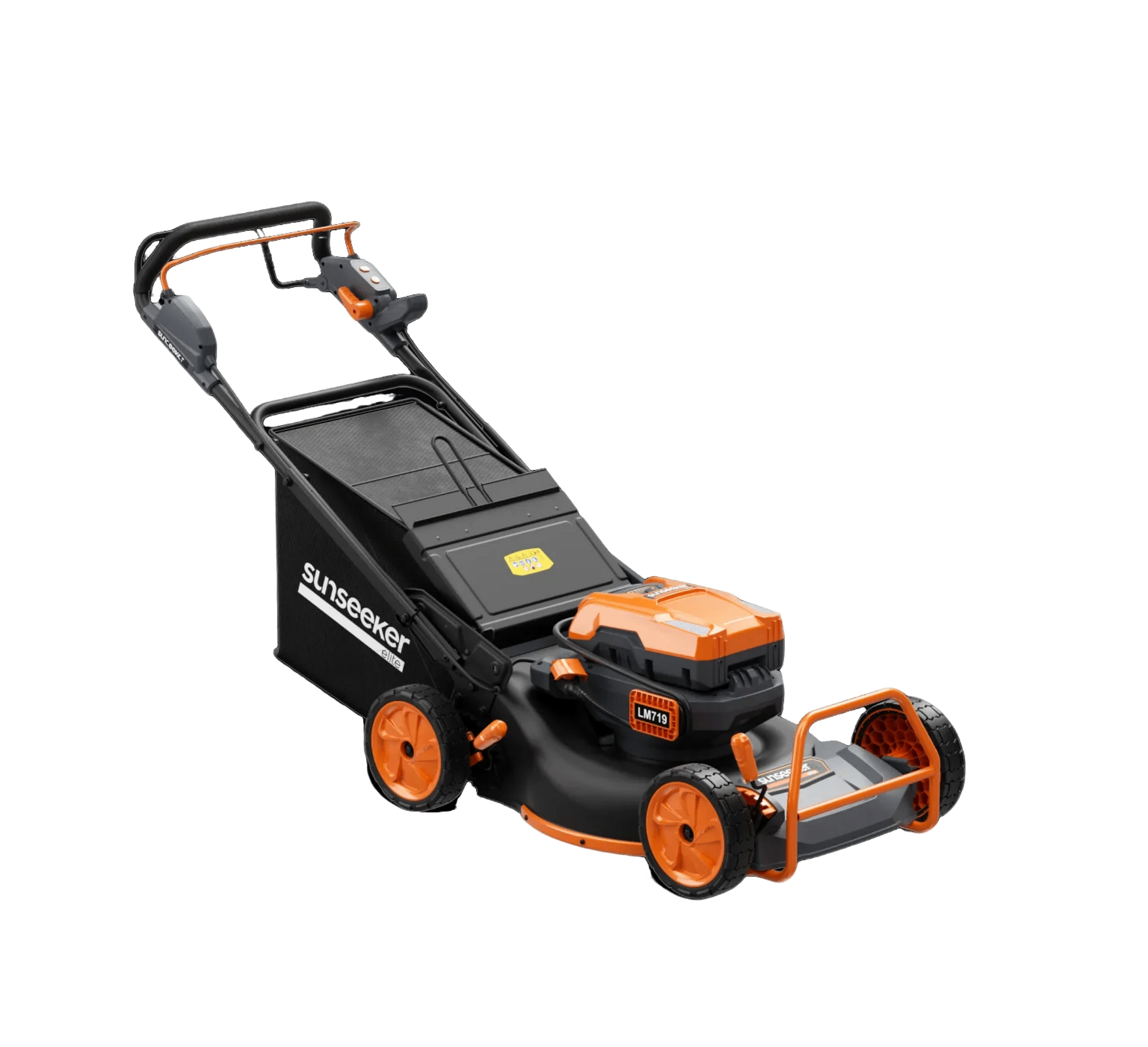
Regular mowing also plays a vital role in maintaining lawn health after seeding. Proper mowing encourages thicker growth and stronger root development. However, traditional mowing can be time-consuming and may place stress on newly established grass. This is where a robot lawn mower becomes a smart and convenient solution. These automated mowers maintain an even cutting height without disturbing young seedlings, promote uniform growth, reduce soil compaction caused by heavy equipment, and free up your time to focus on watering and early-stage care.

Sunseeker Elite X9
For homeowners caring for newly seeded lawns, the Sunseeker Elite X9 is a high-performance choice. It’s designed to maintain consistent cutting without putting stress on young grass, helping new seedlings establish evenly and grow stronger. With adjustable cutting heights from 0.8 to 4 inches, you can mow at the ideal level for early growth stages. Its 4-wheel drive system handles slopes up to 42° (90%), ensuring stable mowing across uneven ground without damaging delicate areas. Along with infrared night vision and a 360° OmniSight system, it’s a smart solution that supports safe mowing and healthy lawn growth.
So, when is the best time to plant grass seed? The answer depends on your grass type and local climate, but in most cases, early fall for cool-season grasses and late spring to early summer for warm-season varieties deliver the best results. Meanwhile, make sure to follow proper timing, prepare your soil correctly, and maintain consistent care, so you can transform a thin or patchy yard into a lush green lawn. If you want to take lawn care even further, robot lawn mowers can help maintain the ideal cutting height, reduce stress on new grass, and support healthy growth with minimal effort. Explore Sunseeker to achieve a professional-quality lawn today!
When planting a lawn, cool-season grasses are usually seeded in early fall (September to early October), while warm-season grasses perform best in late spring through early summer; soil temperature and local weather should confirm the final timing. Meanwhile, it’s important to consider soil temperature and local weather patterns, which have a bigger impact on germination success.
While it might be tempting to simply scatter grass seed and hope for the best, this method usually leads to uneven and disappointing results. Grass seed needs proper soil contact, consistent moisture, and a bit of protection to germinate successfully. Without preparation, many seeds may dry out, get washed away, or be eaten by birds. It’s recommended to lightly rake the soil, water regularly, and cover the seed slightly to improve germination.
Proper ground preparation is one of the most important steps when sowing a lawn. Start by clearing away weeds, rocks, and any debris, then loosen the top 4-6 inches of soil to help roots grow deeply. If needed, improve the soil with compost or a starter fertilizer to boost nutrients. Finally, level the surface and lightly rake it so the seed can make good contact with the soil, creating the ideal environment for strong and even grass growth.