








FAQs
7/2/2026
Contents
Products
Residential Lawns







Explore
Where to Buy


The best lawn fertilizer varies based on grass type, soil condition, and seasonal needs. It’s essential to match the fertilizer to your lawn’s specific requirements, focusing on nutrients like nitrogen, phosphorus, and potassium. Proper timing and application techniques are crucial for maximizing effectiveness. Ultimately, understanding your lawn’s unique needs will lead to healthier, greener grass rather than simply choosing the most advertised product.
After a hot week, your lawn may look thinner and less vibrant, while every fertilizer bag on the shelf promises a deeper green. The problem is that there is no single “best” fertilizer for every lawn. The right choice depends on your grass type, the season, soil conditions, and whether you are trying to improve color, density, root strength, or stress recovery.
Instead of focusing on labels alone, the key is to understand what your lawn is lacking and apply the right nutrients at the right time and in the right amount. In this article, you will learn how to choose the correct fertilizer for different lawn needs, how to read fertilizer ratios, and when to apply it for the best results.
The three numbers on a fertilizer bag are the NPK analysis: nitrogen, phosphorus, and potassium. They appear in that order and show the percentage by weight of each nutrient in the product. A bag labeled 24-0-10, for example, supplies nitrogen for growth and color, no phosphorus, and potassium for stress tolerance and overall plant function.
Nitrogen is usually the nutrient homeowners notice first because it drives green color and leaf growth. Too little can leave turf pale and slow to fill in; too much can create soft, fast growth that needs more mowing and may be more vulnerable to stress. For established lawns, controlled-release nitrogen is often easier to manage than a quick flush of growth.
Phosphorus supports roots and early establishment, but many established lawns do not need extra phosphorus unless a soil test shows a shortage. In some areas, phosphorus use is restricted because runoff can affect waterways, so avoid applying it casually.
Potassium matters more for resilience than instant color. It helps grass handle heat, cold, foot traffic, and disease pressure. If a lawn struggles every summer, the answer may be better potassium balance, deeper watering, improved mowing height, or soil correction rather than a stronger green-up product.
The point is not to chase the highest numbers. A higher analysis means the fertilizer is more concentrated, not automatically better. Match the ratio to the need, then follow the label for how much product to apply over your measured lawn area.
The best fertilizer depends on your grass type, soil condition, and what your lawn is currently lacking.
Start with a soil test if possible. It shows whether your lawn is low in nitrogen, phosphorus, or potassium, which helps you avoid overfeeding and target real deficiencies. If you cannot test, look at the lawn’s condition: pale or slow-growing grass often needs nitrogen, while weak root growth may benefit from balanced formulas.
Choose a fertilizer type based on timing and convenience. Slow-release fertilizers feed gradually and reduce the risk of burning, making them suitable for regular maintenance. Quick-release products act faster but require more careful application and timing.
Also match fertilizer to season and grass type. Cool-season grasses typically respond best in spring and fall, while warm-season lawns perform better with feeding during active summer growth. Avoid fertilizing during extreme heat, drought, or dormancy, when grass cannot absorb nutrients effectively.
The table below summarizes the best fertilizer choices based on common lawn goals.
Lawn goal | Best fertilizer type | What to look for | Key notes |
General greening | Nitrogen-led fertilizer | Moderate to high nitrogen, optional slow-release | Good for established lawns; avoid excess phosphorus if soil levels are already sufficient |
Thickening thin turf | Balanced or nitrogen-focused blend | Steady nitrogen release for growth support | Works best when underlying issues like shade or compaction are also addressed |
Summer stress management | Stress-tolerant, low-nitrogen formula | Higher potassium support, slow growth focus | Avoid pushing fast growth during heat or drought periods |
New or recovering lawns | Starter fertilizer | Nutrient balance with phosphorus support (if needed) | Apply carefully at label rate; soil test helps avoid overuse |
Once you know which nutrients your lawn needs, timing decides how effectively the grass can use them. Feeding at the wrong time can waste fertilizer, encourage weak growth, or add stress.
Cool-season grasses, such as tall fescue, Kentucky bluegrass, and perennial ryegrass, grow most strongly in spring and fall. Fall is often the most useful feeding window because the grass can rebuild roots and density after summer stress. Spring feeding can help color and recovery, but heavy nitrogen too early may push top growth before roots are ready for heat.
Warm-season grasses, such as bermudagrass, zoysiagrass, St. Augustinegrass, and centipedegrass, grow most actively from late spring through summer. Fertilize after the lawn has greened up and is actively growing, not while it is still dormant. As growth slows toward fall, stop feeding so the grass can prepare for cooler weather.
Avoid fertilizing during drought dormancy, before heavy rain, on frozen ground, or when the lawn is too stressed to take up nutrients well. If your area has blackout dates or nutrient restrictions, follow them. In practice, the safest rule is simple: feed grass when it is actively growing and match the formula to the season.
Choosing the right product and season still leaves one final step: applying it evenly and at the right rate. Good fertilizer can disappoint if it is spread too heavily, too lightly, or at the wrong time.
A soil test shows whether your lawn actually needs phosphorus, potassium, lime, or other adjustments. Measuring the lawn prevents overapplication. Count only the turf area, not driveways, patios, planting beds, or sidewalks, and use that square footage to calculate the product amount from the label.
Use a broadcast spreader for larger lawns and a drop spreader where precision matters near beds or pavement. Set the spreader by the fertilizer label, not guesswork. If the label allows it, applying half the amount in one direction and the other half at a right angle can improve coverage.
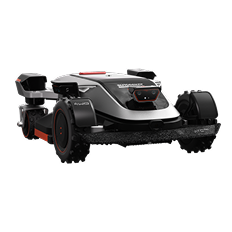
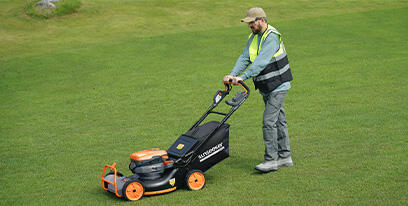
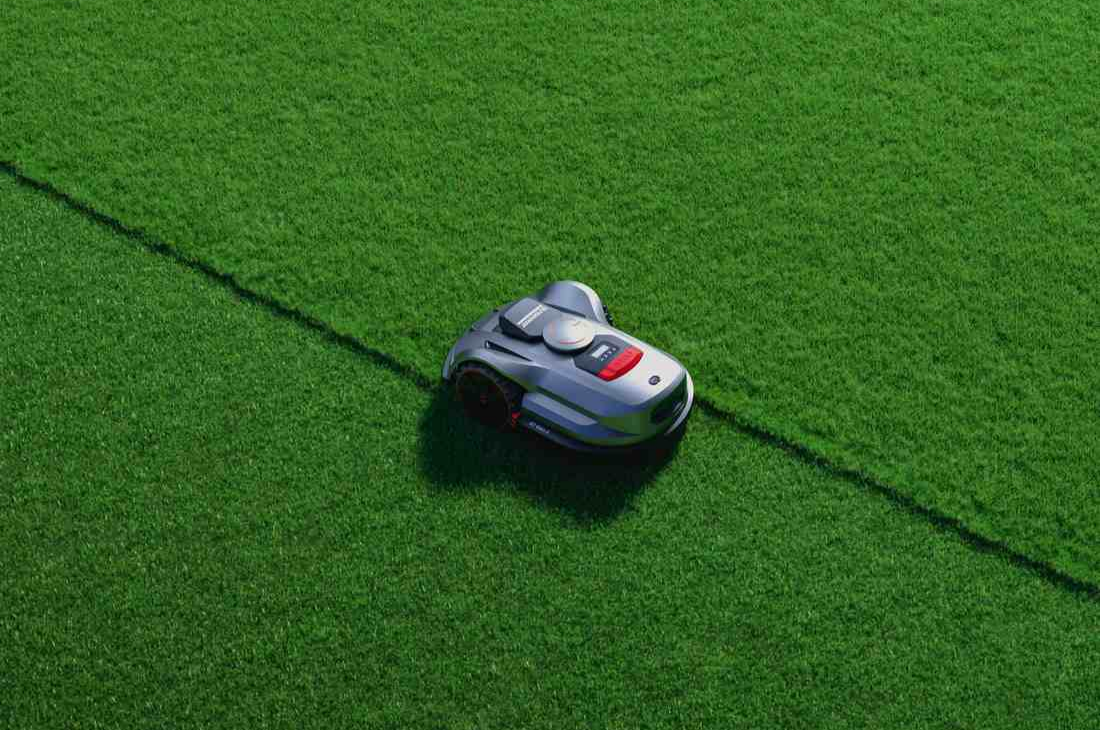
Most fertilizers need watering after application to move nutrients into the soil. Always check the label first, since some formulas (especially weed-and-feed types) have specific timing requirements. If the grass is too long, mow before fertilizing, then wait before mowing again so nutrients can fully absorb into the soil. A robot lawn mower can help to mow the lawn at the proper height without a lot of efforts.
Keeping mowing consistent also matters because fine clippings can return nutrients back to the lawn as they break down. A system like the Sunseeker Elite X7 Gen 2 supports this process by using a dual-disc cutting system with multiple blades that produce a finer, more even cut. The clippings are smaller and distribute more uniformly across the lawn, which helps them decompose faster and contribute back to soil nutrition instead of clumping or being removed.

Do not apply more fertilizer than the label recommends; extra product can burn grass, waste money, and increase runoff risk. Sweep granules off hard surfaces and back onto the lawn if they land on pavement. Avoid feeding dormant or drought-stressed grass, and do not expect fertilizer to fix compacted soil, poor drainage, deep shade, or pest damage. If the lawn keeps underperforming, correct the growing conditions before adding more nutrients.
If you are wondering what the best lawn fertilizer is, the answer is usually the one that matches your grass type, soil condition, season, and specific lawn goals. In many cases, this means using a fertilizer with slow-release nitrogen for an established lawn, and only adding extra phosphorus or potassium when a soil test or visible lawn condition actually indicates a need.
Instead of choosing the “strongest” product, focus on what your lawn truly requires and apply it at the right time and in the correct amount. With proper timing, even application, and attention to mowing, watering, and soil health, you significantly increase the chances of a greener, stronger, and longer-lasting lawn.
10-10-10 can be appropriate only if your lawn actually needs all three nutrients in that balance. The article recommends using soil-test results, grass type, season, and lawn goals instead of chasing a generic NPK number. For many established lawns, slow-release nitrogen and little or no phosphorus may be better unless a test shows phosphorus or potassium is needed.
Use weed-and-feed if your lawn has widespread broadleaf weeds and also needs feeding at the same time. Choose regular fertilizer if the lawn is mostly healthy or weeds are only in small patches, since it is more precise and avoids unnecessary herbicide use. Lawn condition and timing should guide the decision.
Pets and children should usually stay off a fertilized lawn until the product has been watered in and the surface is completely dry, which is typically 24–48 hours, depending on the fertilizer type and weather conditions. Some granular products require immediate watering-in followed by a short restriction period, while weed-and-feed formulas may need longer. Always follow the label instructions, since re-entry timing can vary by product.