




FAQs
6/30/2026
Contents
Products
Residential Lawns


Explore
Where to Buy


Scarifying a lawn is a turf maintenance process that uses a scarifier with vertical blades or tines to cut into the grass surface and remove built-up thatch, moss, and organic debris. It also lightly scores the soil, improving airflow, drainage, and nutrient penetration for healthier grass growth overall conditions over time.
If your lawn feels spongy underfoot, struggles to drain water, or keeps getting taken over by moss, there’s usually a deeper issue at play. A buildup of thatch (dead grass and debris), poor airflow, compacted soil, or excess moisture are often the main culprits behind it all. That’s where scarifying comes in. It’s one of the most effective ways to clear out thatch, which can open up the soil surface and give your grass a fresh start. So, what is scarifying a lawn, and how do you do it without damaging your grass? In this guide, let’s explore everything about lawn scarification, including what it does, when to do it, and how to get the best results step by step.
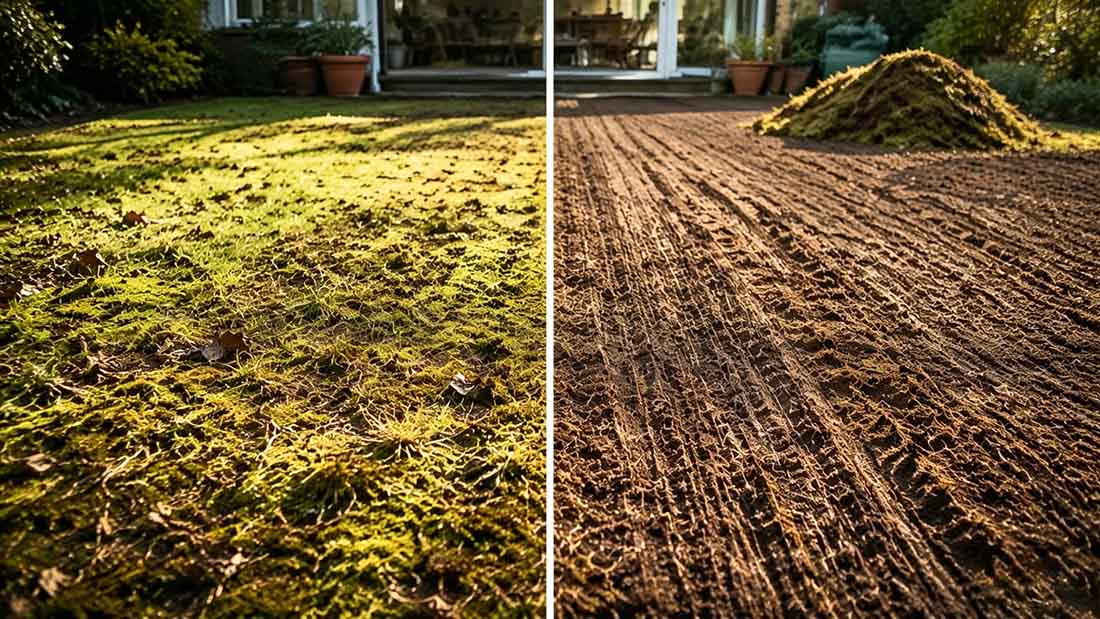
Scarifying a lawn, also known as lawn scarification, is the process of removing thatch, moss, and organic debris using a scarifier equipped with rotating blades or tines. These blades cut vertically into the turf, lifting out unwanted material while lightly scoring the soil surface.
Dethatching is a lighter process that focuses on lifting and removing surface-level debris like dead grass and loose organic matter. It’s usually done with flexible tines, a rake, or a light dethatching tool. This makes it suitable for lawns with mild to moderate thatch buildup and regular maintenance.
Scarifying the lawn, on the other hand, is more intensive. It cuts deeper into the lawn (0.08-0.16 inches into the soil, and sometimes more in severe cases) using vertical blades. This process removes thicker thatch layers, moss, and can even disturb some surface roots. It’s designed for areas with heavy buildup, but it needs to be done carefully to avoid stressing healthy grass.
Here’s a detailed comparison:
Aspect | Dethatching | Scarifying |
Primary Purpose | Remove thatch (dead organic layer) | Remove thatch and break into the soil surface |
Depth of Action | Shallow - surface level only | Deeper (0.08-0.16 inches into soil, up to 0.4-0.8 inches, in severe cases) |
Tools | Light tines, manual rake, dethatcher | Scarifier with vertical knife-like blades or tines |
Effect on Soil | Minimal disturbance | Cuts into the soil and creates grooves, easing compaction |
Aggressiveness | Gentle / maintenance-level | More aggressive/restorative |
Material Removed | Loose debris and light thatch | Heavy thatch, moss, and some surface roots |
Best For | Light to moderate thatch (< 0.5 inch) | Heavy thatch, moss buildup, or neglected lawns |
Intensity | Low stress on the grass | Higher stress on turf |
Recovery Time | Faster recovery | Longer recovery requires proper aftercare |
Frequency | 1-2 times per year | Every 1-3 years |
Risk to Lawn | Low | Higher if overdone or poorly timed |
A small amount of thatch (around 0.5 inch or less) is actually beneficial, acting like a natural mulch that helps protect the soil. However, when thatch builds up too much, it forms a dense layer that blocks air, water, and nutrients from reaching the roots. This can suffocate the lawn, leading to weak growth, more moss, and a higher risk of disease.
So, what does scarifying a lawn do in this case? A lawn scarification helps remove this barrier, giving your grass the space and conditions it needs to grow back stronger and healthier. Knowing what lawn dethatching is helps keep the distinction clear: dethatching lifts lighter surface buildup, while scarifying cuts deeper through heavier material.
Let’s check out the major benefits of lawn scarification:
Timing is crucial when it comes to lawn scarification. The key is to carry it out when your grass is actively growing. So it can recover quickly and bounce back stronger.
Generally, it’s recommended to scarify your lawn during these best times:
Avoid lawn scarification during summer heat, drought conditions, winter dormancy, or very wet periods. They can place unnecessary stress on the lawn and significantly slow down recovery.
Lawn scarification is not as complicated as you imagine. With the right preparation and technique, even beginners can achieve professional-looking results. Here’s how.
Mow the grass short (about 0.8-1.2 inches) 1-2 days beforehand and remove clippings to expose the thatch layer. Clear away any debris, stones, or obstacles so the surface is ready for even treatment.
Set the blades to a shallow depth of around 0.08-0.12 inches, increasing up to 0.16 inches only for heavily thatched areas. Always test a small section first to avoid damaging healthy turf.
Work across the lawn in straight, even passes, then repeat the process at a 90-degree angle. Maintain a steady pace to ensure consistent coverage without overworking any single area.
Rake or collect the loosened thatch and moss as you go. It can look messy at first, but this is a normal and important part of the renovation process.
Apply fresh grass seed to any thin or bare patches to speed up recovery and encourage a thicker, more uniform lawn.
Post-scarification care also plays a major role in how quickly and effectively your lawn recovers. Follow these essential steps:
Immediately rake up all loosened thatch, moss, and organic matter. Dispose of it properly to prevent it from re-entering the turf and blocking light, air, and new growth.
Feed the lawn with a nitrogen-rich fertilizer within a few days to stimulate fresh root and shoot development. This helps restore nutrients lost during scarification and supports faster greening and recovery.
Spread high-quality grass seed suited to your lawn type over any bare or patchy areas. Lightly rake it in to ensure good soil contact, helping the lawn thicken and fill gaps more evenly over time.
Keep the soil evenly moist (but not waterlogged) for the first 2-3 weeks. Light, frequent watering encourages seed germination and helps stressed grass recover without added drought pressure.
Apply a thin, even layer of sand or compost mix to improve soil structure, enhance seed-to-soil contact, and boost drainage. This also creates better long-term growing conditions for a healthier lawn.
Avoid heavy use of the lawn for at least 3-4 weeks. This gives the grass time to recover properly, establish stronger roots, and develop new growth without unnecessary stress or damage.
Avoid sudden height changes or scalping, as these can disrupt root activity and reduce the natural compounds that support beneficial soil microbes. When microbial activity drops, decomposition slows, causing organic matter to build up and gradually form a compact thatch layer.
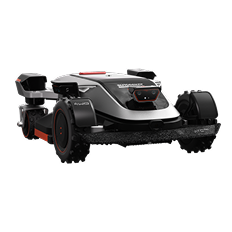
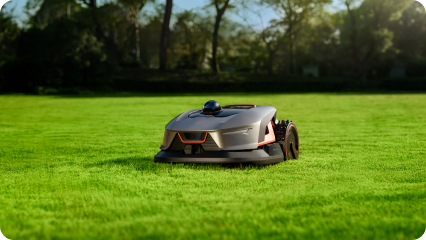
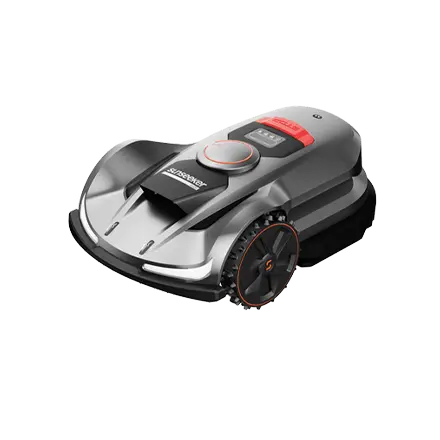
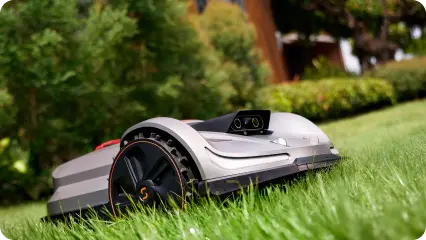
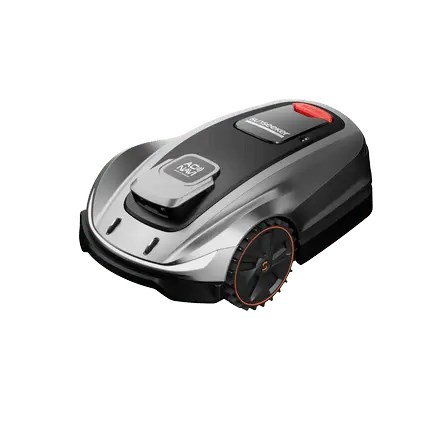
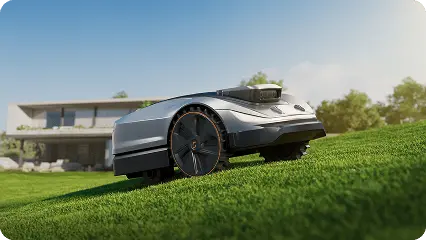
This is where a robot lawn mower becomes especially useful; it automatically maintains the ideal grass height year-round, reduces stress on the lawn, and helps minimize thatch buildup through regular, precise cutting.

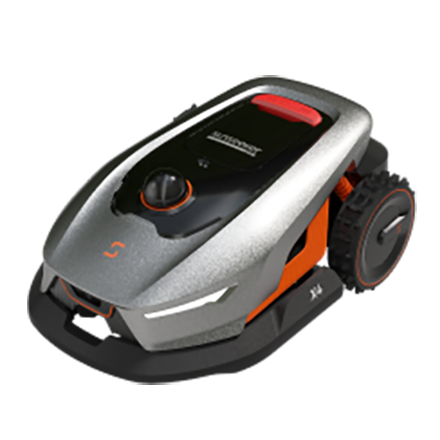
For the best results, consider the Sunseeker Elite X4 robot lawn mower. It offers precise height adjustment from 1.6-3.2 inches, allowing you to set the perfect cutting height based on your grass type and recovery needs. Combined with its advanced 360° 3D LiDAR + Vision AI dual-fusion sensing system, the X4 delivers intelligent navigation, accurate obstacle avoidance, and efficient path planning for stress-free mowing. This makes it an ideal long-term partner after scarification, helping maintain consistent lawn health and encouraging thicker, greener grass with minimal effort.
What is scarifying a lawn? In simple terms, it’s the process of removing built-up thatch, moss, and organic debris to help your grass breathe, absorb nutrients, and grow more strongly. Scarifying works best during active growth—the same basic principle used to judge when to thatch a lawn—but its deeper cutting also requires enough recovery time and proper aftercare. If you want long-term lawn health, consider pairing scarification with consistent mowing. Sunseeker’s robotic lawn mowers are an excellent choice, which can maintain the ideal grass height automatically, reducing thatch buildup and supporting steady, even growth throughout the year. Explore Sunseeker and keep your lawn looking its best with less work and better results from now on!
It depends on the issue you are dealing with. Scarification focuses on removing thatch and moss from the lawn surface, while aeration targets deeper soil compaction. Aeration (core or spike) is better for hard, compacted ground that struggles with water absorption. In many cases, you can use both together for the best overall lawn health results.
Yes, grass usually recovers well after scarifying, especially when done during active growing seasons like spring or autumn. The lawn may look thin or uneven at first, but with proper watering, feeding, and overseeding, new growth typically appears within 1-2 weeks and continues to thicken over time.
You can often notice the lawn feels spongy underfoot and doesn’t respond well to watering or feeding. Moss may start to take over, and the surface can look matted or uneven. In some cases, rainwater may sit on top instead of draining properly. These are all signs that excess thatch is building up and scarification is needed to restore healthy growth.