









FAQs
7/16/2026
Contents
Products
Residential Lawns










Explore
Where to Buy


Lime fixes the hidden problem behind many unhealthy lawns: soil that's too acidic. When applied correctly, it helps grass take in nutrients, grow thicker, and turn a healthier green. Over time, it improves overall lawn strength so your yard looks less patchy and more even, especially when combined with regular care.
A good-looking lawn starts with healthy soil. And sometimes, even if you are watering and fertilizing regularly, your grass still looks a bit tired or patchy. One common reason is soil that’s too acidic, and that’s where lime comes in. So, what does lime do for lawns? In this guide, we will introduce why it matters and how it actually helps your grass grow better. You can also learn signs your lawn needs lime, when to put lime on lawns, and how to apply lime to your lawn step by step!
Lime is a soil amendment primarily made from calcium carbonate, with dolomitic lime also containing magnesium. Its main role is to raise soil pH when conditions become too acidic. Most turf grasses perform best in a slightly acidic to neutral range (around 5.8-7.2). When soil drops below this range, essential nutrients become chemically locked and unavailable to grass roots.
How does lime help your lawn:
It starts with understanding your soil. A general indicator is persistent lawn problems despite good care. To help you better identify the issue, we have outlined the key signs your lawn may need lime:
Timing is critical for effectiveness. Lime works slowly as it reacts with soil, often taking months to fully adjust the pH. It’s important to choose the right season to ensure better absorption and more noticeable improvements.
Fall: Ideal due to rain, snow, and freeze-thaw cycles that naturally help lime break down and work into the soil. This timing also prepares your lawn for stronger, healthier growth in spring.
Early spring: Another good window when the soil begins to warm, but before peak growth starts. Apply only when the lawn is dry, and conditions are stable for even spreading. If spring weed prevention is also planned, understand what a pre-emergent for lawns is and check both product labels before scheduling it alongside lime, since the treatments serve different purposes.
Avoid applying lime in summer, when heat and drought stress the grass, or in winter, when the lawn is dormant, and soil activity is minimal. For best results, apply after aeration to improve soil penetration. If your lawn requires significant correction, split applications across seasons and retest soil regularly to track progress.
Once you decide on the timing, the next step is to apply it correctly. Here’s how to use lime on lawns for better soil absorption and long-lasting results.
Confirm your soil’s pH level with a soil test and determine the correct application rate. This usually ranges from 25-100+ lbs per 1,000 sq ft, depending on soil pH and type. As a general safety rule, never exceed 50 lbs per 1,000 sq ft in one application, especially when correcting severely acidic soil.
Mow the grass slightly shorter than usual and remove any debris such as leaves, sticks, or thick thatch. Aerating beforehand is highly recommended, as it improves soil contact and helps lime penetrate more effectively.
Pelletized lime is usually the easiest to apply evenly and produces less dust than powdered forms. If your soil test shows low magnesium as well as low pH, choose dolomitic lime for added benefit and balanced soil nutrition.
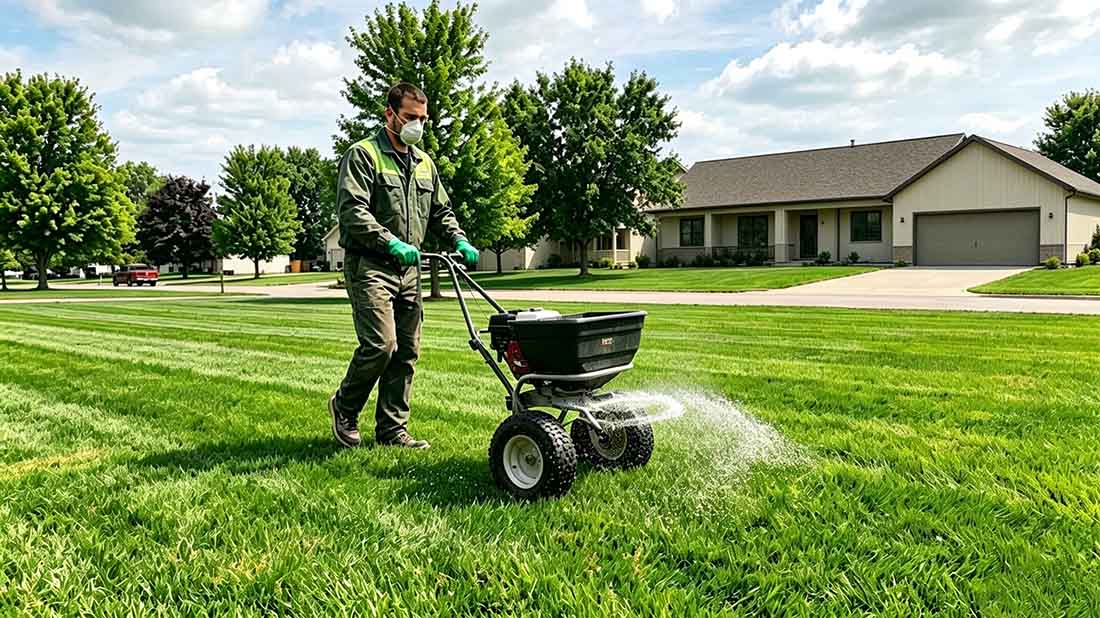
Fill a broadcast or drop spreader and apply lime in overlapping passes. First go in one direction (e.g., north-south), then make a second pass perpendicular to ensure even coverage across the entire lawn and avoid missed spots.
Lightly water the lawn after application to help move lime off grass blades and into the soil, where it can start working. Avoid heavy watering, as it may cause runoff or uneven distribution.
Retest your soil after 6-12 months to track changes in pH levels. Continue with regular mowing, watering, and fertilizing to maintain long-term soil balance and support strong, healthy turf growth.
Not every lawn benefits from lime, especially when soil is already neutral or alkaline. Understanding what iron does for lawns helps explain one risk of over-liming: high pH can restrict iron uptake and leave grass yellow or weak. In addition, some grass types and ornamental plants(centipede grass, azaleas, etc.) naturally prefer more acidic conditions and may suffer if lime is added unnecessarily.
When lime is used correctly, it helps create a stable foundation for long-term lawn health. But it’s also crucial to maintain that balance with consistent care practices above the soil. This is where the Sunseeker Elite X5 comes in, which can automate regular mowing with precision and consistency. It supports optimal cutting height(1.6-3.2 inch), preventing scalping and reducing turf stress through frequent, light cuts. This helps grass maintain steady growth and better utilize improved nutrients from proper liming.

The Elite X5 is also an outstanding robot mower with mulching blades. It finely shreds grass clippings and redistributes them back onto the lawn. This natural mulching process helps recycle nutrients and improve organic matter in the soil. It can also work with proper lime application to create a more self-sustaining, healthier lawn ecosystem over time.
What does lime do for lawns? It balances soil pH, unlocks essential nutrients, and helps grass grow thicker, greener, and healthier over time. As long as you know when and how to apply lime, you can fix hidden soil acidity issues and improve the overall performance of your lawn care routine. To take your lawn even further, pair good soil management with smart robotic mowers from Sunseeker. So you can easily maintain consistent mowing and a professional-looking lawn all season!
Yes, applying lime is worth it when soil tests confirm acidity below optimal levels. It improves nutrient availability, enhances fertilizer efficiency, and promotes stronger root systems. Over time, lawns become denser, greener, and more resilient. Without lime, acidic soil can block nutrients and limit the effectiveness of all other lawn care efforts significantly.
The main disadvantages include the risk of over-liming, which can push soil pH too high and cause nutrient lockout, especially iron and manganese deficiencies. It also works slowly, requires accurate testing, and incorrect application can lead to uneven results. Liming is not suitable for all soil types or acid-loving plants; make sure to conduct a soil test to avoid long-term imbalances.
Excess lime raises soil pH beyond healthy levels, creating alkaline conditions that restrict nutrient absorption. This often results in yellowing grass, weak growth, and increased vulnerability to disease. Severe over-application may require corrective treatments like sulfur amendments and can take time to reverse. So careful testing and dosing are essential before application.