





FAQs
6/30/2026
Contents
Products
Residential Lawns









Explore
Where to Buy


Top dressing adds a thin layer of compost, screened soil, or sand mix over existing grass. It can smooth small bumps, improve soil structure, help seed settle, and support thicker growth. For most home lawns, use a 1/8 to 1/4 inch layer and keep grass blades visible.
A lawn can look freshly mowed and still feel uneven when you walk across it. Small dips collect water, thin spots dry out faster, and compacted soil can make it harder for new grass to grow. That is where top dressing can help. But how to top dress a lawn? This guide will walk through the process in simple steps, from choosing the right mix to helping the grass recover evenly.

Top dressing means spreading a thin, even layer of soil-based material over an existing lawn. The goal is not to bury the grass. The goal is to improve the surface and soil while letting living blades keep growing.
For a normal home lawn, the safe depth is usually 1/8 to 1/4 inch. In very shallow low spots, you can use up to 1/2 inch, but it should be built up gradually if the dip is deeper. If the grass disappears under the dressing, the layer is too heavy. Grass still needs light and air, so the material should fall between the blades rather than sit as a blanket on top.
Top dressing is often done after aeration or overseeding because open holes and fresh seed benefit from good soil contact. It can also correct mild unevenness, improve clay or sandy soil, and add organic matter. A top-dressed lawn is still active grass, so the work needs a light touch.
Top dressing works slowly, but it can improve several lawn problems at once. It is most useful when the lawn is alive but uneven, compacted, or thin.
Top dressing is not a quick cover-up for dead turf, deep ruts, drainage failure, or severe compaction. Those problems need repair first. If your lawn is mostly healthy and needs help becoming thicker and more even, top dressing is a practical fix.
The best top dressing material depends on your soil, grass type, and main goal. Before asking how to top dress your lawn, decide what problem you want to solve. Leveling and soil improvement do not always need the same mix.
Screened compost is a common choice for general lawn health. It should be fine, mature, and free of sticks, stones, clumps, and strong odor. A screen size around 1/4 inch is usually fine enough. Compost improves poor soil, but a thick layer can stay wet or smother grass, so keep it light.
Screened topsoil works well when you need to fill shallow dips. It should be similar to your existing soil. Pure sand over clay can create a hard, poorly draining zone over time, while heavy clay topsoil may cap a sandy lawn. Matching texture matters.
Sand is mainly used for leveling warm-season lawns or sports-style turf, especially when the existing soil is already sandy. It spreads easily and settles into low areas, but it adds no nutrition. For many home lawns, a balanced mix is safer than pure sand.
A good all-purpose mix is often 50% screened compost and 50% screened topsoil. For light leveling, some homeowners use soil, compost, and coarse sand. Avoid mulch, fresh manure, garden soil with weed seeds, and material that forms clumps when squeezed.
Top dressing is easier when you prepare the lawn first and work in thin layers. A large lawn may need more time and tools, but the same basic process still applies. The main rule is simple: spread lightly, work it in, and do not smother the grass.
Mow one or two days before top dressing. Cut the grass a little shorter than your normal mowing height, but do not scalp it. A height of about 2 to 2.5 inches usually works well before top dressing because it leaves enough grass to recover while allowing the dressing material to reach the soil surface. If you use a robot lawn mower for routine upkeep, adjust the cutting height ahead of time so the lawn is ready before you spread the top dressing. Bag or remove clippings so they do not block the thin layer of soil or compost.
Rake up leaves, sticks, old clumps, and loose dead grass. Walk the lawn and mark low areas, thin patches, and hard spots. If the lawn has a thick thatch layer over 1/2 inch, dethatch before top dressing. If the soil is hard and water runs off, core aeration first will help the dressing settle into the root zone.
For a 1/4 inch layer, one cubic yard covers about 1,300 square feet. For a 1/8 inch layer, one cubic yard covers about 2,600 square feet. A 5,000 square foot lawn needs roughly 4 cubic yards for 1/4 inch coverage. Order a little extra for low spots, but do not spread more just to use it up.
Place small piles across the lawn with a wheelbarrow or garden cart. For how to top dress a large lawn, work in sections of about 500 to 1,000 square feet. This keeps the layer consistent and stops material drying into clumps before you spread it.
Use a leveling rake, landscape rake, lute, or the back side of a flat rake. Push and pull the material until it falls between the grass blades. The lawn should look dusty or lightly coated, not buried. In low spots, add a little more, then feather the edges so the area blends with the surrounding grass.
Water lightly after spreading. Aim to settle the material, not wash it away. About 1/4 inch of water is enough for the first watering. Keep people, pets, and heavy equipment off the lawn for at least 24 to 48 hours. If you overseeded too, keep the top 1/2 inch of soil lightly moist until germination.
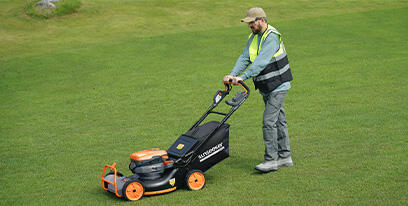
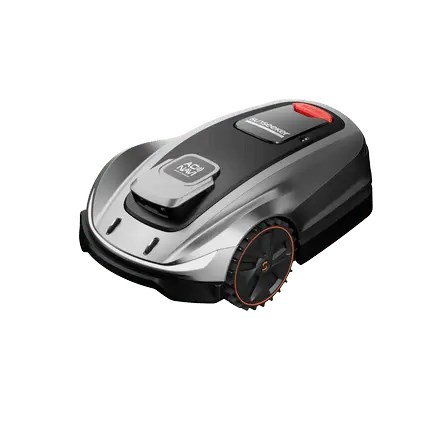
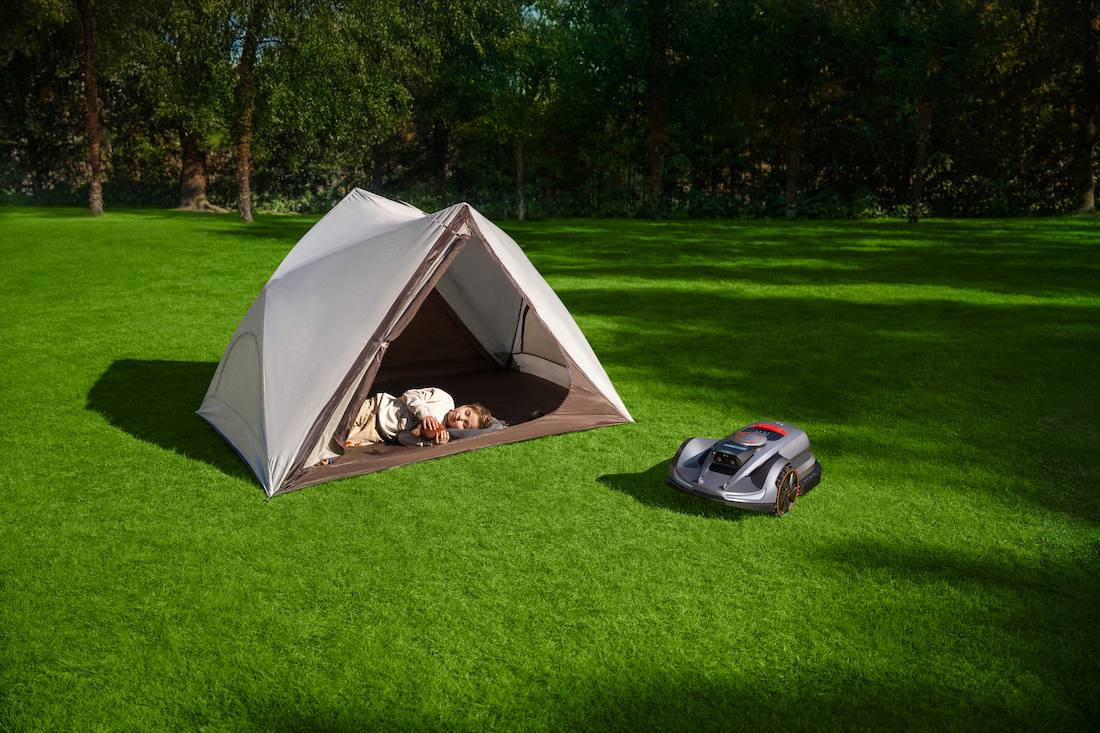
After top dressing, steady mowing helps the lawn recover cleanly because grass responds better to small, regular cuts than to harsh trimming. For larger or uneven yards, the Sunseeker Elite X7 Gen 2 can help reduce routine mowing work with wire-free mapping, virtual boundaries, smart path planning, app control, all-wheel drive for slopes up to 70% / 35°, and a floating dual cutting disc that follows uneven ground. It is a practical fit for homeowners who want a consistent finish after soil improvement work without pushing a mower over every section themselves.
Timing matters because top dressing is a recovery job. Grass should be actively growing, the soil should be workable, and the weather should give the lawn time to heal before heat, drought, or winter stress.
For cool-season grasses such as Kentucky bluegrass, perennial ryegrass, and tall fescue, early fall is usually the best time. Day temperatures around 60 to 75°F and cooler nights support root growth. Spring can also work once the lawn is growing well, but avoid top dressing too early when the soil is cold and wet.
For warm-season grasses such as bermudagrass, zoysia, and St. Augustine, late spring or early summer is better. Wait until the grass is fully green and actively growing. Soil temperatures should be around 65°F or higher. Do not top dress warm-season lawns right before dormancy because the grass may not recover quickly.
Avoid top dressing during drought, heavy rain periods, frozen soil, or disease stress. If the forecast shows several dry, mild days, that is a good window. If storms are coming, wait, because fresh dressing can wash into low corners and drains.
Top dressing is worth doing when your lawn needs better soil contact, smoother ground, or support after aeration and overseeding. The safest approach is a thin layer, the right material, and careful watering afterward. Do not bury the blades, and do not rush deep leveling in one pass. With patient care and steady mowing, the lawn can grow thicker, feel more even, and stay easier to maintain. Sunseeker products can also help keep the improved surface neat with less manual mowing.
The best choice is usually screened compost, screened topsoil, or a balanced mix of both. Use compost for soil improvement and topsoil for light leveling. If your lawn has sandy soil, a sand-based mix may work. Avoid rough garden soil, fresh manure, mulch, and any material with stones or weed seeds.
Mow first, remove debris, then place small piles of screened topsoil around the lawn. Use a leveling rake or flat rake to spread a 1/8 to 1/4 inch layer. Work the soil between the blades so grass tips stay visible. Water lightly after spreading to help it settle.
Yes, if the lawn is alive but uneven, thin, compacted, or low in organic matter. Top dressing can improve the growing surface and help overseeding succeed. It is less useful for dead grass, deep drainage issues, or major dips. Those problems need repair work before top dressing gives good results.