





















A lawn can come out of winter with thin strips, bare spots, or areas that never green up with the rest of the yard. Leaving those openings untouched often gives spring weeds more room, but seeding too late can leave young grass facing summer heat before its roots are ready.
Spring reseeding is most useful as a repair job, especially on cool-season lawns with localized damage. For a full renovation, late summer or early fall is usually the easier window. Here is how to judge the timing, choose seed, reseed the lawn, and carry the new grass into summer.
When Is Spring Reseeding Worth Doing?
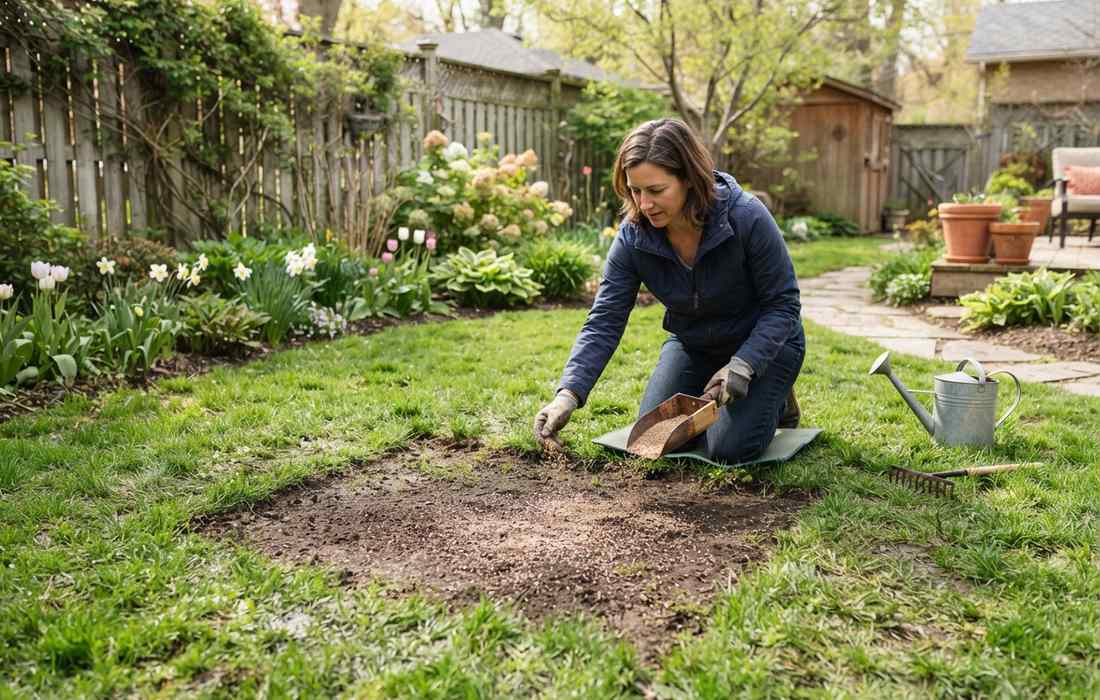
Spring reseeding is most useful for targeted repairs, especially where winter damage has left small bare or thin patches. For cool-season lawns, wait until the soil has warmed to around 50°F and the surface is workable rather than cold, muddy, or saturated. Seed also needs enough time to root before hotter weather arrives.
Spring is less suited to a full lawn renovation because new seedlings face increasing weed pressure and summer stress. If large areas need replacement, late August into early fall is usually a stronger window in cool-season regions. Spring patching makes more sense when the damaged area is limited and you can keep the seedbed consistently moist through germination.
Before reseeding, check any preemergent already applied. Many crabgrass preventers can also stop desirable turfgrass seed from establishing, so follow the product label’s reseeding interval unless it is specifically approved for use with new turf seed.
Which Grass Seed Should You Use for Spring Reseeding?
The replacement seed should fit the existing lawn and the conditions in the damaged area. Match the seed to sunlight, summer stress, and the grass already growing around the patch.
- Kentucky bluegrass: A strong fit for sunny cool-season lawns, especially where the lawn already contains bluegrass. It spreads by rhizomes and can knit small gaps together, but establishment is slower than perennial ryegrass.
- Perennial ryegrass: Useful in mixes when faster early cover is helpful. It establishes quickly and is often paired with Kentucky bluegrass, but it should still match the climate and the existing lawn rather than being used as a universal patch seed.
- Turf-type tall fescue: A practical choice for lawns that already contain tall fescue or need better heat and drought tolerance. Because tall fescue grows in bunches, thin areas often need reseeding rather than waiting for surrounding plants to spread into the gap.
- Fine fescues: Better suited to shaded or lower-input areas than Kentucky bluegrass. In lawns with both sun and shade, a quality mixture can combine bluegrass, fine fescue, and a smaller amount of perennial ryegrass so each part of the lawn has a better match.
Check the seed label before buying. A high-quality mix should list the turfgrass species and cultivars clearly, along with purity and germination information. For spring repair, matching the existing stand is usually more important than choosing the darkest green or fastest-germinating seed on the shelf.
How to Reseed a Lawn in Spring Step by Step
Good spring reseeding is mainly about getting seed into contact with moist soil without burying it too deeply or smothering the existing turf. Work through the steps below while the soil is firm enough to handle traffic.
Step 1. Mow the Existing Grass
Mow the repair area before seeding so tall leaves do not shade the soil surface. For overseeding cool-season turf, a temporary height around 1.5 to 2 inches can reduce competition while the new seed gets established.
Use a sharp blade and remove heavy clumps of clippings if they cover bare soil. The goal is not to scalp the lawn. Keep enough leaf area on the existing grass to recover normally after the seeding work is finished.
Step 2. Loosen the Soil Surface
Rake small bare patches firmly enough to remove loose dead material and expose soil. On compacted or larger areas, a core aerator can create openings for seed and water; several passes are more useful than a single sparse pass.
Keep the work shallow around healthy crowns and roots. You need openings for seed-to-soil contact, not a deeply tilled seedbed that tears apart the turf you are trying to keep.
Step 3. Spread Seed at the Recommended Rate
Measure the area and use the seeding rate printed for that species or mixture. If a bag calls for 5 pounds per 1,000 square feet and the repair area is 2,000 square feet, the target is 10 pounds, not an extra layer for insurance.
For larger areas, divide the seed into two equal portions. Spread one half in one direction and the other half at a right angle to improve coverage. Too much seed creates unnecessary competition for light, water, and nutrients.
Step 4. Press the Seed Into the Soil
After broadcasting, lightly rake, drag, or press the surface so the seed settles against the soil. Turfgrass seed should remain close to the surface; a covering deeper than about 1/4 to 1/2 inch can reduce emergence, especially with smaller seed.
On small bare patches, a light pass with the back of a rake or a gentle hand tamp is usually enough. Avoid burying the seed under a thick layer of topsoil or compost.
Step 5. Keep the Seedbed Moist
Water lightly enough to moisten the upper soil without creating puddles or runoff. One or two light waterings per day are often enough in mild weather, while hot, windy conditions may require more frequent checks and shorter applications.
Keep the surface consistently moist through germination. As seedlings reach about 1 to 2 inches tall, reduce watering frequency and apply water a little more deeply so roots begin following moisture downward rather than staying near the surface.
How to Help Spring Seedlings Survive Summer
Young grass often establishes well in spring but struggles once heat and faster drying begin. The priority then shifts to protecting root growth and reducing avoidable stress during the first summer.
Shift to Deeper Watering as Roots Develop
Frequent surface watering is useful during germination, but it should not stay that way all season. As the seedlings become established, lengthen the gap between waterings and wet the soil more deeply each time.
Watch the lawn rather than the calendar. Wilting, folded leaves, or footprints that remain visible longer than normal are signs that the turf needs water. Avoid keeping the root zone constantly soggy, which can reduce oxygen around young roots.
Mow Without Damaging the Seedlings
Make the first mowing after most seedlings are about 3 inches tall and can spring back upright after light foot traffic. A sharp blade matters because weak seedlings are easier to pull or tear. For many cool-season lawns, an initial cut around 2 to 2.5 inches is practical before gradually moving back toward the normal mowing height.
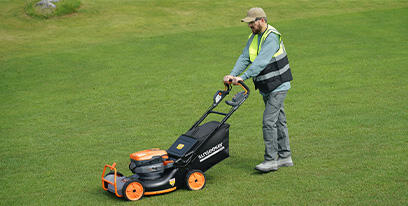
After the repaired turf is rooted firmly and regular mowing is safe, the Sunseeker Elite X7 Gen 2 can take over routine light cuts on established areas. Its 0.8 to 4.0 inch electronic height range lets you match the cut to the grass as it matures, while wire-free virtual boundaries can be adjusted so fresher repair zones stay outside the active mowing area until they are ready.