






FAQs
6/30/2026
Contents
Products
Residential Lawns










Explore
Where to Buy


To successfully reseed a lawn, start by assessing problem areas and preparing the soil for better seed-to-soil contact. Choose the right grass seed based on your local conditions and ensure consistent moisture during germination. Protect the newly seeded areas from foot traffic and avoid mowing until the grass is well-established. With proper care and attention, your lawn can become thicker and healthier over time.
A patchy lawn can make the whole yard look neglected, even when the problem is only a few bare spots, compacted paths, or weak areas of grass. Reseeding is one of the simplest ways to bring it back, but it works best when you do more than scatter seed over the surface. You need to loosen the soil, choose the right grass seed, and keep the area moist while the new roots develop. In this guide, we’ll walk through when to reseed, how to prepare the lawn, how to spread seed properly, and how to care for young grass after it starts to grow.

The best time to reseed a lawn depends on your grass type and local climate, but the goal is always the same: give new seed mild temperatures, steady moisture, and enough time to grow before stressful heat or frost arrives.
For cool-season grasses, such as fescue, ryegrass, and Kentucky bluegrass, late August to October is usually the best window. The soil is still warm from summer, the air is cooler, and there is often more natural moisture. If you only need to repair small bare patches, March to May can also work, but spring reseeding usually needs more care because weeds grow quickly and young grass may struggle once summer heat arrives.
For warm-season grasses, such as Bermuda, zoysia, and centipede grass, May to July is usually better. These grasses grow most actively in warm weather, so reseeding during their main growth season gives them the best chance to fill in thin areas.
Reseeding works best when each step supports the next one, from clearing the area to keeping the seed moist after planting. Follow the steps below to help new grass make good contact with the soil and grow in evenly.
Walk the lawn before doing any work and sort problem areas into three groups: thin grass, bare soil, and compacted or high-traffic zones. Thin sections can often be overseeded after light preparation. Bare patches need better seed-to-soil contact and sometimes a little topsoil or compost. Compacted areas should be loosened first or the seed may struggle to take hold.
Pick a reseeding window that matches your grass type and gives new seed mild weather to settle in. For cool-season grasses, late August to October is usually best, though March to May can work for small bare patches. For warm-season grasses, aim for May to July, when the grass is actively growing.
Mow the existing lawn shorter than usual before reseeding, but do not scalp it down to bare crowns. For many lawns, a height of about 1.5–2 inches helps more light reach the soil and makes spreading seed easier. Use a regular mower or a robot lawn mower only if it can be set low enough and the lawn is firm enough for a clean cut. Bag heavy clippings, then rake away leaves, sticks, dead grass, and loose thatch so the seed can reach the soil surface.
Pay special attention to paths where people or pets travel. Compacted soil often looks hard or sealed, and water may run off instead of soaking in. Lightly loosening the top layer gives seed a better place to settle and improves germination.
If the lawn has struggled for several seasons, a soil test can reveal whether pH or nutrient levels are holding it back. Avoid guessing with heavy applications of fertilizer or lime. Too much amendment can stress seedlings just as easily as too little support.
Choose seed based on your region, sun exposure, and how the lawn is used. A sunny front yard, a shaded side yard, and a play area may call for different blends. Look for seed labeled for your conditions, such as full sun, shade, high traffic, or drought tolerance.
Spread seed as evenly as possible so new grass fills in rather than emerging in thick and thin patches. For larger areas, a spreader helps with consistency; for small repairs, careful hand coverage can work. Once seed is down, lightly rake or press it into the surface so it is not left sitting exposed.
After seeding, give the lawn the support it needs without overdoing it. A starter fertilizer may help if your soil needs it, but water management matters just as much. The goal is steady moisture at the surface during germination, not runoff or constantly soggy soil.
After reseeding, the goal is to give new grass enough time to root without stress. Careful watering, limited foot traffic, and the right first mow will help the lawn fill in more evenly.
For the first 1–3 weeks, keep the soil surface consistently moist while the seed germinates. Some grass varieties sprout faster than others, so don’t stop watering as soon as you see the first light green shoots. In warm, dry, or windy weather, you may need short watering sessions more than once a day.
As seedlings develop, gradually switch to deeper, less frequent watering. This helps the roots grow down into the soil instead of staying near the surface. Avoid sudden dry periods during this stage, because young grass can fail quickly before its root system is strong enough to recover.
Limit foot traffic as much as possible while the seedlings are emerging and rooting in. Repeated walking across newly seeded areas can displace seed, compact damp soil, and break fragile shoots before they mature.
If the area is used by children or pets, block it off temporarily with simple markers or a visual barrier. Even a short protection period can improve fill-in and reduce the need for patch repairs later.
Hold off on mowing until the new grass is tall enough and rooted well enough to handle cutting. Before that first mow, make sure the soil is firm and dry enough to support the mower without leaving ruts. Use a sharp blade and remove no more than about one-third of the grass height.
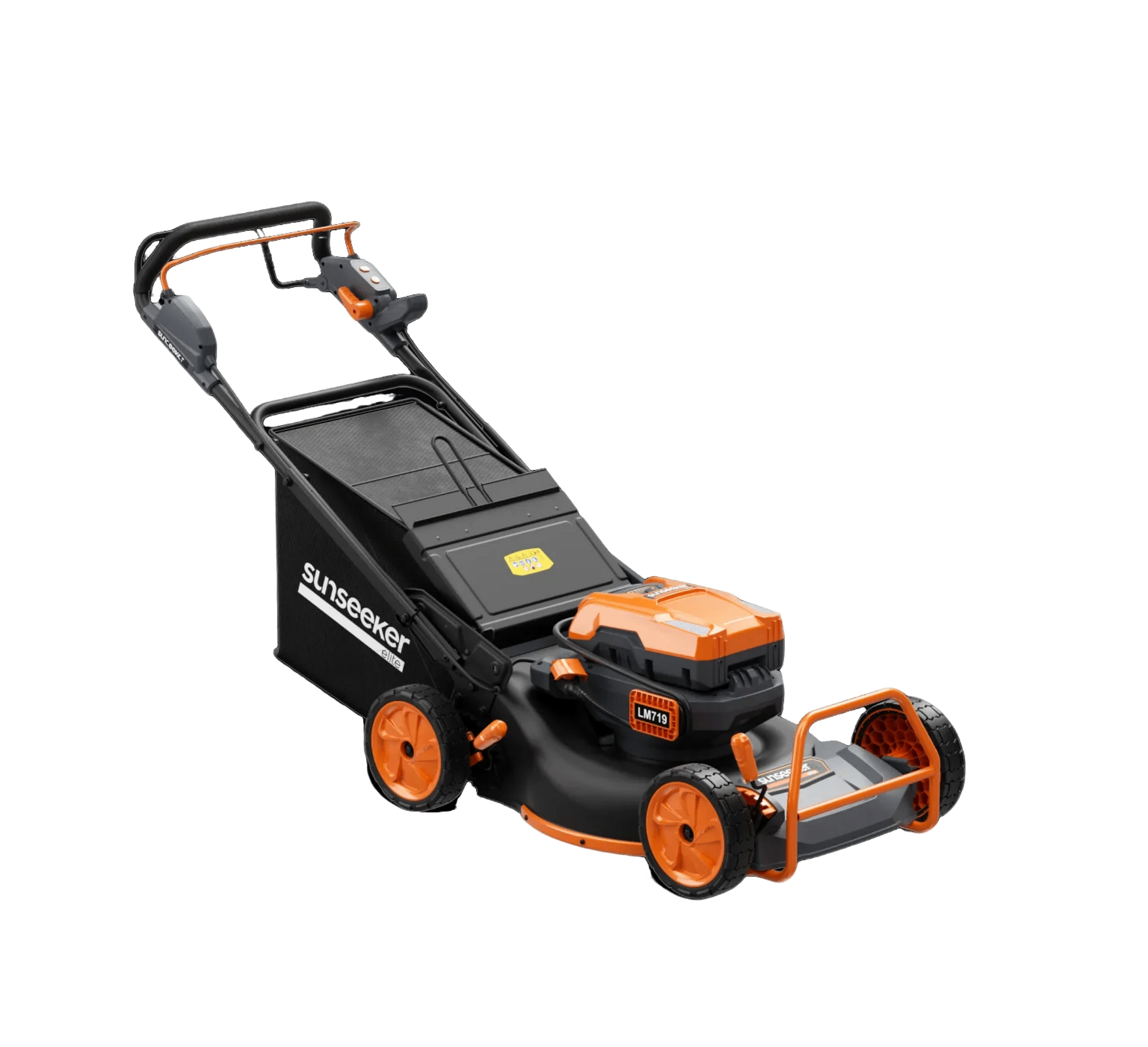
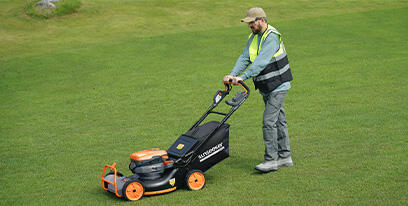
A light, clean first cut encourages the new grass to thicken without adding stress to tender growth. Once the lawn has filled in more evenly, a mower like the Sunseeker Elite X4 can help maintain a regular cutting routine, especially if you want to keep the grass at a consistent height with less manual mowing. If some areas are still thin or slow to establish, wait a little longer before mowing them.

Knowing how to reseed your lawn is really about giving new grass the right start. Seed alone will not fix thin areas if the soil is compacted, the timing is poor, or the surface dries out too soon. But when you prepare the ground well, choose seed that suits your yard, and keep the seedbed consistently moist, those bare patches have a much better chance to fill in evenly.
After that, patience matters. Keep traffic off the reseeded areas, wait until the grass is strong enough before mowing, and return to deeper watering gradually. With the right care in the first few weeks, reseeding can turn a tired lawn into thicker, healthier grass that is easier to maintain through the rest of the season.
Not usually. Seed left on top of an existing lawn often dries out, washes away, or fails because it lacks good seed-to-soil contact. For better results, mow a little lower, remove debris and loose thatch, loosen compacted spots, then rake or press the seed into the surface and keep it consistently moist.
Common mistakes include reseeding during harsh weather, skipping soil preparation, and leaving debris or thatch that prevents seed from reaching the soil. Other problems come from choosing the wrong seed for sun, shade, traffic, or local conditions, spreading it unevenly, watering inconsistently, walking on new seedlings, or mowing before the grass is established enough to handle cutting.
The best month to reseed your lawn depends on your grass type. For cool-season grasses, September is usually the best month because the soil is still warm, the air is cooler, and moisture is easier to manage. For warm-season grasses, May or June is usually better, when the grass is actively growing and can fill in quickly.