





FAQs
7/3/2026
Contents
Products
Residential Lawns










Explore
Where to Buy


To successfully plant a clover lawn, select the appropriate clover seed and prepare the soil by removing debris and ensuring good seed-to-soil contact. Spread the seed evenly, cover it lightly, and maintain consistent moisture until the seedlings are established. A clover lawn can reduce maintenance needs compared to traditional grass, making it a practical choice for many homeowners. Consider your yard’s usage to decide between a pure clover lawn or a clover-grass mix for optimal results.
A patchy, thirsty lawn can turn every warm week into another round of watering, mowing, and reseeding. Clover offers a simpler alternative, but it needs the right start: tiny seed, shallow coverage, steady moisture, and realistic expectations about traffic and appearance. Whether you want a full clover lawn or a clover-grass mix, the best results come from preparing the surface carefully and protecting seedlings through their first few weeks.

To successfully plant a clover lawn, the process is less about complexity and more about precision in surface preparation, seed placement, and moisture control. Clover seeds are extremely small and rely on direct soil contact and consistent hydration during germination. Most failures happen not during growth, but during planting itself.
For US residential lawns, white Dutch clover is the most widely used variety due to its low growth habit, fast spreading behavior, and compatibility with existing turfgrass. It performs reliably across temperate regions and is the standard choice for lawn applications rather than agricultural cover cropping.
Microclover can be used for finer visual texture, but it requires more stable moisture conditions during establishment and typically performs better in maintained suburban lawns rather than high-stress environments.
When available, choose inoculated seed, which improves early nitrogen fixation and helps seedlings establish faster in soil that has not previously supported clover growth.
Clover establishment depends heavily on seed-to-soil contact. For new lawns, the soil surface should be loosened to a shallow depth to remove compaction and allow seeds to settle naturally into the top layer.
For overseeding into an existing lawn, mow the grass low and remove clippings to reduce surface blockage. Raking is essential—light surface scratching helps break through thatch so seeds are not trapped above the soil layer, where germination rates drop significantly.
Avoid any surface treatments or pre-seeding herbicide applications that interfere with seed germination, as clover is highly sensitive during early establishment.
Because clover seed is extremely fine, uniform distribution is critical for consistent coverage. A dry carrier such as sand or fine compost is often used to improve visibility and control during broadcasting.
Apply the seed in two passes:
This cross-seeding method reduces patchiness and improves density consistency across the lawn, especially in larger open areas where visual spacing errors are more likely.
After spreading, the goal is not to cover deeply but to stabilize seed position on the soil surface. Clover should remain very close to the surface layer, where moisture and oxygen conditions support germination.
Light raking or gentle pressing is sufficient to anchor seeds. Over-covering is a common mistake and significantly reduces emergence rates because clover seed lacks the energy reserves needed to push through thick soil layers.
Water immediately after this step using a fine spray pattern to avoid displacement.
Moisture consistency is the most critical factor during early growth. The surface layer should remain evenly damp without drying out between watering cycles.
Under typical US spring or fall conditions, clover seeds begin germination within approximately 7–14 days. During this period, shallow but frequent watering is more effective than deep irrigation, as roots are not yet developed enough to access deeper soil moisture.
Once seedlings begin to establish and show steady green coverage, watering can gradually transition toward less frequent but deeper irrigation patterns.
The choice between pure clover and a clover-grass mix depends less on trends than on how your yard functions. A pure clover lawn suits a softer, more informal space with lighter traffic. A mix is usually the more practical option when you still want the look and wear tolerance of a conventional lawn with fewer inputs.
Option | Best fit | Main advantage | Main trade-off |
|---|---|---|---|
Pure clover lawn | Low-traffic yards, cottage-style lawns, areas where flowers are welcome | Needs less nitrogen fertilizer and can stay green with less care | Less tolerant of heavy play, can look uneven in winter or drought |
Clover-grass mix | Everyday lawns, pets, kids, mixed sun and shade | Grass adds durability while clover fills gaps and feeds the soil | Still needs mowing and may not look as uniform as conventional turf |
For many homeowners, the clover-grass mix is the safer starting point. Grass adds structure and wear tolerance, while clover helps fill gaps and contributes some natural nitrogen. You keep a more familiar lawn appearance without asking clover to handle every demand on its own.
A pure clover lawn is more of a design and maintenance choice. It can work well in smaller front yards, lightly used backyards, or areas where flowers are welcome. But if the space sees frequent play, dog traffic, or repeated footpaths, clover usually performs better as part of a mix or in lower-use sections of the yard.
After clover begins to establish, early care is focused on protecting young growth and stabilizing coverage without stressing new roots.
Mowing should begin only after clover has rooted and growth becomes upright and consistent. Cutting too early can disrupt establishment and pull shallow roots from loose soil.
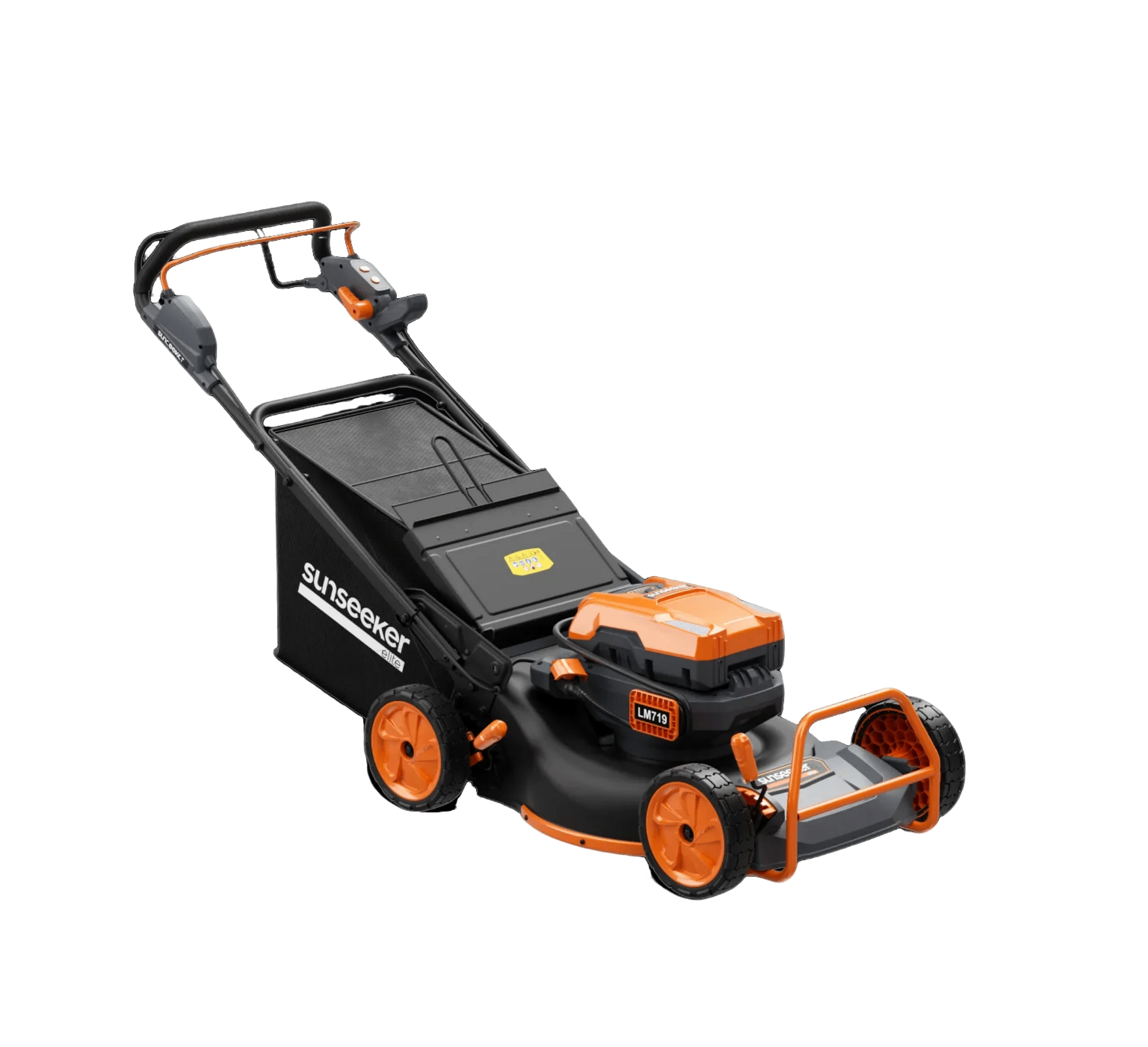
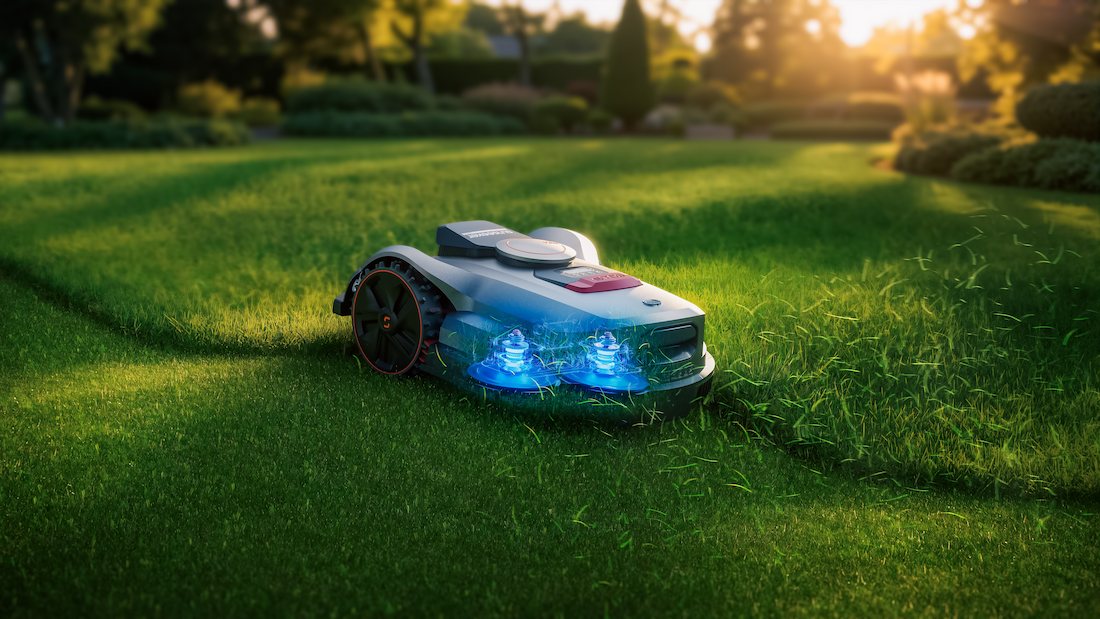
For homeowners aiming to reduce routine mowing once the lawn is fully established, a robot lawn mower such as the Sunseeker Elite X7 Gen 2 can help maintain a consistent cutting height without stressing young clover, as long as it is introduced only after the lawn is fully rooted and stable.
Maintain a higher cut around 3–4 inches to protect young clover crowns and keep soil shaded. This helps maintain even moisture and supports fuller surface coverage.
Keep foot traffic minimal during early growth. Pressure from walking or play can compact soil and disrupt newly forming root systems, leading to uneven patches in the lawn.
Most clover lawn issues come from timing and application errors during planting and early establishment rather than seed quality.
Clover seed should remain near the soil surface. Planting too deep or uneven spreading leads directly to patchy germination and inconsistent coverage.
Planting during periods of extreme heat or cold disrupts germination consistency. Clover establishes best when temperatures support steady soil moisture without rapid drying or freezing stress.
Broadleaf herbicides and heavy nitrogen fertilizers disrupt clover establishment. These inputs favor grass and weeds, reducing clover survival during early growth.
Inconsistent watering during the first stage of growth leads to uneven sprouting. Allowing the soil surface to dry out during germination is one of the most common causes of thin or patchy lawns.
If you’re learning how to plant clover lawn successfully, the main priorities are simple: choose the right seed, prepare the surface carefully, spread it evenly, cover it lightly, and keep the soil consistently moist until the plants are established. The best results usually come from shallow planting, good seed-to-soil contact, and protecting new growth from early traffic and mowing.
For many homeowners, clover can be a practical lower-maintenance alternative to traditional turf, especially when matched to the way the yard is actually used. A pure clover lawn may suit lighter-use spaces, while a clover-grass mix is often the more durable and forgiving option for everyday lawns.
Yes, you can overseed clover into an existing grass lawn, but it needs preparation. Mow the grass low, bag the clippings, and rake firmly so the tiny clover seed reaches soil instead of sitting on thatch. Spread it evenly, press or cover it very lightly, and keep the surface consistently moist until seedlings root.
Plant clover when conditions are mild enough to keep the top layer of soil damp during germination and early growth. Avoid seeding right before extreme heat, hard freezes, or heavy storms that could dry out, damage, or wash away the seed. Clover often sprouts in about 7–14 days, but it still needs protection from mowing and traffic while it establishes.
Clover is lower-input, not no-maintenance. It can look less uniform than traditional turf, thin during severe drought, brown back in winter, and wear down under heavy foot traffic, pets, or play. Weed control also changes because many broadleaf herbicides and weed-and-feed products used on grass lawns can damage clover.