









FAQs
7/16/2026
Contents
Products
Residential Lawns










Explore
Where to Buy


To overseed a lawn in fall, start by mowing short and dethatching, then aerate to loosen compacted soil. Spread grass seed evenly and apply starter fertilizer. Maintain consistent moisture and limit traffic as seedlings establish. Seeding at least a month before frost helps ensure deeper roots and healthier, denser growth.
As summer fades and cooler temperatures begin to settle in, your lawns might look stressed from months of heat. Fortunately, overseeding is a simple yet highly effective way to restore your lawn’s health, which helps create a more resilient turf that thrives across seasons. So, how to overseed a lawn in fall? This comprehensive guide covers the ideal timing by region, essential preparation steps, proven seeding techniques, and proper aftercare. Just read on to find expert tips for achieving a lush, green lawn.
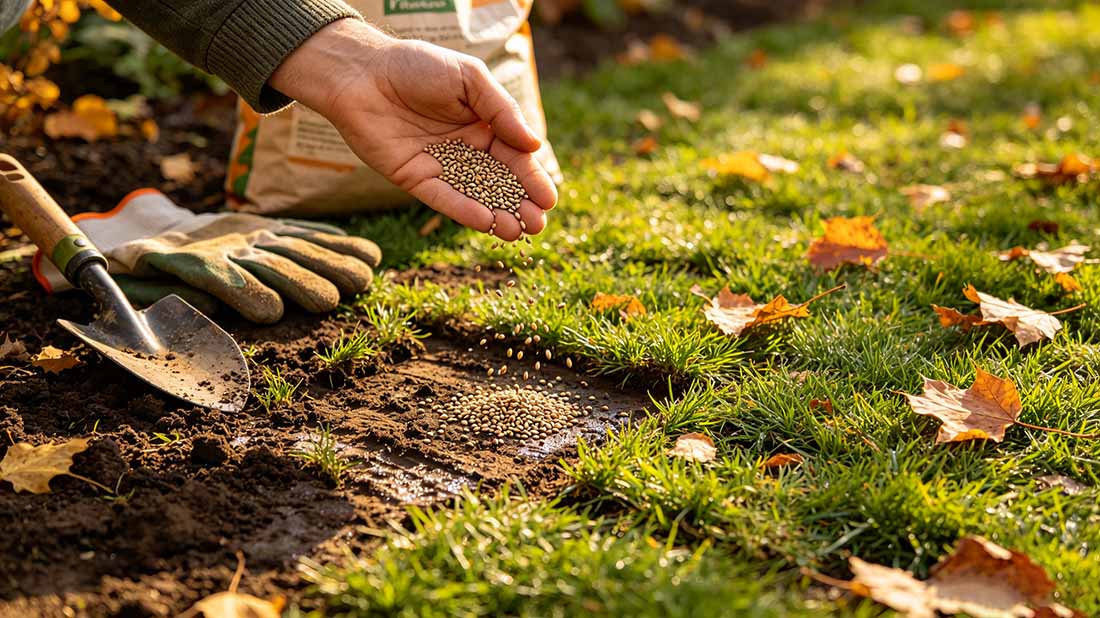
Fall is widely considered the best time to overseed because it naturally provides the conditions new grass needs to thrive. Warm soil temperatures promote fast germination, while cooler air reduces stress on young seedlings and slows weed growth.
Here are the reasons why you might want to overseed a lawn in the fall:
Timing plays a critical role when you overseed your lawn in the fall. The ideal windows should combine warm soil(50-65°F) with cooler daytime temperatures and consistent moisture. Below are general guidelines across U.S. regions:
Generally, it’s recommended to complete overseeding at least 30-45 days before the first expected frost in your region. Seeding earlier in the fall allows roots to establish more deeply. This improves winter survival and sets the stage for vigorous spring growth.
After you decide when to overseed the lawn in the fall, follow these essential steps to ensure successful germination and the best results.
Conduct a soil test to evaluate pH levels and nutrient content. Apply necessary amendments: lime for acidic soil or sulfur for alkaline conditions. Avoid high-nitrogen fertilizers a few weeks before overseeding; they may encourage excessive top growth instead of root development.
Mow your lawn shorter than usual, usually around 2-2.5 inches, and bag the clippings. This helps expose the soil surface, improves seed-to-soil contact, and reduces competition from existing grass.
Remove excess thatch that is over 0.5 inch thick with a dethatcher or rake. Then, core aerate the lawn to relieve soil compaction and create small openings that allow seeds, water, and nutrients to penetrate more effectively.
Select a high-quality grass seed blend suited to your region, sunlight conditions, and lawn usage. Popular options include tall fescue, Kentucky bluegrass, and perennial ryegrass. The right seed can greatly improve germination rates.
Use a broadcast spreader to distribute seed evenly at the recommended rate: 5-10 pounds per 1,000 square feet. Follow with a starter fertilizer rich in phosphorus to promote strong root growth. Lightly rake or roll the area to ensure good seed-to-soil contact.
Once the seed is down, proper aftercare becomes the most important factor in determining success. Newly germinated grass is delicate and requires consistent attention. Here are the essential aftercare tips to follow after you overseed a lawn in the fall:
As your new grass fills in and the lawn strengthens, frequent light mowing helps encourage thicker, healthier turf without stressing tender roots. This is where AWD robotic mowers truly stand out. They provide excellent traction on soft or uneven soil while delivering precise, gentle cuts that support even recovery after overseeding.

For outstanding performance, consider the Sunseeker Elite X5. It features a floating cutting disc that automatically adjusts to your lawn’s contours for a consistently sharp and even cut. With an adjustable cutting height of 1.6 to 3.2 inches, you can easily maintain a higher blade to protect young grass and safely practice light, frequent cuts. Its advanced navigation and intelligent path planning ensure thorough coverage without missing spots or scalping new growth. Additionally, the AWD system provides gentle traction to maneuver across recovering turf smoothly, preventing damage to delicate post-germination roots.
How to overseed a lawn in fall? You might want to start with the right timing and proper soil preparation. Meanwhile, follow the right steps and provide consistent aftercare with proper watering, mowing, and maintenance. Once your new grass is established, regular mowing is essential to maintain its thickness and appearance. This is the time you might want to upgrade your lawn care routine with the Sunseeker’s AWD robotic mowers, which help you maintain a beautiful lawn effortlessly while protecting your hard-earned overseeding results. Explore Sunseeker’s smart solution and enjoy a well-maintained yard with less effort from now on.
You can usually overseed in the fall up to 4-6 weeks before your area’s first hard frost. In many regions, this means late September through early November, depending on local climate conditions. While late seeding may still produce some growth, earlier overseeding gives grass more time to develop strong roots and survive winter stress.
Simply throwing grass seed onto your lawn in the fall often leads to disappointing results because seeds may not have enough soil contact, moisture, or protection. For better germination, mow low, remove excess thatch, aerate compacted soil, and spread seed evenly. It’s recommended to follow the right steps introduced above to overseed a lawn in the fall, which helps maximize germination and achieve the best results.
Common overseeding mistakes include the wrong timing, no soil preparation, unsuitable grass seed, uneven seed application, and failing to provide enough water after planting. Mowing too soon or heavy traffic can also damage young seedlings. It’s crucial to follow the correct overseeding steps and provide consistent care to improve your lawn’s recovery and long-term health.