















FAQs
7/23/2026
Contents
Products
Residential Lawns










Explore
Where to Buy


To level a lawn with sand, apply thin layers (1/4 to 1/2 inch) during active growth, ensuring grass blades remain visible. Use clean, medium-coarse sand for shallow dips under 1/2 inch, or a sand-topsoil-compost mix for deeper depressions. Proper timing, such as late spring for warm-season grasses, is crucial for recovery. Always brush the material into the turf and water lightly to settle.
Few things are more frustrating than a bumpy lawn that causes your mower to bounce or water to pool in shallow dips. While these minor ruts and hollows are common as soil settles over time, you don’t need to restart your entire landscape to fix them. Sand leveling is a precise, cost-effective way to smooth out your yard without destroying your hard-earned turf.
In this guide, we will walk you through the essential preparations and professional techniques to achieve a golf-green finish right at home. The following sections will break the process down into simple, actionable steps.

Yes, sand is a highly effective tool for leveling established lawns, provided it is applied correctly and at the right time. Because sand particles are stable and do not decompose, they create a firm, level surface that stays put far longer than organic matter alone. However, the key to success is moderation. Sand should only be used on healthy, actively growing grass that can "push through" the new layer. If the grass is dormant, you risk smothering the crowns and killing the turf.
The choice between sand and topsoil depends on the depth of the repair and your existing soil quality. Each material serves a specific purpose in turf management.
The following table compares the two materials to help you decide:
|
Situation |
Better Choice |
Why |
|---|---|---|
|
Dip is under 1/2 inch |
Sand alone |
Fast to brush in and unlikely to smother grass |
|
Dip is near 1 inch |
Sand/Topsoil/Compost Mix |
Roots need usable soil and minerals, not just fill |
|
Bare or thin patches |
Soil-based mix |
Supports reseeding, rooting, and moisture retention |
Choosing the right material ensures the particles flow easily into the grass canopy without crusting over. The texture of the sand determines how well it integrates with your existing soil.
You should look for clean, washed, medium-coarse sand, often sold as "mason sand" or "sharp sand." Avoid play sand, which is usually too fine and can pack tightly, blocking air and water from reaching the roots. Similarly, never use beach sand, as the salt content can be toxic to your lawn. For most home projects, a blend of 70% sand and 30% screened topsoil is the "gold standard," providing both stability and moisture-holding capacity.
Achieving a smooth surface requires patience and a light touch. Follow these steps to ensure you improve the surface without burying your grass.
Start by mowing your lawn slightly shorter than usual, around 1.5 to 2 inches, to expose low spots. Using a precision tool like the Sunseeker Elite X9 Plus ensures a consistent cut height, making it much easier to identify where the mower deck "dips" or "scalps." Once mowed, clear all debris and mark the hollows with turf paint or small flags so you know exactly where to focus your material.
Using a shovel, place small mounds of sand in the center of the marked low spots. Aim for a depth of roughly 1/4 to 1/2 inch in a single pass. It is much safer to apply two thin layers over several weeks than one thick layer that completely buries the grass. If you are leveling the entire lawn, work in small sections to keep the application thickness consistent.
Use a leveling rake, a lawn lute, or the backside of a standard garden rake to spread the mounds. Move the tool in a back-and-forth motion to "feather" the sand into the surrounding healthy grass. The goal is to fill the hollows while ensuring the tips of the grass blades are still poking through the sand. If you can’t see any green, you have applied too much and should rake the excess away.
After spreading and brushing, give the area a light watering to help the particles settle into the soil gaps. Do not use a high-pressure nozzle, as this can wash the sand out of the low spots. A gentle mist will also remove dust from the grass blades, which helps the plant continue photosynthesis and recover faster from the weight of the topdressing.
Wait at least two to three weeks for the grass to grow through the first layer before adding more. If the dip was deep, you may need multiple applications to bring it flush with the rest of the yard. This staged approach prevents "suffocating" the root zone and results in a much stronger, more resilient turf profile.
Once the sand is applied, your primary job is to protect the area while the grass recovers and stabilizes the new material. Proper aftercare prevents the sand from shifting or compacting unevenly.
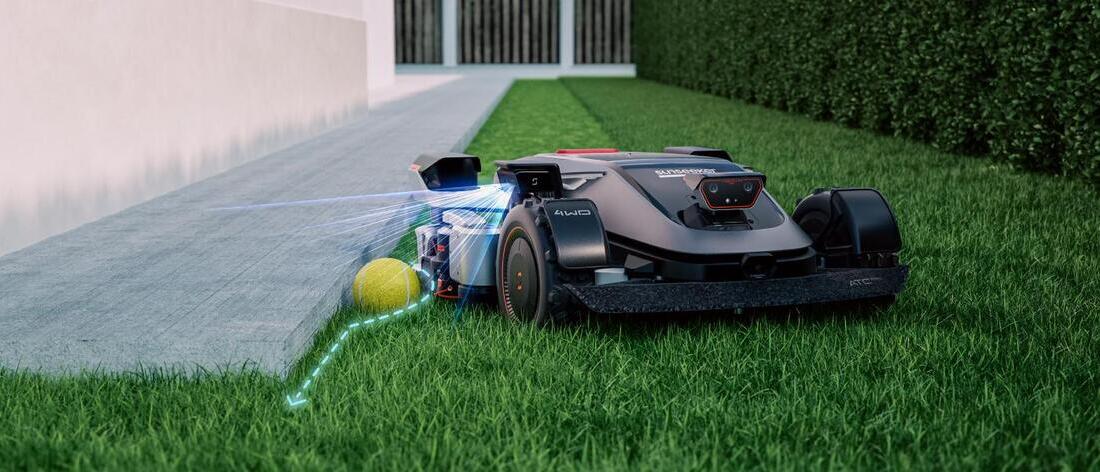
Limit foot traffic for at least a week to avoid creating new ruts in the fresh, loose sand. When you resume maintenance, consider using Robot Lawn Mowers without Perimeter Wires to maintain a steady height-of-cut without the heavy weight of a traditional riding mower. These advanced machines provide frequent, light trims that encourage the grass to grow thick and upright through the new sand layer, eventually hiding the repair entirely.
Sand leveling is not a "fix-all" for every yard problem. There are specific scenarios where adding sand will actually make the situation worse rather than better.
Do not use sand if you are dealing with major drainage issues or standing water caused by heavy clay compaction; these require core aeration or professional grading first.
You should also avoid leveling when the grass is dormant or stressed by extreme heat or drought. Finally, if a hole is deeper than 2 inches, do not simply bury it with sand; instead, lift the sod, fill the void with high-quality topsoil, and relay the grass.
Leveling your lawn with sand is a rewarding project that improves both the aesthetic appeal and the long-term health of your turf. By adhering to the "thin-layer" rule and choosing medium-coarse materials, you can eliminate bumps and mower scalp marks without the need for a full renovation. Success relies on patience—working in stages allows the grass to remain strong and vibrant throughout the process. When combined with high-quality maintenance tools like those from Sunseeker, your smooth, level lawn will become the foundation for a more resilient and easily maintained outdoor space.
Yes, but pure sand works best for correcting shallow unevenness on lawns already growing in sandy soil. Apply no more than about 1/4–1/2 inch per treatment and brush it between the grass blades. Avoid thick sand layers over clay soil, as the contrasting textures may reduce drainage and create a hard surface.
Level during active grass growth so the turf can quickly grow through the sand. For cool-season grass, early fall or mid-spring is suitable. For warm-season grass, late spring through early summer is better. Avoid sanding during dormancy, drought, extreme heat, or waterlogged conditions, and mow the lawn before applying the material.
Sand is better for smoothing minor bumps and improving surface firmness, while topsoil is more suitable for filling deeper depressions and supporting new grass growth. For most home lawns, a screened mix of sand, topsoil, and compost is safer. Match the mixture to your existing soil and avoid burying the grass crowns.
Use clean, washed, medium-grade masonry sand or horticultural sand with consistent particle sizes. Avoid beach sand because it may contain salt, and avoid very fine play sand, which can compact and restrict drainage. The sand should be screened, free from stones and debris, and similar in texture to the soil beneath your lawn.