







FAQs
7/17/2026
Contents
Products
Residential Lawns










Explore
Where to Buy


Bare dirt is actually a good starting point. It gives you full control over soil conditions before a single seed goes down. The steps that matter most are soil testing, proper grading, choosing the right seed for your region and grass type, and consistent watering during the first few weeks.
A bare patch of dirt can make a yard feel unfinished, but it also gives you a clean starting point. Without old turf, thick weeds, or uneven growth in the way, you can shape the soil before the first seed goes down. Many homeowners struggle here because seed will not grow well if the ground is compacted, dry, or planted at the wrong time.
Learning how to grow a lawn from dirt is mostly about getting the order right. In this blog, we’ll cover soil preparation, seeding, watering, early growth care, and the first mow so you can give new grass a stronger start.
Yes, and in some ways bare dirt is a better starting point than a struggling existing lawn. When you try to improve a lawn that already has patchy grass, weeds, and compacted soil, you're working around problems that are already embedded in the turf. Starting from bare dirt means you can test and correct the soil, fix drainage, and put seed down under controlled conditions, without fighting whatever was growing there before.
The two most common reasons bare-dirt lawn projects fail are poor soil preparation and wrong timing. Grass seed germinates reliably when it has good contact with moist, well-prepared soil at the right soil temperature. Skip either of those and germination will be patchy, slow, or absent entirely.
Not all bare dirt is equal. Several conditions make grass establishment harder.
Compacted or disturbed soil. Construction sites often have compacted subsoil near the surface with topsoil removed. Grass roots struggle to penetrate, and water drains poorly, creating stress cycles that kill seedlings.
Low organic matter. Bare soil often lacks the organic matter that supports nutrient cycling. Thin, sandy, or clay-heavy soils without amendment produce weak establishment.
Poor pH balance. Grass grows best when soil pH is between 6.0 and 7.0. Outside that range, nutrients become chemically unavailable even when present in the soil.
Low-quality seed. Cheap seed mixes often contain high percentages of annual ryegrass (which doesn't survive winter), weed seeds, or low-germination varieties, leading to sparse establishment or a lawn that dies after one season.
Weed competition. Bare soil is open ground. Weeds often germinate faster than grass seed and can colonize a new seeding within weeks of germination.
Good preparation done once prevents most problems that are difficult to fix later.
Step 1: Test the soil. Grass grows best in soil with a pH between 6.0 and 7.0. Outside that range, nutrients become unavailable and growth suffers. A garden center pH test kit gives a quick reading, though for a complete and reliable nutrient profile, sending a sample to your local cooperative extension office is the more accurate option.
Also check soil texture by shaking soil and water in a jar. Clay soil stays murky and needs compost to improve drainage. Sandy soil settles fast and needs organic matter to retain moisture.
Step 2: Establish the rough grade. Slope the surface away from the house, driveway, and sidewalks to prevent pooling. Fill low spots and remove high areas well before seeding to allow settling. If large trees are present, avoid adding soil over their root zones. Even a few inches of extra fill can suffocate roots over time.
Step 3: Add topsoil and amendments. If soil is compacted, rocky, or poor, add 4–6 in of quality topsoil and work in compost. Apply lime or sulfur based on soil test results and till into the top 6 in.
Step 4: Prepare the final seedbed. Rake to a smooth, fine-textured finish. The surface should be loose enough for seed contact but firm enough that only a shallow shoe print appears when walked on.
Step 5: Apply starter fertilizer. Apply a phosphorus-high starter fertilizer immediately before seeding and rake it lightly into the top inch of soil.
Alternative for large or sloped areas: Hydroseeding sprays seed, fertilizer, and mulch in one pass. Faster and more even than hand broadcasting, though typically requires professional equipment.
With the soil prepared, the actual seeding process comes down to five steps. Done in order, they give new seed the best possible start.
Step 1: Choose the right seed and timing. Match grass species to your region. Cool-season grasses (Kentucky bluegrass, tall fescue, perennial ryegrass) do best seeded mid-August through mid-September. Warm soil speeds germination while cooling temperatures reduce stress and limit weed competition. Warm-season grasses (Bermuda, zoysia, centipede) need late spring to early summer when soil temperatures reach 65 °F.
Step 2: Spread seed evenly. Use a spreader set to half the recommended rate. Make one pass, then a second pass perpendicular to the first. Overlap passes slightly to avoid gaps.
Step 3: Rake lightly and roll. Lightly rake to bury most seed to 1/8–1/4 in. Optionally roll the area to press seed and soil together.
Step 4: Apply straw mulch. Spread weed-free straw evenly to retain moisture and reduce erosion. On slopes, about one bale per 1,000 sq ft is adequate.
Step 5: Water immediately and consistently. Water within a few hours of seeding. Keep the top 1 in moist throughout germination, typically requiring light watering two to three times daily. Never let the seedbed dry out. Germination takes 5–21 days depending on species.
The first few weeks after germination are critical. How you water, mow, and manage the new lawn determines whether it establishes evenly or develops thin spots that are hard to fix later.
Reduce watering frequency gradually. Once germination is visible, shift to less frequent but deeper irrigation to push roots downward. A 2-month-old turf can typically be watered on the same schedule as an established lawn.
First mow at 3–4 in. Wait until new grass reaches 3–4 in before the first cut, then mow down to 2–2.5 in. Keep the mower blade sharp. A dull blade tears young seedlings rather than cutting them cleanly.
Apply a follow-up fertilizer. A light balanced fertilizer 6–8 weeks after seeding supports continued growth. Avoid heavy nitrogen on young turf, which can burn shallow roots.
Manage weeds carefully. Avoid broadleaf herbicides until the lawn has been mowed at least two or three times. Hand-pull isolated weeds during establishment.
Stay off the new lawn. Keep people and equipment off until the grass has been mowed at least twice.
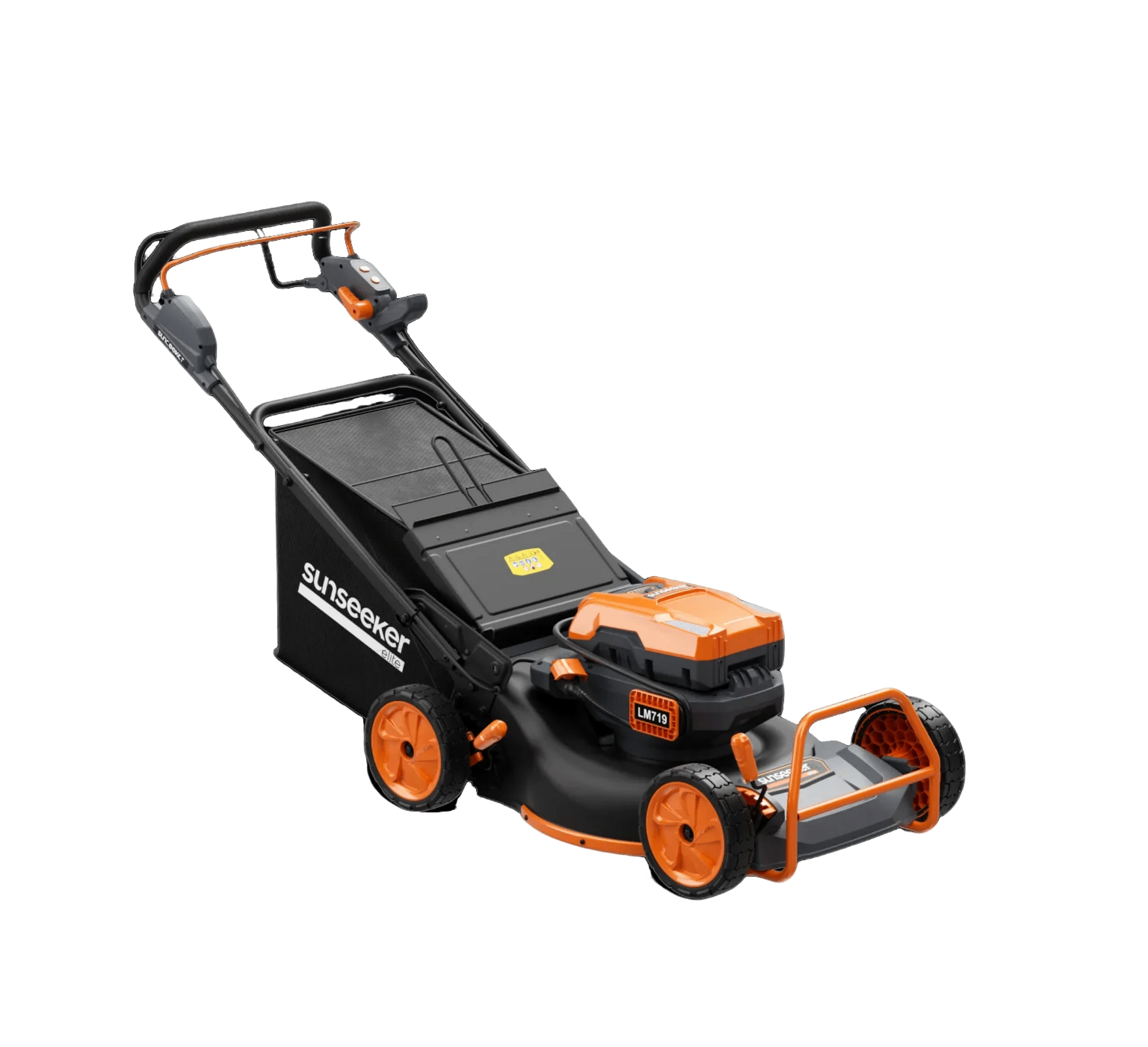
New grass needs time to anchor before automated mowing becomes part of the routine. When the lawn has completed its first two cuts and can tolerate light equipment, a robot lawn mower can help maintain steady growth.
The Sunseeker Elite X5 can be set near the upper end of its 1.6–3.2 in cutting range, while its rotatable rear wheel limits dragging and scuffing as the young turf continues to thicken and strengthen.

A successful lawn from bare dirt comes down to soil preparation and timing. Test and amend the soil before seeding, grade for proper drainage, and seed at the right time for your grass type. Keep the seedbed consistently moist through germination and ease into a normal mowing and watering schedule once the grass is established. The process of how to grow a lawn from dirt is patient work, but done correctly, it produces results that established lawns with underlying soil problems can rarely match.
A few things consistently speed up establishment. Choosing a fast-germinating species like perennial ryegrass (5–10 days) rather than Kentucky bluegrass (14–21 days) gives a head start. Seeding at the optimal window for your grass type, when soil temperature is right, produces faster germination than off-season planting. Keeping the seedbed consistently moist throughout germination is the single most important factor. Let it dry out even once and germinated seeds die. Straw mulch helps retain moisture and moderates soil temperature, reducing how often you need to water.
Scattering seed on unprepared ground produces poor results. Seed needs close contact with moist, firm soil to germinate reliably. Bare dirt without grading or amendment tends to have poor drainage, compaction, or pH issues that limit germination. Raking the surface, correcting drainage problems, and applying a starter fertilizer before seeding significantly improves results.
Most grass species show first germination within 5–21 days under good conditions. Cool-season grasses like perennial ryegrass germinate fastest (5–10 days), while Kentucky bluegrass takes 14–21 days. A new lawn typically reaches first-mow height within 3–6 weeks. Full establishment where turf is dense and traffic-tolerant usually takes a full growing season.