













FAQs
6/18/2026
Contents
Products
Residential Lawns









Explore
Where to Buy


Pull cord failure is one of the most common repairs on gas walk-behind mowers in the US. A replacement rope costs just a few dollars at any hardware store, and a complete recoil starter assembly is still an inexpensive part for most engines. The job takes about 30 minutes, and the only real caution is the coiled spring inside the starter, which stays under tension while you work.
Few things stall a mowing day faster than a starter rope that snaps mid-pull, jams halfway out, or hangs limp and refuses to rewind. The repair looks intimidating because it happens inside the engine's top cover, but learning how to fix lawn mower pull cord problems takes one short session in the garage and a handful of common tools. This guide covers why pull cords fail, the repair itself step by step, and when swapping the whole recoil starter is the smarter move.

The pull cord is part of the recoil starter, the round housing on top of the engine where the rope comes out. Inside, the rope wraps around a pulley, and a coiled spring underneath winds it back after every pull. Those three parts (rope, pulley, spring) explain every symptom.
These are the most common failures and what each one means:
The fastest way to repair lawn mower pull string trouble is to read the symptom first, since it tells you which part to buy. People often treat how to fix lawn mower cord issues as one job, but a frayed rope, a dead spring, and a jammed blade are three different repairs.
Safety check before any work starts. Your hands will be inches above the engine, and a recoil spring stores real force. Run through this list first:
The steps below cover the most common case, a broken or worn rope. The same sequence shows you how to repair pull cord on lawn mower engines of nearly every major brand, since recoil starters share one basic design.
Step 1: Rule out a jam. Tip the mower on its side with the air filter facing up and look under the deck. A stick or stone wedged against the blade can lock the cord solid. If you find one, remove it; that may be the whole repair.
Step 2: Remove the starter housing. Release the rope from the guide on the handle if your mower routes it there. Then remove the bolts holding the top housing to the engine, usually two to four, and lift it off.
Step 3: Pull out the old rope. Flip the housing over and find the knotted end of the rope in the pulley. Grip the knot with needle-nose pliers and pull the rope out. While the pulley is empty, spin it and check it for cracks.
Step 4: Wind up the spring. The spring inside the housing is what pulls the rope back in, so it has to be wound up before the new rope goes on. Turn the empty pulley by hand in the direction your manual shows, a few full turns, until you feel firm resistance. Then turn it back slightly so the rope hole in the pulley lines up with the hole in the housing, and slide a screwdriver through both holes. The screwdriver holds the wound-up pulley still while you thread the rope.
Step 5: Feed the new rope. Use rope of the same diameter as the old one. Melt the tip of the nylon briefly with a lighter so it threads cleanly, feed it through the housing hole into the pulley hole, and tie a tight knot.
Step 6: Let the rope wind in. Hold the rope firmly, pull the screwdriver out, and let the pulley rewind the rope slowly. Never let it snap back on its own.
Step 7: Attach the handle. Thread the free end through the starter handle and tie a second knot.
Step 8: Reinstall and test. Bolt the housing back onto the engine, route the rope through its guide, reconnect the spark plug wire, and give it a few test pulls. The rope should pull smoothly and rewind fully every time. Once the mower is working again, any damage left in the turf is a separate job, and a guide to how to fix a lawn can help with thin, bare, or stressed areas.
A broken pull cord does not always mean the whole starter is bad. If the rope is frayed or snapped but the pulley still turns smoothly, the spring pulls the cord back, and the housing is not cracked, replacing the rope is usually enough. This is the most common fix and is often a simple repair for a mower that otherwise runs well.
Replacing the complete recoil starter makes more sense when the problem goes beyond the rope. A cracked pulley, weak spring, loose spring hook, bent housing, or worn starter pawls can make the cord stick, slip, or fail again soon after repair. In these cases, a new assembly is usually safer and more reliable than trying to rebuild every small part. This is especially true if the recoil spring has jumped loose, because it can snap back sharply and cause injury. Always match the replacement assembly to the engine model number, not just the mower brand.
It is also worth looking at the bigger picture: if the mower has recurring starter trouble plus symptoms such as lawn mower leaking oil, the recoil assembly may no longer be the only repair to consider. If fixing the pull string has become a yearly job and the mower also needs frequent carburetor cleaning, oil changes, or starter work, the recoil starter may not be the real issue anymore. The machine may simply be aging.
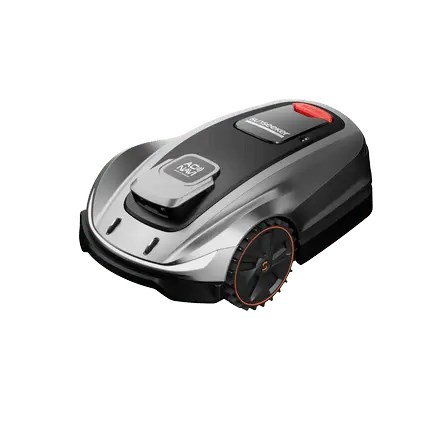
For homeowners who want to avoid pull-cord starts altogether, the Sunseeker Elite X9 offers a different path. It works through app control, uses wire-free mapping, and is designed for large or complex lawns with AONavi™ positioning, 360° OmniSight™ sensing, all-wheel drive, and strong slope performance. Such a robot lawn mower will help homeowners avoid the same starting, fuel, and recoil-starter problems in the future.

A dead pull cord looks like the end of the mower, and it almost never is. A snapped rope means a cheap swap, a rope that will not rewind points at the spring, and a cord that will not pull at all usually means a jammed blade, not a broken starter. Read that way, how to fix the pull string on a lawn mower is one of the friendliest repairs in lawn care: a 30-minute job that gets the machine pulling like new.
A pull cord that will not retract means the recoil spring has lost tension, slipped off its anchor, or broken. Remove the starter housing, take the rope off the pulley, and rewind the pulley until the spring is snug, then refit the rope as in a normal replacement. If the spring will not hold tension after rewinding, replace the complete recoil starter assembly rather than the spring alone.
Replacement rope costs just a few dollars, typically $5 to $10 at a hardware store, which makes the DIY rope swap nearly free. A complete recoil starter assembly for a common walk-behind engine usually runs $20 to $50. Having a small-engine shop handle the job adds labor, so the DIY route saves the most on this particular repair.
Yes, a pull cord swap ranks among the easiest small-engine repairs. It needs only a screwdriver or socket wrench, needle-nose pliers, and new rope, and most people finish in under 30 minutes. The single step that demands care is keeping the pulley locked while the recoil spring is under tension. Anyone comfortable with that one moment can handle the rest without experience.