





FAQs
6/18/2026
Contents
Products
Residential Lawns


Explore
Where to Buy


Zero turn mowers are a fixture on larger US lawns because they cut mowing time dramatically on open ground. The trade is a learning curve that rewards patience: new owners do best with a careful startup routine, slow practice in a controlled space, and firm rules for turns and slopes before mowing at full speed.
Sitting on a zero turn for the first time is a strange moment: there is no steering wheel, no brake pedal, just two levers waiting at your sides. The good news is that the whole secret of how to drive a zero turn mower is one idea: each lever drives one rear wheel, and everything else follows from that. This guide covers what makes these machines different, the checks and startup routine before you move, the driving itself step by step, and the habits that turn a beginner into a clean, efficient mower.
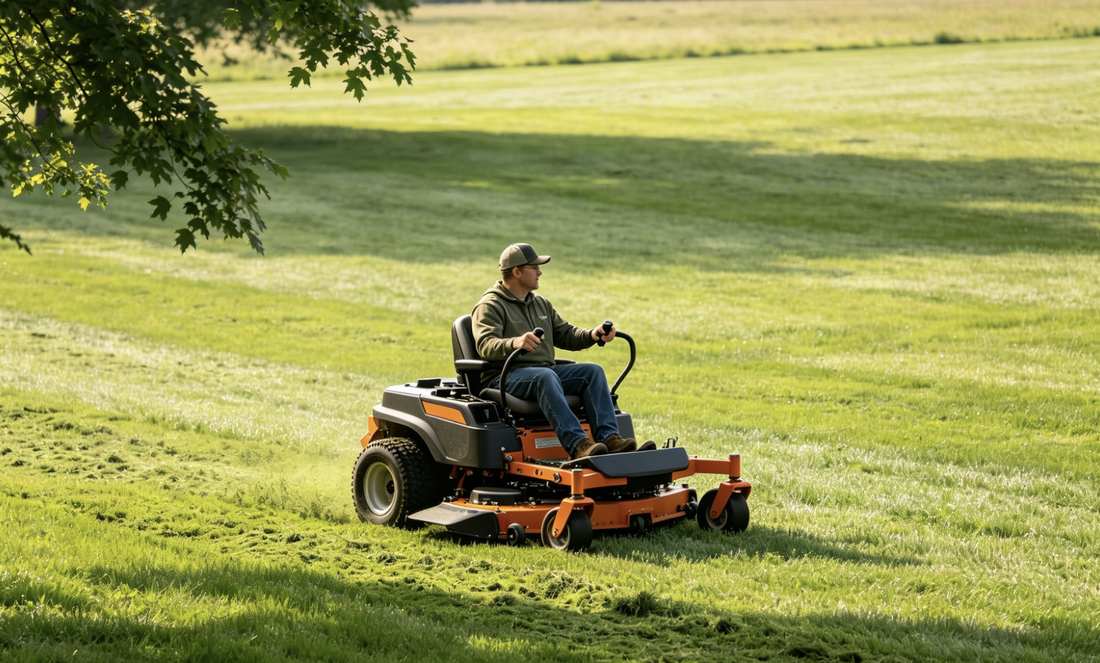
A zero turn mower has two rear drive wheels, each powered by its own transmission, and two free-swiveling caster wheels at the front. The lap bars control the rear wheels directly: one bar, one wheel. When the wheels turn at different speeds, the machine turns; when they spin in opposite directions, it rotates in place. That full rotation with no turning radius is where the name comes from.
The first question in how to operate a zero turn mower is usually what happened to the steering wheel, and the honest answer is that the lap bars replaced the wheel, the gas pedal, and the brake all at once. Pushing the bars controls speed and direction together, and pulling them back to neutral is the brake. There is nothing else to operate while moving, which is exactly why the layout feels alien for an hour and obvious afterward.
The payoff is speed around obstacles. A zero turn pivots at the end of a row and circles trees and beds in one pass, which is why landscaping crews run them all day. The same agility is also the machine's main hazard, since sensitive controls and a fast top speed punish jerky hands.
Preparation for how to use a zero turn lawn mower safely starts before the engine does. Walk the lawn first and pick up sticks, stones, and toys, since the blades can throw debris a long way. Dress for the job: sturdy shoes, long pants, and safety goggles. If your machine has a roll bar, keep it up and wear the seat belt.
Then run the startup sequence. Models differ, so the manual is the final word, but the routine below matches most machines:
The blades stay off until you are actually ready to cut. Anyone wondering how do you operate a zero turn mower for the first time should plan the first session with the PTO off entirely: just drive. A mower with no spinning blades is a far friendlier classroom.
If you are wondering how do you drive a zero turn mower without wrecking the lawn on day one, the answer is a routine: run the steps below in order, in a flat, open part of the lawn, away from slopes, fences, and anything expensive.
Step 1: Start moving. Push both lap bars forward slowly and evenly. Even pressure means a straight line, and gentle pressure means a walking pace. Keep the throttle low for the whole first session.
Step 2: Stop. Pull both bars back to the neutral position. There is no brake pedal; neutral is the brake. Practice this until stopping is a reflex, because everything else gets safer once it is.
Step 3: Reverse. Pull both bars back past neutral toward your body, and always look behind you first. Go easy: reverse is just as sensitive as forward.
Step 4: Make gentle turns. Ease one bar slightly ahead of the other. Pushing the left bar further forward turns you right, pushing the right bar further turns you left, the same way a bicycle leans away from the harder-pedaling side. Small inputs are enough; the steering is sharp.
Step 5: Try the zero turn itself. With the machine nearly stopped, push one bar gently forward and pull the other gently back, and the mower rotates in place. Learn it slowly, then use it sparingly: in a true pivot the inside wheel barely moves, and a stationary drive wheel grinding on grass is how zero turns tear holes in lawns. A three-point turn, slightly forward, rotate, then back, gives the same result without the scar.
Step 6: Build speed last. Full forward on both bars is top speed, around 7 to 9 mph on many residential machines. Earn it gradually, and always slow down before any turn, because tight turns at speed are how these machines get away from people. These habits matter even more on a commercial zero turn mower, where higher speed and longer operating hours can amplify small steering mistakes.
Mastering how to turn a zero turn mower without marking the lawn is genuinely the hardest part of ownership, and it is a matter of repetitions, not talent. Smooth control matters even on the best zero turn mower because abrupt pivots can still tear turf and reduce the time saved by faster mowing. Most people pick up how to use a zero turn mower confidently within an hour or two of deliberate practice, and the bars stop feeling like controls and start feeling like hands.
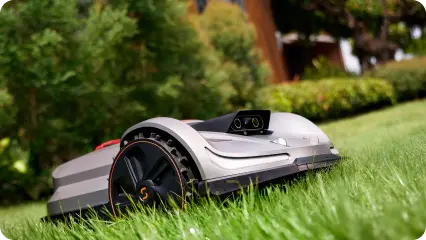
The skill, once learned, is yours for good. The chore is another story: it returns every week, and the seat time never shrinks. That is why some owners hand the routine cuts to a robot lawn mower, which mows on a schedule with no levers, no pivots, and no operator at all, and save the driving for the days that genuinely call for it.
Once the controls are second nature, efficiency is about patterns. The fastest way of how to mow with a zero turn mower is long, straight passes with a teardrop or three-point turn at each end, overlapping each pass by a few inches so no strips are missed. Circle trees and beds in a single smooth arc instead of repeated corrections, and save the trim work along fences for the end.
Slopes deserve their own rules, because hills are the most serious risk with these machines. Mow up and down the slope, never across it, and stay off anything steeper than 15 degrees. Skip sharp turns on a grade entirely, plan your turns on flat ground, and avoid mowing wet grass, since the rear tires lose grip first. One field test settles doubtful hills: try backing straight up the slope. If the mower cannot climb it in reverse, it has no business mowing it at all.
Maintenance is the quiet efficiency tip. Sharp blades cut cleanly at higher ground speed, while dull ones force slow passes and leave torn, browning grass tips. Keeping the deck free of packed clippings and the tires at spec pressure keeps the handling predictable, which matters on a machine this responsive.
Lawn size also decides how much of this skill you will actually use. Learning how to mow with a zero turn mower pays off most on large, open properties where long passes and fast turns save real time. On smaller lawns, especially those with narrow sections, beds, trees, or tight corners, the time saved can be less obvious because careful turning matters more than speed.
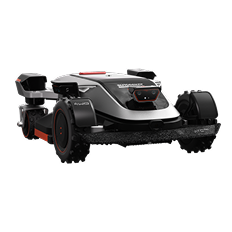
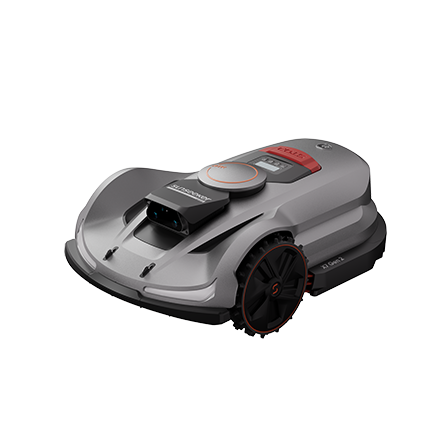
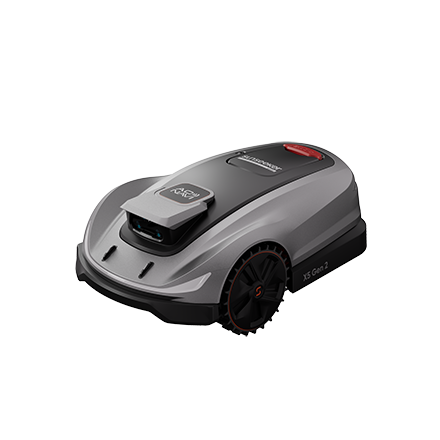
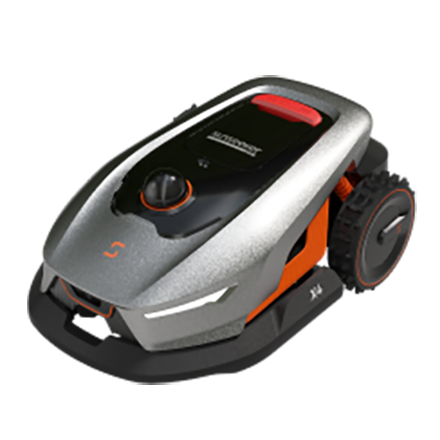
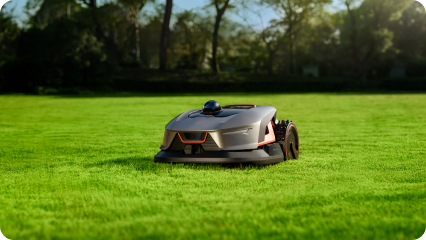
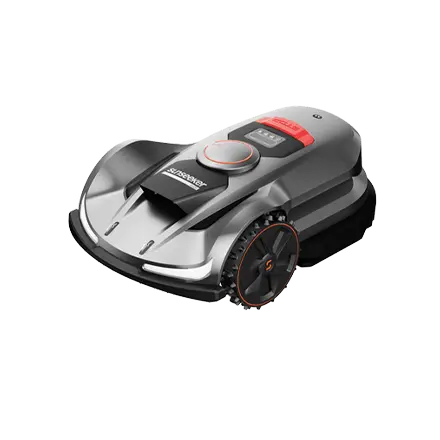
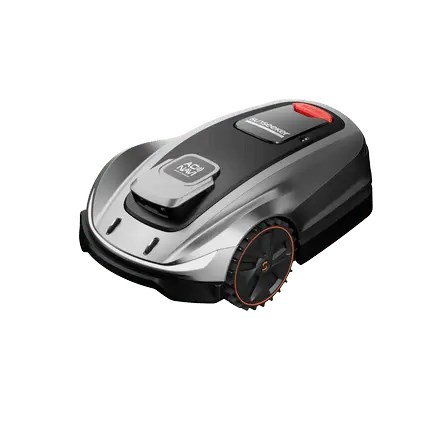
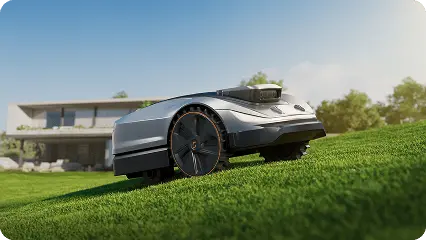
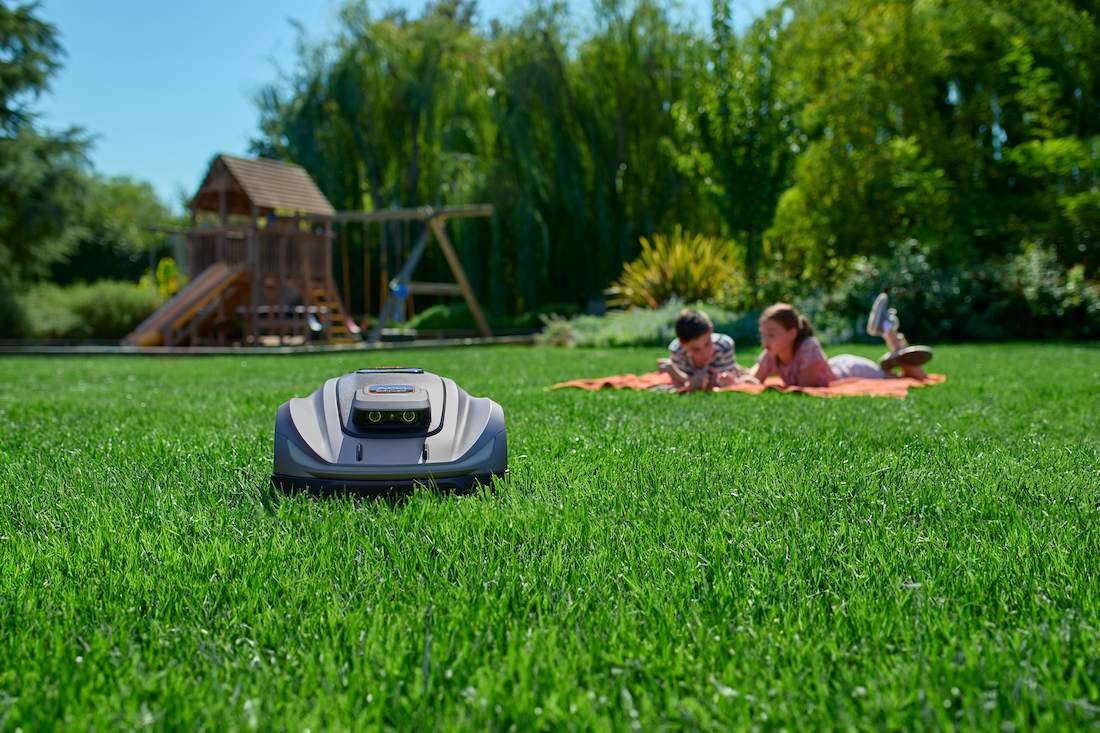
For yards up to about half an acre, a robotic mower can be a more practical way to keep the grass even without practicing zero turn patterns every week. The Sunseeker Elite X5 is designed for this kind of routine, with AONavi™ navigation that combines RTK satellite positioning and VSLAM vision for accurate, wire-free mowing. Its Vision AI helps detect obstacles, while the independent front suspension supports smoother movement over uneven turf. It will not replace a zero turn mower on every large property, but for a half-acre lawn, it can make regular mowing feel much less hands-on.
Driving a zero turn is one idea practiced until it is boring: each bar drives one wheel, even pressure goes straight, neutral is the brake, and small inputs beat big ones. Add the two safety absolutes, gentle pivots to protect the turf and no slopes past 15 degrees, and the lever-armed beast from the showroom becomes the most efficient seat in lawn care. Give it one slow afternoon, and the levers will do the rest.
Beginners should start on a flat, open stretch of lawn with the throttle low and the blades off. Practice in this order: moving straight, stopping at neutral, reversing, gentle turns, and only then the zero-radius pivot. Keep both hands relaxed and make small inputs, since the bars respond to far less pressure than new operators expect. An hour of that routine covers most of the learning curve.
No, but it is unfamiliar. The lap bars replace the steering wheel, accelerator, and brake at once, so the first minutes feel awkward for almost everyone. The controls are sensitive rather than difficult, and most new operators are comfortable within an hour or two of slow practice. The genuinely hard parts are discipline items: easing through turns to protect the turf and staying off steep slopes.
Each rear wheel has its own transmission, and each lap bar controls one of them directly. When both wheels turn at the same speed the mower goes straight, a speed difference between them steers it, and wheels spinning in opposite directions rotate it in place. The front wheels are free-swiveling casters that simply follow, which is what allows the zero-radius turn the machine is named for.