
















FAQs
6/18/2026
Contents
Products
Residential Lawns









Explore
Where to Buy


Most mower issues in spring trace back to old gas sitting in the tank over winter. A siphon pump is the cleanest and safest method for most homeowners. Tilting the mower works as a no-tool alternative but requires extra care to avoid flooding the engine.
Every gas-powered mower eventually needs its tank emptied, and knowing how to drain gas from lawn mower correctly prevents the most common cause of spring startup failures. This guide covers when draining is necessary, what you'll need, two step-by-step methods, and what to do with the old fuel afterward.
Gasoline begins to degrade within 30 days without a stabilizer, and within 60 days it can leave behind sticky varnish deposits that clog carburetor jets and fuel lines. The most common situations that call for draining:
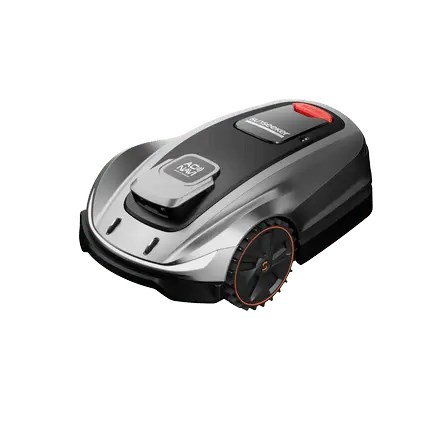
For homeowners tired of dealing with seasonal fuel management altogether, a robot mower removes the problem entirely. A robot lawn mower runs on battery power with no fuel to drain, no carburetor to clog, and no spring startup routine to worry about.
Before learning how to drain lawn mower gas safely, gathering the right tools makes the process cleaner and reduces spillage risk.
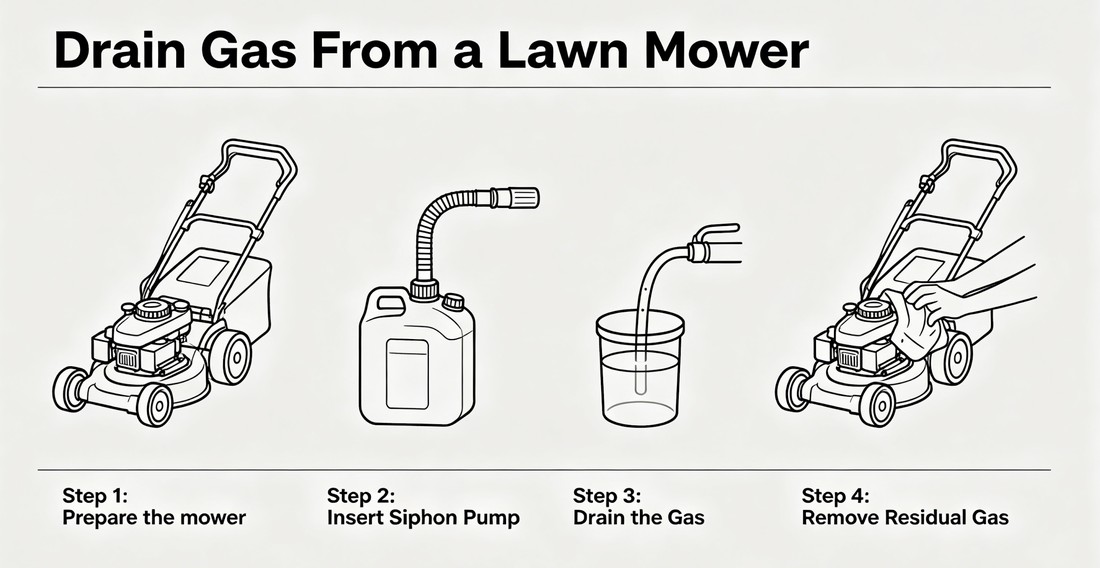
A siphon pump is the cleanest and safest method. It transfers fuel directly from the tank into a container with minimal spillage risk.
1. Place the mower on a flat, stable surface. Turn off the engine and let it cool completely before starting.
2. Disconnect the spark plug wire. Pull the wire off the spark plug tip to prevent the engine from starting accidentally during the process.
3. Remove the gas cap. Set it aside in a clean spot.
4. Insert the siphon pump's intake hose into the tank. Submerge the intake hose fully into the tank, stopping just short of the bottom to keep sediment out.
5. Place the outlet hose into your fuel container. Make sure the container is lower than the mower's fuel tank to help gravity assist the flow.
6. Prime the pump. Activate it according to its type: hand pumps typically require a few strokes to get fuel flowing; battery-powered models start automatically.
7. Continue until the tank is empty. Gently tilt the mower if needed to collect the last of the fuel.
8. Remove the pump and wipe the hose dry. Cap the fuel container immediately.
9. Reconnect the spark plug wire once everything is cleaned up.
When a siphon pump isn't available, tilting the mower is a workable alternative, though it requires more care.
1. Disconnect the spark plug wire before doing anything else.
2. Position a fuel container on the ground next to the mower.
3. Tilt the mower carefully so the fuel cap opening points downward toward the container.Always tilt with the carburetor and air filter facing upward. Tilting the wrong way risks flooding the engine with oil or fuel entering the air filter.
4. Remove the gas cap once the tank opening is aimed at the container, and let the fuel drain.
5. Replace the gas cap and return the mower to flat ground once drained.
6. Reconnect the spark plug wire.
Note: tilting is quick but messier than siphoning. Clean up any spills immediately. Gasoline on concrete or grass is a fire hazard and an environmental hazard.
Old gasoline cannot go into regular household trash or be poured down drains or onto the ground. Once you drain gas from lawn mower, here's how to handle it responsibly.
Never pour old gas into storm drains, soil, or regular trash. It's a fire hazard and contaminates groundwater.
Knowing how to drain gas in lawn mower tanks correctly is just as important as knowing when to do it.
Stale fuel degrades and clogs the fuel system. Gasoline left in the tank breaks down chemically over time. The lighter components evaporate first, leaving behind heavier residues that form a sticky varnish. This varnish coats the inside of the carburetor and blocks the small jets that regulate fuel flow, making the mower hard or impossible to start without professional cleaning.
Ethanol-blended fuel attracts moisture and accelerates corrosion. Ethanol absorbs moisture from the air over time. That moisture separates from the fuel and sinks to the bottom of the tank, where it corrodes metal components and introduces rust into the fuel system. Since ethanol-blended fuels are standard in most US markets, this is a concern for the majority of gas mowers.
A proper end-of-season drain, or the use of fuel stabilizer before long-term storage, prevents most of these issues. Either approach takes about 15 minutes. Knowing how to get gas out of lawn mower tanks correctly saves the cost of a carburetor cleaning or rebuild in spring. If fuel-system problems keep returning on an aging machine, comparing the best gas lawn mower options may make more sense than repeated carburetor repairs.
For homeowners who'd rather eliminate gas engine maintenance entirely, the Sunseeker Elite X4 is worth a look. It runs on battery power with no engine oil, no carburetor, and no spring startup checklist. Covers up to 0.3 acres, operates quietly at 60 dB(A), and handles slopes up to 45% (24°). Drop it on the lawn and it maps the space automatically, navigates around obstacles, and runs on an app-based schedule without any manual input.

Knowing how to empty gas from lawn mower tanks properly before winter storage is one of the most effective ways to keep a gas mower reliable season after season. A siphon pump makes the job clean and straightforward in under 15 minutes. If a pump isn't available, tilting the mower works with some extra care. Dispose of old fuel through a hazardous waste facility or auto parts store. Never pour it down a drain or onto the ground. Handle the fuel properly once and the mower will be ready to start cleanly in spring.
The cleanest method is using a siphon pump: disconnect the spark plug wire, insert the pump hose into the tank, position the outlet into a fuel-rated container, and pump until the tank is empty. If you don't have a siphon pump, tilting the mower with the carburetor facing up and draining through the gas cap opening works, but requires more care to avoid spills or flooding the engine.
A siphon pump is the easiest and cleanest option for most people. Hand pumps are inexpensive and available at hardware stores. Battery-powered fuel transfer pumps are faster and require even less effort. Both methods keep fuel contained with minimal spillage risk compared to tilting the mower.
For storage longer than 30 days, yes. The same storage rule applies even to the best self propelled gas lawn mower: long idle periods still require fresh stabilized fuel or a drained tank. Either drain the tank or add fuel stabilizer and run the engine for a few minutes to treat the full fuel system including the carburetor. Skipping this step is one of the most common reasons gas mowers are hard to start in spring. Fresh gas or properly stabilized fuel is fine to leave in the tank for shorter storage periods.