







FAQs
7/17/2026
Contents
Products
Residential Lawns







Explore
Where to Buy


Most fertilizer burn is caused by applying too much at once, using fast-release nitrogen formulas, or fertilizing at the wrong time. Recovery usually takes one to four weeks with consistent flushing. Severe damage may require reseeding. The most reliable prevention is a soil test before every application.
A greener lawn can make fertilizer feel like the obvious fix, especially when the grass looks pale, thin, or slow to grow. But adding extra fertilizer does not always help. Too much can burn the blades, leave yellow or brown streaks, weaken the roots, and in severe cases create bare patches that need reseeding.
So, can you over fertilize your lawn? Yes, and it is a common mistake because the damage often appears only after the product has already settled into the soil. Below, we’ll look at the warning signs, common causes, recovery steps, and simple habits that help you feed the lawn without overdoing it.

Yes. Fertilizers contain mineral salts, nitrogen, phosphorus, and potassium compounds, and excessive salt concentration in the soil reverses the normal osmotic process in grass roots. Instead of drawing moisture in from the soil, roots lose water to the surrounding soil. This is fertilizer burn: the grass desiccates from the root outward, producing the scorched brown patches that appear rapidly after heavy application. So can you over fertilize a lawn to the point of permanent damage? Yes, if roots die completely, those sections won't recover without reseeding.
According to University of Maryland Extension, many fertilizers contain soluble salts that can burn root tissues and cause the lawn to turn brown if heavily applied. The same source notes that over-fertilization also harms beneficial soil microbes that support plant health and makes lawns more vulnerable to pest and disease problems.
Over-fertilization produces several visible symptoms, some of which overlap with other lawn problems. Knowing what to look for prevents misdiagnosis.
Brown or yellow streaks following application patterns. Fertilizer damage typically follows the spreader path, streaks or bands of discoloration that match where product was applied. This is one of the clearest indicators that fertilizer, not drought or disease, is the cause.
Brown or scorched tips on grass blades. The tips of individual blades dry out and turn brown as the salt draws moisture away from leaf tissue. This appears within a few days of application.
Yellowing or wilting despite watering. Excess fertilizer forces rapid top growth that outpaces the root system's ability to supply water and nutrients. The result is visually similar to drought stress but doesn't respond to irrigation the way drought stress would.
Crust or white residue on the soil surface. Visible salt deposits on the soil indicate extremely heavy application and serious risk of root damage.
Increased pest or disease activity. The weak, rapid growth forced by excessive nitrogen is more attractive to insects and more susceptible to fungal pathogens. A sudden increase in pest or disease pressure shortly after fertilizing is a secondary indicator of over-application.
Distinguishing from other problems. Fertilizer burn follows the application pattern and appears quickly after treatment. Drought stress and disease damage are less patterned and develop more gradually. Mowing too short can cause similar yellowing but isn't limited to post-fertilization timing.
Most over-fertilization is unintentional. These are the most common causes.
Applying too much at once. Exceeding the recommended rate, even slightly, concentrates salt beyond what roots can tolerate. Many homeowners assume more product produces faster results.
Using fast-release nitrogen formulas. Quick-release fertilizers deliver a high concentration of available nitrogen in a short period. The salt surge is more likely to overwhelm the root zone than slow-release formulas, which release nutrients gradually over weeks.
Fertilizing at the wrong time. Applying fertilizer when grass is stressed, during drought, heat, or dormancy, reduces the lawn's ability to absorb nutrients. The product sits near the surface and concentrates rather than dispersing through the root zone.
Skipping a soil test. Applying a complete fertilizer when the soil is only deficient in one or two nutrients adds unnecessary quantities of other nutrients that become part of the salt load. Many homeowners ask can I over fertilize my lawn using organic fertilizer. Less likely, since organic formulas have lower salt indexes, but applying any product without a soil test still risks adding nutrients the lawn doesn't need.
Spreader calibration errors. An uncalibrated broadcast spreader can deliver two to three times the intended rate in overlapping areas, creating concentrated zones of over-application.
Unfavorable soil and weather conditions. Sandy soils have less capacity to buffer against sudden changes in salt concentration, making them more vulnerable to burn than loam or clay. Hot, dry conditions accelerate moisture loss from grass blades and roots, compounding the damage from any given application rate. The same amount of fertilizer that's safe on a cool, overcast day can cause burn during a heat wave.
Act quickly. The faster excess salt is flushed from the soil, the better the recovery prospects.
Step 1: Remove any dry or granular fertilizer still visible on the surface. If a granular product was recently applied and hasn't been watered in yet, sweep or rake it from the surface before it dissolves further into the soil.
Step 2: Water deeply and consistently. The goal is to flush excess salt below the root zone. Water to saturation, approximately 1 in per day, for one to two weeks, including areas that look unaffected. This prevents concentrated zones of salt from migrating to healthy areas as water moves through the soil.
Step 3: Pause mowing. Letting grass grow slightly longer during recovery allows the plant to photosynthesize more efficiently and absorb available nutrients from the recovering soil. Resume mowing once visible recovery is underway.
Step 4: Check the roots. After one to two weeks of consistent watering, check the roots in damaged areas. Healthy roots are white and firm. Brown, black, or mushy roots indicate cell death, those sections may not recover and will need reseeding. If roots are still firm despite surface damage, continue watering and monitor for new growth.
Step 5: Aerate if recovery is slow. Core aeration improves water movement through compacted or salt-affected soil, accelerating the flushing process and helping new roots establish.
Step 6: Reseed or re-sod dead sections. Sections where roots are confirmed dead will not recover on their own. Clear dead material, prepare the seedbed, and reseed. On a healthy, recovering lawn, overseed thinned areas as soon as new growth is visible.
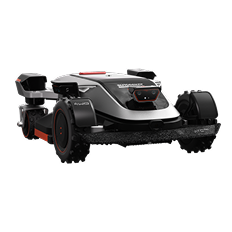
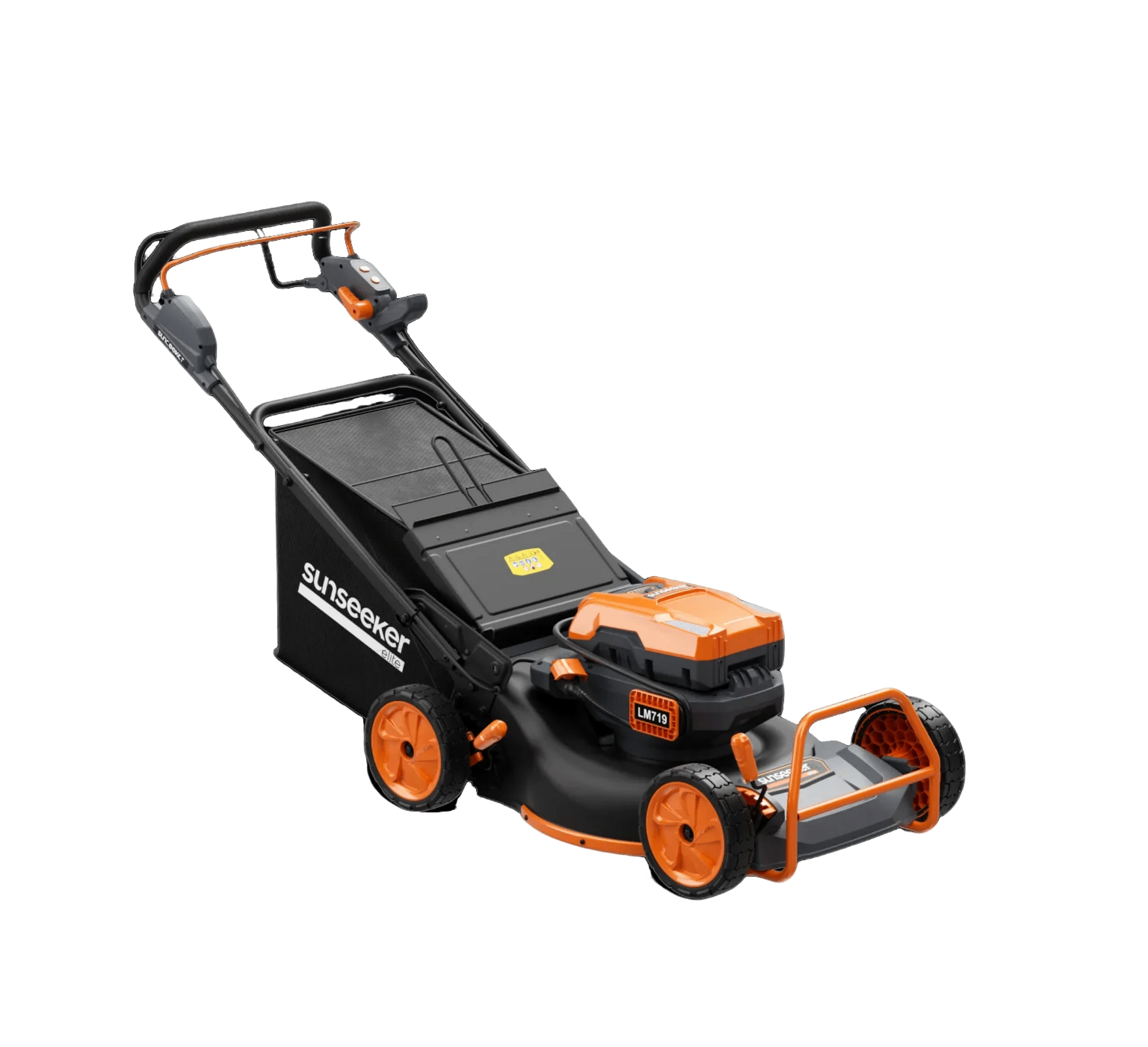
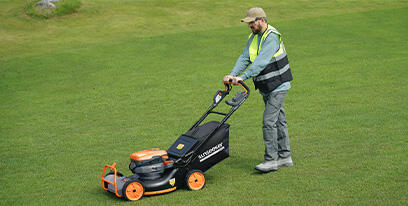
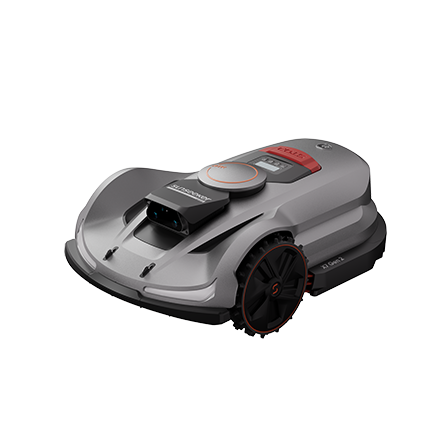
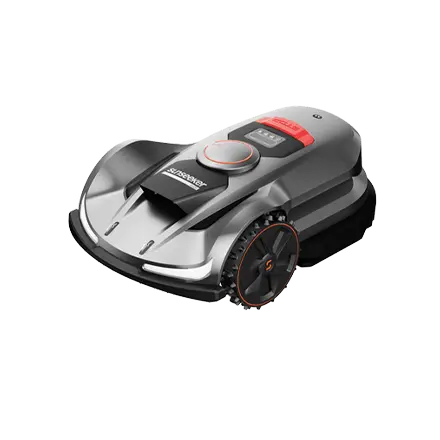
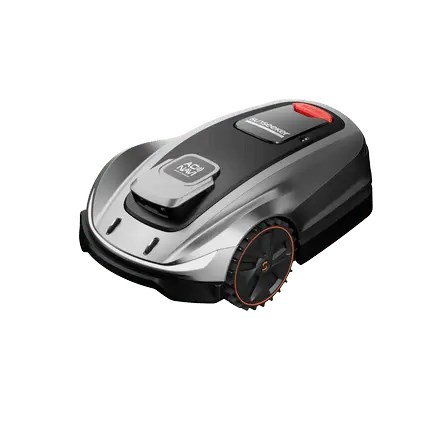
Once new growth is established, a gentle mower can help avoid stressing recovering turf. The Sunseeker Elite X5 uses a floating cutting disc that follows lawn contours, while its rotatable rear wheel supports smooth zero-turn movement to reduce scuffing on fragile areas.

Most fertilizer burn is preventable. These habits eliminate the most common causes before they become problems.
Get a soil test before every application. A soil test identifies which nutrients are actually deficient, which are adequate, and what the current pH is. Applying only what's needed eliminates unnecessary salt load and produces better results than guessing. Most cooperative extension offices provide affordable testing.
Use slow-release nitrogen formulas. Slow-release fertilizers release nutrients gradually over 6–8 weeks, maintaining a lower salt concentration at any given time. They're significantly less likely to cause burn than fast-release formulas, particularly in summer or on sandy soils.
Follow label rates exactly. The rate on the label is the maximum safe application for normal conditions. Applying more doesn't accelerate results, it increases salt concentration without improving nutrient availability to the plant.
Water in after every application. Watering immediately after granular application washes product off grass blades and moves it into the soil where it can be absorbed. University of Maryland Extension specifically recommends watering thoroughly after fertilizing to prevent surface burn.
Fertilize during active, moderate-stress growth periods. Avoid fertilizing during drought, heat stress, or dormancy. If you're wondering can you over fertilize lawn grass more easily in summer, the answer is yes. Stressed grass absorbs nutrients more poorly, so product concentrates near the surface rather than dispersing into the root zone.
Calibrate the spreader before use. Check the spreader setting against the product label and test the output rate before applying. Overlapping passes at the wrong setting is one of the most preventable causes of burn.
A dense, consistently mowed lawn is more tolerant of fertilizer application variations than thin or stressed turf. A robot lawn mower maintains that density automatically through consistent mowing on a set schedule. Your lawn on autopilot. Find the right model and make it happen.
Can you over fertilise your lawn by accident? Yes, over-fertilizing is easy to do and causes damage that takes weeks to months to reverse. The mechanism is simple: excess salt draws moisture away from grass roots rather than letting them absorb it. Recovery is possible if roots are still viable and flushing starts quickly. The best prevention is a soil test, a slow-release formula, label-rate application, and avoiding fertilization when grass is stressed.
The clearest sign is brown or yellow discoloration that appears within a few days of fertilizer application and follows the spreader pattern. Brown tips on individual blades, wilting that doesn't respond to watering, or visible white salt residue on the soil surface are all indicators. If symptoms appeared shortly after fertilizing and match the application pattern, over-fertilization is the likely cause rather than drought or disease.
In most cases, yes. If the roots are still firm and white when checked, consistent deep watering for one to two weeks will flush excess salt and allow recovery. New growth typically appears within two to four weeks of starting the flushing process. Sections where roots are confirmed dead won't recover and will need reseeding. The sooner flushing begins after over-application, the better the recovery prospects.
Slow-release or controlled-release nitrogen fertilizers have significantly lower burn risk than fast-release formulas. Organic fertilizers (compost, blood meal, bone meal, feather meal) have the lowest salt indexes of all and rarely cause burn at normal application rates. The trade-off is slower visible response. For lawns prone to fertilizer sensitivity, sandy soils, stressed turf, or during hot weather, slow-release or organic formulas are the safer choice regardless of application accuracy.