











FAQs
2/13/2026
Contents
Products
Residential Lawns












Commercial Landscapes
Explore
Where to Buy


After overseeding, it’s best to wait 2–4 weeks or until new grass reaches 3–4 inches in height before mowing. Look for strong root hold, firm soil, and even growth as indicators. Initial mowing should be high, with sharp blades, dry conditions, and gentle passes to protect young seedlings.
A general rule of thumb is to wait three to four weeks after overseeding before mowing for the first time. This period allows the new grass seedlings to germinate, establish initial roots, and grow strong enough to withstand the disturbance of a mower.
However, this is not a rigid deadline. The exact timing depends on several interactive factors, and observing your lawn is more reliable than counting days on a calendar.
Different grass species establish themselves at different paces, which directly impacts your mowing schedule. Refer to the table below for a quick overview of how quickly different grass types typically sprout and establish.
|
Grass Type |
Typical Germination Time |
Key Characteristics |
|
Perennial Ryegrass |
5-10 days |
Fast germination, quick establishment, often used in seed mixes for rapid results. |
|
Tall Fescue |
7-14 days |
Moderately fast germination, drought-tolerant, deep-rooted, good for variable climates. |
|
Fine Fescue |
10-14 days |
Shade-tolerant, slower but steady growth, often mixed with other grasses. |
|
Kentucky Bluegrass |
14-30 days |
Slow germination, spreads via rhizomes, establishes a dense, resilient turf over time. |
|
Bermudagrass |
10-30 days (from seed) |
Warm-season grass, prefers heat, spreads aggressively through stolons and rhizomes. |
|
Zoysiagrass |
14-21 days |
Slow to establish but forms a thick, weed-resistant turf once mature. |
Mother Nature plays a leading role in your lawn's timeline. Ideal growing conditions like consistent soil moisture, daytime temperatures between 60-75°F (15-24°C), and ample sunlight can accelerate growth, meaning your lawn might be ready sooner. Conversely, a stretch of cool, cloudy, or dry weather will slow everything down, requiring more patience. Always let the grass's growth, not the calendar, be your primary guide.
The most reliable test is a visual and physical inspection of your lawn. Before mowing, ask yourself two questions:
Height: Have most of the new grass seedlings (about 75% of them) grown to about one-and-a-half times your desired mowing height? For example, if you want a 3-inch lawn, wait until the new grass is roughly 4.5 inches tall.
Strength: Does the lawn feel stable underfoot? Walk across it gently. If your footprints disappear quickly and the soil doesn't feel soft or spongy, the root system is likely developed enough to handle a mower's weight without being torn up or compacted.
Understanding why you're waiting helps reinforce the importance of patience. That first mow is a significant event for your new grass, and proper timing protects your investment.
In their first few weeks, grass seedlings are incredibly vulnerable. Their root systems are shallow and fine, anchoring them loosely to the soil. A mower's blade or wheels passing over them too soon can easily dislodge or sever these fragile roots, undoing your overseeding work in moments. Giving them time to establish a stronger foothold is essential.
The area you overseeded is a carefully prepared seedbed with loose, aerated soil to encourage germination. The weight of a mower, especially on damp soil, can compact this loose surface, creating a hard layer that makes it difficult for remaining seeds to sprout and for new roots to penetrate deeply. This compaction can lead to poor establishment and thin spots.
Mowing is a form of stress for any plant; it removes living tissue. For young grass, this stress can be significant, weakening the plants and making them more susceptible to disease, particularly in the damp conditions often maintained for germination. Allowing the grass to mature slightly before its first cut builds its resilience.
When the big day arrives, a careful approach will ensure you encourage growth rather than set it back. Think of this as a gentle introduction to lawn care for your new grass.
Start with a sharp mower blade. A dull blade will tear the tender grass blades rather than cutting them cleanly, creating ragged wounds that are more susceptible to disease. Also, take a few minutes to walk the lawn and clear any sticks, leaves, or other debris that could interfere with mowing or be thrown by the mower.
This rule is especially critical for new lawns. Mowing wet grass leads to clumping, uneven cuts, and increased soil compaction. It also makes it easier for disease to spread from blade to blade. Always wait until the grass is completely dry from dew or rain.
To fully understand why mowing wet grass is problematic and to learn how long you should wait after rainfall, explore our detailed guide: Can You Mow the Lawn When the Grass is Wet?
Set the mower to its highest cutting height for the first pass, aiming to trim only the grass tips. Following the One-Third Rule helps prevent stress on young turf and supports steady recovery. Mow at a slow, controlled pace and avoid sharp turns that could disturb the soil.
Smart models like the Sunseeker Elite X7 Gen 2 robot mower make this easier, allowing cutting height to be adjusted remotely via the app across a wide 20–100 mm range for precise, stress-free control during early mowing.
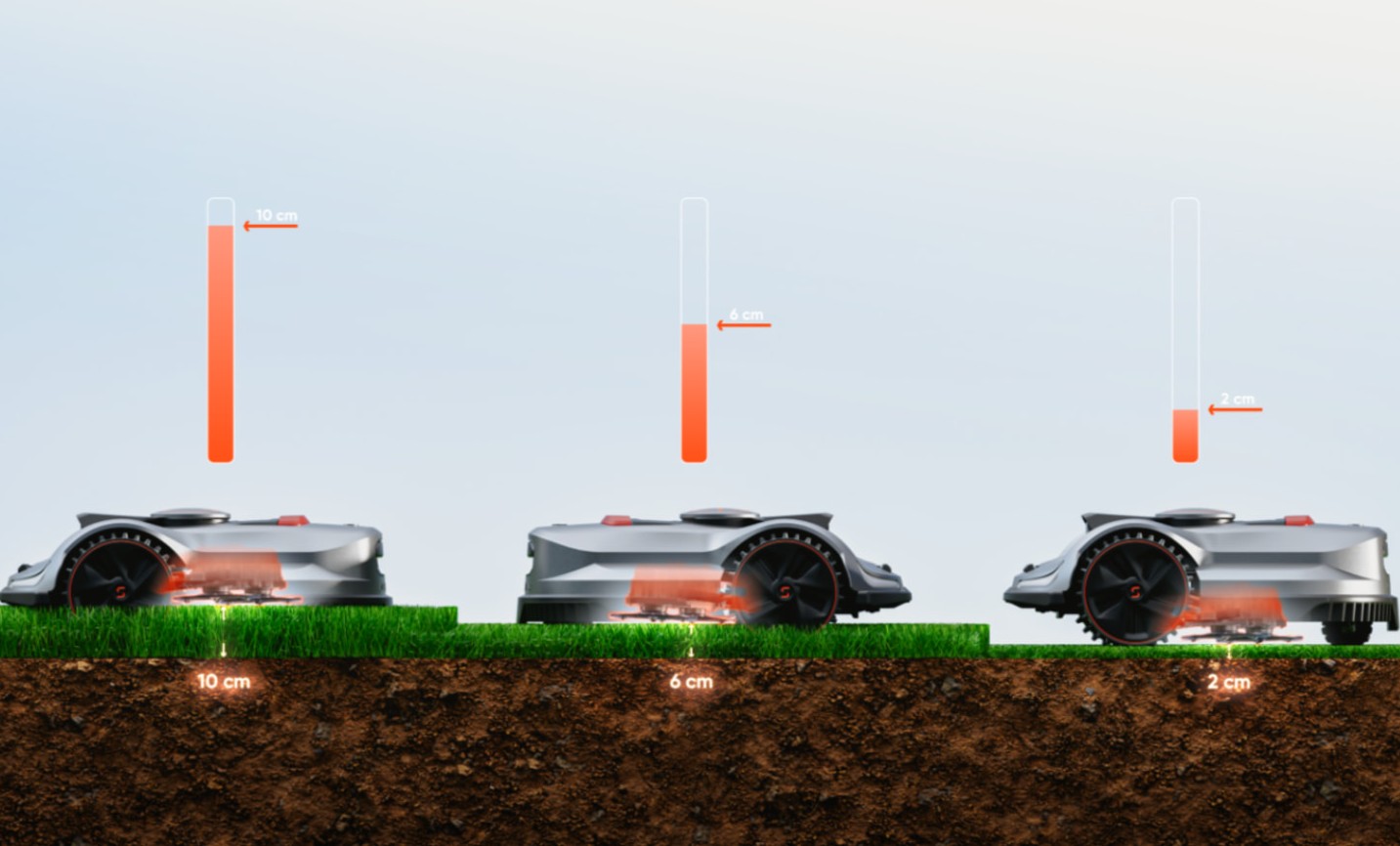
Sunseeker Elite X7 Gen 2 with adjustable cutting height from 2 cm to 10 cm
After mowing, take the time to clean any grass clippings from the underside of your mower deck. This prevents the potential spread of any lawn diseases. You can leave the fine, short clippings on the lawn as a natural mulch. However, if the clippings are long and clumpy, rake them up to prevent them from smothering the new grass underneath.
Successfully navigating the first mow is a major milestone, but your care in the following weeks will determine the long-term outcome.
Watering Schedule Adjustments: Transition from frequent, light watering to deeper, less frequent sessions after the first mow. This shift encourages roots to grow downward, helping the new grass develop stronger, more drought-resistant foundations.
Fertilization Timing: Wait 4–6 weeks after overseeding before fertilizing. Use a mild, slow-release formula so young grass receives steady nutrients without being pushed into weak, overly rapid growth.
Traffic Management and Ongoing Maintenance: Limit foot traffic for another 2–3 weeks after mowing to allow the lawn to thicken. Begin a regular mowing routine, gradually lowering the cutting height over several sessions to promote dense, lateral growth.
Delay the Use of Weed Killers: Avoid herbicides and “weed and feed” products for at least 6–8 weeks, or until the new grass has been mowed four times. Early chemical use can seriously harm delicate seedlings.
The period after overseeding calls for patience and careful timing, especially when deciding on the first mow. Waiting three to four weeks, until new grass is tall and stable, allows seedlings to establish strong roots. When mowing begins, a sharp blade, higher cutting height, and light approach help protect young growth and preserve your hard-earned progress.
Remember that successful lawn renovation is a process, not a single event. The careful steps you take now, from adjusting your watering to delaying fertilizer and weed killers, all contribute to building a resilient, thick, and beautiful lawn that will thrive for seasons to come.
Water lightly 2-3 times daily to keep the top inch of soil consistently moist until seeds germinate. Reduce frequency once seedlings reach about 2 inches tall, but avoid letting the soil dry completely before the first mowing.
Minimize all foot traffic for the first 3-4 weeks. If necessary, walk gently on dry days using boards to distribute weight. Heavy traffic can compact soil and uproot delicate seedlings before they establish strong roots.
Set your mower to its highest setting (typically 3-4 inches) and remove no more than ⅓ of the grass height. This protects the developing root system while encouraging thicker growth through proper photosynthesis.