







FAQs
12/16/2025
Contents
Products
Residential Lawns




Commercial Landscapes
Explore
Where to Buy


Imagine a robot mower that glides along the perfect edge between your lawn and flower bed, never once crossing the line, all without a single wire buried in your yard. This scene already exists thanks to RTK technology. This advanced positioning system is transforming robotic lawn care from a helpful gadget into a precision tool, delivering a level of accuracy and convenience that makes traditional methods feel outdated. Let’s explore how RTK works and why it may be the smarter choice for your lawn.
At its core, RTK technology is about achieving remarkable accuracy. It takes the satellite navigation we use every day and supercharges it, providing the precision needed for a machine to autonomously tend to your lawn.
RTK stands for Real-Time Kinematic. It's a satellite navigation technique that improves the accuracy of position data from standard global navigation satellite systems (GNSS), like GPS. While your smartphone's GPS might get you within 5-10 meters of your destination, RTK can pinpoint a location to within a few centimeters. It does this by using a fixed base station in your yard to correct the signals received by the mower in real-time, eliminating common errors caused by atmospheric interference.
The difference between standard GPS and RTK is the difference between approximation and precision. Consumer GPS is great for navigation but is subject to errors. RTK solves this by employing a two-unit system. A stationary base station calculates the error in the satellite signals at your exact location and sends these corrections to the mower. This process allows the mower to know its position with centimeter-level certainty, rather than meter-level estimation.
An RTK system for your lawn consists of three key parts. First, the RTK Base Station is set up in a fixed location with a clear view of the sky. Second, the RTK Rover is the receiver mounted on the robot mower itself. Third, a communication link, typically radio or Wi-Fi, allows the base station to send correction data to the rover in real time. Together, they create a local, high-precision positioning network for your property.
This technology translates directly into how your mower perceives and navigates its world, replacing physical guides with intelligent, digital ones.
The most immediate benefit is the elimination of boundary wires. Instead of burying a physical perimeter, you use the mower's app to digitally map your lawn's edges. The RTK system remembers these virtual boundaries with extreme accuracy. The mower stays within these digital lines as reliably as if a physical wire were there, but with far greater installation flexibility.
This precision enables efficient, systematic mowing patterns. Unlike older robots that might use random bounce navigation, an RTK-guided mower can follow straight, parallel lines like a professional landscaper. It knows exactly where it has been, ensuring no strips are missed and no areas are cut twice unnecessarily. This results in a neatly striped lawn and optimal battery usage.
For properties with multiple separate lawns, RTK excels. It can store maps for front, back, and side yards. The mower can navigate through narrow passages (at least 1 meter wide) on its own to move between these zones according to your schedule. It also handles complex shapes and obstacles with ease, smoothly navigating around trees and garden beds.
RTK’s advanced capabilities deliver practical advantages that become clear with every perfectly groomed cut.
Forget the weekend project of trenching and burying wires. Setting up an RTK system involves placing the base station and then using the mower or app to trace your lawn's perimeter. This process can often be completed in under an hour, making advanced automation accessible without complex installation.
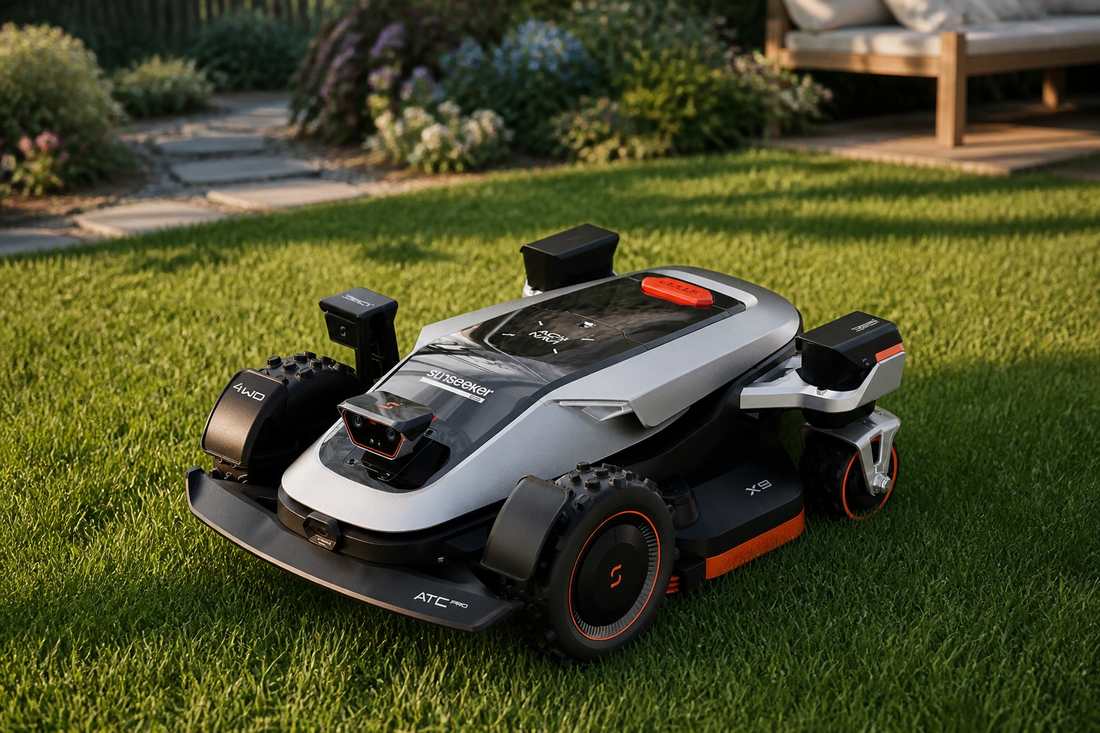
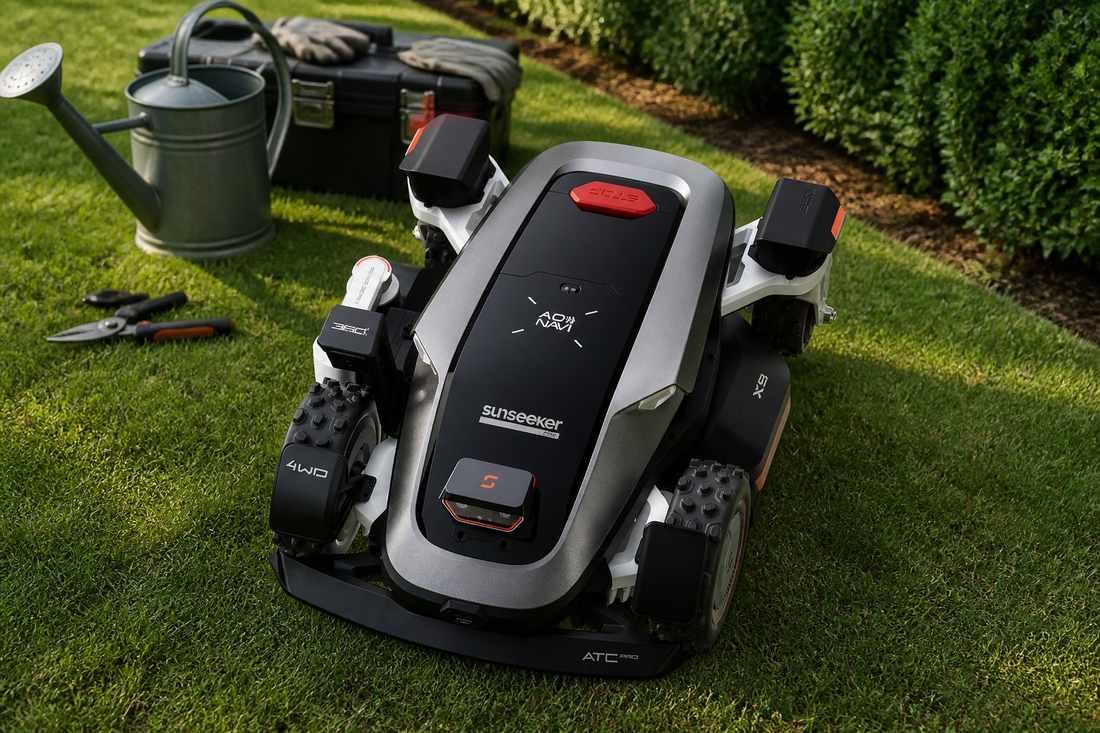
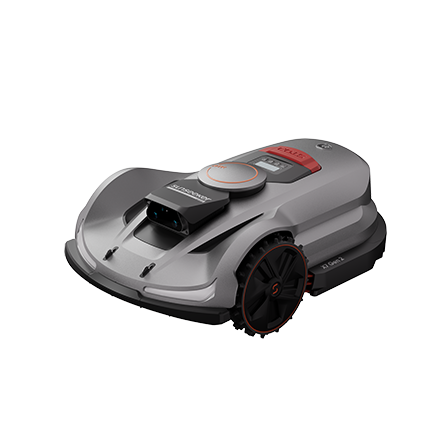
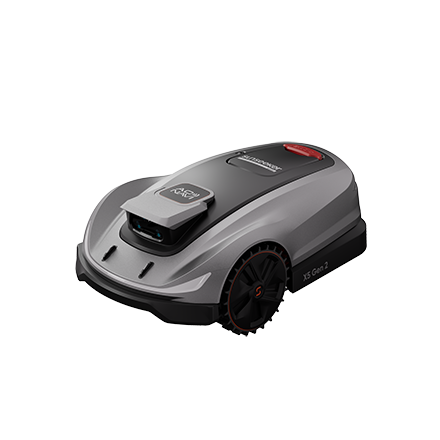
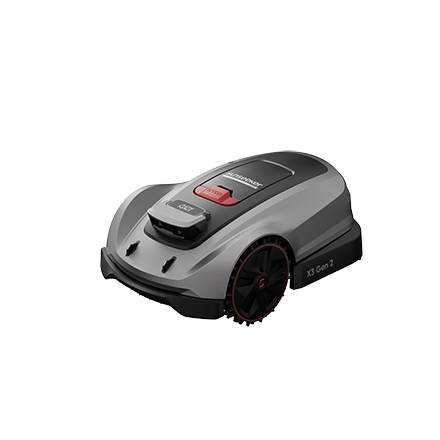
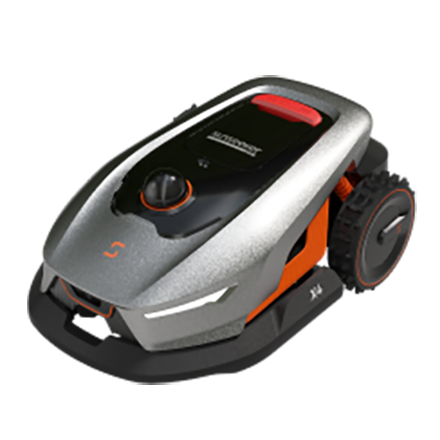
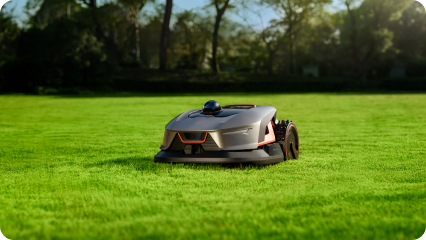
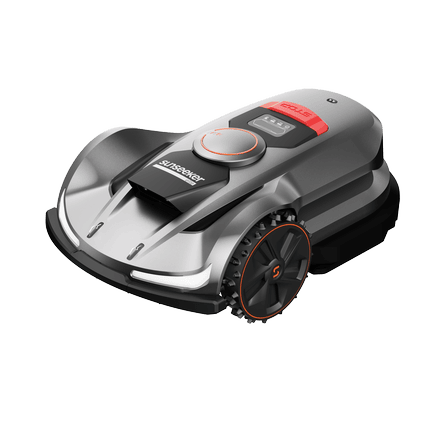
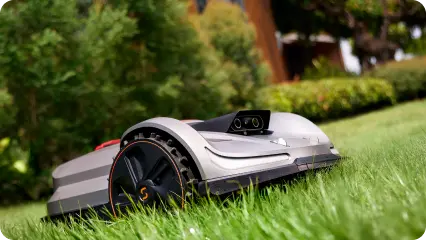
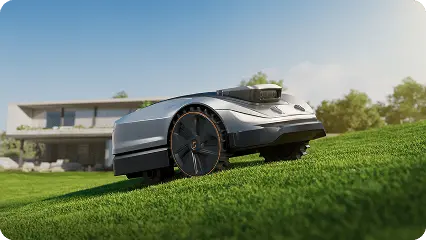
The straight-line navigation of models like the Sunseeker Elite X Gen 2 Series isn't just for aesthetics; it's highly efficient. By avoiding random overlaps, the mower covers your lawn faster and uses less energy. This often translates into longer battery life per charge and the ability to maintain larger areas. The result is a consistently clean cut with the distinctive, professional look of parallel stripes.

Sunseeker Elite Robot Mower with Intelligent Path Planning
Life and gardens change. With a physical wire, adding a new garden bed or adjusting your lawn's shape is a major undertaking. With RTK, you simply redraw the virtual boundary in the app. This flexibility makes RTK mowers ideal for homeowners who enjoy updating their landscape or for new properties where the final garden design is still evolving.
Although RTK technology is powerful and highly convenient, following a clear setup plan and paying attention to specific details are essential to ensure a strong, stable signal that allows the technology to truly shine.
Before you begin, assess your property carefully. The single most important factor is sky visibility for the RTK base station. Choose a permanent location—on a wall, fence, or pole—that offers the clearest possible view of the sky, away from dense tree cover or roof eaves.
This location should also be close to the mower’s charging station, typically just a few meters away, since the two units are connected by cable. Ensure the spot has access to a power outlet. Finally, prepare your mower, base station, and smartphone with the manufacturer’s app installed to streamline the setup process.
To better understand exactly where to place the RTK base station in your yard, please refer to How to Install the RTK Station, which includes clear visual diagrams for guidance.
1. Assemble the pole & stake
Screw the extension rods together to form the pole.
Attach the tripod or ground stake and tighten so the pole is stable.
2. Thread and connect cables
If the pole supports cable routing, thread the RTK cable through it.
Connect the RTK module to the mower’s charging station using the supplied RTK cable and any extension pieces; secure connections with cable ties.
3. Mount the RTK unit
Secure the RTK module to the top of the pole.
Firmly fix the pole assembly into the ground, ensuring the pole is vertical (90°).
4. Power up and verify
Plug the charging station into power.
Wait 3–5 minutes for the RTK to acquire satellites.
Confirm a solid blue or green indicator light for a strong signal. If the signal is weak, raise the station or move it to a clearer location.
Safety reminder: keep power and data cables tidy and away from the mower’s path; use ties or conduit where appropriate.
Even with careful planning, you might encounter areas with weak signal. Here’s how to diagnose and fix these issues:
Analyze Satellite Visibility and Obstructions: Use a free satellite visibility app (like GNSS View) on your phone. Stand where your mower has trouble and check for obstructions like dense tree canopies or walls blocking the sky. Do the same at your base station location. The goal is to ensure both points have a clear view of multiple satellites spread across the sky.
Optimize Equipment Placement and Environment: If you find obstructions, your best solution is to remove them. Trim overhanging branches. If the base station view is poor, relocate it to a more open spot, ideally with a 160-degree vertical view of the sky. For problems caused by signals bouncing off smooth walls (multipath interference), try covering the reflective surface with a textured material like unpainted wood.
Test and Schedule Based on Satellite Orbits: Satellites move in predictable orbits. Test the problematic area every few hours over a day. You may find it works perfectly at certain times when satellite geometry is favorable. If so, use the app to schedule mowing for that specific zone during those optimal time windows. As a last resort, you can exclude a consistently problematic spot from the mowing area.
RTK technology represents a significant leap forward in making robotic lawn care both precise and practical. By replacing physical wires with centimeter-accurate digital boundaries, it delivers a new level of convenience and flawless results. As this technology continues to become more accessible, it is clearly defining the future of autonomous lawn maintenance.
For anyone who prefers a low-intervention, automated lawn solution, an RTK-enabled mower from a high-performance lineup like the Sunseeker Elite X Gen 2 Series remains a smart investment in both time saved and a perfectly maintained lawn.
Yes. RTK relies on satellite signals, so the base station needs a clear view of the sky. Heavy tree cover, walls, or roof overhangs can weaken accuracy and should be avoided.
RTK installation is far simpler than traditional wired systems. Once the base station is positioned with clear sky visibility and connected to power, users map the lawn digitally through the app. The full setup often takes under an hour and requires no digging.
Yes, RTK mowers are especially effective for complex layouts. They support multi-zone management, precise routing between areas, and accurate edge trimming. This makes them ideal for properties with separate lawn sections, narrow passages, slopes, and detailed landscaping features.