




















The carburetor is the heart of a gas-powered push lawn mower’s engine. It mixes the right ratio of air and fuel for efficient combustion. As the engine runs, the carburetor adjusts this mixture based on load, speed, and temperature to ensure reliable power delivery to the blade.
Without a properly functioning carburetor, your mower may struggle to start, run unevenly, or consume excessive fuel. Modern push mowers use simple float-bowl or diaphragm carburetors designed for small engines. It’s crucial to keep it clean to prevent varnish buildup from stale fuel, which is also a common problem after winter storage.
Where Is the Carburetor on a Push Lawn Mower?
On most push (walk-behind) lawn mowers, the carburetor is located on the side or top of the engine, just behind the air filter and above the mower’s base. It is usually a silver or black metal rectangular component connected to the fuel line from the gas tank.
Here’s how to find the carburetor on a push mower.
Step 1: Turn off the mower, allow the engine to cool, and disconnect the spark plug wire to prevent accidental starting so you can safely inspect the engine components internally.
Step 2: Locate the air filter housing, which is usually a plastic cover on the side or top of the engine, secured with clips or screws for easy removal.
Step 3: Remove the air filter cover and take out the filter element, then unscrew or unclip the housing to expose the carburetor behind it.
Step 4: Identify the carburetor. It is usually a small metal component connected to the fuel line, mounted to the engine, and linked with throttle and choke control cables.
Step 5: Trace the fuel line from the gas tank to the carburetor. Take photos of all connections before removing any parts to ensure correct reassembly later.
What Are the Signs of an Issue with the Carburetor?
Now that you know where the carburetor is on a push mower, it’s also important to recognize the warning signs of problems so you can fix them early and avoid further engine damage.
- Hard starting or no start: If your push lawn mower needs many pulls or will not start, the carburetor is likely clogged. Old fuel creates varnish that blocks fuel flow and prevents proper engine ignition.
- Stalling shortly after starting: The engine may start but then die within seconds or minutes. This happens when the carburetor can not maintain the correct air-fuel mixture once the choke is turned off during operation.
- Sputtering or uneven running: The mower may run rough or surge while cutting grass. Clogged jets disrupt fuel delivery, especially when the engine is under load and needs steady combustion power.
- Only runs with choke on: If the engine only stays running with the choke engaged, the carburetor is not supplying enough fuel. This usually means internal passages are restricted or partially blocked.
- Black smoke and high fuel use: Thick black exhaust smoke and fast fuel consumption indicate a rich mixture. This often comes from a stuck float or clogged carburetor parts that disrupt proper air and fuel balance.
- Rough idling or surging: The engine RPM rises and falls at idle without control. This symptom points to uneven fuel flow caused by varnish buildup inside the carburetor passages.
How Do You Clean a Push Lawn Mower Carburetor?
Over time, old fuel breaks down and forms varnish and deposits that clog the carburetor’s tiny jets and passages. A proper cleaning can remove these blockages and restore smooth operation.
Tools You’ll Need
Before everything else, here’s the equipment needed:
- Carburetor cleaner spray: Dissolve fuel varnish and remove dirt from small internal passages.
- Screwdrivers (flathead and Phillips): Remove covers, screws, and small engine components.
- Socket or wrench set: Loosen and tighten bolts that secure the carburetor to the engine.
- Needle-nose pliers: Disconnect small fuel lines and linkages in tight spaces.
- Clean rags or paper towels: Wipe fuel spills and keep parts and surfaces clean during work.
- Gloves and safety glasses: Protect hands and eyes from debris and cleaning chemicals.
- Compressed air (optional): Blows out debris from tiny jets and internal passages.

Step-by-Step Instruction
When you have the equipment ready, make sure to work in a well-ventilated area and follow the steps below.
Step 1. Prepare the mower safely
Use gloves and safety glasses for protection, then park the mower on a flat surface. Disconnect the spark plug wire, and drain fuel using clean rags or paper towels to prevent spills and fire risks.
Step 2. Access the carburetor
Remove the air filter cover using screwdrivers, take out the filter, then unbolt the housing with a socket or wrench set. Place small parts into a small container for parts to avoid loss.
Step 3. Remove the carburetor
Disconnect the fuel line using needle-nose pliers, then detach throttle and choke linkages. Loosen mounting bolts with a socket or wrench set. Carefully remove the carburetor while keeping it steady and supported.
Step 4. Disassemble the carburetor
Use screwdrivers to open the float bowl. Remove the float, needle valve, and gasket. Store all components in the small container to keep them organized.
Step 5. Clean all components
Spray carburetor cleaner into jets and passages. Use clean rags or paper towels for wiping exterior parts. Apply compressed air (if needed) to clear stubborn debris from internal channels.
Step 6. Inspect parts
Check all components for wear or damage; make sure to handle them with gloves and safety glasses. Replace worn gaskets or damaged parts before reassembly to ensure proper sealing and fuel flow.
Step 7. Reassemble and reinstall
Rebuild the carburetor and tighten bolts with a socket or wrench set. Reconnect fuel lines with needle-nose pliers, reinstall the air filter housing, and ensure all parts are secured properly.
Step 8. Test the mower
Reconnect the spark plug wire, add fresh fuel, and start the engine. Use clean rags or paper towels to wipe any leaks and confirm smooth operation under load.
When Should You Replace the Carburetor?
If cleaning does not resolve the problem, or if the carburetor shows cracks, severe corrosion, or damaged internal components, replacement often becomes the most practical option. In many cases, it can be more cost-effective to install a new carburetor, especially when multiple small parts no longer function properly.
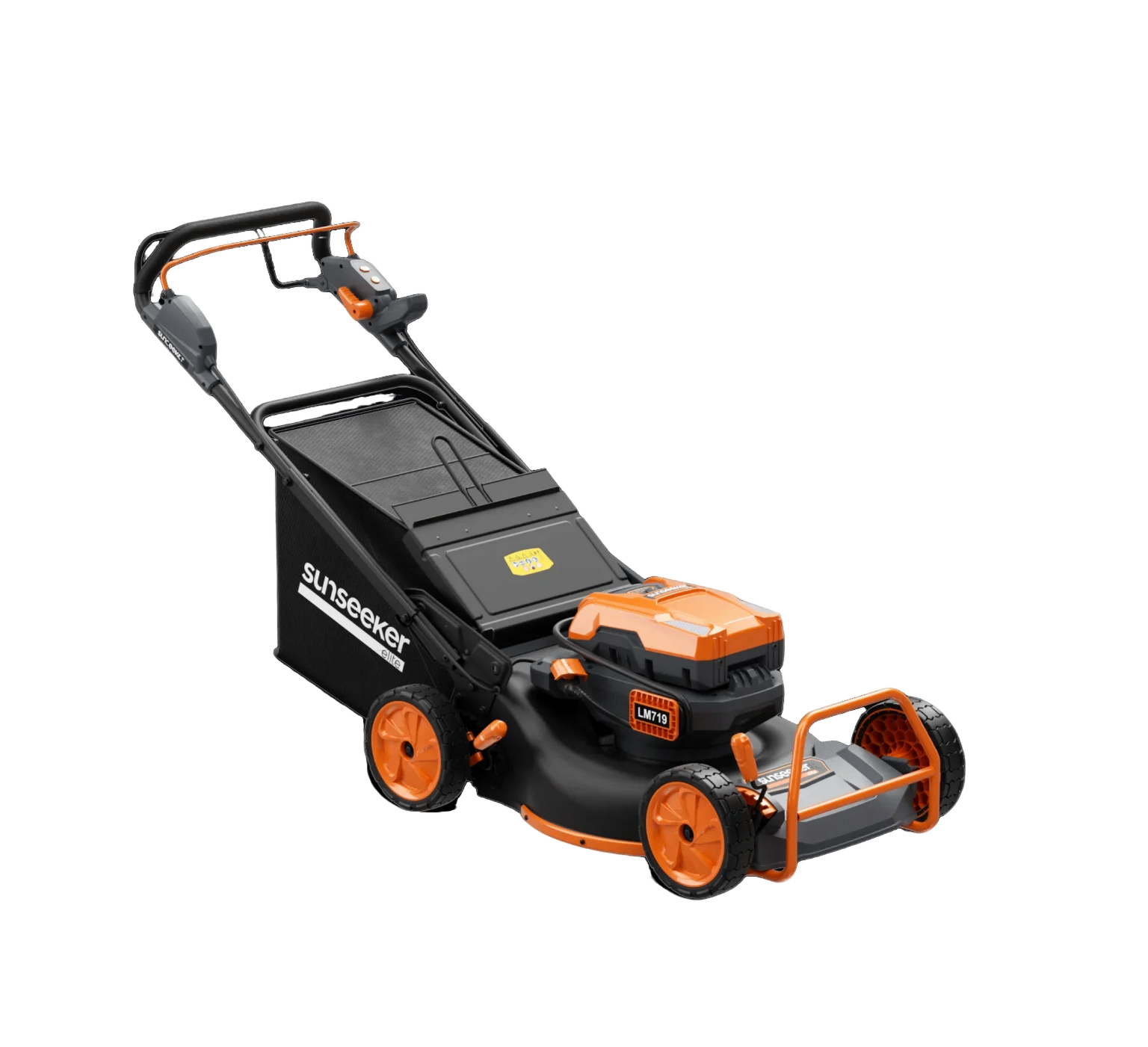
For users who want to avoid carburetor-related issues, the Sunseeker Elite Lawn Mower (Plug-in Connect) is a strong option. This 60V cordless electric mower delivers consistent cutting power without fuel systems or engine maintenance. It also features adjustable cutting height, a dual-blade system, and plug-in charging for precise and efficient mowing every time.