




FAQs
11/20/2026
Contents
Products
Residential Lawns










Commercial Landscapes
Explore
Where to Buy


Spring feeding depends on grass type, soil nutrients, and whether the lawn is truly growing. Cool-season turf often needs only a modest late-spring application, while warm-season grass should green up fully before nitrogen. Test the soil to find missing nutrients, then choose a slow-release product and calculate the rate from the label.
Spring fertilizer bags can be hard to tell apart. They all promise greener grass, but the numbers on the labels differ. Some feed the lawn slowly, while others also kill weeds. With so many options, it is easy to buy more than your lawn needs.
Your grass type and soil condition both affect what lawn fertilizer to use in spring. The numbers on the bag tell you which nutrients it supplies, but you also need to know how quickly it feeds the grass and when to apply it. These details can help you choose a suitable product and avoid feeding too early.

Spring fertilizer can support healthy grass growth, but not every lawn needs an extra application. Cool-season lawns that received fertilizer in fall may already have enough nutrients, while warm-season grasses often benefit from feeding once active growth returns.
For cool-season grasses such as Kentucky bluegrass and tall fescue, fall is the main fertilizing season. If your lawn is already thick and growing well in spring, additional feeding may be unnecessary. If soil testing indicates a nutrient shortage, a light application in late April or May can help support growth.
Warm-season grasses such as Bermudagrass and Zoysiagrass generally benefit from spring fertilization after winter dormancy. In warmer regions, this is typically April or May, once the lawn has largely greened up and soil temperatures reach around 18°C.
A fertilizer's release pattern affects how quickly grass responds and how often feeding must be repeated. Choosing what type of lawn fertilizer to use for spring depends on the lawn's present condition, not the boldest green-up promise on the bag.
Fertilizer type | How nutrients become available | Usually a good fit | What to watch |
Slow-release nitrogen | Released gradually over weeks as coating or material breaks down | Established lawns needing steady spring growth | Still requires correct nitrogen rate and timing |
Quick-release nitrogen | Soluble nutrients become available rapidly | A documented deficiency needing a prompt correction | Higher burn or surge-growth risk if overapplied |
Organic-based fertilizer | Nutrient release depends partly on soil organisms and temperature | Lawns where gradual feeding and organic inputs are preferred | Release can be slow in cold soil; analyses vary |
Spring lawn fertilizers come in different N-P-K ratios and nitrogen formulations. To choose the right one, consider your soil's nutrient levels, grass type, and whether you're feeding an established lawn or planting new grass.
A laboratory soil test is the most reliable basis for choosing phosphorus, potassium, and lime. Collect small samples from several spots in the same lawn area, mix them, and submit the composite according to your soil-testing lab's directions. Separate noticeably different soil areas; do not mix a shady, wet patch with a sunny slope.
Results usually report soil pH and nutrient levels, with fertilizer recommendations for your grass. For an established lawn, retesting about every three years is reasonable unless you are correcting a known problem.
Cool-season grasses such as Kentucky bluegrass, tall fescue, and perennial ryegrass typically need lighter nitrogen feeding in spring, as their main fertilizing season is fall. A slow-release nitrogen fertilizer can support steady growth without encouraging excessive leaf production.
Warm-season grasses such as Bermudagrass, Zoysiagrass, and St. Augustinegrass generally need more nitrogen during their active growing season. Choose a fertilizer that matches your grass type and the nutrient requirements recommended for your region.
The three numbers on a fertilizer bag show the percentages of nitrogen (N), phosphorus (P), and potassium (K). For example, a 20-0-10 fertilizer contains 20% nitrogen, so applying 5 kg of product provides 1 kg of actual nitrogen.
Look for slow-release or controlled-release nitrogen when choosing a fertilizer for steady spring growth. Check the label for the recommended application rate and calculate the amount based on your lawn's actual area.
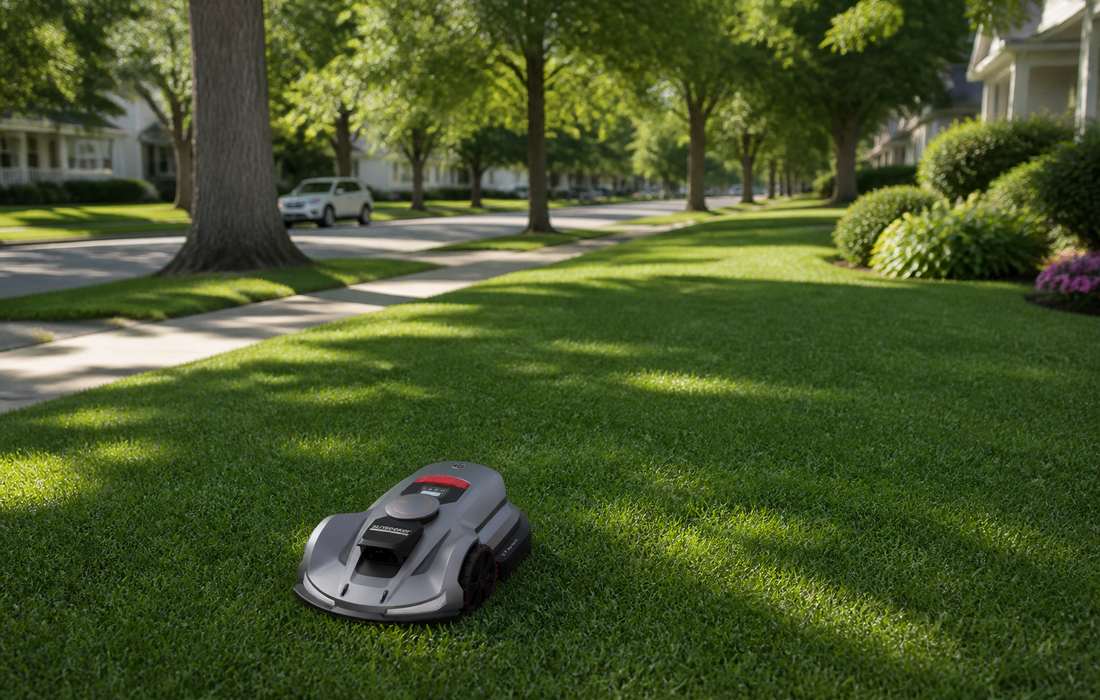
Grass clippings also return nutrients as they decompose. Robot Mowers with Mulching Blades help maintain frequent, light cuts that leave fine clippings on the lawn, gradually recycling nutrients and reducing the need for additional fertilizer.
Newly seeded lawns have different nutrient needs from established grass. If your soil test shows low phosphorus, a starter fertilizer containing phosphorus can support early root development. Check the N-P-K ratio and application rate to choose a product suited to your planting area.
For spring overseeding, also consider any planned weed control. Many pre-emergent herbicides prevent grass seed from germinating, so check the product label before applying a weed-and-feed fertilizer. Choose a fertilizer compatible with your seeding schedule to give new grass suitable growing conditions.
A weed-and-feed product is a practical choice when your lawn needs both fertilization and weed control at the same time. The best application timing depends on the weeds you're targeting and your grass type.
For crabgrass prevention, apply a pre-emergent weed-and-feed before the seeds germinate, often in early spring. Products targeting broadleaf weeds such as dandelions work best when those weeds are actively growing. On northern cool-season lawns, crabgrass prevention may be needed in April, while spring fertilization may be better suited to May. Separate treatments allow you to address each need at the right time.
Before applying, check that the product is suitable for your grass type and follow its temperature, watering, and application instructions. If you have only a few weeds, spot treatment may be more practical. For newly seeded lawns, check the herbicide's seeding restrictions, as some ingredients can interfere with grass germination and establishment.
Applying spring lawn fertilizer evenly helps prevent patchy growth and ensures your grass receives the right amount of nutrients. Choose a time when the lawn is actively growing and follow these steps for the best results.
Step 1. Measure Your Lawn Area
Measure the actual grass-covered area, excluding patios, driveways, buildings, and garden beds. For example, a 200 m² lawn needs one-fifth of a fertilizer bag rated to cover 1,000 m².
Step 2. Calculate the Fertilizer Amount
Use the recommended nitrogen rate and the fertilizer's N-P-K ratio to determine how much to apply. If your lawn needs 0.25 kg of nitrogen per 100 m², a 20-0-10 fertilizer requires 1.25 kg of product for that area.
Step 3. Spread Fertilizer Evenly
Apply fertilizer when the grass is dry and actively growing. Set your spreader according to the product label and walk at a steady pace. For more even coverage, you can divide the recommended amount into two equal portions and spread them in perpendicular directions. Sweep any granules from sidewalks and driveways back onto the lawn.
Step 4. Water After Application
Most granular lawn fertilizers benefit from watering after application to move nutrients into the soil. Check the label for the recommended watering amount, especially when using weed-and-feed products. Follow the specified re-entry instructions for children and pets.
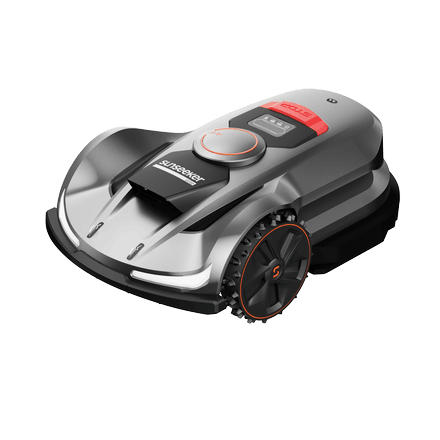
Spring fertilization can encourage faster grass growth, which may require more frequent mowing. For large properties, the Sunseeker Elite X9 Plus supports scheduled mowing and intelligent route planning, with a rated coverage of up to 24,000 m² in 48 hours. This makes regular cutting easier to manage as grass growth increases throughout spring.

Choose spring fertilizer only after checking turf type, soil nutrients, and active growth. For cool-season lawns, that may mean a modest May feeding, or none after a strong fall program. Warm-season grasses generally need to green up before spring nitrogen becomes useful. Match the analysis and release pattern to the soil report, apply the measured dose evenly, and treat herbicides as a separate decision unless the timings align. The goal is steady growth, not the fastest change in color.
Sometimes. A plain fertilizer left dry in its original sealed container may still be usable if it has not hardened or degraded and its nutrient analysis meets the spring soil-test recommendation. A “winterizer” is not automatically suitable for spring, and a bag containing an herbicide must also match the current application season and label instructions.
With readily available nitrogen and actively growing grass, visible improvement may appear in roughly 7-14 days. Slow-release products generally produce a gentler response over several weeks. Cold soil, dormancy, poor drainage, and shade can delay or prevent a color change, so lack of a rapid response is not a reason to double the fertilizer rate.
No. Iron may deepen green color when iron availability is limiting, but it does not supply the nitrogen, phosphorus, or potassium that grass needs for growth. High soil pH can make iron less available even when soil contains plenty. Use a soil test to distinguish an iron-related color problem from a true need for nitrogen or other nutrients.