








FAQs
4/29/2026
Contents
Products
Residential Lawns











Commercial Landscapes
Explore
Where to Buy


New grass should be mowed only after the roots feel anchored and the blades reach about 8 to 9 cm. Seeded lawns often need 6 to 8 weeks, while sod may be ready in 2 to 3 weeks. A light first cut, dry soil, a sharp blade, and a higher deck setting help protect young grass while it gets stronger.
You've just put in the work of seeding or laying sod, and the grass is finally starting to come in. The next question most people have is: when to mow new grass without undoing all that progress? Mow too early and you risk pulling up seedlings that haven't rooted yet. Wait too long and the grass gets leggy and harder to manage.
The timing depends on which type of new lawn you're working with. This guide covers newly seeded lawns, overseeded areas, and freshly laid sod, along with how to mow safely and what to do afterward.
The right timing varies depending on how your lawn was established. Here's what to look for in each case.
When to mow newly seeded grass: wait until the grass reaches 8 to 9 cm tall and has been growing for at least 6 to 8 weeks. Before you mow, do a quick tug test. Pull on a few blades. If they come up easily, the roots aren't ready. If there's resistance, you're good to go. Also wait for a dry day. Mowing on soft, watered-down soil can disturb shallow roots before they've had a chance to anchor.
With overseeding, new seedlings are growing alongside established grass, so the new growth needs more time to catch up. When can you mow new grass that's been overseeded: once the new areas reach the same height as the rest of the lawn, around 8 to 9 cm. Running the deck a notch higher for the first couple of cuts helps protect the younger plants.
Sod has a head start over seeding, but the roots still need time to knit into the soil. When should you mow a new lawn laid with sod: around two to three weeks after installation. Use the same tug test — lift a corner of the sod and see if it pulls away easily or holds. If it holds, a light first mow is fine.
Once you know when to mow new grass, the way you mow becomes just as important. The first few cuts shape how the lawn grows over time. Cutting too short or too often can slow development, while the right approach helps build stronger, healthier grass from the start.
For the first mow, raise the cutting height one or two notches above your normal setting. New grass cut too short, anything under 6.5 to 7.5 cm, stresses the young plants and slows how quickly they establish. The one-third rule, never removing more than one-third of the blade in one pass, is especially worth keeping in mind at this stage.
A dull blade tears the grass instead of cutting it cleanly. On new seedlings that are still developing, that extra stress can set things back. Checking the blade before the first mow and sharpening if needed is a small step that makes a real difference.
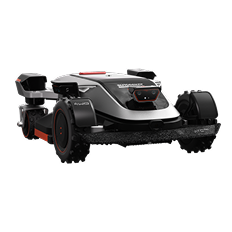
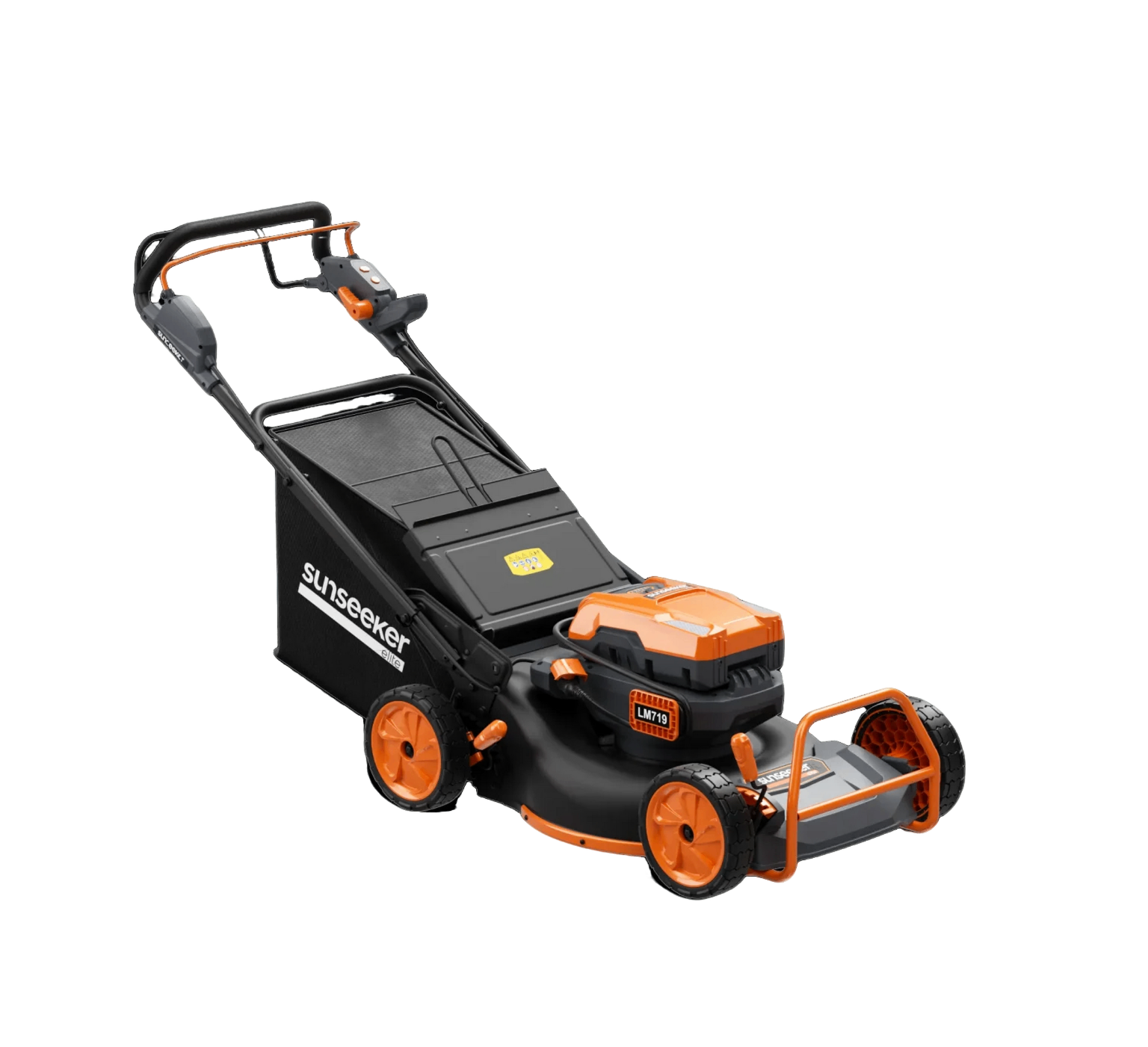
Heavy riding mowers put a lot of pressure on soft, freshly seeded soil. A lighter push mower is easier on the ground for the first few cuts. For larger properties where that's not practical, some models are designed with a lighter footprint that's easier on new turf. The Sunseeker Elite X4 is one of them, with a build that keeps ground pressure low enough to be a reasonable option even on recently seeded areas.
New lawns compact easily, and wet soil makes that worse. Waiting for a dry day before the first cut helps protect the soil structure that young roots are working to establish.
A slower pace gives the blade more time to cut cleanly and reduces the chance of the mower pulling at seedlings that are still loosely anchored.
After the initial mow, here's what helps the lawn continue developing well.
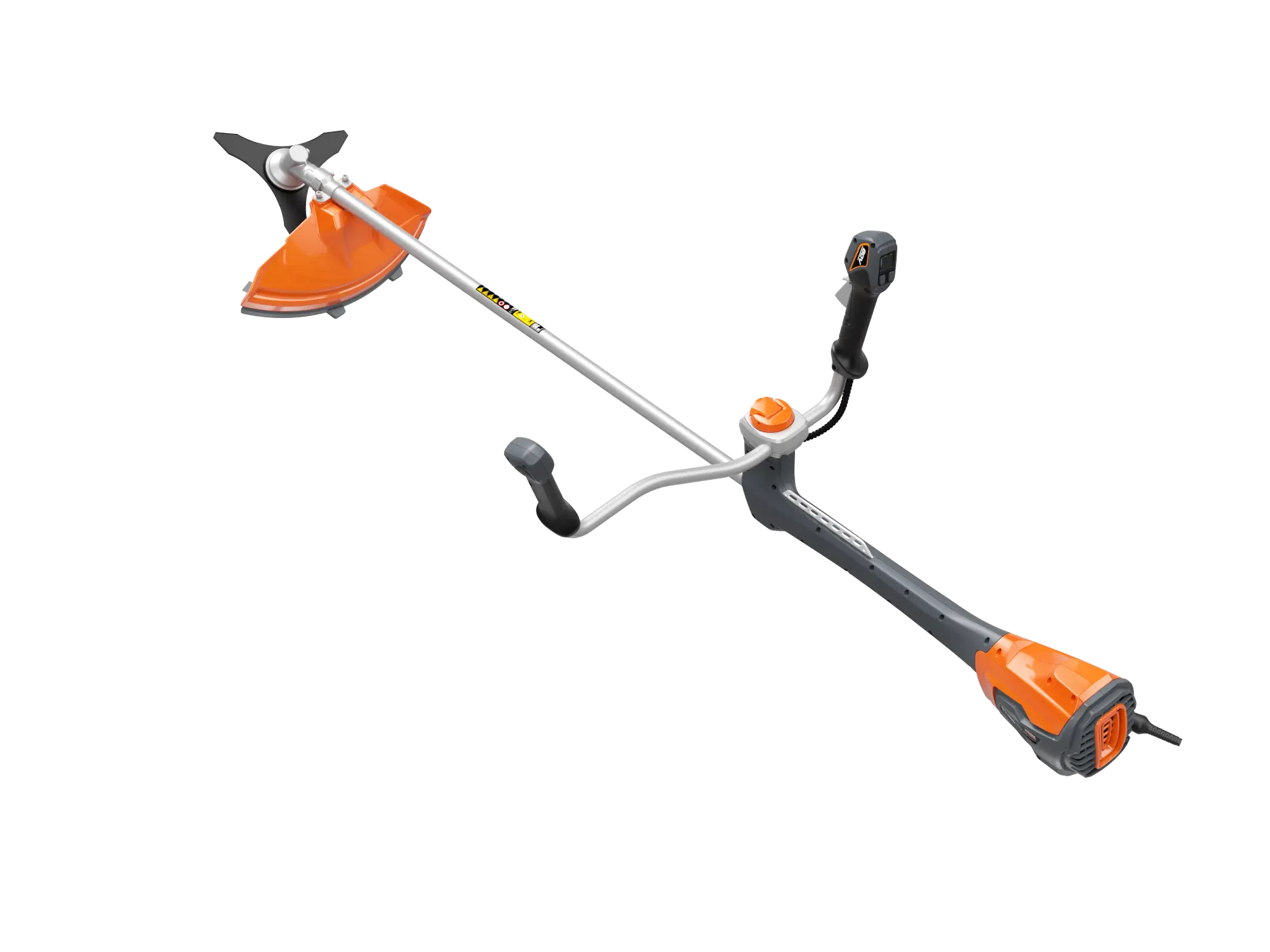
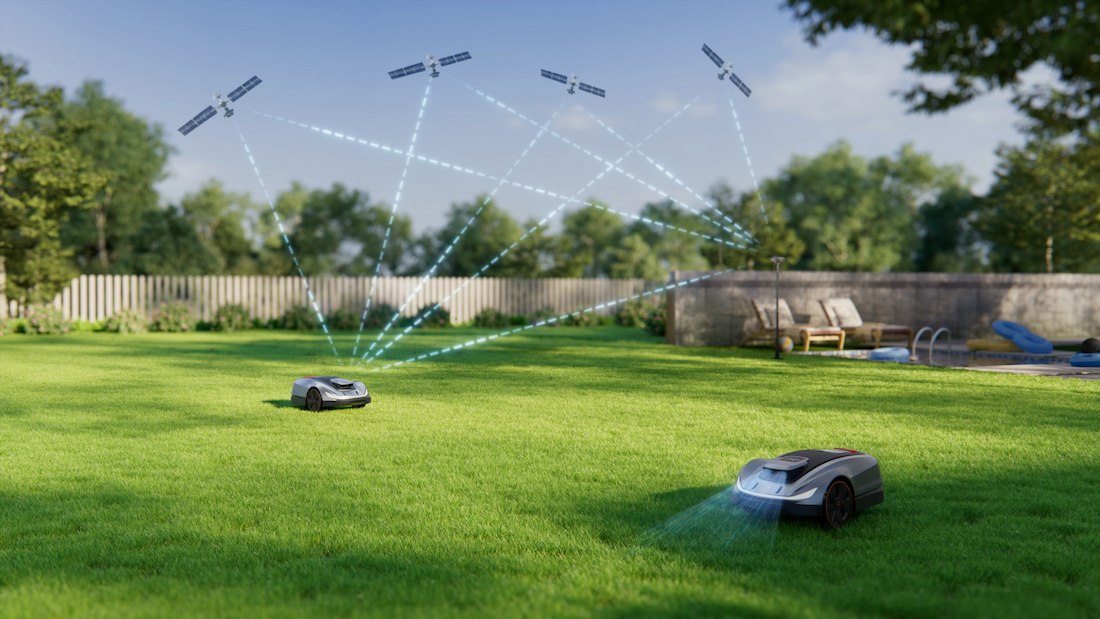
For larger new lawns where keeping up with a gentle, consistent schedule is harder to manage manually, a robotic mower can help. If you are unsure how to mow grass around pavers, define the paved edges clearly and use a trimmer for any narrow strips the mower cannot reach. The Sunseeker Elite X5 mows little and often on a set schedule, which is actually well-suited to new grass since it removes small amounts at a time rather than making infrequent heavy cuts.
When can you mow new grass without causing damage? Once the roots are anchored and the grass has reached 8 to 9 cm, which is usually 6 to 8 weeks for seeded lawns and 2 to 3 weeks for sod. The tug test is the most reliable check, more so than counting days. Going in with a high deck setting, a sharp blade, and dry conditions gives the lawn the best start. Get the first few mows right and it has a much stronger foundation going into its first full season.
For newly seeded lawns, waiting at least 6 to 8 weeks is a reasonable baseline, but the more reliable indicator is whether the roots have established. A tug test, pulling gently on a few blades to check for resistance, tells you more than a calendar date. For sod, two to three weeks is usually enough before the first light mow, provided the roots have started knitting into the soil beneath.
It can, in a moderate way. Cutting the grass encourages lateral growth as the plant responds to being trimmed, which can help fill in thin areas over time. That said, mowing too early or cutting too short has the opposite effect and sets back establishment.
If the new grass was seeded in late summer or early fall, which is actually an ideal time for cool-season grasses, it may reach mowing height before the growing season ends. In that case, a light mow before winter is worth doing. Going into the colder months with grass that's too long can lead to matting and increase the risk of disease. Set the deck high, take only a light cut, and avoid mowing once the grass has gone dormant or frost is a regular occurrence.