
















If your push mower won't stay running, you're not alone. It's one of the most common complaints homeowners have about gas-powered mowers, especially at the start of the season or after the mower has been sitting for a while. The good news is that the cause is almost always something simple and fixable.

Why Does a Push Mower Start Then Die?
When a mower fires up but then shuts off within seconds or minutes, something is interrupting the engine's ability to keep running. Understanding what that is makes the fix much easier to find.
Here are the most common reasons a push lawn mower won't stay running:
- Stale or contaminated fuel. Gas that's been sitting in the tank for more than 30 days starts to break down. It leaves behind a sticky residue that clogs fuel lines and the carburetor, and the degraded fuel itself burns poorly. This is the number one cause of a mower that starts then dies, especially after winter storage.
- Clogged carburetor. The carburetor mixes air and fuel for combustion. When old fuel residue blocks the tiny passages inside it, the engine can't get a consistent fuel supply and stalls out. A partially clogged carburetor often lets the mower start, run for a few seconds, then cut out.
- Dirty or clogged air filter. The engine needs a steady flow of air to run. A blocked air filter restricts that airflow, causing the engine to run rich and stall, especially under load. If the filter looks grey or brown, it's overdue for cleaning or replacement.
- Faulty or fouled spark plug. A spark plug that's worn, dirty, or gapped incorrectly can fire inconsistently. The mower might start on a good spark but stall when the plug struggles to keep firing. Checking the spark plug takes about two minutes and costs very little to fix.
- Fuel cap vent blockage. The fuel cap has a small vent that lets air into the tank as fuel is consumed. If that vent is blocked, a vacuum builds up in the tank that eventually stops fuel from flowing to the carburetor. The mower starts fine but dies after a minute or two. Loosening the cap slightly while the mower runs is a quick way to test this.
- Low or dirty engine oil. Most mowers have a low-oil shutoff sensor. If the oil level drops below a certain point, the engine shuts down automatically to prevent damage. An oil change that's overdue can also cause oil to break down and lose its protective properties, leading to running problems.
How to Fix Push Lawn Mower Won't Stay Running?
Most of these fixes are straightforward. Work through them in order from simplest to most involved.
Here is a step-by-step approach to fixing a push mower won't stay running problem:
Step 1: Check and replace the fuel.
Drain any fuel that's been sitting for more than 30 days. Refill with fresh gasoline and try again. If the mower runs better straight away, stale fuel was the problem. Add a fuel stabilizer going forward to keep fuel fresh during storage.
Step 2: Clean or replace the air filter.
Remove the air filter cover and take out the filter. Foam filters can be washed with warm soapy water, dried fully, and reinstalled. Paper filters should be replaced if they're visibly dirty. A clean filter makes an immediate difference to how the engine runs.
Step 3: Inspect the spark plug.
Disconnect the spark plug wire and remove the plug with a socket wrench. Look for carbon buildup, cracks, or a worn electrode. Clean it with a wire brush if it's just dirty. If it looks damaged or heavily fouled, replace it. Spark plugs are inexpensive and easy to find at any hardware store.
Step 4: Test the fuel cap vent.
With the mower running, loosen the fuel cap slightly to see if it continues running. If it does, the vent is blocked. Clean the cap with compressed air or replace it.
Step 5: Clean the carburetor.
If the steps above haven't solved the issue, the carburetor is the most likely culprit. Spray carburetor cleaner into the air intake while the mower is running to help clear minor blockages. For a more thorough clean, remove the carburetor, soak it in cleaner, and use a small brush or wire to clear the jets. If the carburetor is heavily corroded or damaged, replacing it is often the more practical option.
Step 6: Check the oil level.
Pull the dipstick and check the oil level. Top up if it's low. If the oil looks dark or milky, do a full oil change before running the mower again.
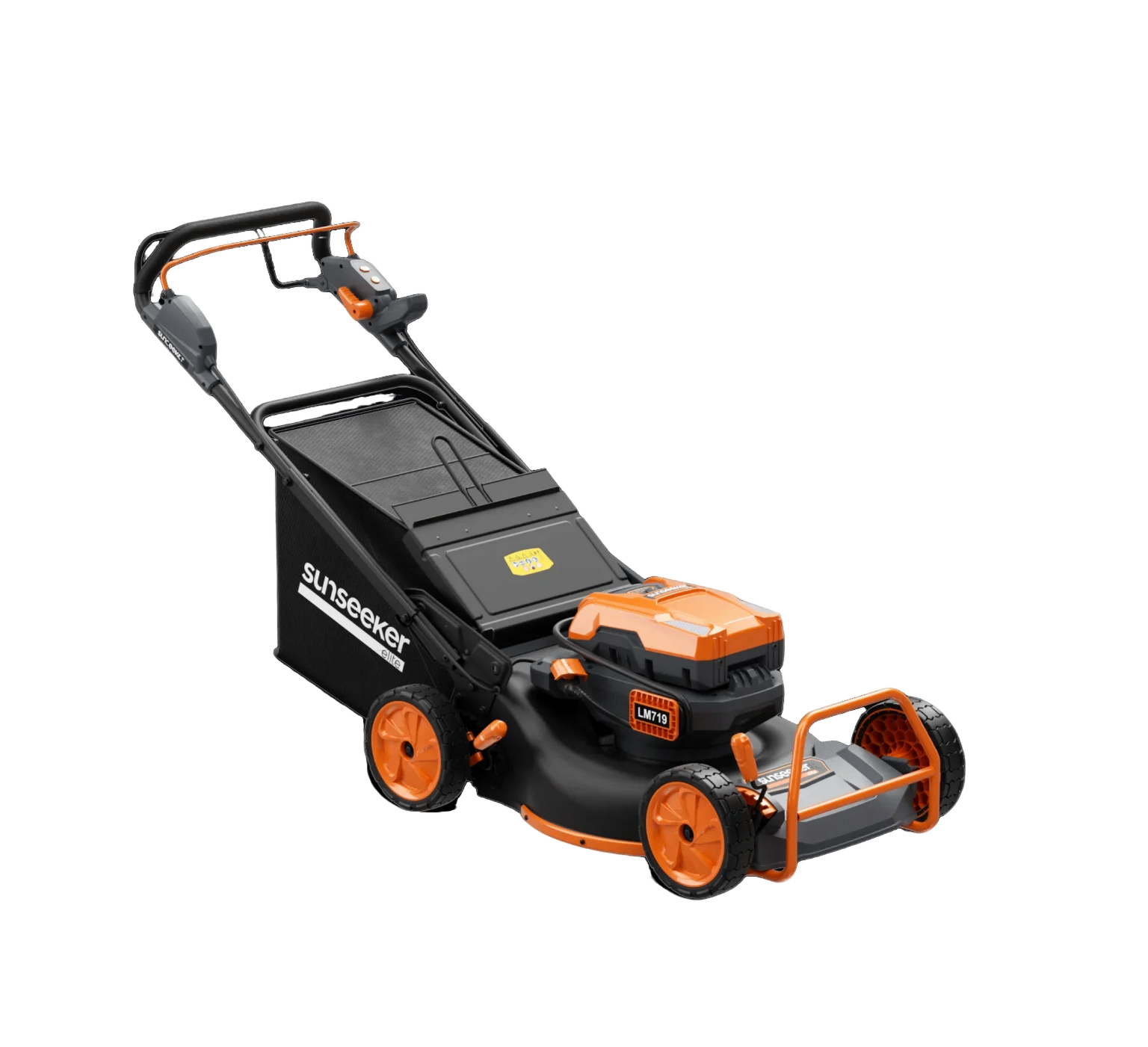
If you'd rather avoid gas engine maintenance altogether, an electric mower is worth considering. The Sunseeker Elite Lawn Mower (Plug-in Connect) runs on a 60V battery system and has no carburetor, no fuel lines, and no spark plugs to worry about. It features a 560 mm dual-blade steel deck, 7 cutting height settings from 1.0 in to 3.50 in, and 3-in-1 functionality covering mulching, rear discharge, and bagging. Noise levels stay at or below 98 dB(A). Maintenance is minimal, mostly keeping the blade sharp and the deck clean.