







FAQs
4/27/2026
Contents
Products
Residential Lawns










Commercial Landscapes
Explore
Where to Buy


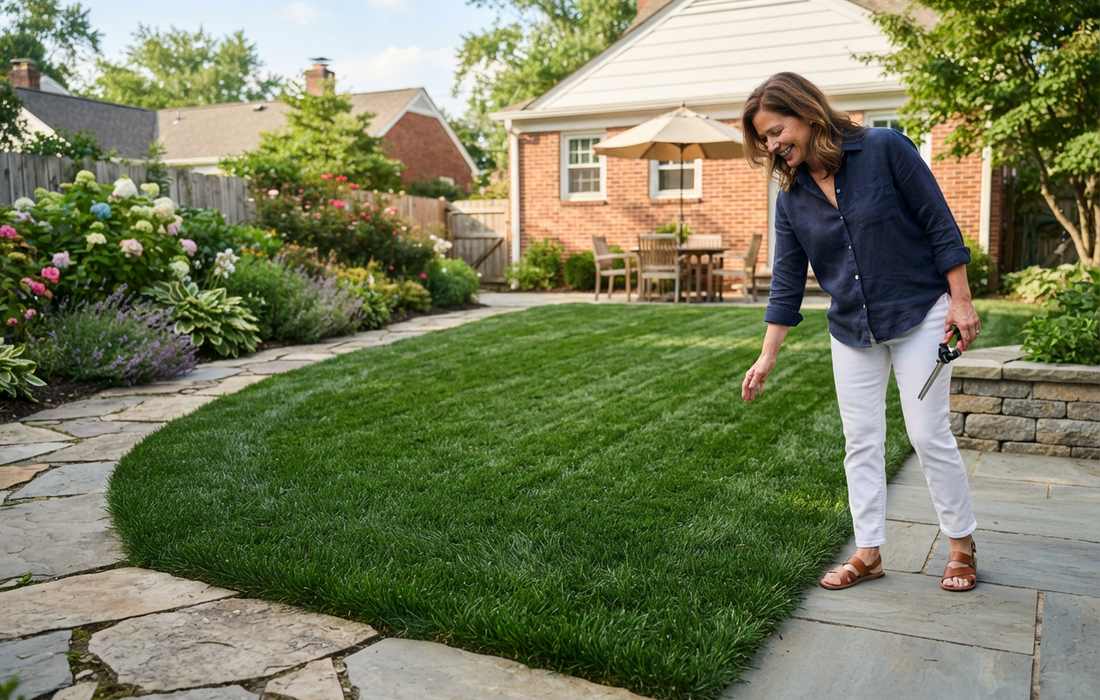
Mowing stripes creates a professional, eye-catching effect by bending grass blades in alternating directions. Achieving clean stripes depends on proper mower height, dry grass, consistent passes, and slight overlap. Patterns can range from straight lines to checkerboards or circles, and careful navigation around obstacles ensures uniformity across the lawn.
Many homeowners dream of achieving that professional ballpark look for their yard. The bold, alternating light and dark bands instantly make your grass stand out, and it creates a sense of pride every time you step outside. But, how do you mow stripes in a lawn in your lawn? This guide walks you through the easiest methods and advanced striping techniques. You can also find practical tips and tools that make the entire process effortless!
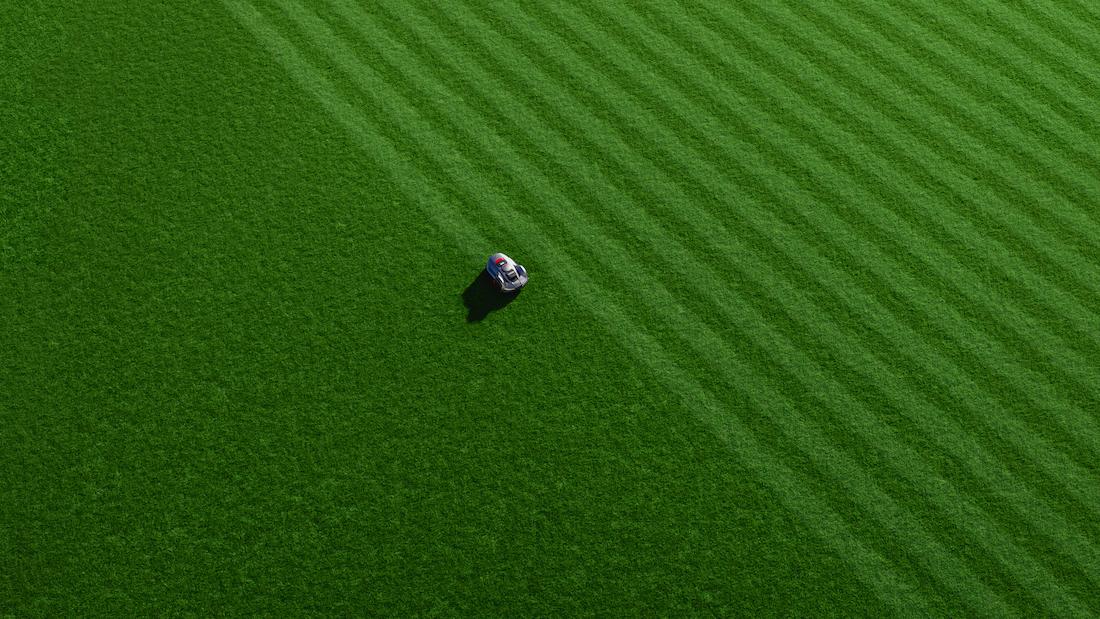
How to stripe a lawn in your lawn? A practical approach for mowing stripes in grass is using a lawn striper kit. This attachment connects to the back of your mower and when the blades are bent away from you, they reflect more sunlight and appear lighter. When they are bent toward you, they reflect less light and look darker.
Here’s how to stripe a lawn using a lawn striper kit in simple steps.
Step 1: Attach the lawn striper kit securely to the rear of your mower according to the manufacturer’s instructions.
Step 2: Set your mower to a taller cutting height and ensure the grass is dry for better bending and visibility.
Step 3: Begin mowing in smooth, consistent passes, allowing the striper kit to naturally bend the grass as you move.
Step 4: Continue mowing with steady movement to maintain uniform stripe definition across the lawn.
Now that you know how to stripe a lawn in grass using a lawn striper kit, you can also start experimenting with more creative and visually striking patterns. Here are several popular techniques you can try to take your mowing stripes to the next level.
The straight striped lawn is the most basic and widely used pattern, making it the perfect starting point for beginners. You may follow the steps below to mow a straight striped lawn.
Step 1: Start at a straight edge of your lawn, such as a driveway or sidewalk, to guide your first pass.
Step 2: Mow in a straight line across the lawn, keeping your path steady and consistent.
Step 3: Turn carefully at the end of each row without disturbing the grass pattern.
Step 4: Continue mowing back and forth in parallel lines until the entire lawn is covered with alternating stripes.
The checkerboard pattern builds on straight stripes by adding a second layer of mowing. Here’s how to mow lawn stripes in a checkerboard pattern easily.
Step 1: First, mow the entire lawn in straight parallel stripes in one direction.
Step 2: After finishing, mow a second set of stripes perpendicular to the first (90-degree angle).
Step 3: Maintain even spacing and consistent overlap during both passes.
Step 4: Complete the full lawn to reveal a clear grid-like checkerboard pattern.
Circle striping creates a flowing, eye-catching design that works well on round or irregularly shaped lawns. Just follow these steps to create the look.
Step 1: Choose a starting point in the center or at the outer edge of your lawn.
Step 2: Mow in smooth circular or spiral paths around the chosen point.
Step 3: Alternate direction between passes (clockwise and counterclockwise) for contrast.
Step 4: Continue until the entire lawn is covered with evenly spaced circular stripes.
Diagonal stripes are created by mowing at an angle(usually around 45 degrees) rather than following the natural edges of your lawn. Here are the steps.
Step 1: Set your mowing direction at an angle, typically around 45 degrees from the lawn edge.
Step 2: Mow in straight diagonal passes across the lawn with consistent spacing.
Step 3: For zigzags, slightly shift direction during passes to create angled V-shaped lines.
Step 4: Repeat until the full lawn is covered with clean, dynamic diagonal or zigzag patterns.
Mowing stripes around obstacles requires careful planning to keep your overall pattern smooth and visually consistent. Here’s how to do it effectively:
Step 1: Identify obstacles like trees, flower beds, or garden structures before mowing.
Step 2: Plan your stripe direction so it flows smoothly around these features.
Step 3: Mow carefully around obstacles while maintaining the overall pattern direction.
Step 4: Use gentle curves or radiating lines to keep spacing consistent and maintain a cohesive striped look.

To help you achieve truly professional-looking mowing stripes, we have summarized the most effective tips below.
Keep your grass slightly taller, ideally around 75-100 mm. Longer blades bend more easily under the striper kit, creating a stronger contrast between light and dark stripes.
Focus on a fixed point ahead of you while mowing. This helps you keep lines straight and evenly spaced, which is essential for clean and professional-looking stripes.
Avoid mowing when the lawn is wet. Dry grass bends more cleanly, allowing the striper kit to create sharper, more defined patterns without clumping or uneven flattening.
Each pass should overlap the previous one by a small margin, usually 5-10 cm. This prevents gaps and ensures your mowing stripes look smooth and continuous.
Alternate your mowing direction each time you cut the lawn. This prevents grass from leaning permanently in one direction and keeps the stripe contrast fresh and visible.
If you want to achieve consistent mowing stripes effortlessly, consider upgrading to smart robotic mowers. They create strong, repeatable patterns because these models follow highly accurate, straight-line paths with minimal deviation, consistent overlap, and uniform pressure—something hard to achieve perfectly by hand every time.
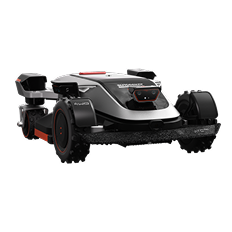
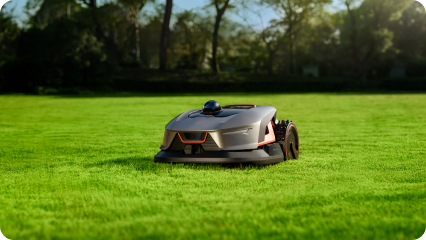
One excellent option is the Sunseeker Elite X4 , which turns your lawn into a perfectly striped, evenly sculpted landscape that looks like it was maintained by a pro. Equipped with a 360° 3D LiDAR system and advanced AI, it can create professional-looking stripes through intelligent path planning with multiple mowing directions. Its precise mapping and obstacle avoidance make it ideal for maintaining clean, consistent patterns. The floating cutting system helps achieve an even mowing height, and the app allows you to easily customize zones and mowing patterns.
Another strong choice is the Sunseeker Elite X7 Plus Gen 2 . Featuring upgraded AONavi™ 2.0 navigation and multi-angle mowing capabilities, these models allow you to treat your lawn like a customizable canvas. You can combine different mowing angles and create traditional straight stripes, diagonals, or overlapping patterns (like checkerboards) with excellent coverage. With smart adaptive zoning and intelligent path planning, it optimizes routes to eliminate chaotic movement, ensuring even, parallel passes that lock in strong stripe contrast. What’s more, you can even upload your own designs via the app and bring them to life with customized mowing paths!
Now you know how to stripe a lawn. By following the guide above, you can easily create a variety of eye-catching patterns, from straight striped lawns to checkerboard and circular designs. With the right techniques and a lawn striper kit, achieving clean and professional-looking mowing stripes is simpler than it may seem. However, if you are looking for the most effortless way to maintain consistent mowing stripes, consider upgrading to Sunseeker’s robotic mowers. These wire-free models use intelligent mapping and advanced navigation to deliver uniform cuts and patterns, helping you elevate your lawn’s appearance with minimal effort and maximum consistency!
Lawn stripes appear due to the way light reflects off grass blades bent in different directions. When grass is pushed away from you, it reflects more light and looks lighter. When bent toward you, it appears darker. This alternating pattern creates the striped effect without changing the grass color. Proper mowing height and sunlight can also enhance visibility.
Cool-season grasses like Kentucky bluegrass, ryegrass, and fescue stripe best because they are more flexible and hold their shape longer. Their wider blades reflect light more effectively. Warm-season grasses can still stripe, but the effect is usually less noticeable due to their stiffer structure and faster recovery.
The best mowing height for striping is on the taller side of your grass type's recommended range, 75-115 mm for most cool-season lawns and 50-75 mm for warm-season grasses. Taller grasses are softer and bend more readily under the mower deck or striper, creating greater contrast between light and dark bands. Shorter cuts (under 65 mm) produce weak or invisible stripes because blades lack enough length to reflect light differently.
You can still achieve basic lawn stripes by using a robotic lawn mower. These machines follow programmed paths and apply consistent pressure as they move, gently bending the grass to create visible striping effects. For best results, consider Sunseeker Elite models, which can help you create clean, consistent stripes, even on complex lawns.